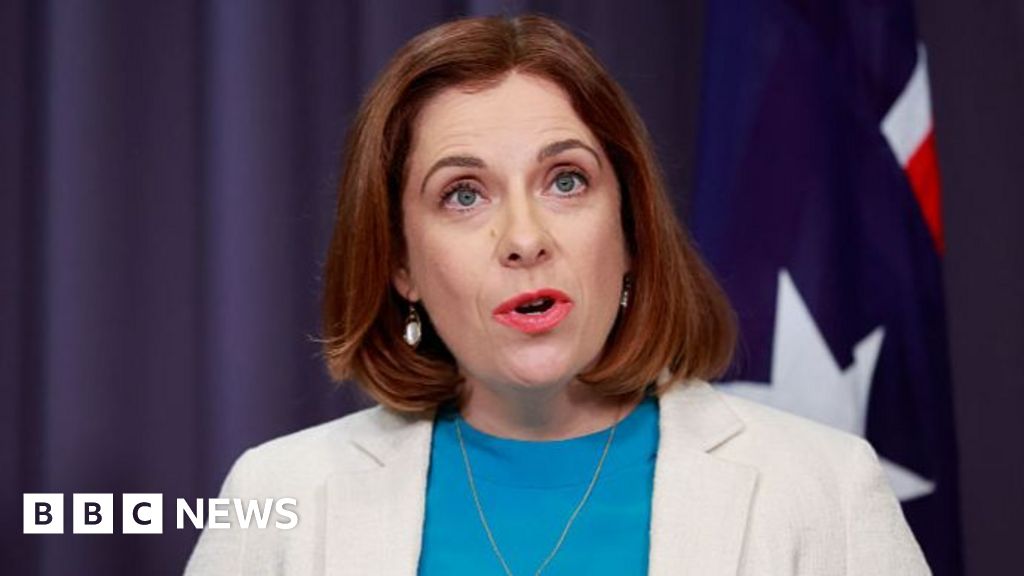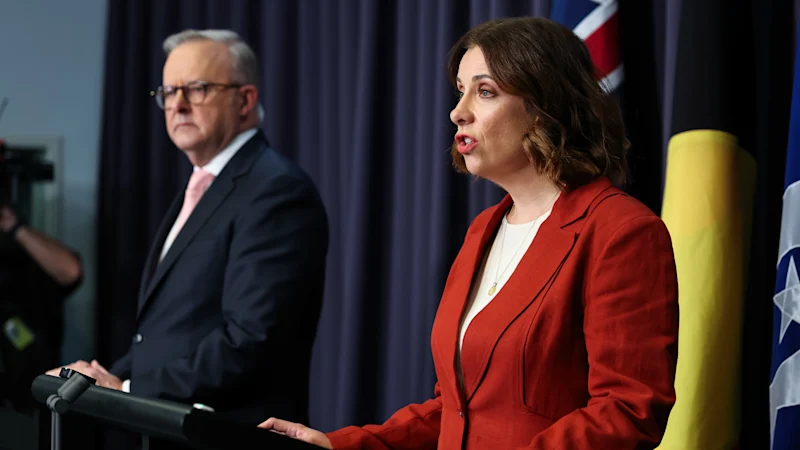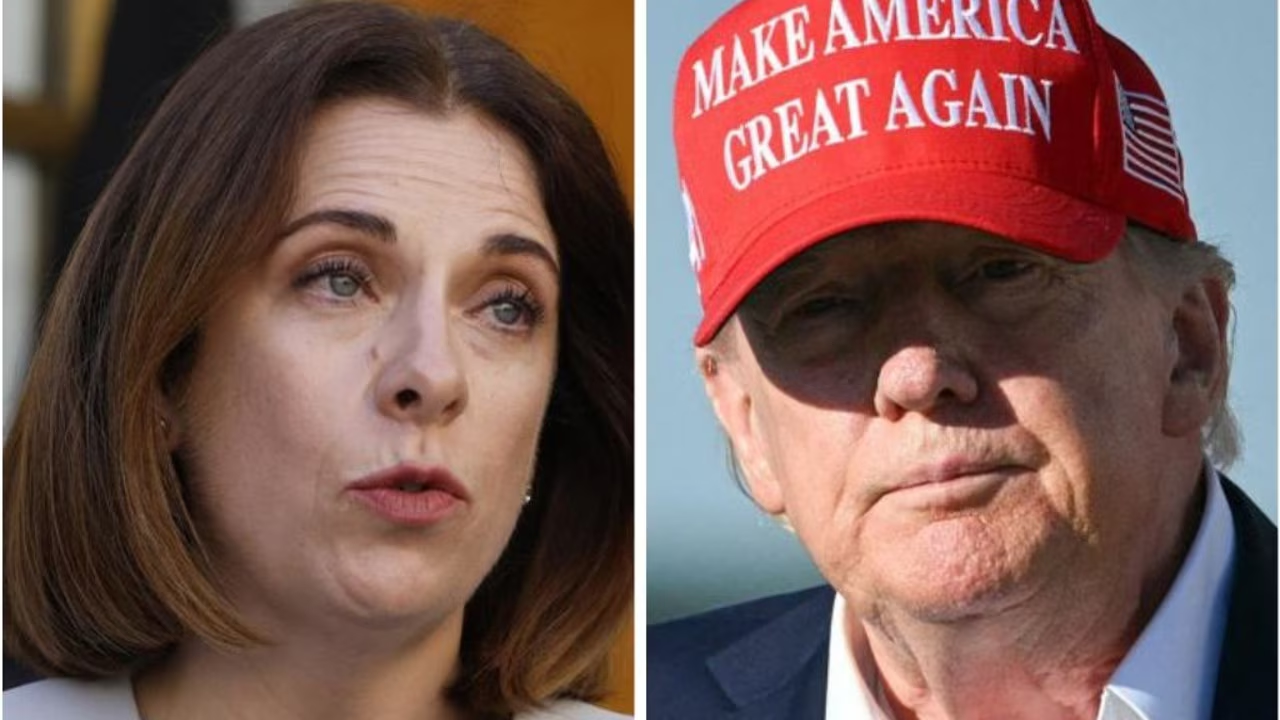
Communications Minister Anika Wells has brushed off a warning from the US about draft laws threatening hefty fines for platforms that fail to protect Australians online.Labor’s digital duty of care would give Australians the choice to opt out of algorithms – the systems that decide what users see online.On social media, that often involves pushing emotionally or politically charged content to people to keep them scrolling longer, which radicalisation experts warn is driving extreme views.The new laws would also force digital platforms to crack down on illegal or harmful content, such as child pornography and material that encourages eating disorders.A White House spokesman told the Australian Financial Review on Wednesday (AEST) that US President Donald Trump “has unequivocally warned trading partners against imposing digital services taxes, fines, and other forms of extortion on America’s leading technology sector”.“The administration remains committed to raising these issues with our trading partners,” the spokesman said.Ms Wells dismissed the White House’s warning that the laws were being seen as an attack on the US, where most tech giants are based.“I haven’t been approached by the US Consul General on this topic in my time as minister for communications,” she told News24.Asked whether Australia was risking higher tariffs, Ms Wells said she had not been asked to participate in talks and the issue had not been “raised with me”.Ms Wells said the reforms were “a longstanding piece of work” and reiterated that Australia was “a sovereign nation”. “We have the right to defend Australian parents and kids, and we’ll do that,” she said.Earlier, Anthony Albanese downplayed any US concerns while unveiling the proposal.“Look, we’re a sovereign nation, we decide our policies based upon the Australian national interest,” Mr Albanese told reporters on Tuesday.“I as prime minister will do that regardless of what the issue is.“But my relationship with the US President is indeed very good and I look forward to seeing President Trump in New York in a couple of weeks’ time.”Mr Albanese is expected to meet Mr Trump on the sidelines of the UN General Assembly later this month.Coalition concernsThe Coalition was quick to accuse the Albanese government of censorship, with Angus Taylor declaring himself “deeply sceptical” at the weekend.The Opposition Leader’s deputy Jane Hume took a softer line on Wednesday when asked about the US response.“Let’s start by saying that I think we can all agree that the big tech companies’ algorithms do pose a danger,” she told News24.“They are addictive. They prey on the vulnerable – that’s the business model of the tech companies, of the social media companies, and there should be an opportunity to have some control over that.“But the control should sit with the individual, not necessarily with the government.”Senator Hume said the opposition was most concerned by ministerial “overreach”.“The idea that a minister, or indeed the eSafety commissioner, can make decisions about what is and is not an online harm for the rest of the country without putting that in legislation is a massive overreach and does threaten free speech in this country,” she said.But both Mr Albanese and Communications Minister Anika Wells have rejected the Coalition’s claims, insisting the laws are “about giving people control themselves over what they see”.Speaking alongside Mr Albanese on Tuesday, Ms Wells said she could “emphatically rule out” that political statements or commentary would be affected.Ms Wells has ruled out political statements or commentary being affected by the new rules. She said the Digital Duty of Care impacted “just illegal things online”, including crimes such as child grooming, sexual violence or inciting extremism. “We’re not declaring new illegal harms here,” she told News24.“Whereas for kids, we are having a lower threshold about psychosocial harms, and there’s six of those that we’ve put in exposure draft. “Things like misogynistic content, eating disorder content, (and) content that’s likely to cause a child serious distress; for example, an AI chatbot teaching a child how to kill themselves.”The proposal is similar to laws in the UK and EU.
‘We have the right’: Response to US warning
Communications Minister Anika Wells has brushed off a warning from the US about draft laws threatening hefty fines for platforms that fail to protect Australians online.
661 words~3 min read