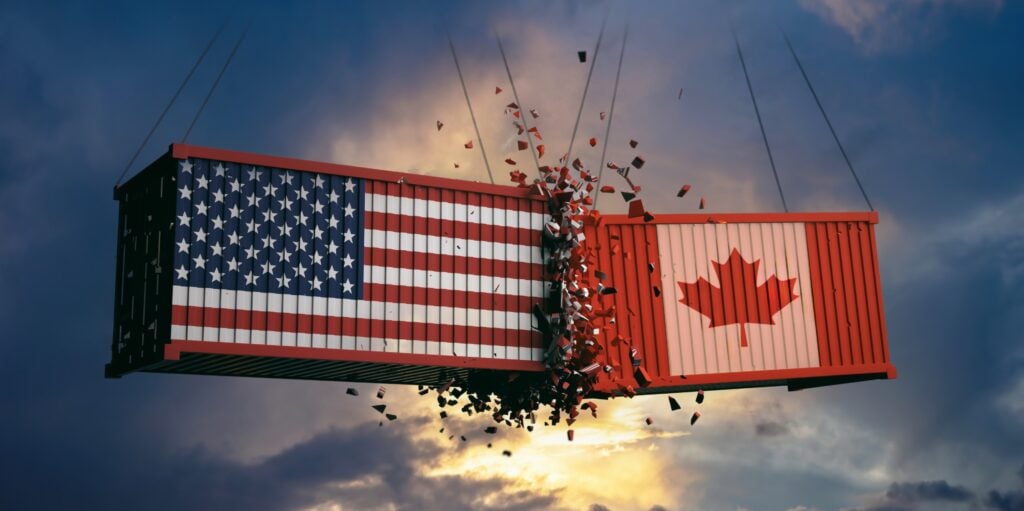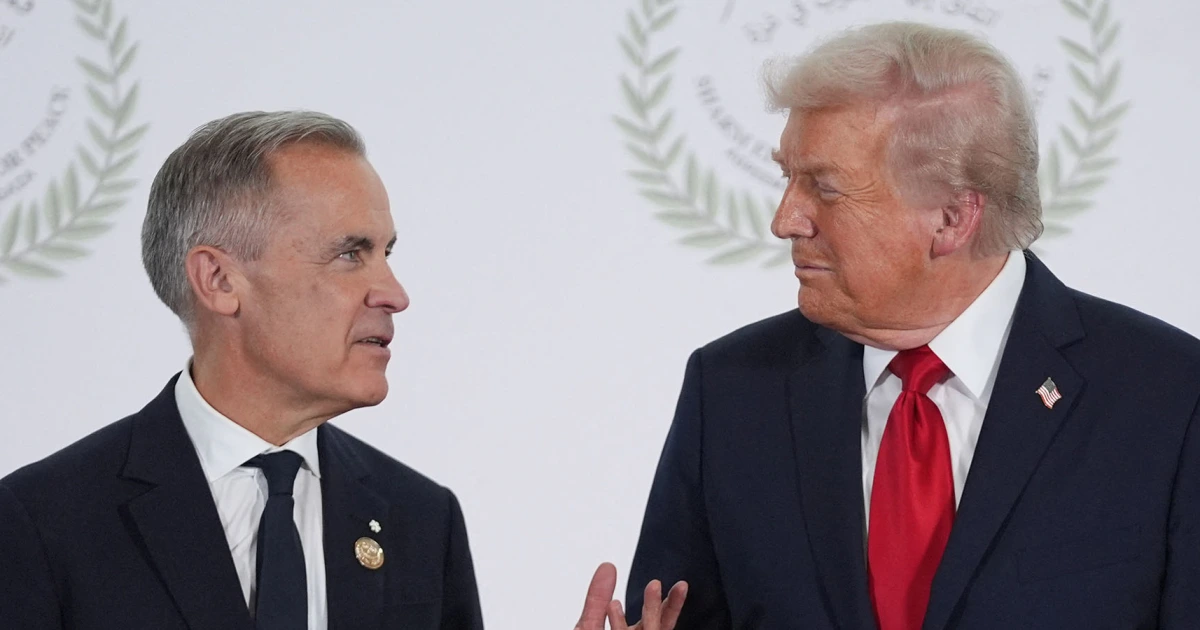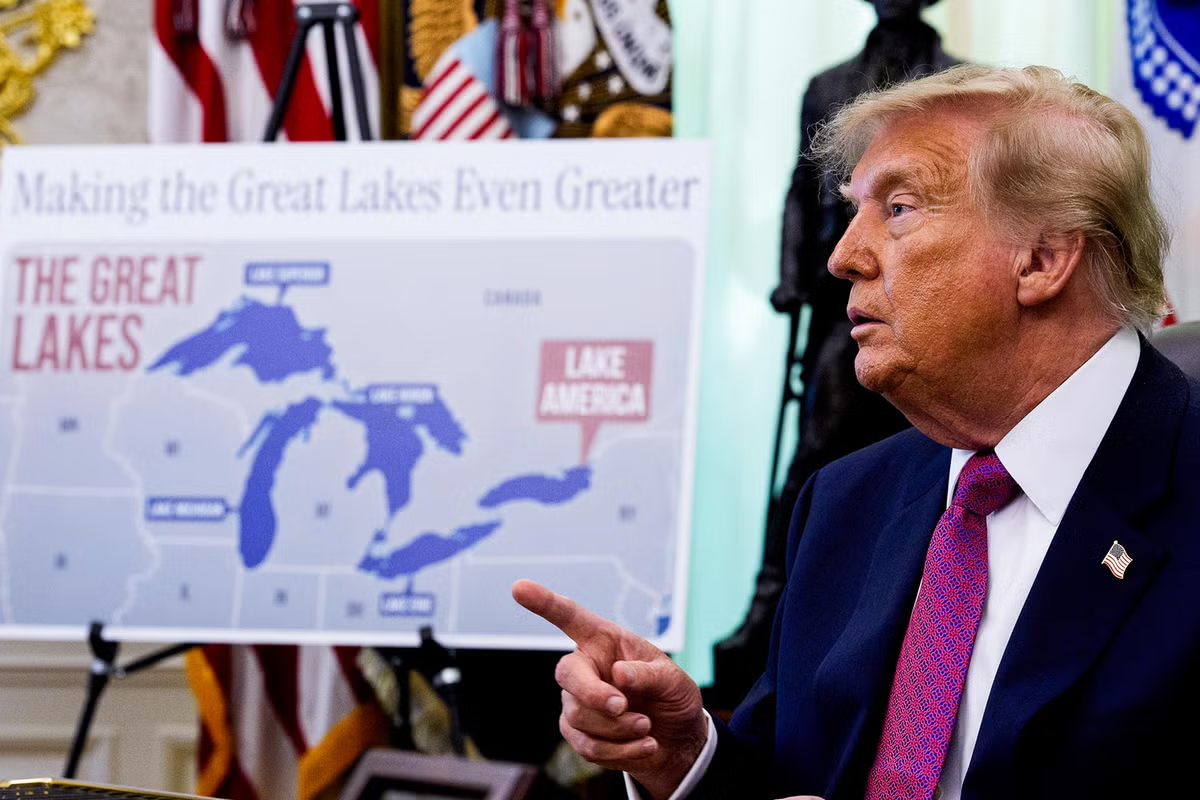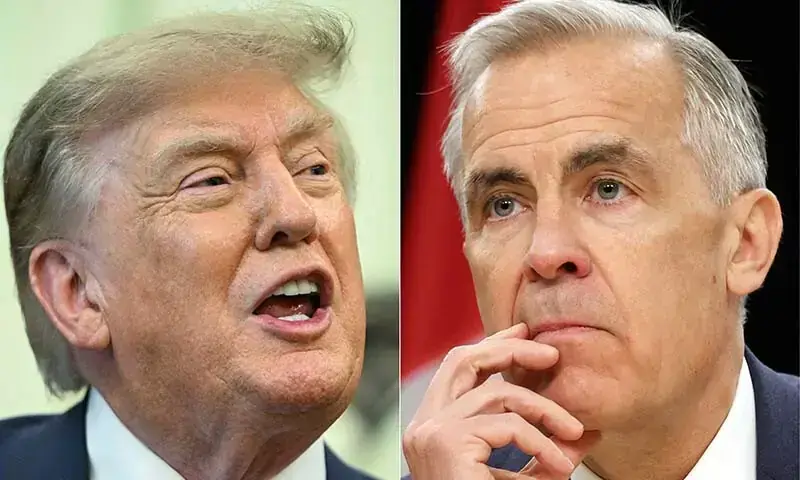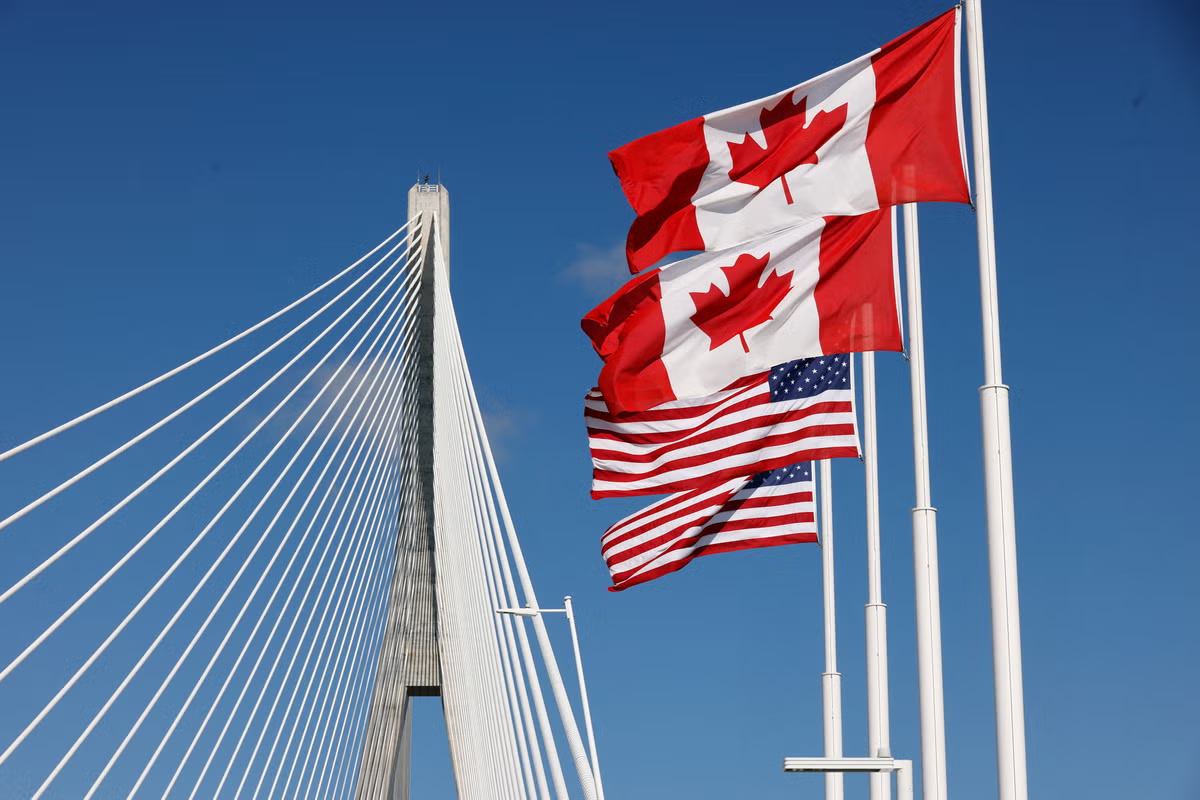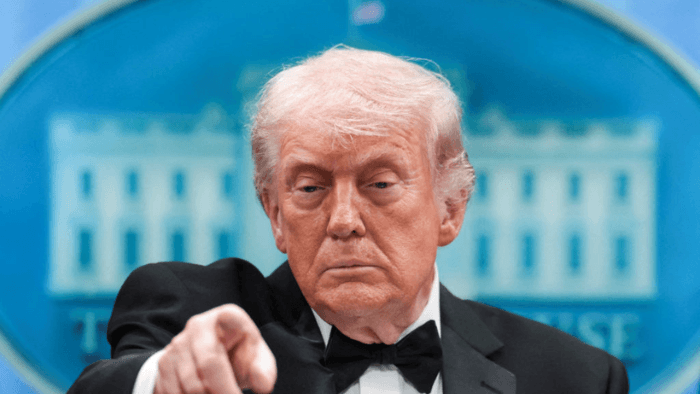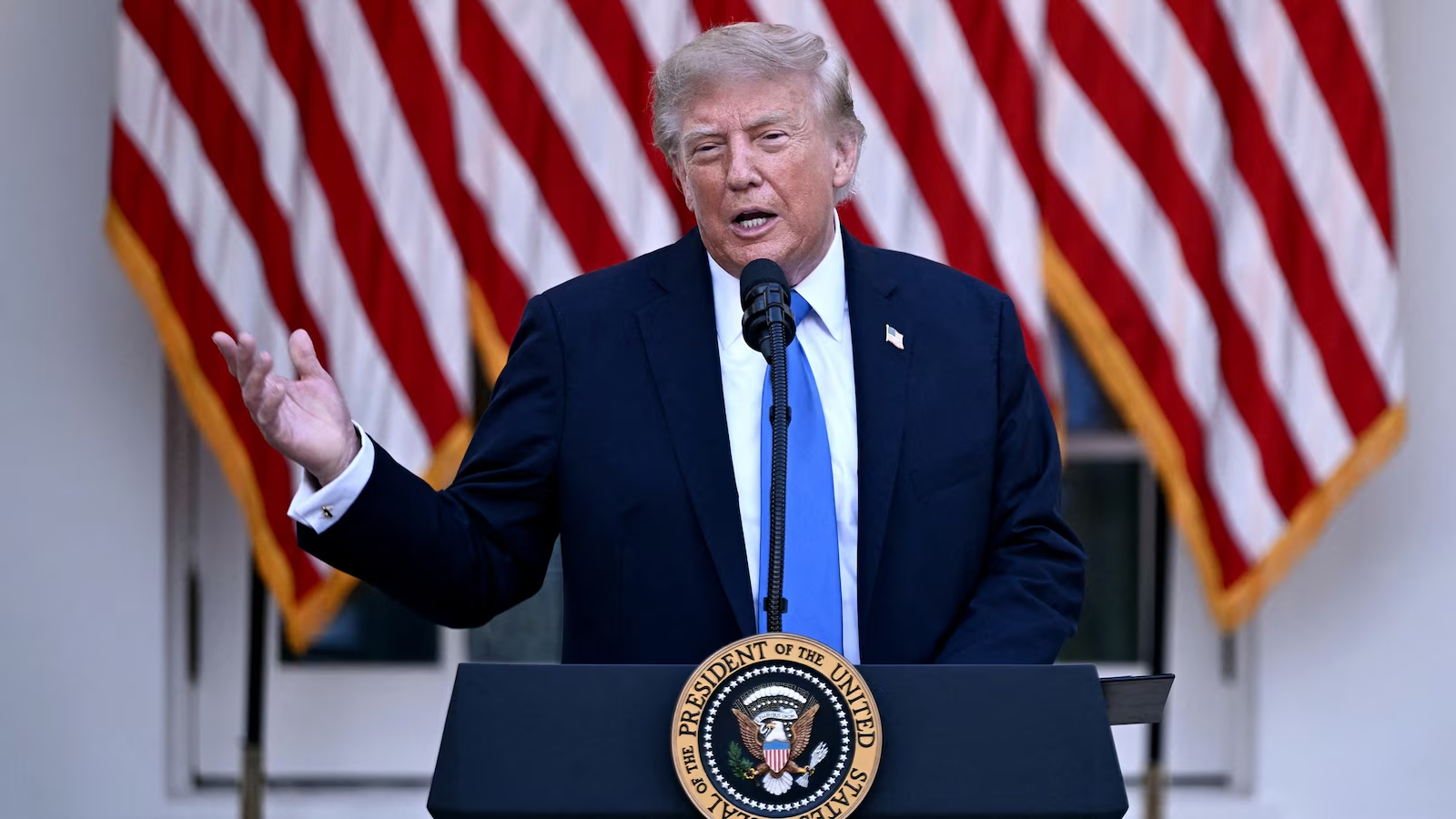
PoliticsU.S. President Donald Trump is banning the import of Canadian alcohol, motorcycles and various other products into the U.S. as of Sept. 29. This latest move in an escalating trade war between Canada and the U.S. comes after Canadian retaliatory tariffs came into force on Tuesday.Canadian retaliatory tariffs came into force earlier TuesdayDarren Major · CBC News · Posted: Sep 08, 2026 7:31 PM EDT | Last Updated: 11 hours agoListen to this articleEstimated 4 minutesThe audio version of this article is generated by AI-based technology. Mispronunciations can occur. We are working with our partners to continually review and improve the results.Trump hits Canada with new tariffs and product import bans12 hours ago|Duration 4:34U.S. President Donald Trump hit back at Canada's counter-tariffs with stiff new tariffs on billions of dollars in some products, and outright bans on others, including alcohol.U.S. President Donald Trump is banning the import of Canadian alcohol, motorcycles and various other products into the U.S.Trump signed five proclamations on Tuesday night, which will ban those Canadian imports as of Sept. 29, and slap 50 per cent tariffs on a series of other products starting next week.Whey products and molasses are also included in the new ban, while certain dairy products, paper and wood products, aluminum products, furniture and mattresses will be subject to 50 per cent levies.This is the latest move in an escalating trade war between Canada and the U.S. and comes after Canadian retaliatory tariffs, promised after trade talks fell apart last month, came into force on Tuesday.U.S. to block import of Canadian motorcycles, most alcohol in retaliation against counter-tariffsA senior Trump administration official told reporters on background that Washington opted for outright bans instead of tariffs because some Canadian provinces banned the sale of American alcohol in provincially run stores."These are things that we are doing in order to level the playing field, defend American production and take action against one of the only countries on the planet to retaliate against the United States," the official said."Canada set this precedent of banning things."The official said that they estimate the import ban would impact "single-digit billions" of dollars worth of Canadian goods.WATCH | Former ambassador to U.S. Hillman 'struck' by untenability of deal:Former ambassador to U.S. Hillman was 'struck' by untenability of trade dealSeptember 8|Duration 12:50Prime Minister Mark Carney is bracing the Canadian public for impact as counter-tariffs hit U.S. goods overnight. Former Canadian ambassador to the United States, Kirsten Hillman, who held the office under both Trump administrations, joins Power & Politics to discuss the latest retaliation.Trump to bar Canada from purchasing contractsTrump is using Section 338 of the U.S. Tariff Act, or the Smoot-Hawley Act, to implement the import bans. The same section was used to tariff a swath of Canadian imports last month, on top of sectoral tariffs that have been in place for over a year. The proclamations say the U.S. will also remove tariffs from a series of products, including salt, toilet paper, refined lead and fishing rods.Earlier, Trump moved to bar Canadian-made products from eligibility for certain U.S. government purchasing contracts.In a post to his Truth Social platform on Tuesday afternoon, Trump said he is directing the General Services Administration — the independent agency that oversees federal government procurement — to remove Canadian-origin products from its "multiple award schedules."While the General Services Administration's preferential purchase program accounts for roughly $50 billion US worth of procurement per year, only 58 Canadian companies were granted contracts through the program in 2024-25, the most recent fiscal year with details available, according to information extracted from a GSA database by CBC News.WATCH | Can the U.S. and Canada still negotiate?:Are there still opportunities to negotiate after latest U.S. trade war move? | Hanomansing TonightSeptember 8|Duration 4:08The Trump administration's new bans on Canadian imports, including booze and motorcycles, are set to take effect on Sept. 29. As the tit-for-tat trade war escalates, former U.S. trade official Ryan Majerus discusses if that deadline creates a window for potential negotiations between Canada and the U.S. LeBlanc calls U.S. response 'unjustified' Canada-U.S. Trade Minister Dominic LeBlanc said in a statement on social media Tuesday night that the government is assessing the latest moves."Our first priority remains on protecting and supporting Canadian workers, farmers, families, and businesses from these unjustified actions," he wrote, adding that he is in contact with U.S. Trade Representative Jamieson Greer."When the U.S. is ready to engage, our government will work in good faith and constructively towards a more secure mutually beneficial trading relationship that fully respects Canadian sovereignty," LeBlanc said.Prime Minister Mark Carney released a video Tuesday morning warning Canadians that the country's pivot away from the United States will come at a cost — but insists the alternative would be far worse.The prime minister reiterated Canada's plan to respond to the U.S. trade war by striking new trade deals with other countries to become less reliant on the U.S."We have everything we need to pivot and prosper," Carney said. "That pivot will come at a cost. There's always a cost to action. But it doesn't come close to the cost of standing still."Canadian and American negotiators were working toward a trade agreement that would have given Canada some tariff relief in key sectors. But the Carney government ultimately decided to walk away, with the prime minister calling what the U.S. was offering "uneconomic."WATCH | Carney releases video saying U.S. wanted 'dependency' in too many areas:Carney releases video saying U.S. wanted 'dependency' in too many areasSeptember 8|Duration 1:48In an excerpt from a 15-minute explanatory video released by Prime Minister Mark Carney's office on Tuesday, Carney says U.S. trade negotiators wanted Canada 'to become even more reliant on them, not less.'ABOUT THE AUTHORDarren Major is a senior writer for CBC's parliamentary bureau in Ottawa. He previously worked as a digital reporter for CBC Ottawa and a producer for CBC's Power & Politics. He holds a master's degree in journalism and a bachelor's degree in public affairs and policy management, both from Carleton University. He also holds a master's degree in arts from Queen's University. He can be reached at darren.major@cbc.ca.With files from The Canadian Press
Trump banning import of Canadian booze, motorcycles, other goods into U.S. | CBC News
U.S. President Donald Trump is banning the import of Canadian alcohol, motorcycles and various other products into the U.S. as of Sept. 29. This latest move in an escalating trade war between Canada and the U.S. comes after Canadian retaliatory tariffs came into force on Tuesday.
1,021 words~5 min read