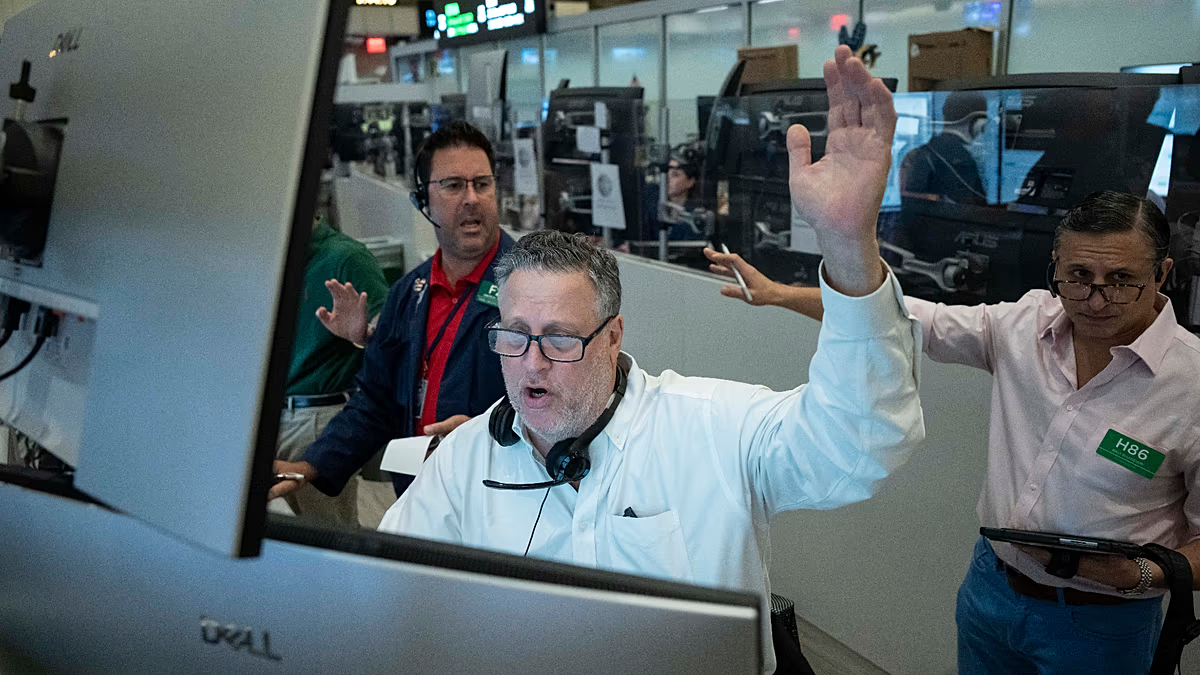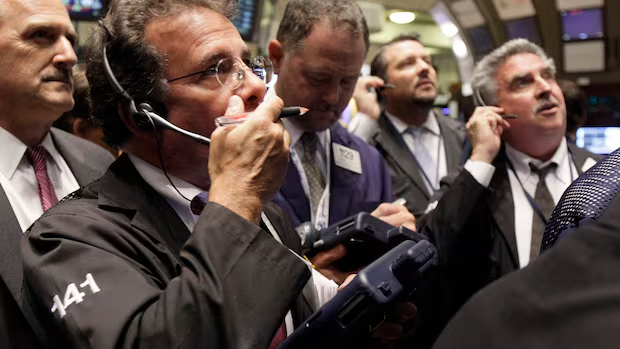
BusinessThe bond market is experiencing a steep, global sell-off, creating waves for consumers and investors alike. Here's what you need to know about how the bond market can affect you.Canadians can expect higher mortgage rates, stronger returns on GICsJeff Lagerquist · CBC News · Posted: Sep 04, 2026 4:00 AM EDT | Last Updated: September 4Listen to this articleEstimated 6 minutesThe audio version of this article is generated by AI-based technology. Mispronunciations can occur. We are working with our partners to continually review and improve the results.Traders gather on the floor of the New York Stock Exchange in this 2010 file photo. The bond market is experiencing a steep, global sell-off. (Richard Drew/The Associated Press)With global bond yields surging to multi-decade highs, a previously mundane corner of the financial world is now a hot topic on Wall Street. For the average Canadian, it means higher borrowing costs for some products, such as mortgages and auto loans, but also stronger returns on other products, such as other guaranteed investment certificates (GICs) and money market funds.Let's start with the basics. When you buy a bond, you're effectively lending money for a predetermined amount of time to the issuer. That could be the federal government, provinces, municipalities or a private company. Investors are typically paid interest until the maturity date, when they get the face value of the bond back.So, what's a bond yield? It's the annual return an investor earns from holding a bond, expressed as a percentage. After bonds are issued, they can be traded on the open market, causing their prices to shift. When bond prices drop, yields rise. This is because investors get the same interest payments for a lower buy-in price.Until recently, the global bond market was pretty sleepy. That's because central bankers around the world kept interest rates at near-zero for more than a decade following the 2008 financial crisis. Now, a growing number of investors see rate hikes on the horizon as central banks look to tamp down sticky inflation. When a central bank raises interest rates, newly issued bonds offer higher payouts, making existing lower-paying bonds less valuable.Higher inflation puts pressure on central banksRight now, the bond market is experiencing a steep, global sell-off. From the United States, to Germany, Japan and Canada, yields have jumped to multi-year or even multi-decade highs."What's going on there? Well, when you see a substantial movement, usually it's because there is more than one thing happening at once," Bank of Canada Governor Tiff Macklem said on Wednesday, after the central bank's latest interest rate decision was announced.Inflation fears and concerns about ballooning government debt are feeding expectations for the Bank of Canada and its global peers to raise their trend-setting interest rates. "Central banks' tolerance for higher inflation is limited," said Macklem. "That is causing the market to build in the possibility of future interest rate hikes."According to the latest Statistics Canada data, gas prices were a key driver of higher inflation in July. On Wednesday, the Bank of Canada said global oil prices are persistently high, with no end in sight for the U.S.-led war with Iran, which has disrupted seaborne crude traffic in the region. U.S. benchmark oil prices have soared nearly 60 per cent year-to-date. Inflation risks rise with higher fuel costs and new U.S. tariffs, Bank of Canada governor warns'Measured confidence': RBC, TD Bank, CIBC share optimistic outlook for Canada's economyAt the same time, the bank sees the Canada-U.S. trade war pushing up costs for businesses, which could feed into consumer prices over time. Macklem noted the AI infrastructure buildout is stoking demand for new corporate bond issuance, lowering prices for previously issued bonds. "All those things are tending to work in the same direction to boost global bond yields," Macklem said.WATCH | The expected inflationary impact of counter-tariffs:Inflationary impact of counter-tariffs expected to be 'relatively modest': Bank of Canada governorSeptember 2|Duration 2:06Bank of Canada governor Tiff Macklem says the central bank will update its estimates, but as of now officials assess the 'inflationary impact of those counter-tariffs is fairly modest,' adding that the situation in the Middle East remains the 'bigger issue' for inflation.Canada's 10-year government bond yield hit a two-year high on Wednesday, after the Bank of Canada signalled inflation risks are rising. Because Canadian banks can invest risk-free with the government, government bond yields set the floor for all other lending. Fixed-rate mortgages, auto loans and other forms of credit are linked to five-year and 10-year government bonds, meaning the higher the yields for those bonds are, the higher the banks set their interest rates for those loans. For those looking to invest their savings, rising bond yields force banks to raise their GIC rates to stay competitive, boosting guaranteed returns.WATCH | Why U.S. Treasury Secretary Scott Bessent is setting off alarm bells for many investors and analysts:Will Bessent's bond market intervention make U.S. inflation worse? | About ThatAugust 28|Duration 4:38U.S. Treasury Secretary Scott Bessent's recent intervention in the bond market is setting off alarm bells for many investors and analysts. Avneet Dhillon breaks down concerns that Bessent’s attempt to calm the markets and decrease the cost of borrowing may actually worsen inflation.
Here's what soaring bond yields mean for Canadian consumers | CBC News
The bond market is experiencing a steep, global sell-off, creating waves for consumers and investors alike. Here's what you need to know about how the bond market can affect you.
1,236 words~6 min read