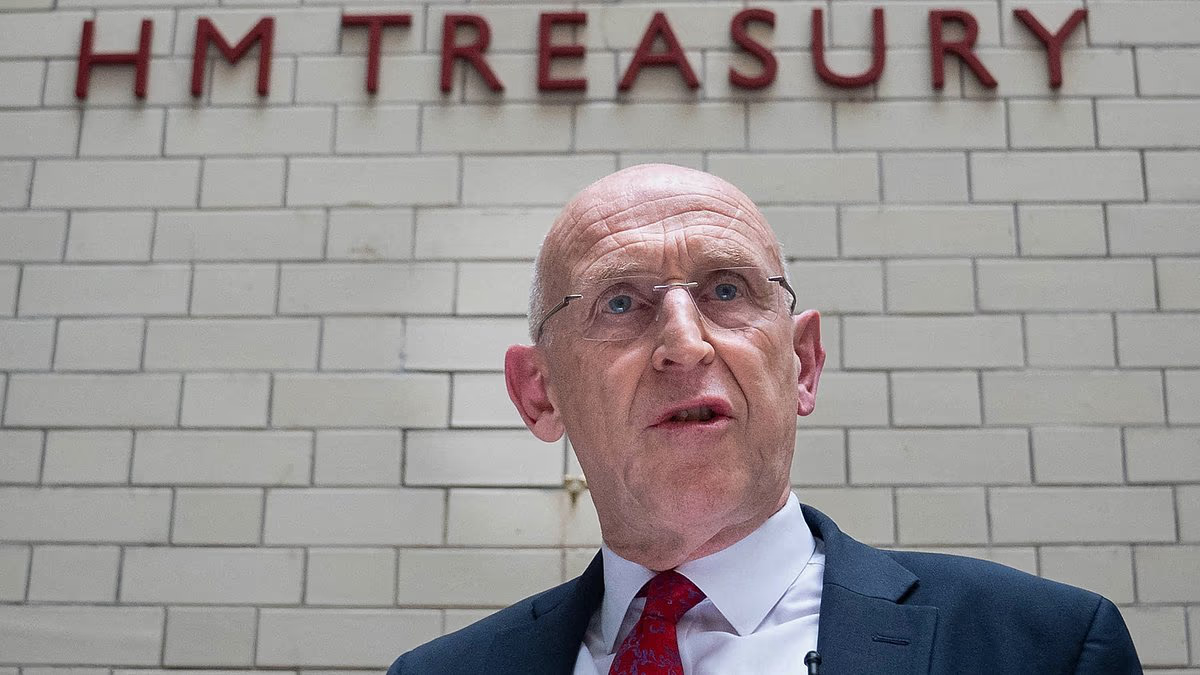
The government bond market is freaking out again, so should you be worried?On the surface the answer is ‘no’. The periodic throwing of toys out of the bond market pram is usually a storm that long-term thinkers can ignore.An inflation panic or other wobble sees yields spike as investors demand a higher interest rate return for buying countries’ debt.The pendulum swings too far, then things calm down and rates ease back.In the long-run, that brief spot of turmoil makes little difference to our personal finances.The main exceptions being if you are unlucky enough to need a mortgage as the storm rages – such as those caught out by the aftermath of the Liz Truss mini-Budget.Although you could also be lucky enough to lock in a temporarily boosted fixed savings rate or better pension annuity income. Perhaps you could even invest directly in gilts, as UK government bonds are known, and snaffle higher rates. But take a deeper look and you’ll find we should all be worried about what’s going on with government bonds because this is making our lives worse in terms of public services and tax. It is also leading to bad government policy, where we make decisions based on managing our debt rather than what's right. And in case you hadn't noticed as this blowout hits, there is a crucial Budget fast approaching. Tough task: New Chancellor John Healey must balance the need to spend more on defence, try to cut the welfare bill, deal with sky-high debt interest costs, and deliver growthThe UK’s government borrowing costs are now at the highest level for 28 years on some benchmark measures.The yield on 30-year gilts rose as high as 5.94 per cent yesterday, the highest level since 1998.The yield on 10-year gilts reached 5.23 per cent, a level that has only been surpassed briefly on three occasions since 1998.It’s tempting to shrug off those numbers as mere episodes in a long-running financial soap opera, but they matter because the UK is borrowing a lot of money each year and spending a huge amount on debt interest.A fortnight ago, a report from the Debt Management Office, which is responsible for issuing UK debt, revealed the UK had £303.7billion of planned gilt sales in the last financial year.This was double the amount in 2016 and the second highest level on record. The DMO said it was exceeded only by its need to finance the UK response to the Covid-19 pandemic in 2020 to 2021.In the last financial year the UK spent around £110billion on debt interest, equivalent to about 3.6 per cent of GDP and 8 per cent of total public spending. The rate the UK must pay investors to buy debt has risen sharply (red line) at the same time as the amount borrowed each year (grey bars) has climbed and was only outstripped in Covid
The bond market blowout has come at the worst possible time for the UK
We should all be worried about what's going on with government bonds, because this is making our lives worse in terms of public services and tax.
979 words~4 min read