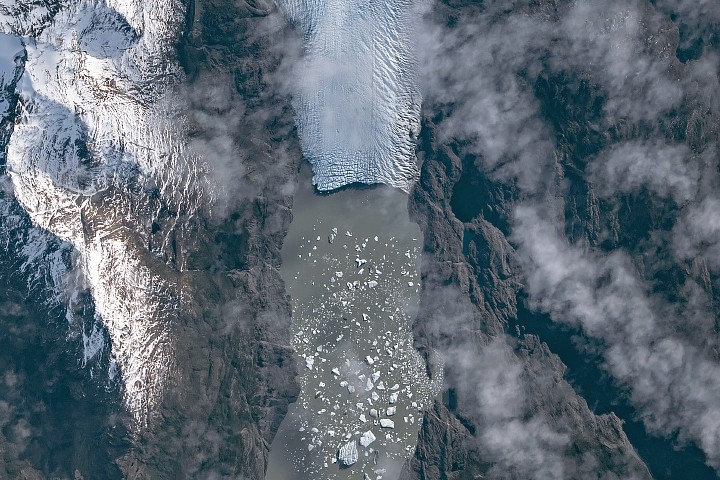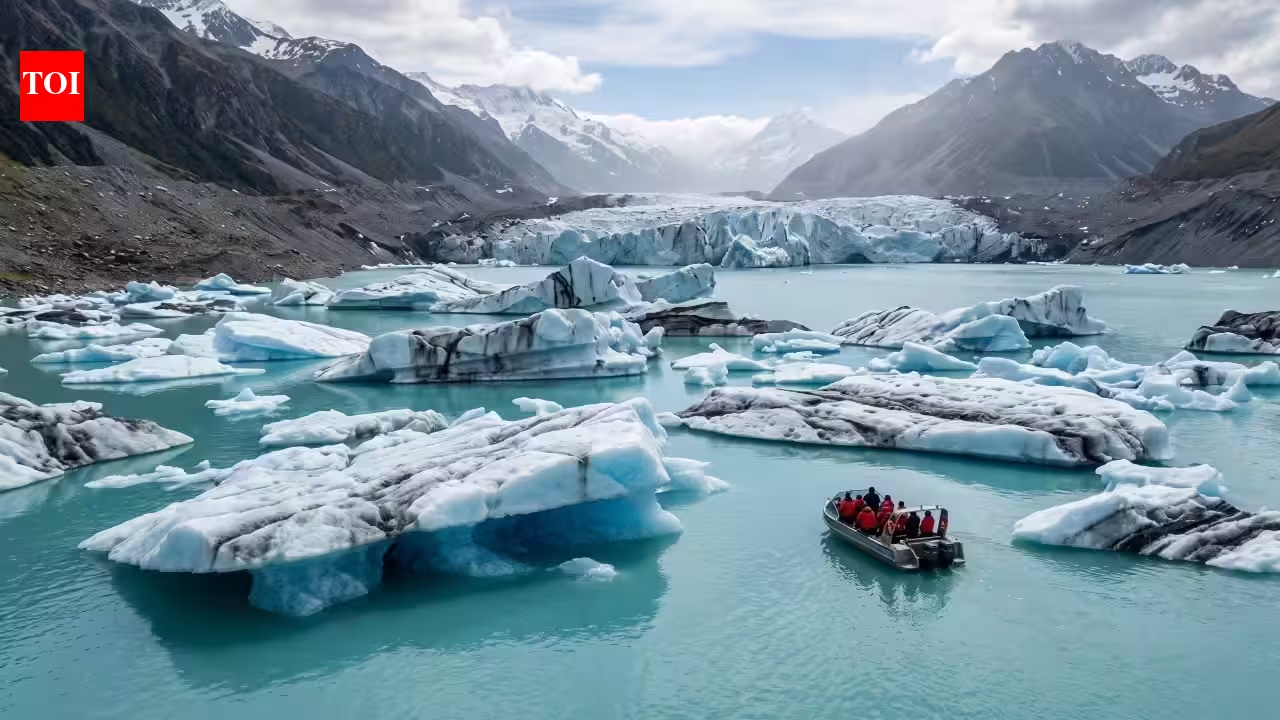
An AI-generated representative image showing large icebergs filling Tasman Lake after a major calving event from New Zealand's Tasman Glacier in 2010. Credits - Google GeminiThere are over three thousand glaciers in the Southern Alps of the South Island of New Zealand, but none are as well-known as the Tasman Glacier, which is New Zealand’s longest glacier at about 27 kilometres. Nestled within Aoraki/Mount Cook National Park, it has grown to be one of the most popular natural landmarks in the area, partly due to the eye-catching turquoise lake that has developed at its base during the previous several decades.Tasman Lake wasn't there before. In the early 1970s the end of the glacier met dry land, but after decades of steady melting, meltwater has pooled against the front of the ice and the lake has since grown to be about seven km long. NIWA reports that the Tasman Glacier has retreated by an average of about 180 metres a year since 1990.Ice lifted from beneath before it brokeThe August 2010 event was exceptional both in its magnitude and in the way it unfolded. On the ground at the time, tour operators reported that a great deal of rain in the days before had resulted in a rapid increase in water levels in Tasman Lake that had pushed a giant part of the submerged ice front of the glacier up by twenty to forty metres over the full six hundred metre width of the terminal face. The increasing water created buoyancy and pushed up a vast chunk of previously submerged ice, which eventually broke free.Denis Callesen, general manager of tourism for Aoraki Mount Cook Alpine Village, said the terminal face had risen dramatically after heavy rain and that a major calving was imminent, according to the New Zealand Herald. On August 18, a smaller section of the uplifted ice calved away; days later, the rest broke free in what was described at the time as the biggest calving in the lake’s 35-year history.An iceberg field appearsInstantly it was evident how huge what came out was. There were at least twenty significant icebergs in the lake, each at least fifty metres by fifty metres above the waterline. Callesen said the largest berg was about 300 metres by 200 metres and 40 metres high, with only about 10 per cent visible above the waterline. This concealed mass is a signature of glacier calving into deep lakes, rather than the ocean, and reveals how density variations between ice and water keep much of a berg’s structure hidden beneath the water’s surface. Scientific analysis of the Tasman Glacier’s terminus was published in the 2011 study ‘Twenty-First Century Calving Retreat of Tasman Glacier, Southern Alps, New Zealand’ in Arctic, Antarctic, and Alpine Research. The study identified a subaqueous ice ramp extending more than 130 metres from the terminal ice cliff into the lake, illustrating the complex geometry beneath the water.An AI-generated representative image shows how only part of a large iceberg was visible above Tasman Lake after it calved from the glacier, while much of its mass remained submerged beneath the turquoise water. Credits - Google GeminiA lake reshaped by a single eventThe aftermath changed what customers may expect to see for the businesses offering boat trips on the lake. Glacier Explorers announced that it would resume operations on September 3, about a month ahead of schedule, so visitors could see the newly formed icebergs. Callesen estimated the ice would offer superb views for at least two more seasons until melting reduced the bergs to nothing, transforming what had once been a regular glacial lake into a temporary field of drifting ice sculptures.However, such large calving events are not unprecedented in the glacier’s recent history, with a separate calving of a similar magnitude occurring only months later,A separate major calving followed the magnitude 6.3 Christchurch earthquake on February 22, 2011; RNZ reported that about 30 million tonnes of ice broke away from the glacier.The 2010 calving was part of a broader retreat that researchers had already documented as the Tasman Glacier lost ice and Tasman Lake expanded.
A huge underwater break sent millions of tonnes of ice from beneath New Zealand’s Tasman Glacier; what surfaced turned its turquoise lake into an iceberg field
There are over three thousand glaciers in the Southern Alps of the South Island of New Zealand, but none are as well-known as the Tasman Glacier, which is New Zealand’s longest glacier at about 27 kilometres. Nestled within Aoraki/Mount Cook National Park, it has grown to be one of the most popular natural landmarks in the area, partly due to the eye-catching turquoise lake that has developed at its base during the previous several decades.
681 words~3 min read