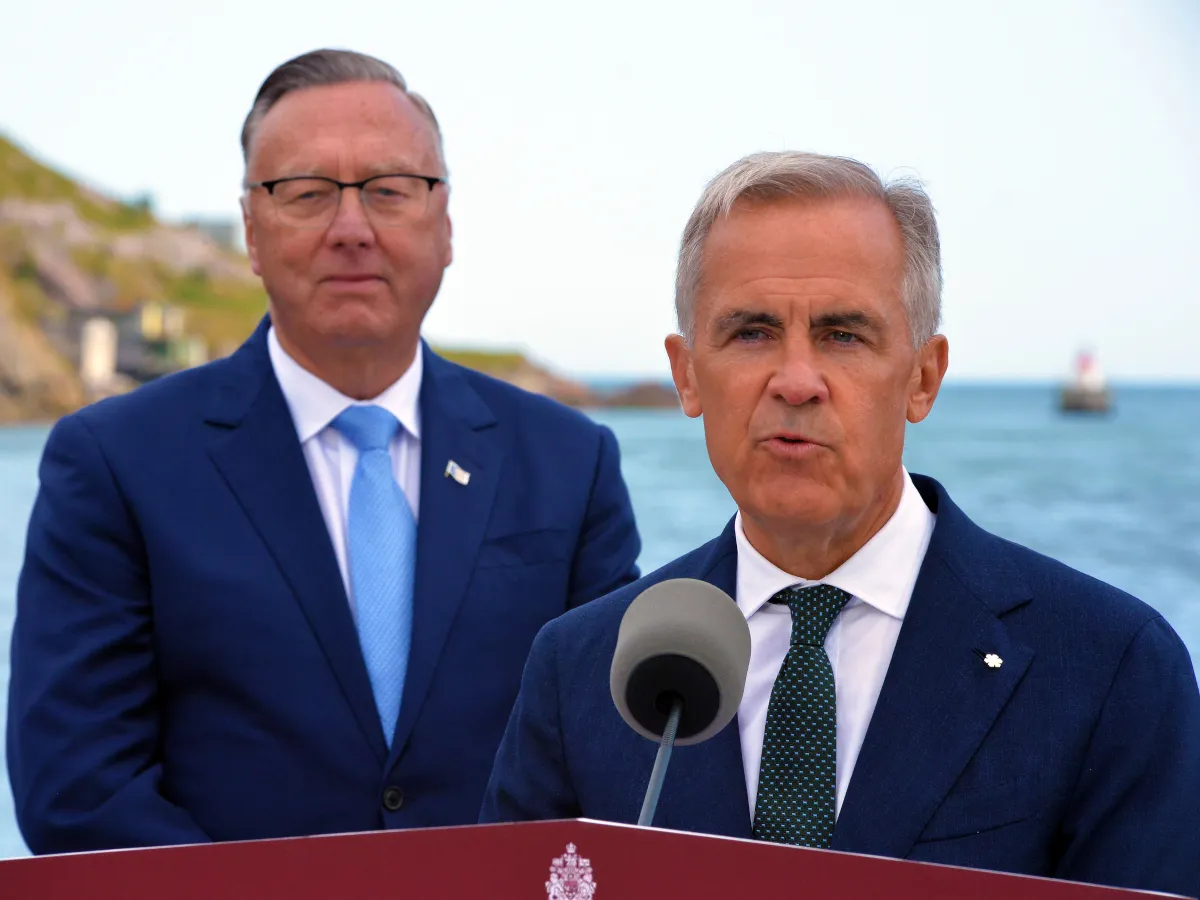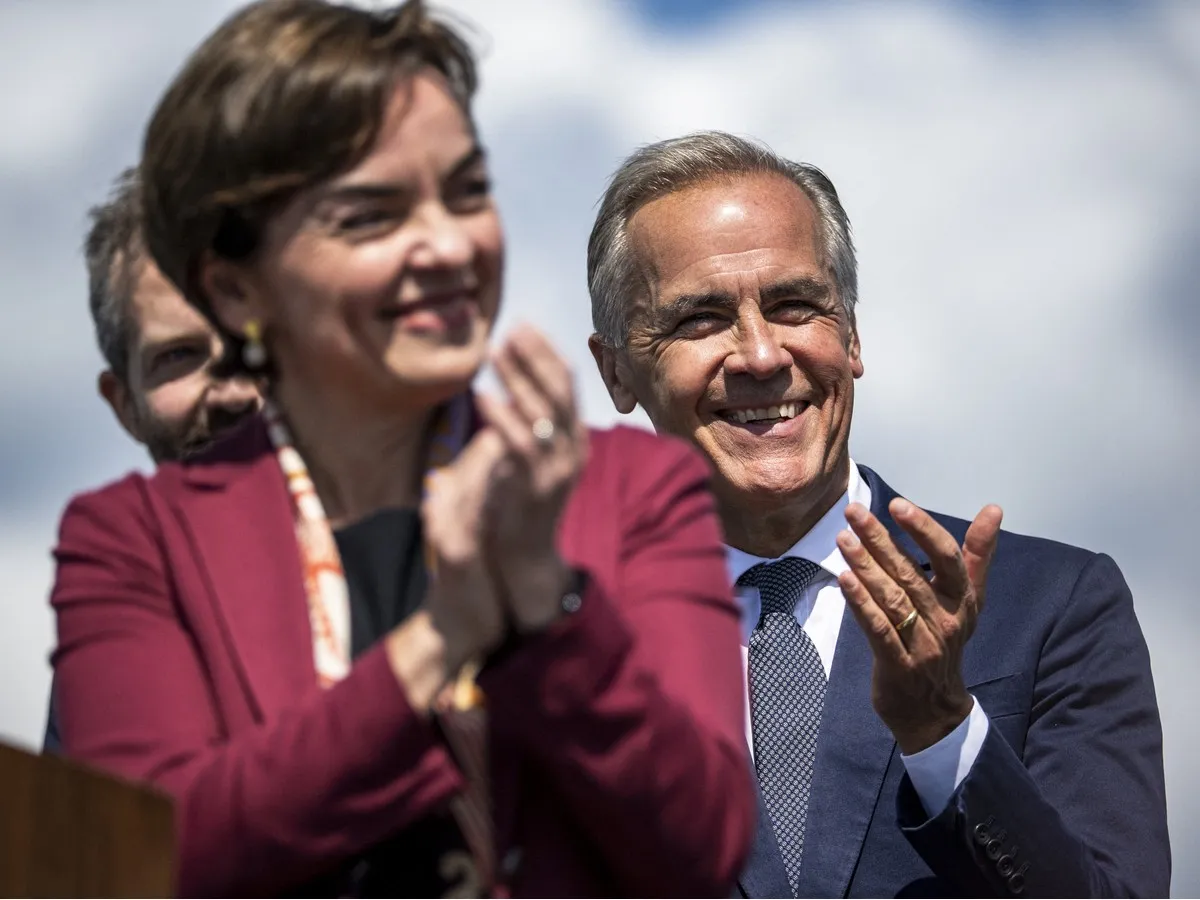
Skip to Content Subscribe My Account Manage My Subscriptions FAQ Newsletters Canada Canadian True Crime Canadian Politics Health World Israel & Middle East Financial Post NP Comment Longreads Puzzmo Diversions Comics NP News Quiz New York Times Crossword Horoscopes Modern Life Eating & Drinking Style Sponsored Play for Ontario Travel Travel Canada Travel USA Travel International Cruises Travel Essentials Culture Books Celebrity Movies Music Theatre Television Business Essentials Advice Lives Told Tails Told Shopping Buy Canadian Home Living Outdoor Living Kitchen & Dining Tech Style & Beauty Personal Care Entertainment & Hobbies Gift Guide Travel Guide Deals Savings National Post Store More Sports Hockey Baseball Basketball Football Soccer Golf Tennis Driving Vehicle Research Reviews News Gear Guide Obituaries Place an Obituary Place an In Memoriam Classifieds Place an Ad Celebrations Working Business Ads Archives Healthing Epaper Manage Print Subscription Profile Settings My Subscriptions My Offers Newsletters Customer Service FAQ Newsletters Canada World Financial Post NP Comment Longreads Puzzmo Diversions Modern Life Shopping Epaper Manage Print Subscription HomeNP CommentTerry Newman: Carney's 'war' is good for political incumbents, but bad for CanadiansThe reasons why the Liberals walked away from trade with the U.S. and the larger deal are far too mysterious for Canadians to support this "war"Last updated 2 hours ago Quebec's Prime Minister Christine Frechette (L) applauds during a press conference with Canadian Prime Minister Mark Carney at the Davie Shipyard in Levis, Quebec, Canada on August 24, 2026. Photo by ANDREJ IVANOV /AFP via Getty ImagesEnjoy the latest local, national and international news.Exclusive articles by Conrad Black, Barbara Kay and others. Plus, special edition NP Platformed and First Reading newsletters and virtual events.Unlimited online access to National Post.National Post ePaper, an electronic replica of the print edition to view on any device, share and comment on.Daily puzzles including the New York Times Crossword.Support local journalism.Enjoy the latest local, national and international news.Exclusive articles by Conrad Black, Barbara Kay and others. Plus, special edition NP Platformed and First Reading newsletters and virtual events.Unlimited online access to National Post.National Post ePaper, an electronic replica of the print edition to view on any device, share and comment on.Daily puzzles including the New York Times Crossword.Support local journalism.Create an account or sign in to continue with your reading experience.Access articles from across Canada with one account.Share your thoughts and join the conversation in the comments.Enjoy additional articles per month.Get email updates from your favourite authors.Create an account or sign in to continue with your reading experience.Access articles from across Canada with one accountShare your thoughts and join the conversation in the commentsEnjoy additional articles per monthGet email updates from your favourite authorsSign In or Create an AccountorThe National Post newsletter that doesn’t hold back, giving readers the unvarnished truth on media, politics and culture.By signing up, you consent to receive the above newsletter from Postmedia Network Inc.A welcome email is on its way. If you don't see it, please check your junk folder.The next issue of Right? will soon be in your inbox.We encountered an issue signing you up. Please try againU.S. President Donald Trump announces tariffs on Canada will take effect on Feb. 4, including 25 per cent on almost all goods, 10 per cent on energy resources. Canada announced that it would respond with retaliatory tariffs in stages — $30 billion on U.S. goods to begin on Feb. 4 and a round of duties on $125 billion of U.S. goods 21 days later. Carney and Trump met again, this time at the G7 in Kananaskis, Alta. A reporter asked Trump what, from his perspective, was holding up a deal with Canada. Trump replied, “It’s not so much holding up. I think we have different concepts. I have a tariff concept, and Mark has a different concept, which is something that some people like. But we’re going to see if we can get to the bottom of it today. I’m a tariff person. I’ve always been a tariff — it’s simple, it’s easy, it’s precise and it just goes very quickly. And I think Mark has a — a more complex idea, but also very good. So we’re going to look at both, and we’re going to see what we’ll — we’re going to come out with something, hopefully.” When asked whether that would take days or weeks, he replied, “It’s achievable. Both parties have to agree.” Both committed to signing a deal within 30 days.Trump told reporters that the U.S. hadn’t “really had a lot of luck with Canada,” and that it could be a country “where there’s just a tariff, not really a negotiation.”July 30, 2025Things appeared to escalate again, this time over Canada’s decision to recognize Palestine as a state. In response to this, Trump posted, “Wow! Canada has just announced that it is backing statehood for Palestine. That will make it very hard for us to make a Trade Deal with them.”July 31, 2025Trump signed an executive order raising tariffs from 25 to 35 per cent (not affecting CUSMA products) as he had previously warned if Canada did not meet the deadline.Aug. 1, 2025Canada would soon start feeling economic pain from 50 per cent tariffs applied to copper and more than double countervailing tariffs placed on softwood lumber.Aug. 21, 2025Carney and Trump spoke on the phone. This was reportedly their first publicly acknowledged contact since no deal was reached by Trump’s Aug. 1 deadline.Aug. 22, 2025Carney announced that, as of Sept. 1, the Canadian government would “now match the United States by removing all of Canada’s tariffs on U.S. goods specifically covered under CUSMA.” At the time, Trump said, “I like Carney a lot, I think he’s a good person and we had a very good talk yesterday, so I think it’ll be good.” Trump likely felt this was fairer, because with the exception of the targeted sectoral tariffs on autos, steel and aluminum, the U.S. had not tariffed goods that were part of CUSMA, as Canada had done.Canada and China were the only two countries to retaliate against tariffs.A reporter asked Carney at this time what happened to elbows up. Carney replied with another hockey metaphor that suggested he thought taking extra penalties wasn’t the right thing to do.Aug. 29, 2025The “de minimis” rule that protected low-value items from duties ended and reportedly began to hit mom and pop shops hard.Sept. 29, 2025U.S. announces it will be adding 10 per cent tariffs on all imported timber and lumber and 25 per cent duties on kitchen cabinets, bathroom vanities and upholstered furniture to begin on Oct. 14.Oct. 7, 2025Carney attended a second Oval Office meeting. Trump made it clear he was open to renegotiating or making different deals. Carney reportedly was looking for relief on tariffs in specific sectors (Section 232) on things like steel and aluminum, which were tariffed at 50 per cent. Canada-U.S. Trade Minister Dominic LeBlanc called the talks both “successful” and “positive.”Things looked hopeful. According to U.S. Ambassador to Canada Pete Hoekstra, as part of a potential deal, Carney had offered to double oil experts to the U.S. Reportedly, Keystone XL and defence were discussed, and Carney told reporters at the time that he and Trump had “identified opportunities for material progress in trade in steel, aluminium and energy.”Oct. 24-25, 2026 Trump cancelled negotiations after an Ontario anti-tariff ad featuring former U.S. president Ronald Reagan aired during two baseball games. Reportedly, talks broke down, not just because of the ad. White House spokesperson Kush Desai called the ad the “latest example of how Canadian officials would rather play games than engage with the administration,” and the director of the National Economic Council, Kevin Hassett, accused Canada of having a “lack of flexibility,” suggesting it was “leftover behaviours from the Trudeau folks.”Oct. 29, 2025Carney apologized to Trump for the ad at a dinner at the Asia Pacific Economic Cooperation forum in Gyeongju, South Korea. The Government of Canada told The Canadian Press that talks had not resumed after the apology, and that Canada was ready to pick up where they left off. Meanwhile, Ontario Premier Doug Ford was framing the ad as a victory: “We’ve achieved our goal, having reached U.S. audiences at the highest levels.”Reaching U.S. audiences might be helpful if your goal is to have an effect on an upcoming U.S. election, not secure a sensitive trade deal.Dec. 5, 2025Carney, Mexican President Claudia Sheinbaum and U.S. President Donald Trump met privately and sat together at the FIFA World Cup draw that took place at the John F. Kennedy Center in Washington, D.C. The Prime Minister’s Office said they had at least one 45-minute discussion and “agreed to keep working together on CUSMA.” Trump told reporters that all three of them were also going to discuss immigration and trade.Feb. 2, 2026U.S. Trade Representative Jamieson Greer told Fox Business that it was Canada that was maintaining barriers that were making the talks difficult: “They continue to have certain barriers. They refuse to sell U.S. wine and spirits on their shelves. There are a variety of issues that they have not addressed and they aren’t addressing, and this makes it a big challenge and an obstacle for starting real negotiations with them.”March 6Four months later, LeBlanc met Greer in Washington, D.C., to discuss the upcoming CUSMA review on July 1.March 31Greer’s office released a report outlining trade irritants with Canada, noting that Trump wanted U.S. alcohol to “immediately and permanently” return to shelves in all provinces. It also cited concerns with “Buy Canadian” policies, high tariffs on U.S. dairy and concerns about delays with aircraft validation in Canada.June 17The Canadian Press reported that Carney never had an official meeting with Trump during the G7 summit in France, but told the press he’d had seven or eight discussions with him and got him a birthday present that he liked “a lot.” But no official bilateral talks were had between the two.Meanwhile, Canada had recently agreed to reduce its tariffs on Chinese EVs from 100 to 6.1 per cent, capping vehicles annually at 49,000, while China suspended its retaliatory tariffs on Canadian agricultural goods.July 1The U.S. declined to extend CUSMA for another 16 years and opted instead for annual reviews.July 19Sheinbaum, Trump and Carney attended the World Cup final together in East Rutherford, N.J.July 20With no progress in sight, Trump announced plans to levy 50 per cent tariffs on more Canadians imports in response to what he saw as discriminatory treatment of U.S. dairy goods, cars and alcohol.This brings us up to the most recent failed negotiations.July 21Suddenly, Carney was back on the phone with Trump agreeing to intensify talks.Aug. 17Curiously, Carney told reporters at the the press conference for the Churchill Falls deal that, “The most important thing happening this week in Canada is today’s announcement,” which was interesting, seeing as we all knew U.S. trade talks were happening and no one had walked away at the point.I contacted his office to ask about the remark and other details about the deal. I never received a response.Aug. 18Before talks broke down, it looked like things were going well. On the evening of Aug. 18, Trump exuberantly declared on Truth Social that Canada and the U.S. had a “DEAL” (pending finalized documents) and that Keystone XL “may be awoken from the grave!” LeBlanc posted a picture of himself with Greer, saying they were working towards a finalized agreement.That same day, a Leger poll was released that found that a majority of Canadians polled earlier that week, when talks had resumed, said the government should draw a hard line and not make more concessions. At least one Canadian journalist echoed this sentiment.It wasn’t hard to see that Carney — with all his talk of elbows and never ever getting back together — hadn’t prepared Canadians for concessions. The anti-Americanism had reached such a fever pitch that it wouldn’t matter what deal was offered, Canadians who hadn’t seen it weren’t going to accept it, on principle.Aug. 21-22So perhaps we shouldn’t have been too surprised hear on Aug. 21 from Carney that talks had broken down. He gave a press conference in Ottawa the next day, which left everyone with more questions than answers.During it, Carney said that the U.S. would restrict Canada’s ability to make other trade deals. He told Canadians, “Building at home and diversifying trade abroad is not our Plan B. It has been our Plan A from the start.”According to the New York Times, a Canadian official said that the U.S. wanted the assurance that Canada would apply U.S. tariffs, particularly in regards to steel, to other countries now and into the future. This was, no doubt, a point of contention with the U.S.Carney is on record as governor of the Bank of England in 2019 suggesting in a speech that the global economy needed a new reserve currency to improve its functioning and posited the Chinese Renminbi as the “most likely candidate.” “Already, China is the world’s leading trading nation, overtaking the U.S. at the start of this decade,” he said.As such, it would be natural if the U.S. was suspicious of Carney’s motivations in making trade deals with China.CUSMA already limits foreign materials like steel from China in what can be considered as CUMSA-compliant products. For example, under CUSMA’s rules of origins regulations, “at least 70 per cent by value of the vehicle producer’s purchases at the corporate level in the territories of one or more of the CUSMA countries of steel and aluminum … are of originating goods,” meaning, coming from either Canada, Mexico or the United States.Unlike Carney, Greer made himself available for Canadian interviews (in English and French) and was clear and direct about what had been offered. He told CBC’s Rosemary Barton that the 25 per cent auto tariffs in effect would be reduced to 15, and could possibly go to seven (excluding medium and heavy trucks). He said aluminum would go from 50 to 25 per cent (no quota) and steel from 50 to 25 per cent.Canada walking away from the deal this time was beneficial to Quebec Premier Christine Fréchette, who enjoyed an uptick in ratings after the deal fell through, and Ontario Premier Doug Ford’s popularity jumped from 24 per cent in July to 36 after the deal fell through.We know Carney was unable to secure an agreement from Ford to put alcohol back on the shelves in order to close the deal. This should have been simple. The Americans saw this as a major irritant. They were fine with it being on the shelves and tariffed, Hoekstra told me. It was the ban they found insulting and unnecessarily antagonizing.After talks collapsed, a poll from Angus Reid on Aug. 23 found that 76 per cent of those surveyed thought that Carney did the right thing by ending negotiations — a silly poll to begin with, as no one had seen the deal that Canada had walked away from, so asking Canadians if it was right to do doesn’t make much sense. But hey, the Liberals can always point to it, I guess, to say they followed Canadians’ wishes.So there’s a strong chance that the Liberals will suffer politically if they sign a deal with any concessions, which is an impossible situation to be in, albeit one they created themselves.Either way, as of Aug. 22, 50 per cent Section 338 tariffs on Canadian goods took effect. Canada threatened dollar-for-dollar retaliation effective Sept. 8. Trump responded by threatening 50 per cent tariffs, instead of 15, on all autos, effective Jan. 1, 2027. And round and round we go.It might be a good time to take the gloves off, lower the elbows, stop speaking about “war” and get back to the table. But do the Liberals really have any incentive to do so?There is no question that capitalizing on anti-Trump and anti-American rhetoric helped resuscitate the Liberal party.Some have claimed no deal is better than a bad deal. But no deal is not better than a deal we haven’t seen and walked away from.If Lutnick is correct that the Liberals walked away for political reasons, including a provincial election in Quebec and Alberta’s referendum vote in October, and that Canadian trade representatives would be back after that, looking for a deal, we may be in big trouble. Canada isn’t likely get a deal as good as the one it walked away from. This is part of Trump’s philosophy. It’s in his book. More importantly, Canadians still do not completely understand why we walked away. This is why Carney needs to agree to a long interview about the collapse of negotiations. We are still a democracy, right?National Post Join the Conversation This website uses cookies to personalize your content (including ads), and allows us to analyze our traffic. Read more about cookies here. By continuing to use our site, you agree to our Terms of Use and Privacy Policy.
Terry Newman: Carney's 'war' is good for political incumbents, but bad for Canadians
The reasons why the Liberals walked away from trade with the U.S. and the larger deal are far too mysterious for Canadians to support this "war"
2,806 words~13 min read