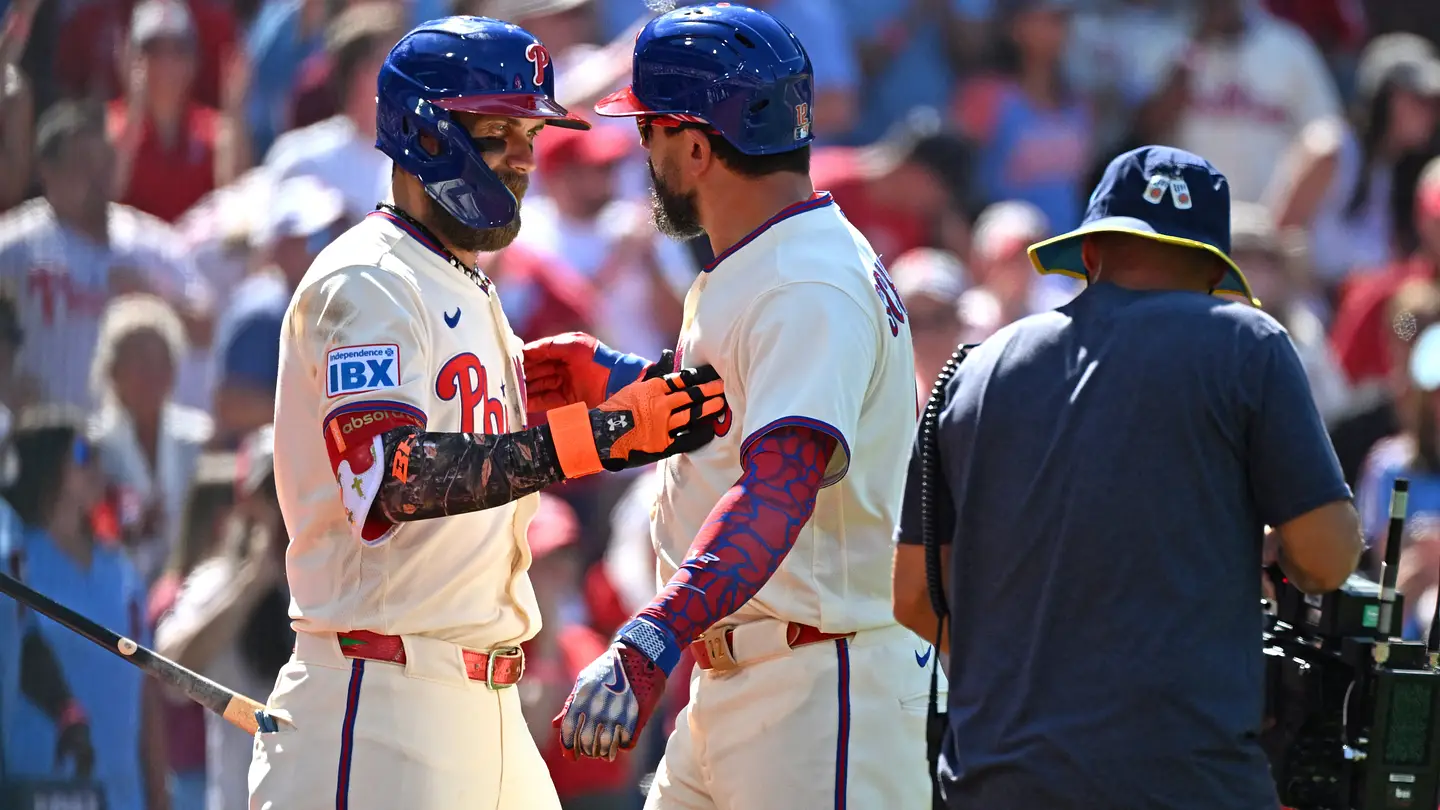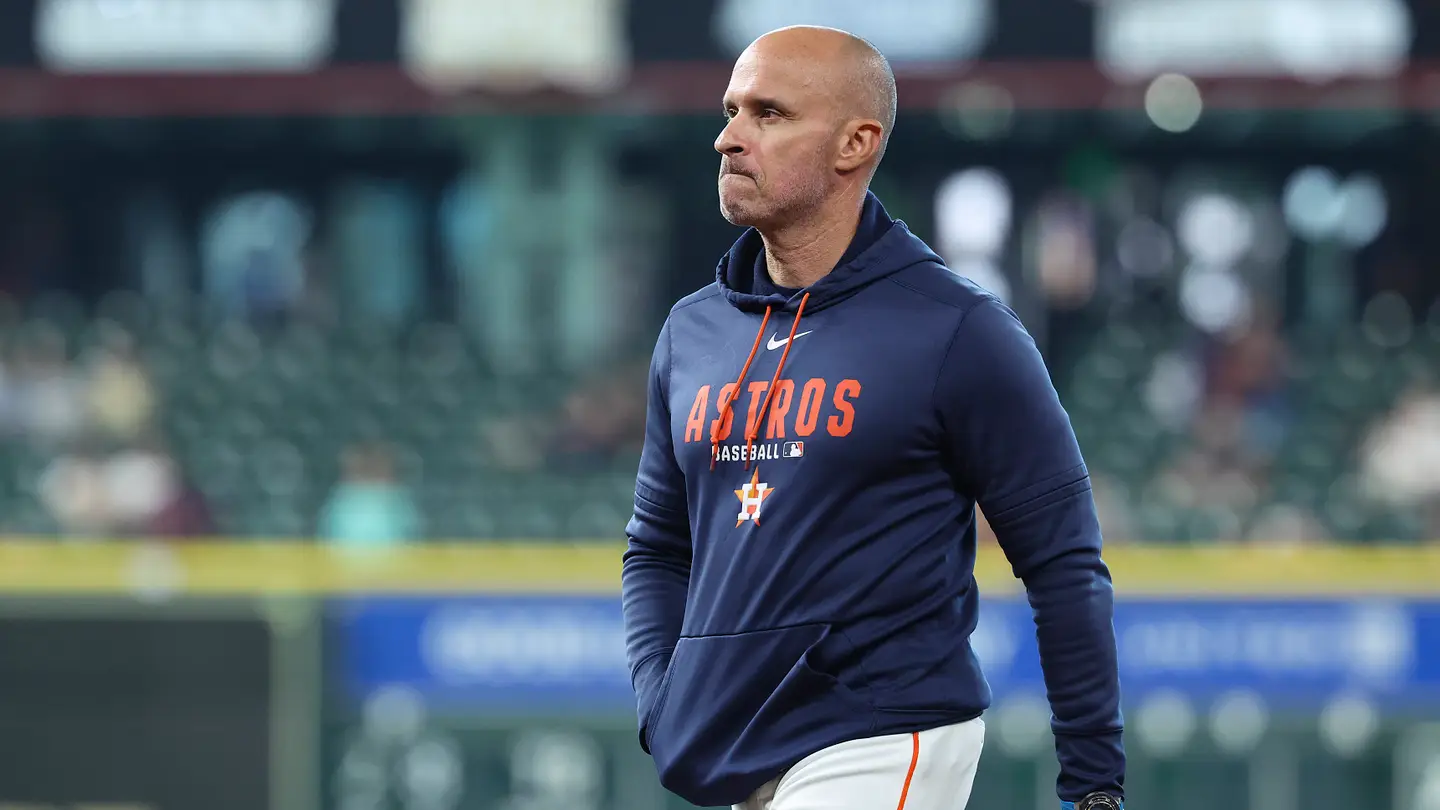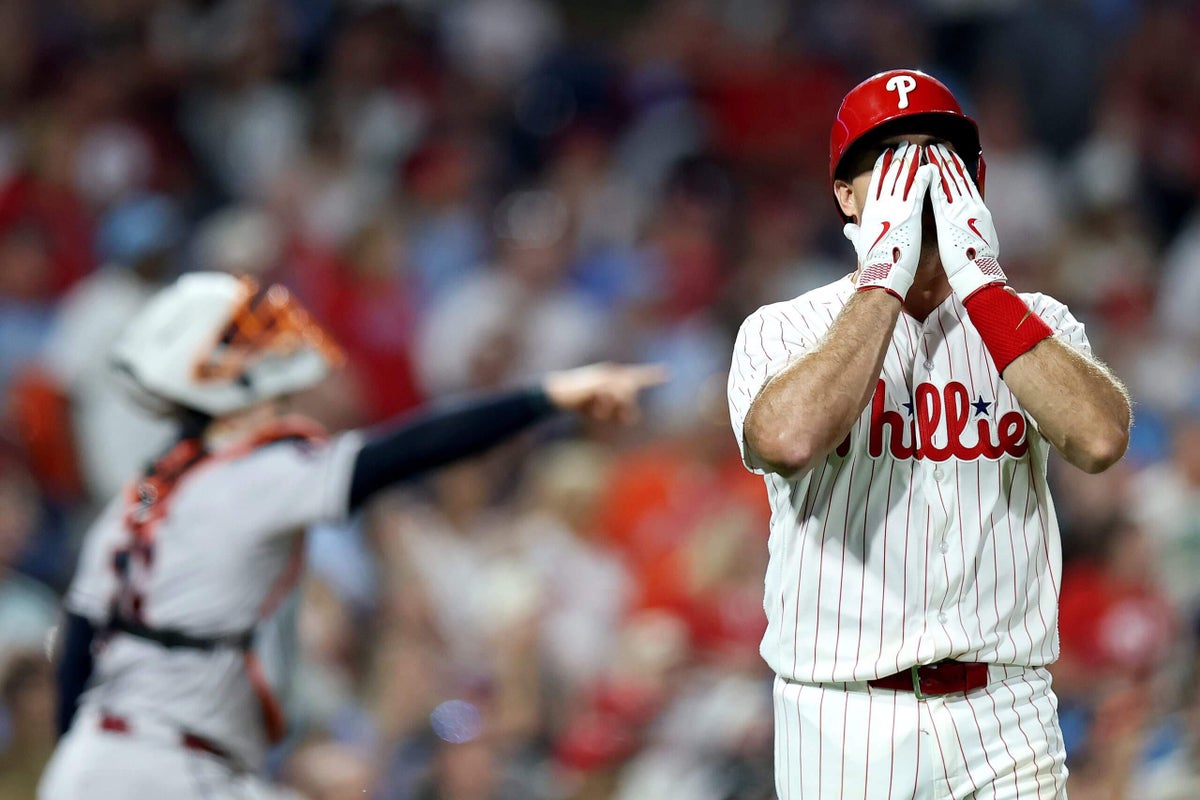
PHILADELPHIA — Before Houston Astros outfielders scrambled to get to Brandon Marsh’s double rolling through center field in the seventh inning Tuesday, Alec Bohm — who had drifted away from second — doubled back because he thought the ball might be caught.Instead, it careened off the State Farm sign in center and Bohm was left hustling to make up ground on the basepaths with Bryson Stott, who was coming from first, on his heels.It was a somewhat tricky read on Bohm’s part, who ultimately was the only player to score off Marsh’s double, sliding head-first into home. His hesitation might not even be that noteworthy — except a more serious base-running blunder immediately followed the play as Stott did not score from third and the Philadelphia Phillies went on to lose by one run against the Astros. Bohm’s decision-making did not bother interim manager Don Mattingly, who saw issues elsewhere in the 6-5 loss.“When you talk about games,” Mattingly said, “you talk about small things. Most of the time, you don’t pay attention to it. You think about the home run or the big hit or the out you didn’t get. But there’s games that small things cost you runs, chances. And it can cost you a game.”The Phillies know the feeling all too well. But, three weeks away from what this club hopes is the start of a meaningful October, this lineup is still haunted by the small mistakes — the type that can spiral into postseason pain.Not even two weeks ago in Los Angeles, the Phillies had four runners thrown out at third and home in a two-game span. And on Tuesday in Philadelphia, a few decisions — out of the box and on the bases — proved game-changing as the Phillies attempted to come back from an early 5-0 deficit.Alec Bohm scored a run in the seventh, but his hesitation on the basepaths earlier in the play ultimately proved costly. (Kyle Ross / Imagn Images)First there was Bohm doubling back — a debatable decision, certainly, with a strong center fielder and a ball hit toward one of the trickiest parts of Citizens Bank Park. But Bohm retreating slowed Stott behind him and potentially cost the Phillies another run in a tight game. Mattingly, who was Daulton Varsho’s bench coach in Toronto, said that he’s seen him catch a ball like Marsh’s in center field. So he understood Bohm’s hesitation while waiting to see if Varsho, the Astros’ center fielder, tracked it down.That was immediately followed by a perhaps more costly mishap, as J.T. Realmuto hit a ball toward the gap between third base and shortstop. The Astros’ Jeremy Peña laid out to make an excellent catch. And Marsh, who was on second after his double, had broken so hard toward third that Peña easily made a double play. The Phillies, with two runners in scoring positions and no outs, suddenly found themselves with two outs and with just Stott on third.Marsh said it was “unacceptable” for him to take a step toward third.“In the heat of the moment,” he said, “(I) thought it was getting through — hit hard, hooking toward that hole between third and short. But there’s really no excuse, no explanation, other than I was just wrong. And I have to clean that up and be better in the future if we want to be where we want to be at the end of the year.”While the base running took center stage, another poor decision was made by Edmundo Sosa with the game on the line. He hit a ball 100 mph off Josh Hader, the Astros’ dominant closer, and watched it sail toward right field before breaking out of the box with a runner on and no outs in the ninth inning. What may have been a triple was instead a double; Hader then recorded three straight outs to end the game.That closed out a loss to a flawed but talented Astros, who will very likely make the playoffs. They became one of many teams to exploit the Phillies’ struggles with fundamentals.There have been rough moments spread over the course of the regular season: Bryce Harper caught stealing home against the Angels, Derek Hill not keeping his head up to look for a stop sign at third in that same series, Realmuto’s poor base running that led to a game-ending double play against the Dodgers in July, Marsh’s mistake on Tuesday. And, on occasion, other teams have countered Phillies’ blunders with their own sterling fundamentals. (How could anyone forget, from last October, that wheel play?)Tuesday, in the standings at least, the miscues didn’t hurt the Phillies (81-64) as much as they might have. Losses by the Atlanta Braves and Chicago Cubs kept the Phillies four back in the National League East and a half game ahead in the race for the top wild-card spot, respectively, with 17 games to play.After the Phillies’ four self-inflicted outs at third and home against the Angels in late August, Mattingly said “it’s something that’s going to happen now and then.” He did not take issue with all of the decision-making or aggressiveness during that series.But any time it happens, he said Tuesday, it is something to learn from.“You should always stay on it,” Mattingly said. “Players are better probably now than they’ve ever been. Pitchers are throwing harder and (are) tougher to hit than they’ve ever been. Base running, for me, has kind of went a little backwards.”That has sometimes shown up in the Phillies’ play. And, this time of year, it is easy to remember just how often differences in fundamentals set teams apart in the postseason. Good teams will punish their opponents for any mistake — though late-game theatrics, which the Phillies have mastered of late, could provide some relief in October. That was not enough to save this team on Tuesday, but better fundamental decision-making just might have.— Matt Gelb contributed to this report.
Phillies hurt themselves, feel the sting of losing on the margins as October nears
Fundamental lapses on the basepaths are still haunting the Phillies as October nears.
990 words~5 min read