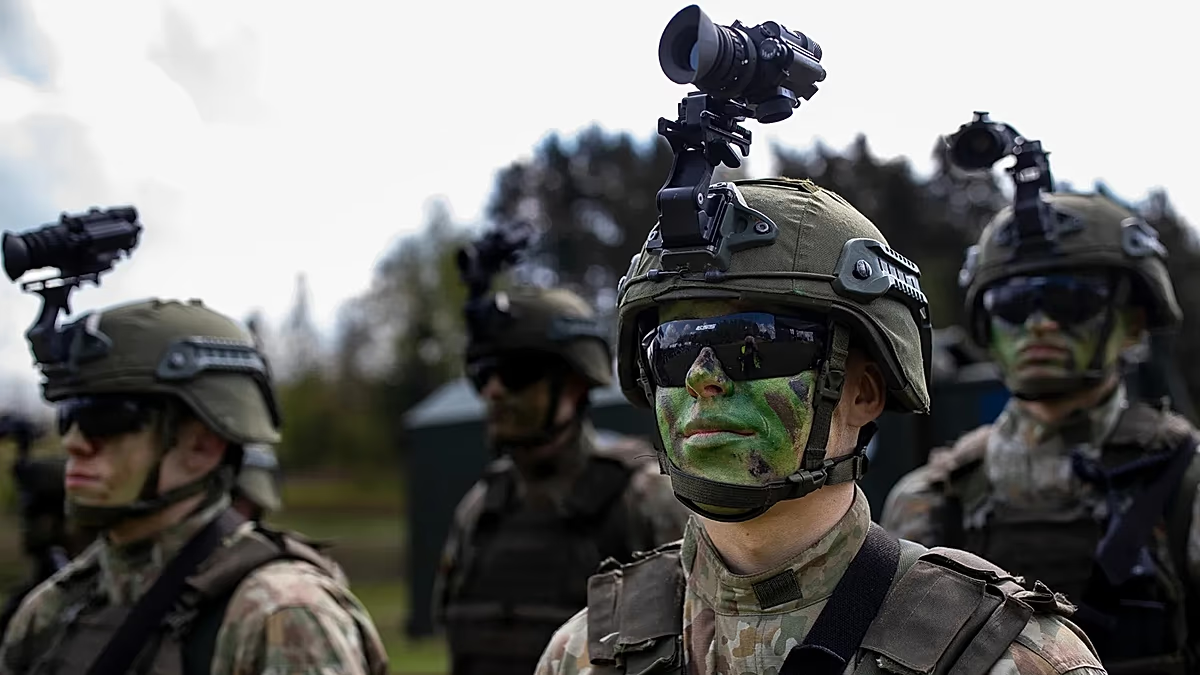
I am travelling to Latvia for a work trip centred on three d’s: drones, defence and debesmanna. Squeezing in time to the Rīga Conference and other sites relevant to the country’s upcoming EU council presidency — next year — is a must, too.
Meanwhile, my colleagues in Brussels are holding down the fort, where one topic is stealing the spotlight. “Migration is very much back on the agenda,” one senior EU diplomat said to a crowd of journalists chewing on hors d'oeuvres Monday night at a rentrée party.
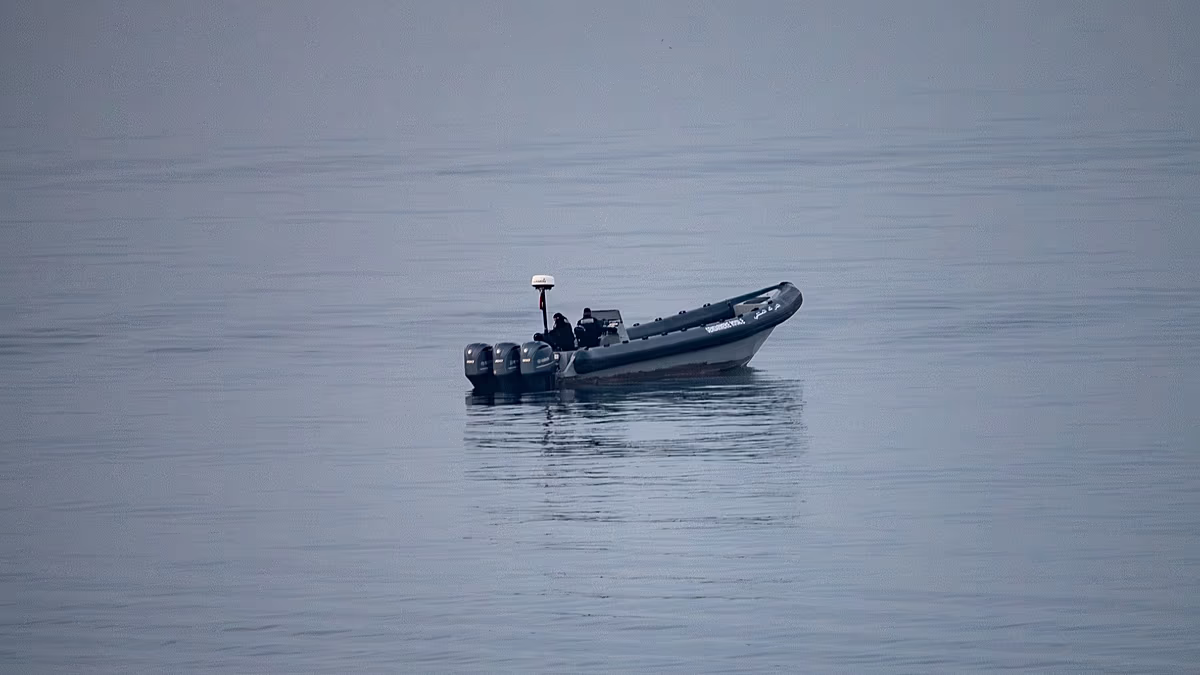
What is clear is the migration horse certainly has bolted, with no signs of abating, and the Ceuta crisis – of 80,000 migrants storming the Spanish enclave in July from Morocco – is the new springboard into the debate.
Taking the scenic route: Mared Gwyn reports that Ceuta’s leader, Juan Jesús Vivas, was in Brussels on Tuesday to call on the EU’s senior leadership. He requested a permanent presence from the EU’s border agency Frontex and the EU’s asylum agency and financial contributions to the work of securing the border with Morocco.
But crucially he also asked for a firmer and more forceful EU position towards Morocco, citing leaked police reports claiming Moroccan officers helped orchestrate the crossing. His stance is significantly sharper than the Spanish government’s strategy of cooperation with Rabat, with my colleague Vincenzo Genovese diving deeper into the crisis.