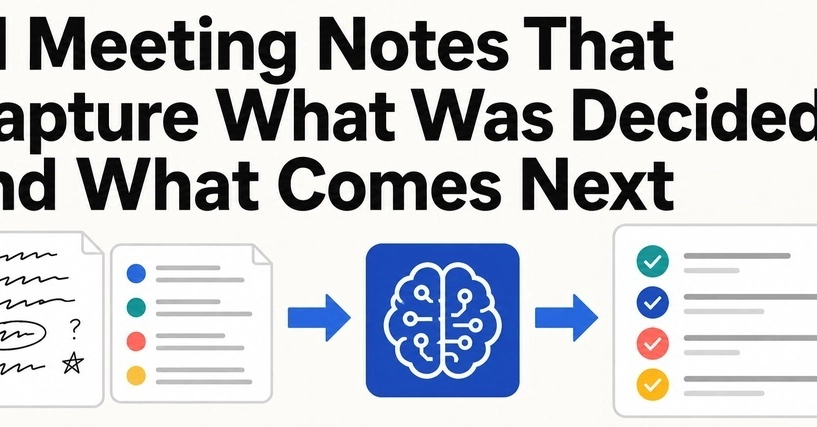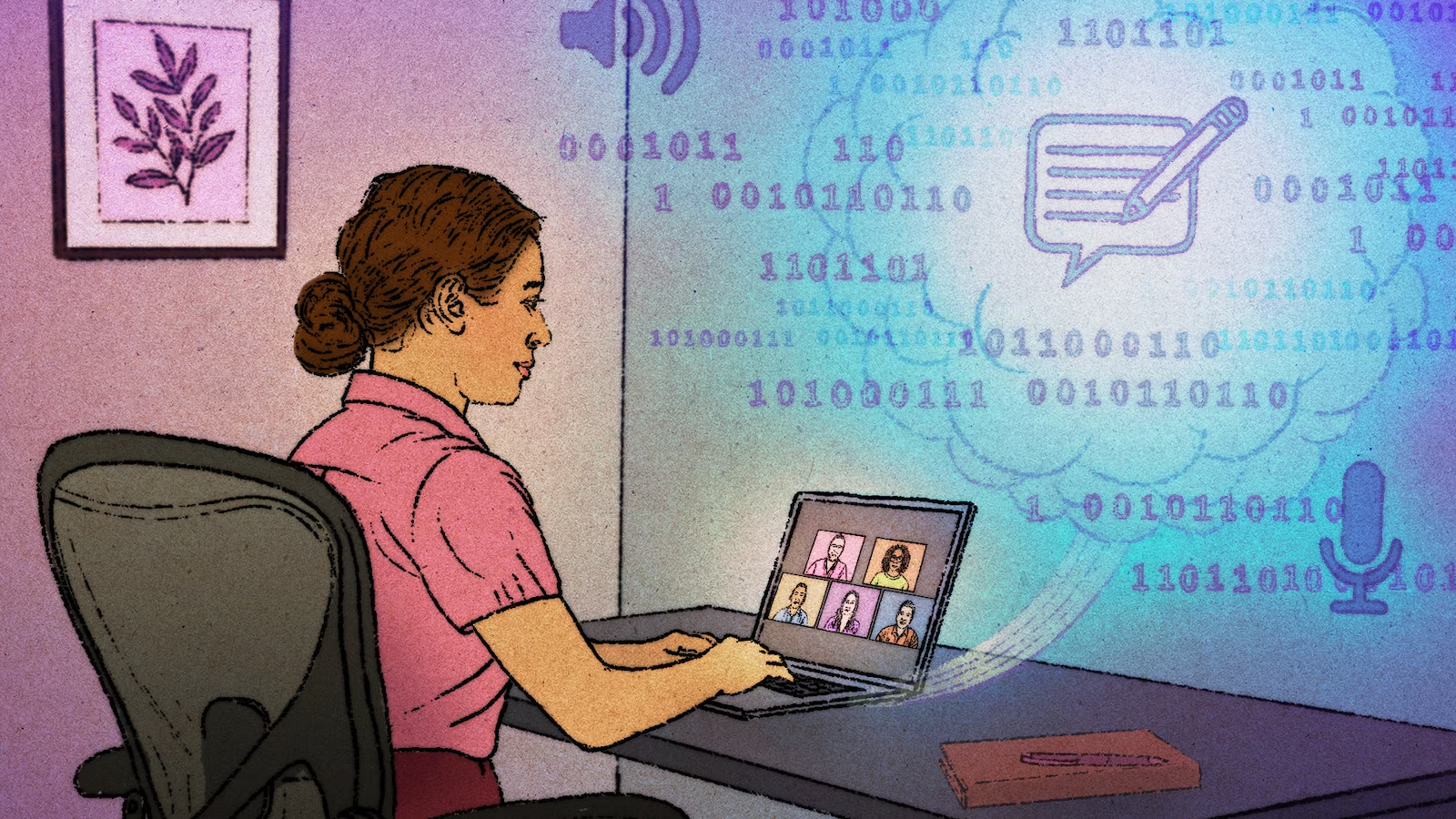
Your AI meeting notes tool is producing documents nobody reads. Not because the summaries are bad, but because a summary of a conversation is not what anyone in your business actually needs. What they need is much smaller and much harder to extract: what was decided, who owns it, and by when. If your tool does not produce that, and route it to the person who must act, you have automated the creation of noise.
I have set these tools up for owners, watched the initial enthusiasm, and then watched what happens three weeks later. The pattern is the same every time. Week one, everyone opens the summaries. Week two, the summaries go to a folder. Week three, the folder is where information goes to die, and the same items get re-discussed in the next meeting because nobody can remember what was agreed. The transcript exists. The summary exists. The decision has still evaporated.
Why summaries fail in a running business
A meeting summary is written for a reader who does not exist: someone with the time and motivation to read a neutral account of a conversation they either attended or did not care about. Your sales head attended the meeting; she does not need the recap. Your accountant did not attend; he needs one line from it, not eleven paragraphs.