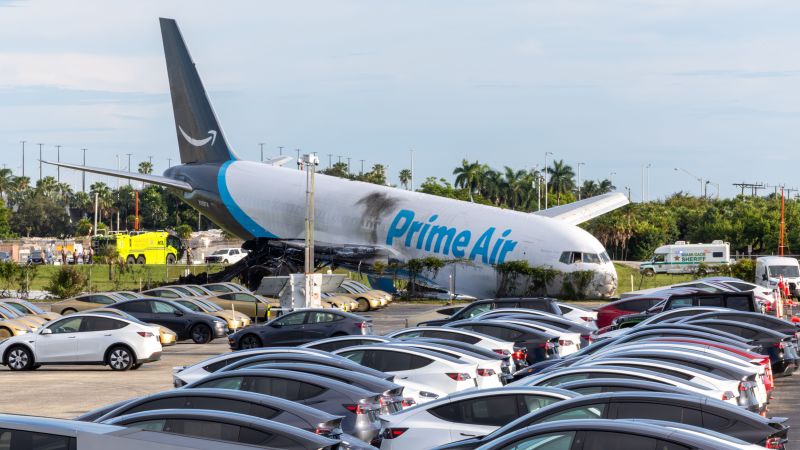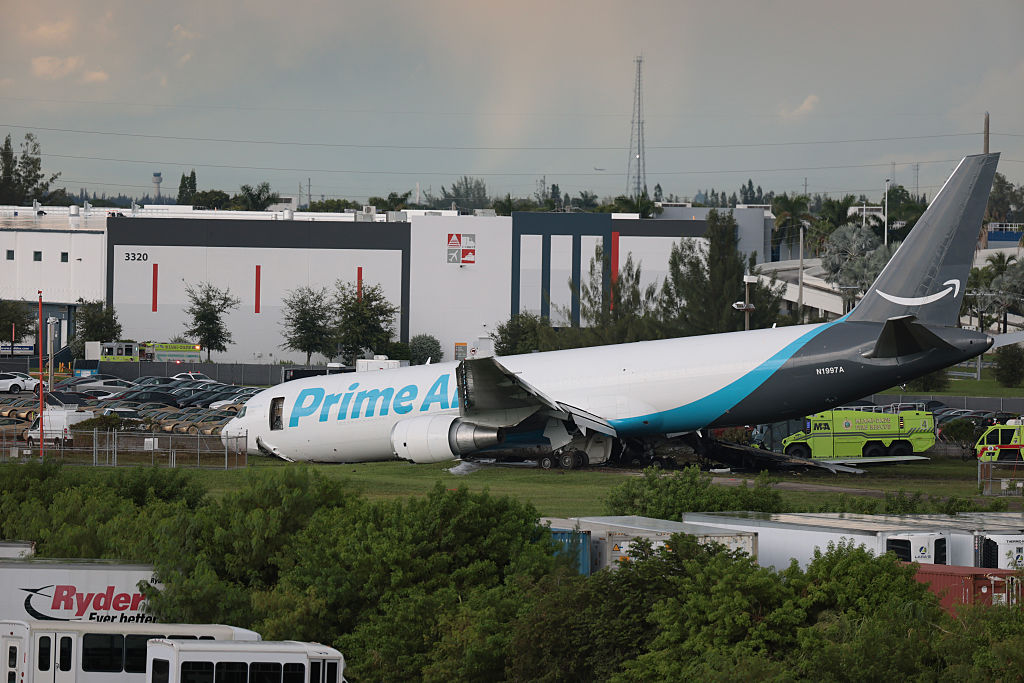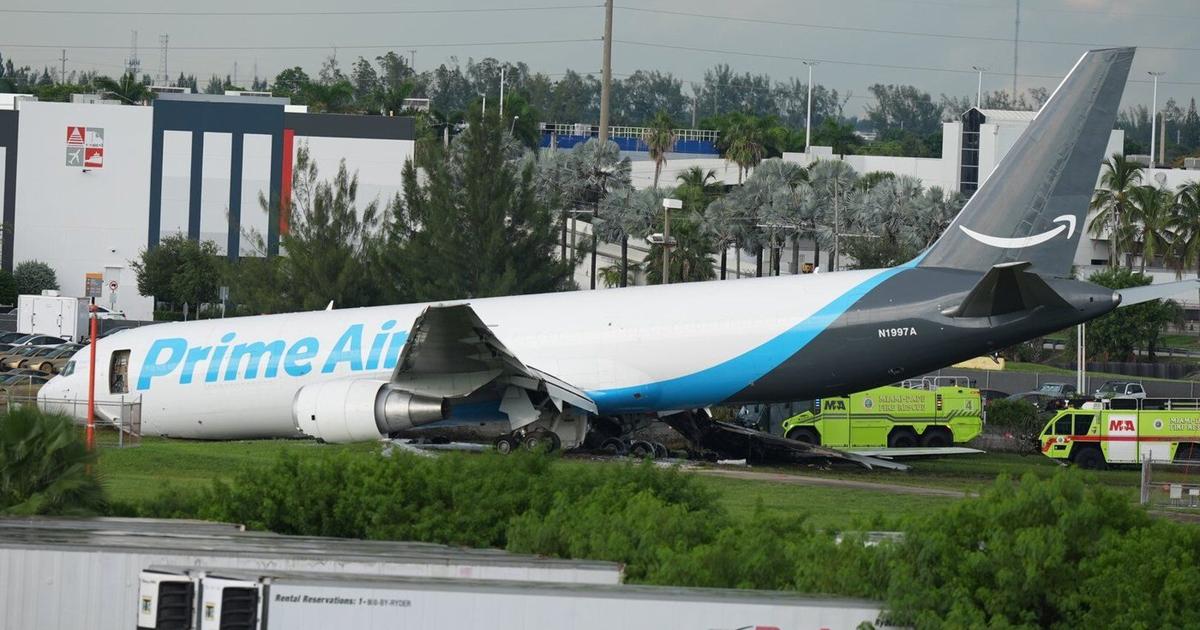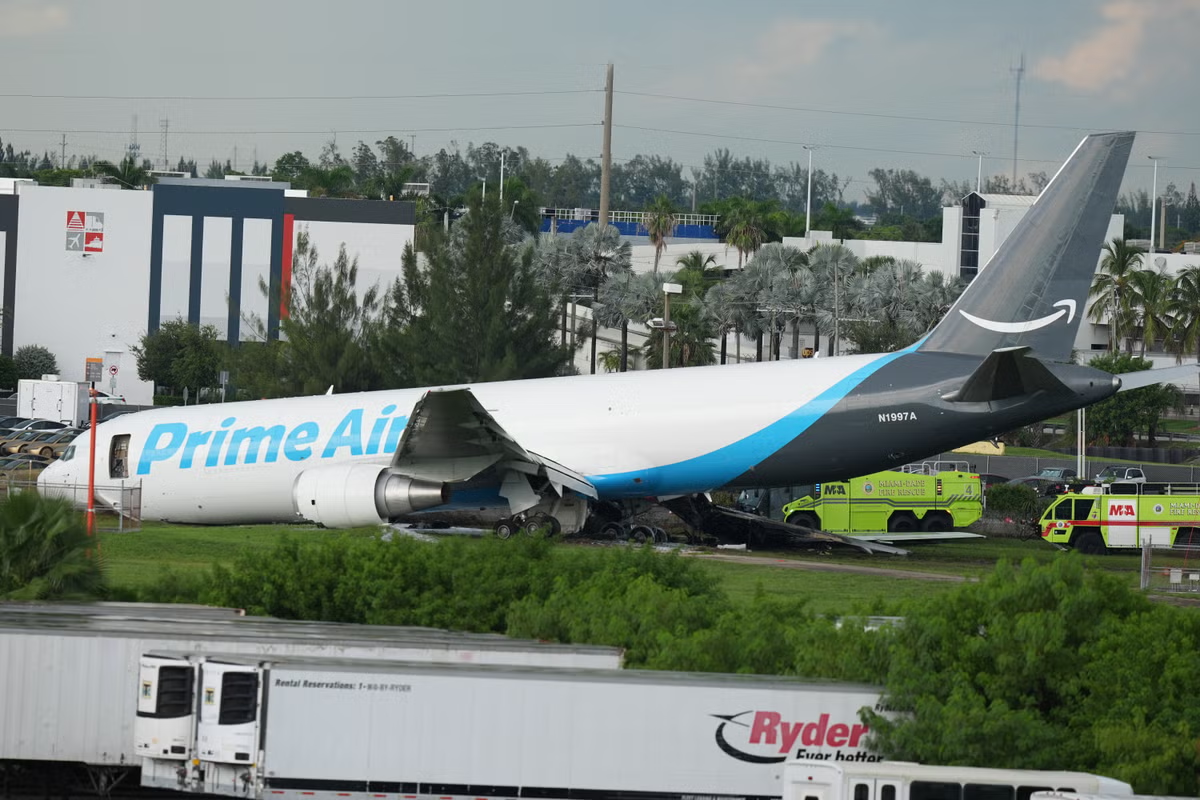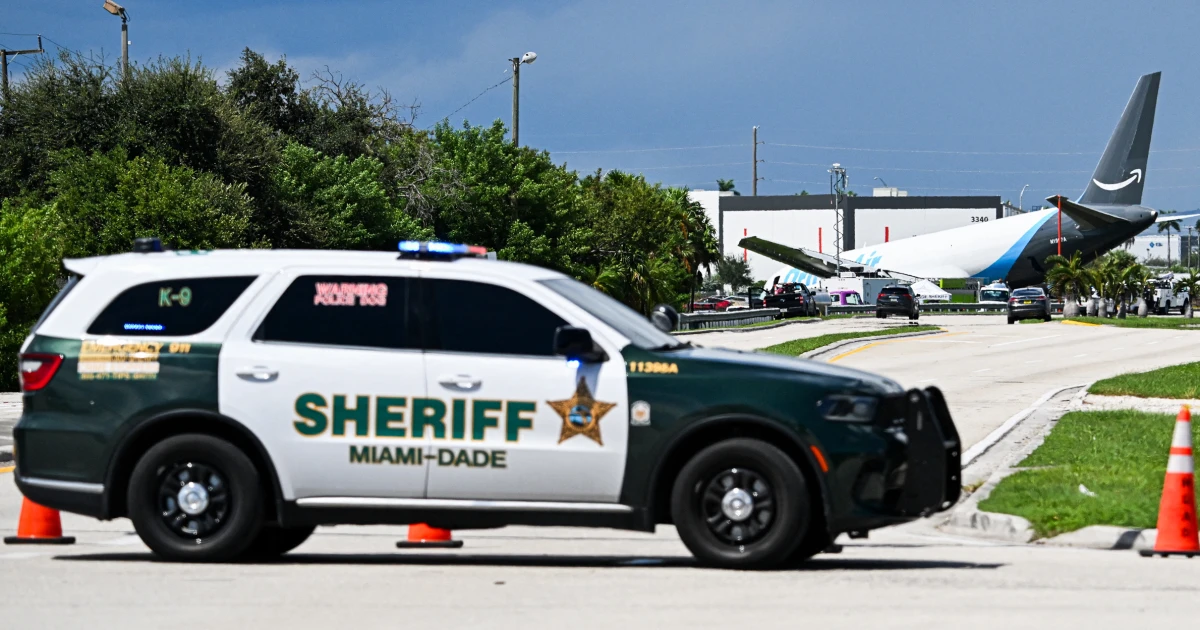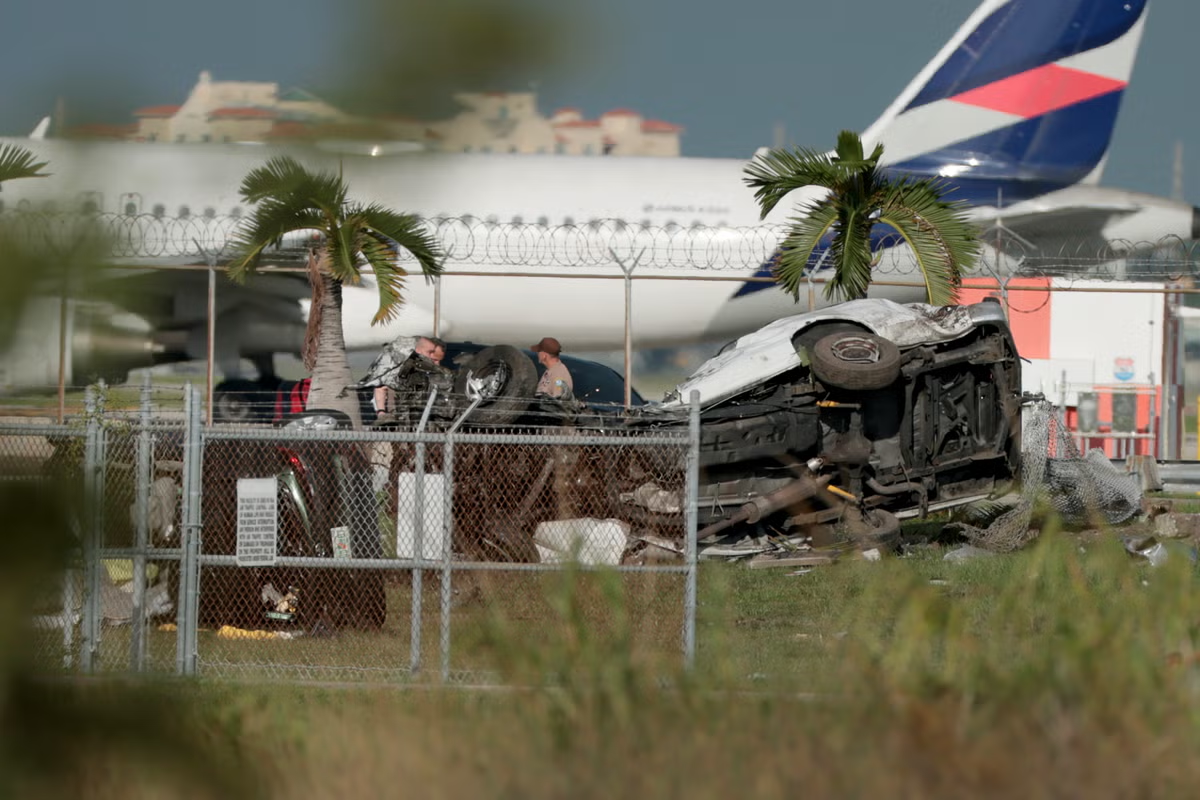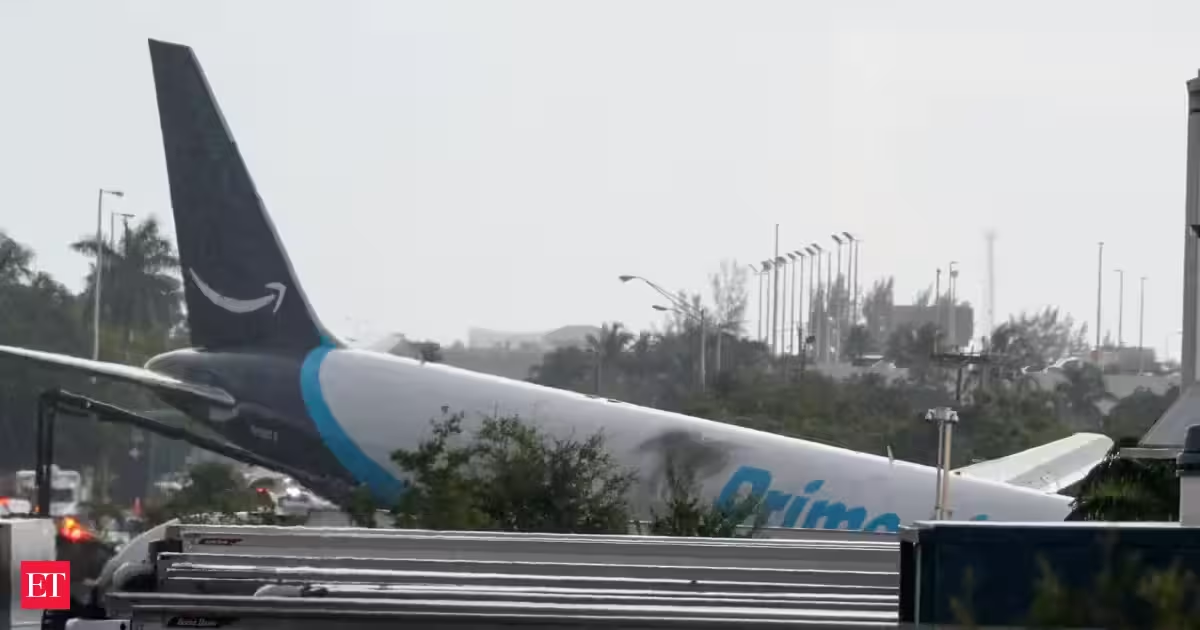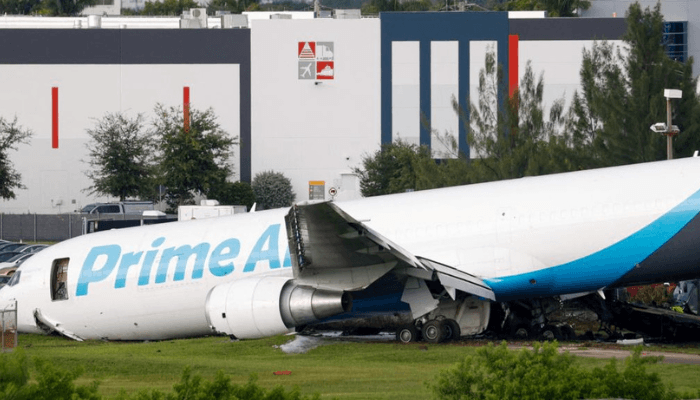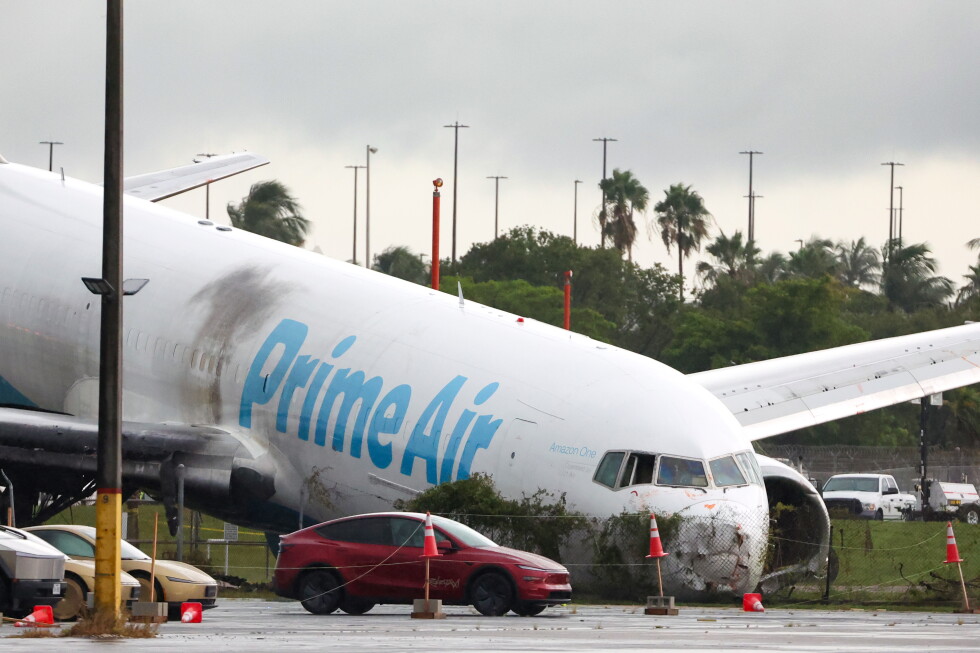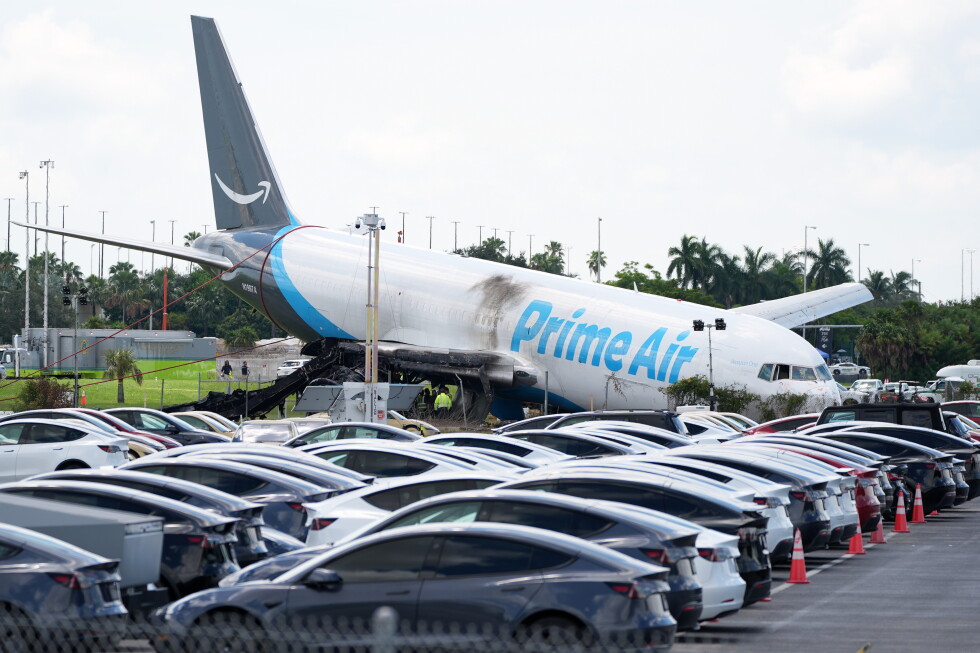
Investigators are still trying to determine what caused an Amazon cargo jet to overshoot a runway in Miami and plow into two vehicles, killing five people on the ground. The Boeing 767 hit a van on Miami International Airport property on Sunday before ramming through a fence and hitting an SUV on a public street. Five people who were a part of a cleaning crew in the van died while two survived. The pilot and co-pilot also lived.National Transportation Safety Board Chairwoman Jennifer Homendy called the scene at the airport “utter devastation.”
Miami Dade Fire Rescue officials inspect a damaged vehicle two days after an Amazon cargo plane overshot a runway at Miami International Airport, Tuesday, Sept. 8, 2026, in Miami. (AP Photo/Rebecca Blackwell)
License this photo
Hundreds of flights at the Miami airport have been delayed or canceled as authorities investigate the crash site, where the jet and a mangled white van have remained. By late Tuesday, only one of the airport’s four runways was still closed, raising the likelihood that the cancellations would begin to ease.Here’s what to know about the crash.
Jet spent a long time over the runway before touching downThe NTSB said the plane barreled roughly 1,300 feet (396 meters) past the end of the runway.It was landing after a two-hour flight from Puerto Rico as storms brewed around the Miami airport.Homendy called the scene “utter devastation,” with pieces of the vehicles, air bags, destroyed navigational equipment and fencing along the plane’s route. Investigators didn’t have full access to the site until all the jet fuel was recovered from the plane Monday evening.Former FAA official Mike O’Donnell said that the fact that the plane landed on its nose and right landing gear first demonstrates this was an unstable landing. He said the pilot might have been attempting a “go-around” to retry the landing approach.Video of the landing showed the plane hovering above the runway for a long time without flaring the nose to force the wheels onto the ground. Experts said it appeared a strong tail wind propelled the plane far past the point where it was supposed to land. Air traffic controllers also had not changed the approach to the runway to allow the plane to land into a headwind. Investigators will want to know how quickly the winds shifted.