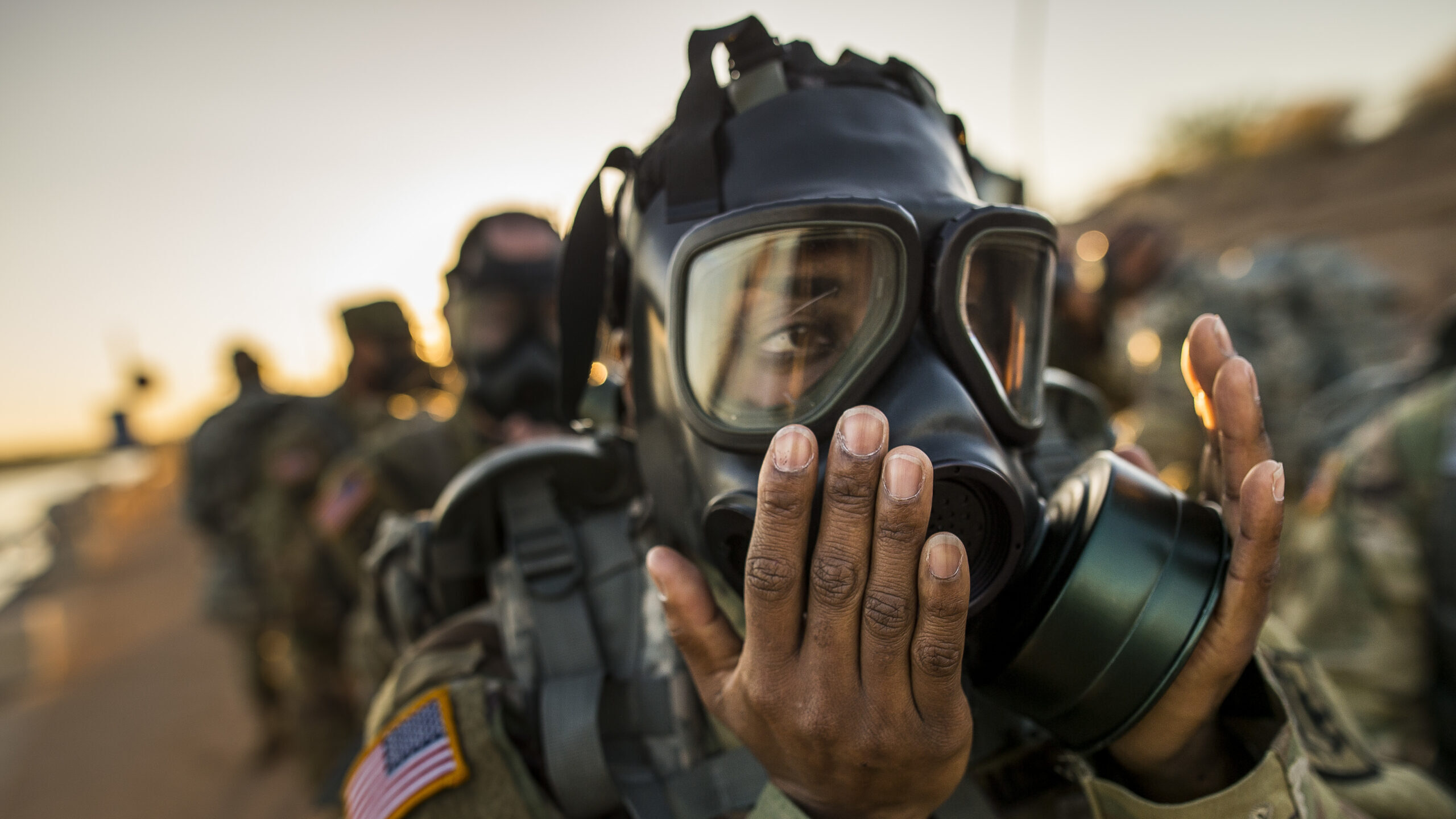
FORT BELVOIR, Va. — The Army announced today its new biodefense strategy to build a force that can fight to its full operational potential in a “biologically contested environment,” an official from the US Army’s Nuclear and Countering Weapons of Mass Destruction Agency told reporters today (USANCA) said.
Such contested environments can consist of: naturally occurring threats like the COVID-19 pandemic or malaria, accidental threats caused by pathogen leaks from facilities, and deliberate biological threats manufactured by adversaries, Lt. Col. Dave Kingery, the biological defense integrator for the Army’s headquarters and USANCA, told a small group of reporters today during a media event.
“We have to ensure that a global pandemic or some other health event does not stop us from our ability to project those forces forward, so we can be in the place to fight and win the war and endure through any conflict,” Kingery said.
New Lines Of Effort
The new strategy, signed by former Army Secretary Dan Driscoll, has five lines of efforts that the service hopes to implement by 2035, according to the strategy document sent to reporters ahead of today’s event. Under the first effort, “building knowledge,” the Army plans to recruit, develop and retain talent “to expand the pool of scientific, medical, and operational biodefense SMEs [subject matter experts] at all echelons,” according to the strategy. This line also aims to further include biodefense curriculum in training and education courses.