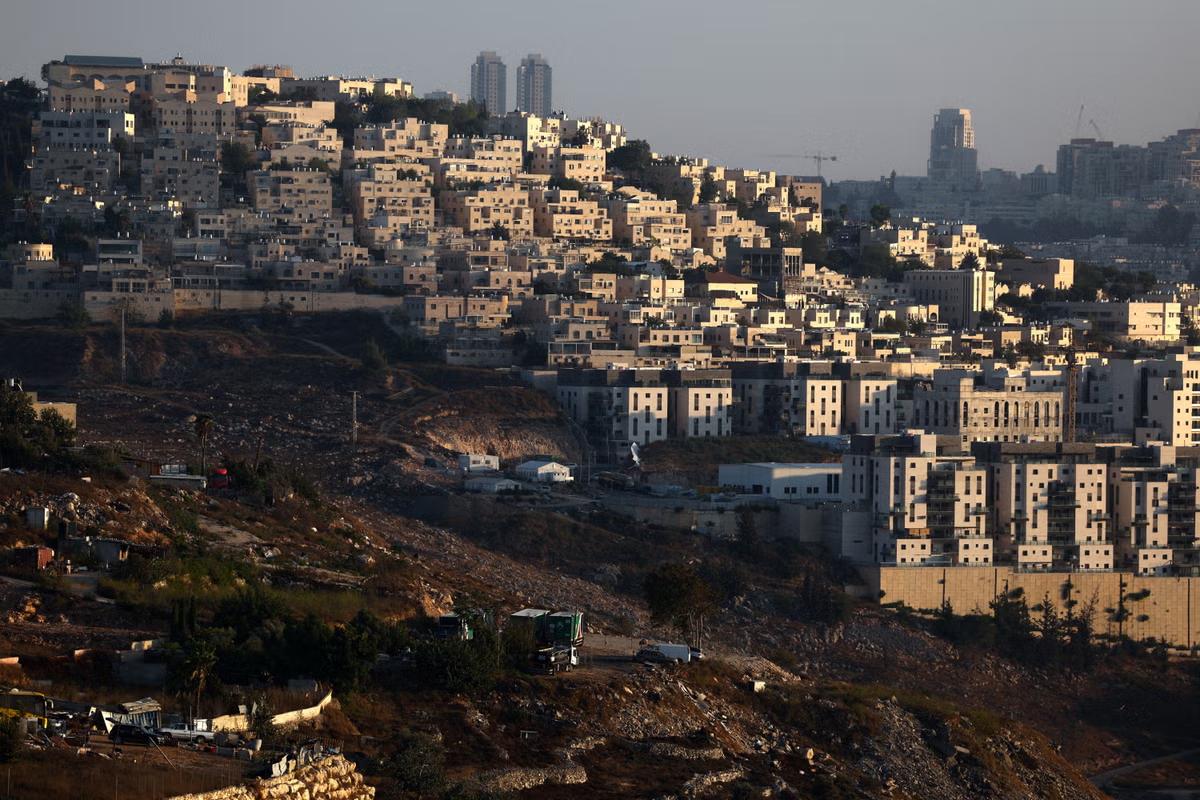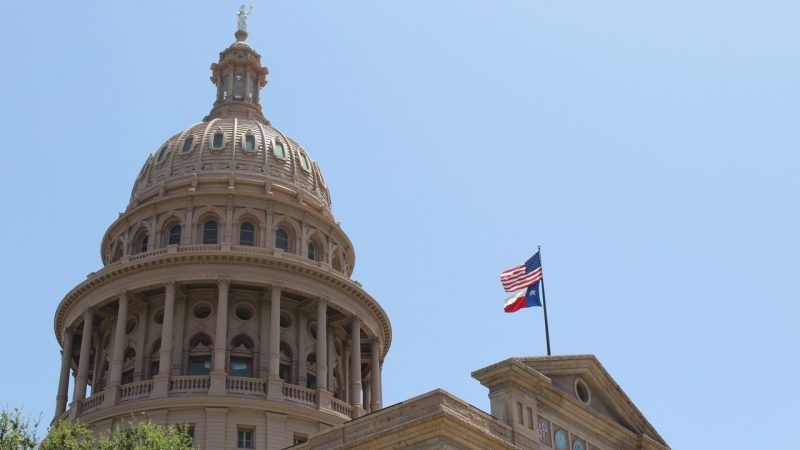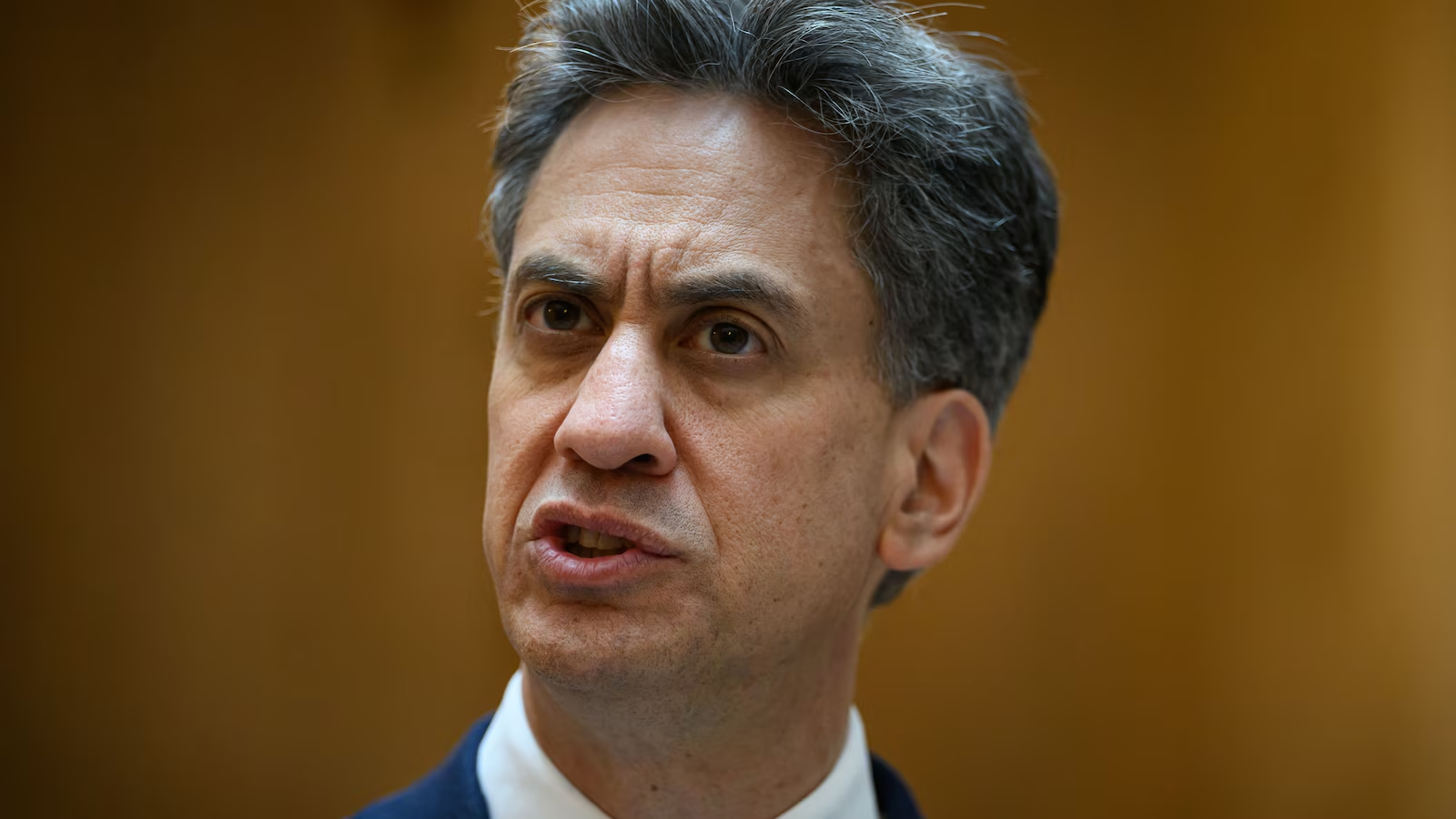
By Sarah Young and Alexander CornwellLondon/Tel Aviv — Britain will announce a trade ban on goods made in Israeli settlements in the occupied West Bank later on Tuesday, a senior minister said, the latest in a series of sanctions against Israel as it faces growing diplomatic isolation.The US, through its ambassador to Israel, has already criticised the move, which London has framed as a sign of fresh support for the two-state solution, which Israel opposes.Israeli President Isaac Herzog accused Britain of interfering in Israel’s upcoming elections, due in late October, while finance minister Bezalel Smotrich called for the British ambassador in Tel Aviv to be expelled.Ed Miliband, who became Britain’s foreign minister in July, had flagged that he wanted to reset policy on Israel and will announce the trade sanctions later on Tuesday.The impact on the £6bn of annual bilateral trade is likely to be minimal, with details unclear of how the UK will differentiate between goods originating in West Bank settlements and products made in Israel.British Prime Minister Andy Burnham, in office since July, discussed the Middle East in a call with US President Donald Trump on Monday, when he stressed “the importance of the two-state solution“, according to his office.Historical claimUN bodies and most governments, including Britain, consider Israeli settlements in the West Bank illegal and regard the West Bank as territory under military occupation.Israel says the territory is disputed rather than occupied and asserts that Jews have a historical claim to the land.The focus of recent concerns is Israel’s E1 settlement project in the West Bank not far from Jerusalem, which would cut across land the Palestinians seek for a future independent state.Britain and other European nations criticised the E1 settlement plans in August, and UK work and pensions minister Pat McFadden said on Tuesday the rate of settlement activity made the need for sanctions urgent.By moving ahead with sanctions, Burnham’s government is sticking with the policy direction of his Labour Party predecessor, Keir Starmer.Under Starmer, Britain in 2025 joined other countries to recognise a Palestinian state as a means to promote a two-state solution, and in June it sanctioned Israeli networks involved in financing, enabling and carrying out violence in the Israeli-occupied West Bank.While several Labour lawmakers welcomed Miliband’s move, one described the ban as not going far enough for some and going too far for others, especially those with large numbers of Jewish voters in their constituencies.Settler attacksIsrael-UK relations have become increasingly strained in recent years, with London criticising Israel’s conduct in Gaza, the expansion of settlements in the West Bank and rising settler attacks on Palestinians.President Herzog, whose role is largely ceremonial, said the sanctions would be a “grave miscalculation” that would fall on the “wrong side of history”.US ambassador to Israel Mike Huckabee told the BBC that the sanctions amounted to “discrimination against the Jewish people”. He warned they could potentially limit the UK’s ability to do business in some US states that prohibit companies that boycott Israel from being eligible for state government contracts, procurement or public investment.McFadden said Israel would remain an important trading partner for the UK.Goods originating from settlements are mainly agricultural, including fresh produce and wine, and make up only a tiny fraction of Israel’s total trade flows.The Israeli prime minister’s office and foreign ministry did not immediately respond to requests for comment.Foreign diplomats say an import ban could be difficult to enforce, as some goods from Israel may use products from settlements without identifying their origin.Spain, Ireland and the Netherlands have each moved to ban imports of goods originating in Israeli settlements in the West Bank, though not all the bans have come into effect. Other countries, including France, Canada and Norway, also issued sanctions this year targeting settlements. Finance minister Smotrich and national security minister Itamar Ben-Gvir have been sanctioned by some countries, including the UK.Reuters
UK to ban goods from Israeli settlements in occupied West Bank
Britain’s trade ban is expected to have little impact on £6bn bilateral trade
640 words~3 min read