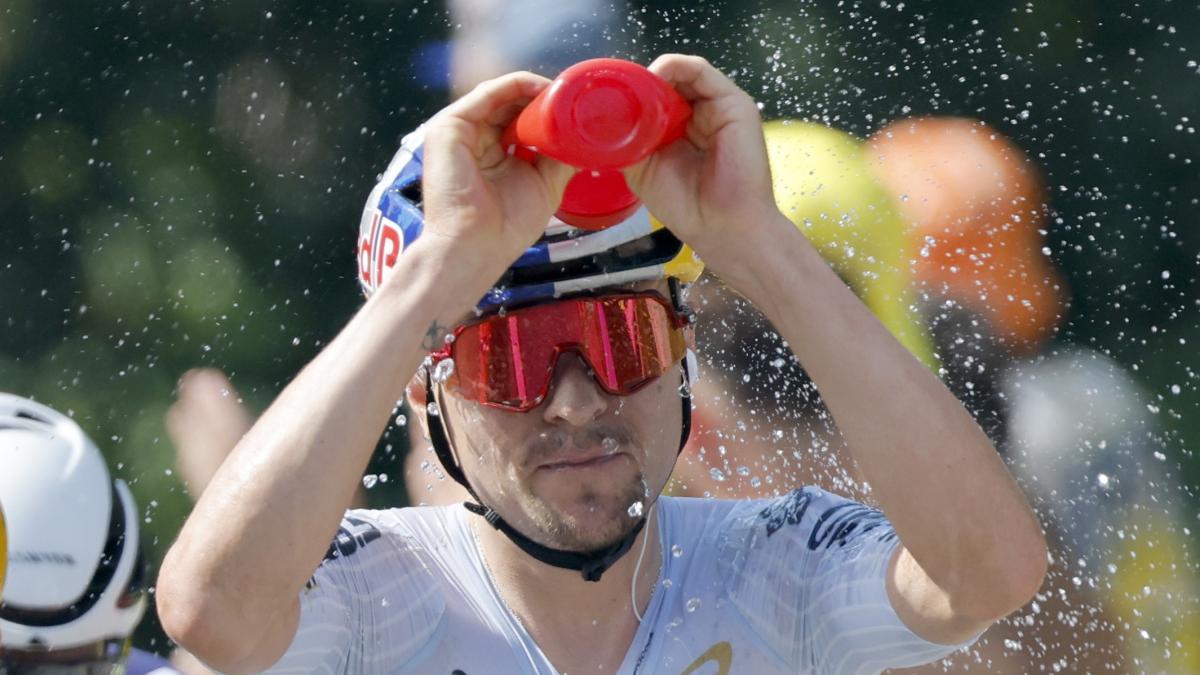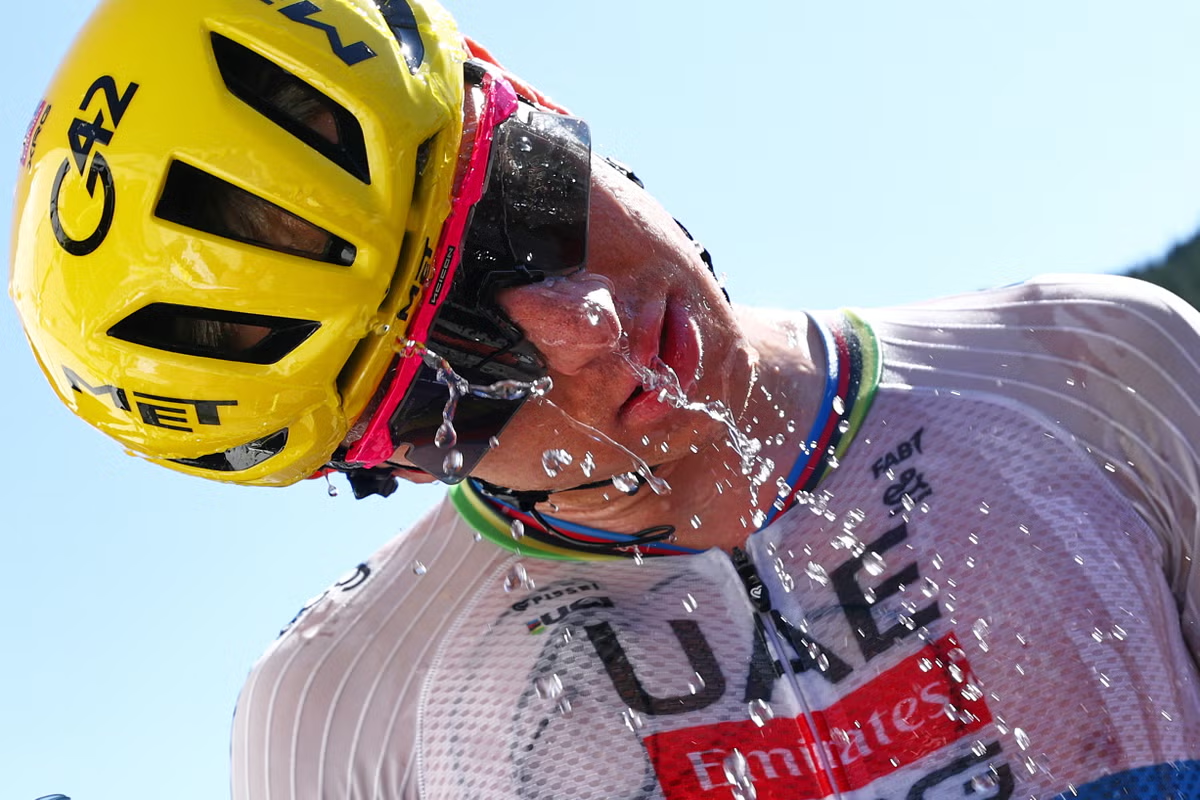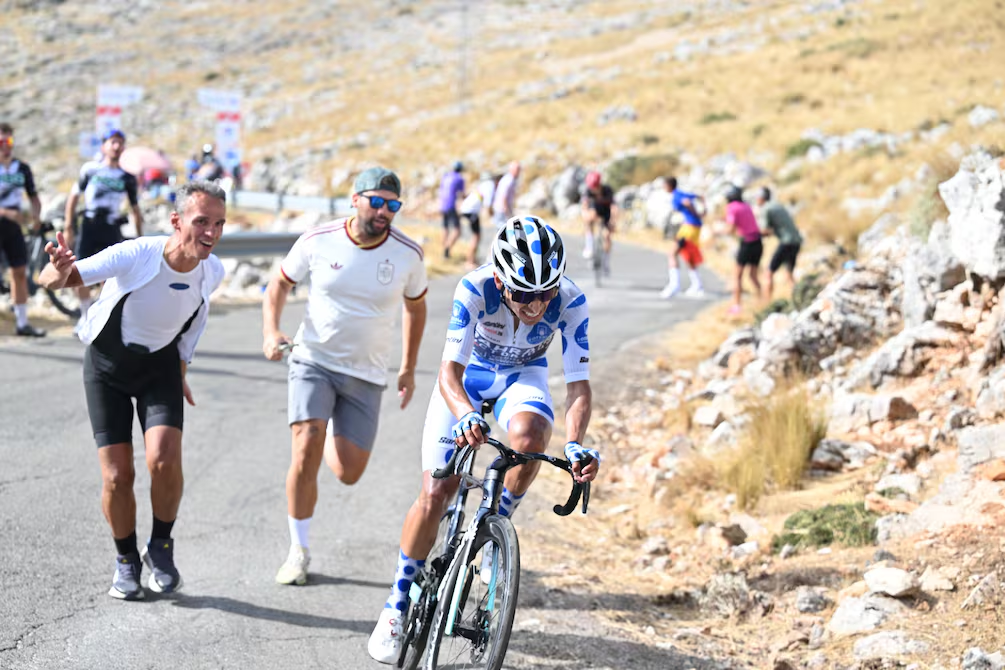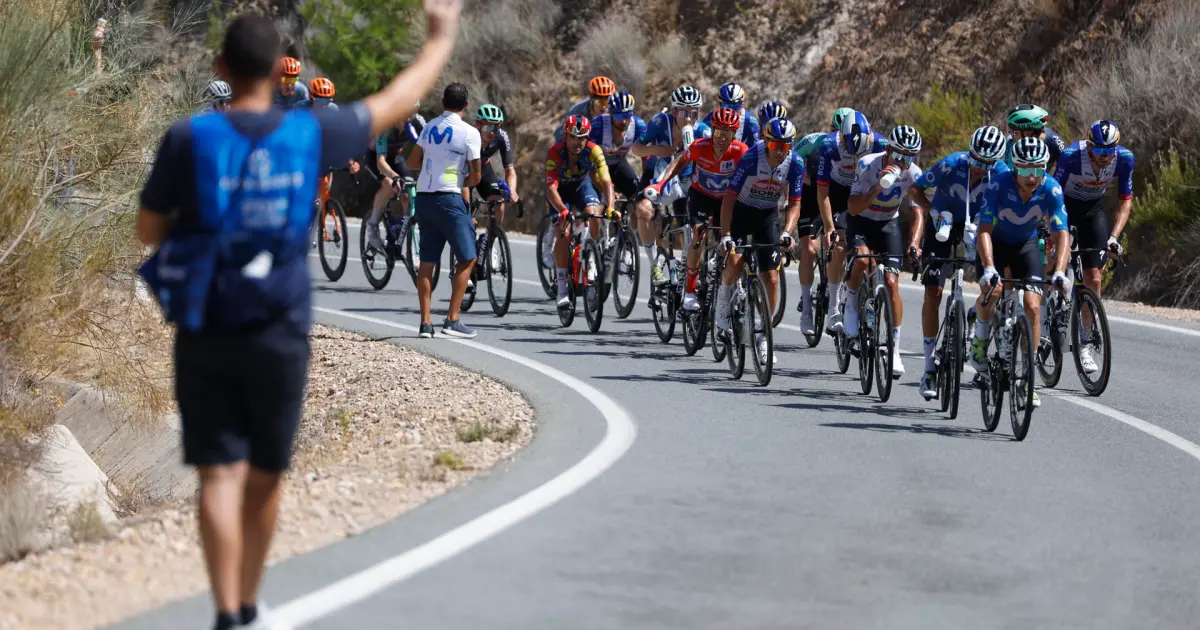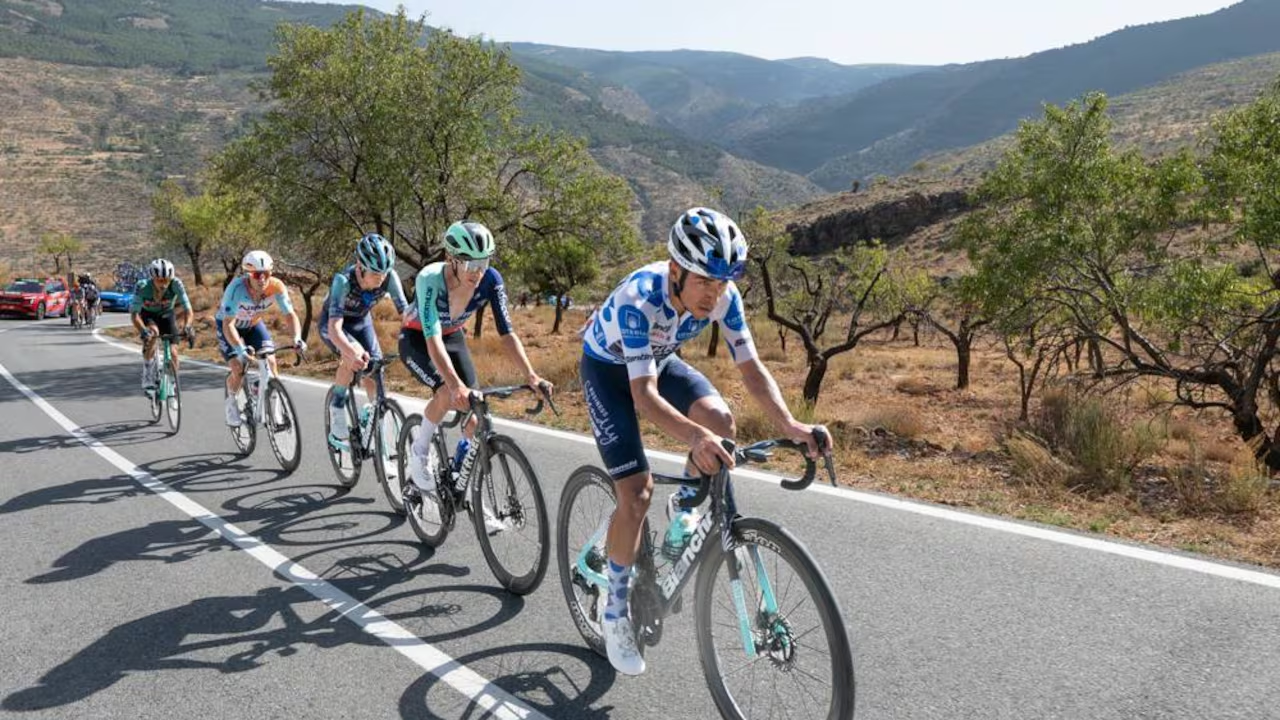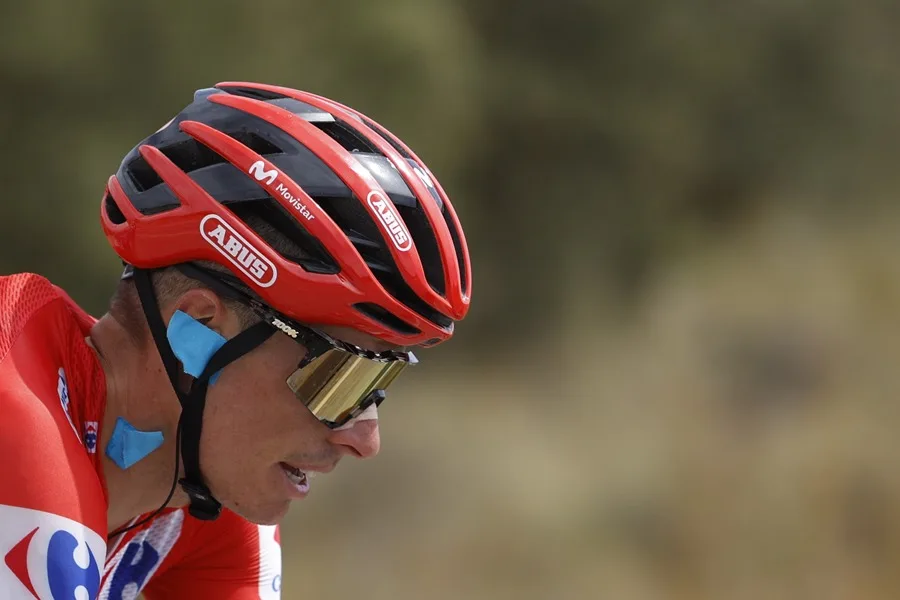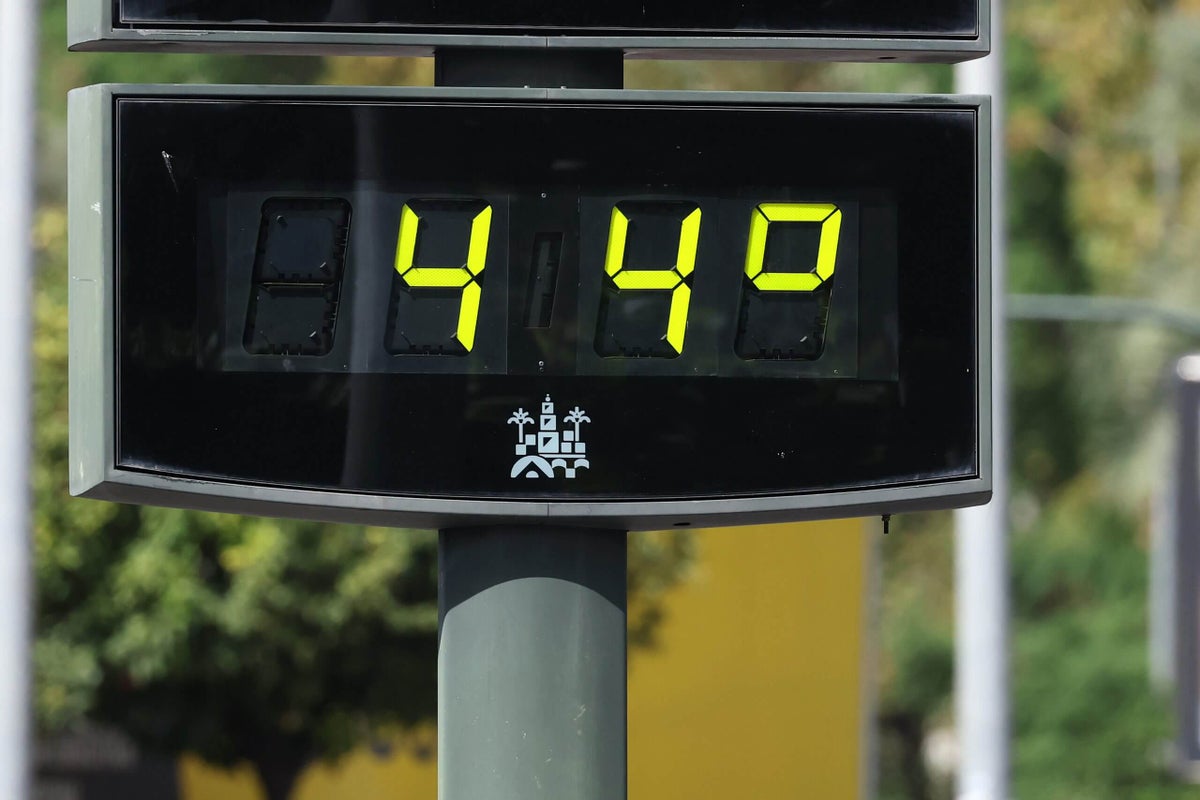
Despite riders growing ever more exasperated with having to race in extreme heat, the Vuelta a España race organizer is adamant that major changes to the cycling calendar will not be contemplated as a solution to combat excessive temperatures.Owing to the scorching conditions that have beset the race since it entered Spain’s southernmost mainland province of Andalucía on stage 12, stage 15 of the race on Sunday was shortened by 80km (50 miles), with the riders themselves requesting the change.But the two-and-a-half hours that riders did race that day were held in mid-afternoon temperatures of 41C (107F), official data from Spain’s national meteorological service (AEMET) showed.João Almeida, the Portuguese rider who finished second in last year’s Vuelta, told Cyclingnews: “I think the heat is a bit limiting, because we are reaching the limit of the human body, which is a bit dangerous… It’s also day after day: the dehydration and the heat. It’s no joke.”Matthew Brennan of England, a three-stage winner at this year’s event, made similar comments after the stage: “When I was on the climb at the start, it was 44C (on his bike computer — 111F). At that point, you start thinking, ‘What are we doing?’”Brennan criticised the UCI, world cycling’s governing body, for not intervening further, saying riders were “slogging away for their sake”.“That’s the show we put on, but I think it wouldn’t surprise me if there are a few bodies going home in an ambulance tonight with heatstroke,” the 21-year-old added.Scottish rider Oscar Onley attempts to cool down after stage 15 on Sunday (Tim de Waele/Getty Images)A bit of context is required: as one of the most southerly countries in Europe, Spain always contends for the title as the continent’s hottest nation.And the Vuelta, ever since it moved from its April-May slot to late summer/early fall in 1995, is used to high temperatures and little precipitation. Riders taking part in it know what they’re signing up for — to a degree.But the past five years have been the hottest in the country’s history, AEMET data highlights, and this summer — which, meteorologically speaking, finished on August 31 — was also the hottest on record. Wildfires have raged, and tens of thousands of excess deaths, attributed to the succession of heatwaves, have been recorded across Europe.Many of cycling’s protagonists are therefore asking why the Vuelta doesn’t move back to the spring, or to the fall, to avoid the worst of the summer heat. Tadej Pogačar, the sport’s biggest name, who abandoned the race on stage eight with a broken collarbone and other injuries after a crash, has repeatedly said he would support such a change.However, Javier Guillén, the Vuelta’s race director, has refused to entertain the discussion.“I believe that at this moment we don’t have to change the dates because there’s so much at stake,” Guillén told The Athletic in an interview that took place ahead of stage eight.“The dates of the cycling calendar are set. We rely on having a regular (TV and roadside) audience that knows our dates and time slots.“(In Spain) August is holiday month, and there’s no school until the second week of September, so this allows a lot of people to come to the race in big numbers. One of the big secrets of the Tour de France is that it’s in July, and it similarly works well for the Vuelta that it’s in August and September.”However, due to the UCI’s combined World Championships (the so-called ‘Super Worlds’), which will bring together 20 different disciplines being held in late August and early September next year, the Vuelta will take place entirely in the latter month.That will be seen by many as an unofficial trial: is the race safer if it’s held in the first month of fall?Vuelta race director Javier Guillen, pictured during the 2025 edition of the race (Thomas Coex/AFP via Getty Images)“We prefer August and September, but the Vuelta starting one year in September isn’t something that really bothers us,” continued Guillén, who has been the head of the race since 2008. “We agreed with the UCI, and we’re going to see how it works.“If, at best, we find that it works really well in terms of roadside fans and TV numbers, who knows? Maybe we’ll make the change. But the change won’t come because of the heat.“That’s why I say that the September date (in 2027) is an exception and we’ll return to our usual dates of August and September.“Any debate on this matter would have to take place in the long-term, knowing full well the consequences — and obviously, with safety as the priority. But at the moment I think the methods (race organizers and teams deploy) are sufficient to combat the heat.”Those methods are numerous: riders are better adapted, thanks to the universal adoption of near-year-round heat training, and most wear sensors that tell them their core body temperature during a stage.Riders are also given water and other drinks on a much more regular basis throughout stages, while ice socks, ice vests and ice baths are used to cool them down at various points in the day.“High temperatures have always existed,” Guillén said. “What we try to do is manage the race differently. We have to put measures in place.“The UCI has allowed us to have more places for food and water, organizers can provide more cars and motorbikes to give water and ice socks to riders, while the teams themselves are getting better at adapting to these situations.“They have methods that, four years ago, didn’t exist, and that’s helping to combat the heat; above all, so the rider can stay hydrated. We have to introduce methods to the current situation, not change anything to what we currently have.”Guillén’s message is that he and cycling at large will only be forced into drastic action, such as changing the calendar or the mid-afternoon start times of stages, when scientists and authorities instruct them to do so.“The inflexion point won’t be decided by a race organizer, but by the UCI, when we have all sorts of data,” Guillén said. “I can’t tell you the exact thresholds, but experts can. They can tell us what we have to do and the UCI will take the appropriate measures, putting the health and safety of riders first.“I don’t deny that there’s climate change. Temperatures are more extreme, floods are more regular and wildfires are worse each time.”Just like the Tour, which faced the same weather-related questions earlier this summer, heat isn’t the only issue that race organizers — at events big or small — are having to contend with.The safety of competitors has been thrown back into the spotlight following the death of British rider Finlay Tarling at August’s Volta a Portugal. The 19-year-old was killed by a non-race vehicle which had entered the course.Through the SafeR body that was set up in 2023 to improve protections during races, the UCI has made important changes in recent years. One such intervention was the netting that was put up on the descent of Alpe d’Huez at the Tour this year, which prevented Sepp Kuss of the United States plunging down the mountain after he crashed.
Vuelta a Espana race director on extreme heat, safety and cycling’s calendar: ‘High temperatures have always existed’
Javier Guillen on why the Vuelta is likely to keep its late-summer slot despite riders struggling to cope with soaring temperatures
1,584 words~7 min read