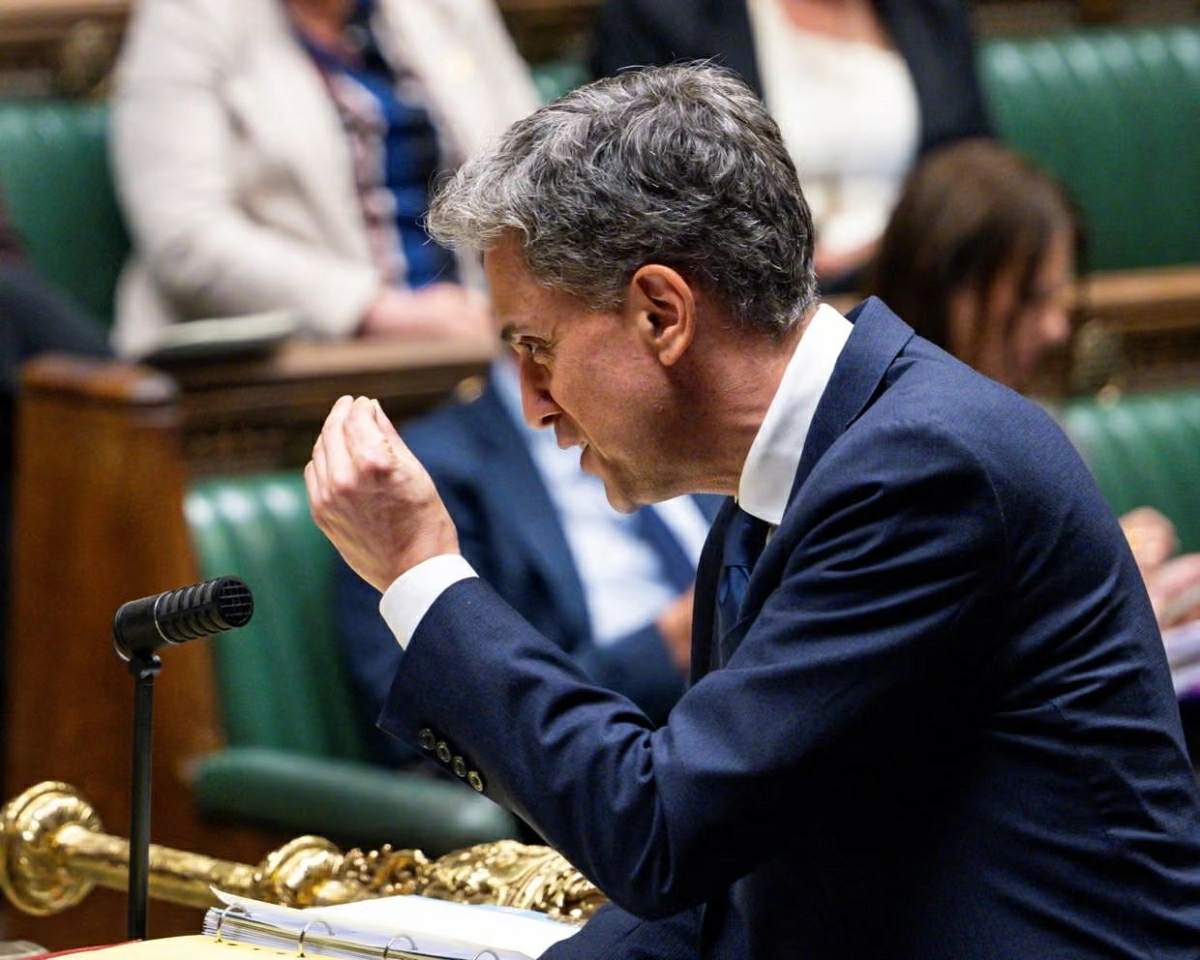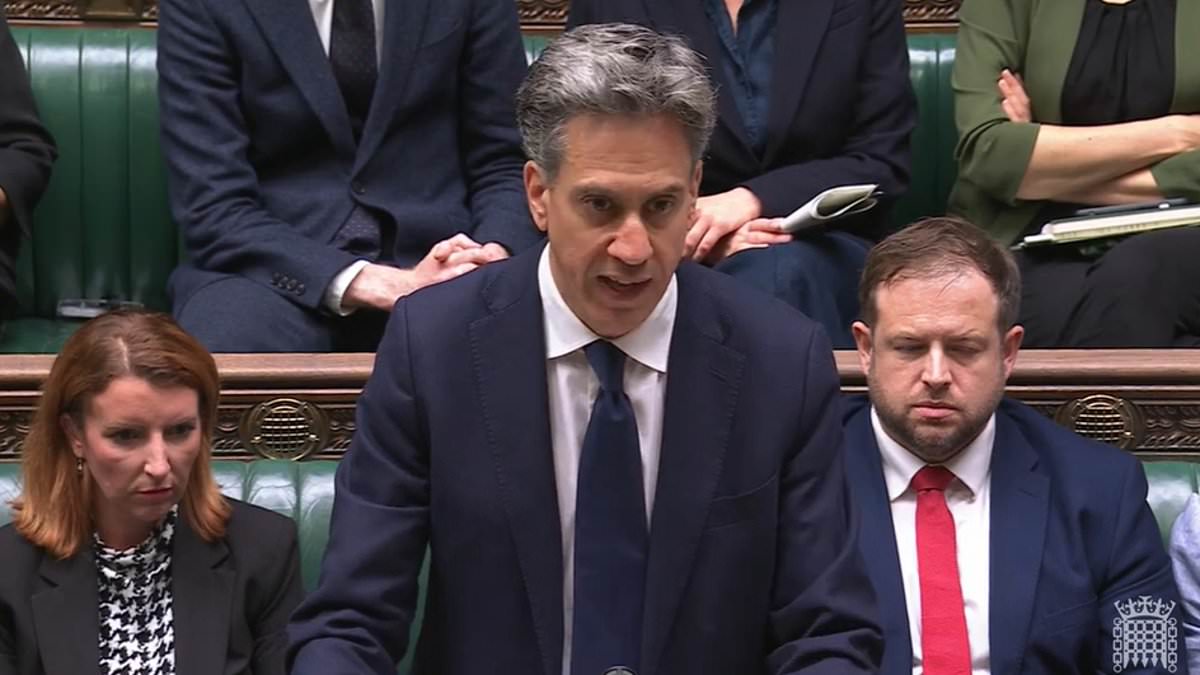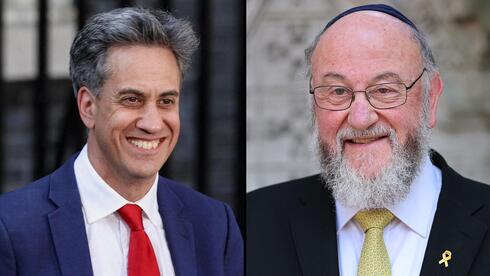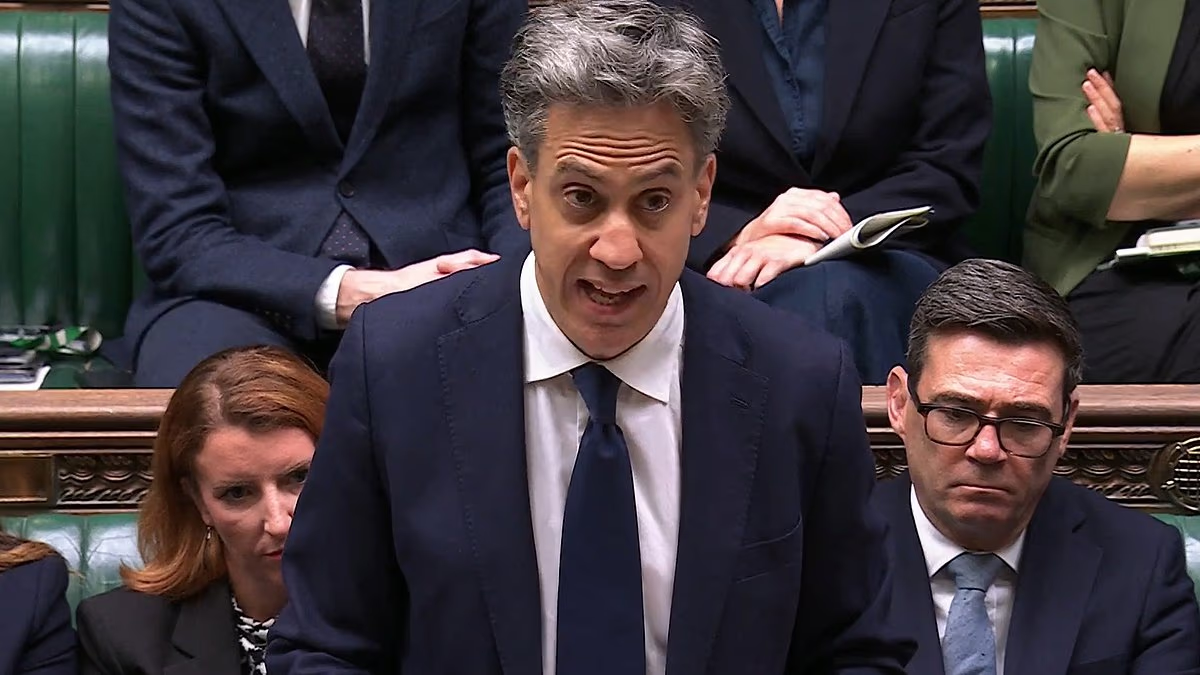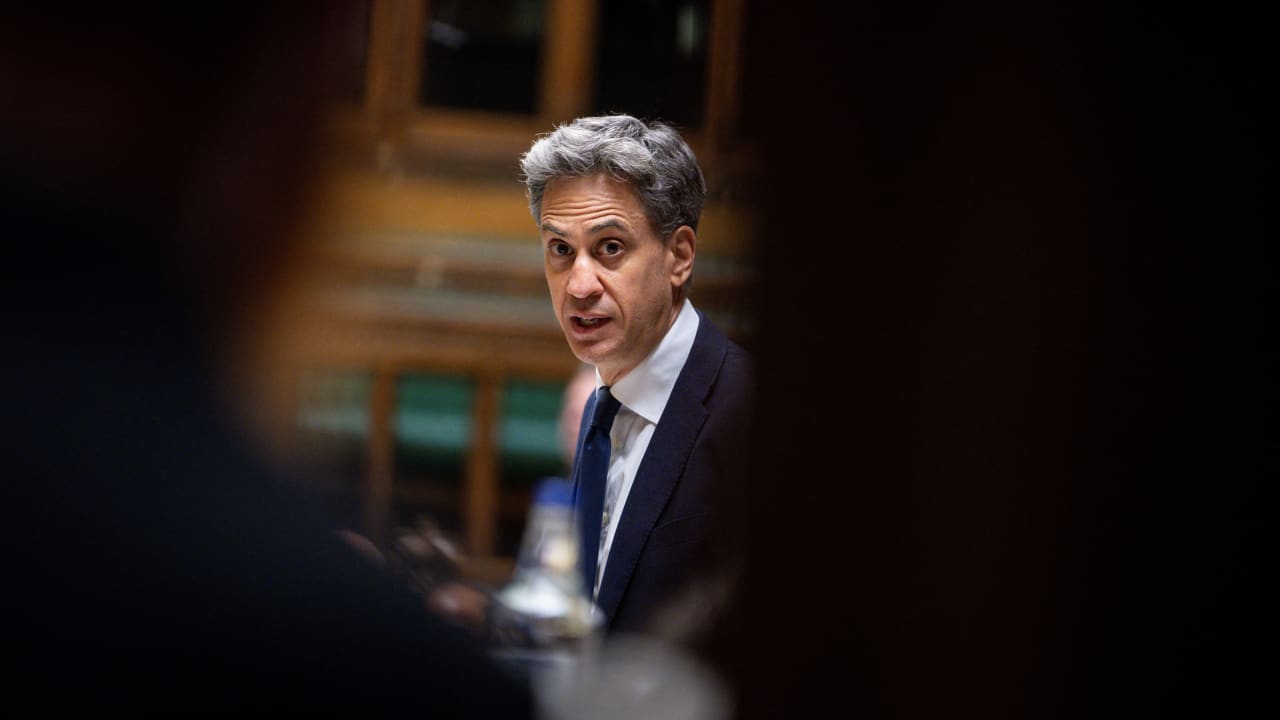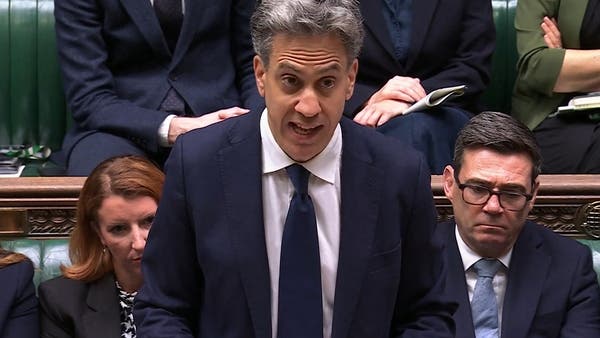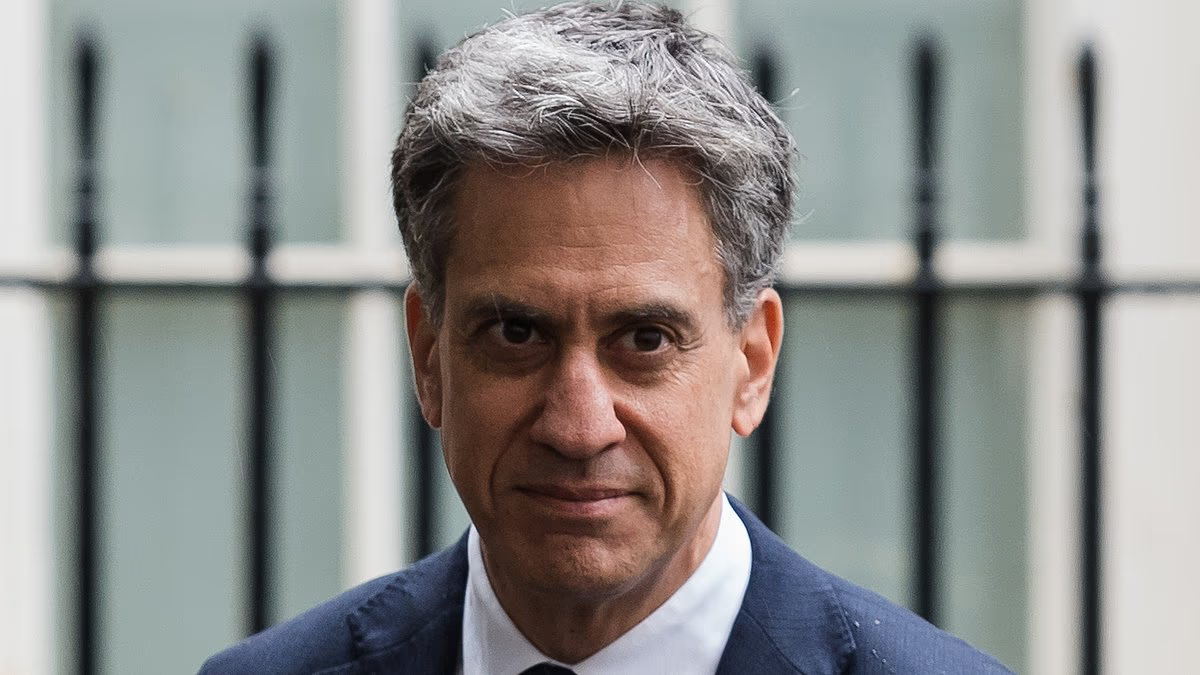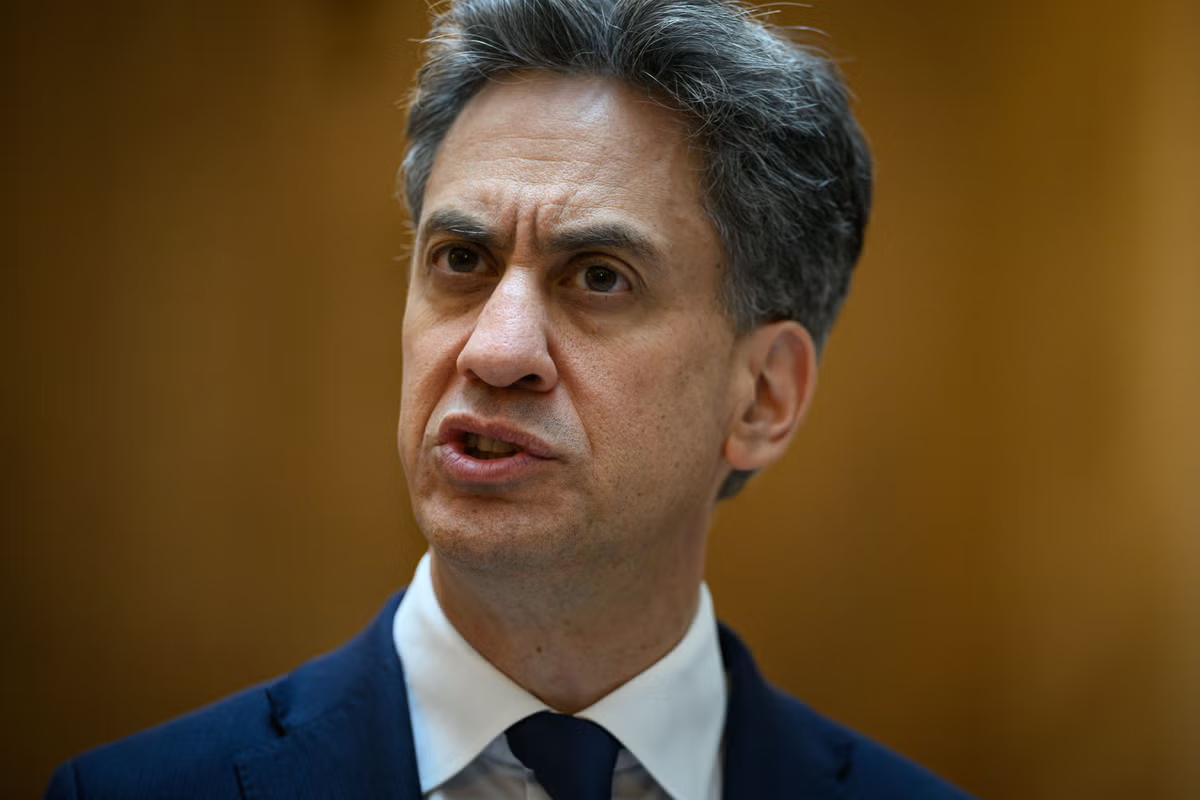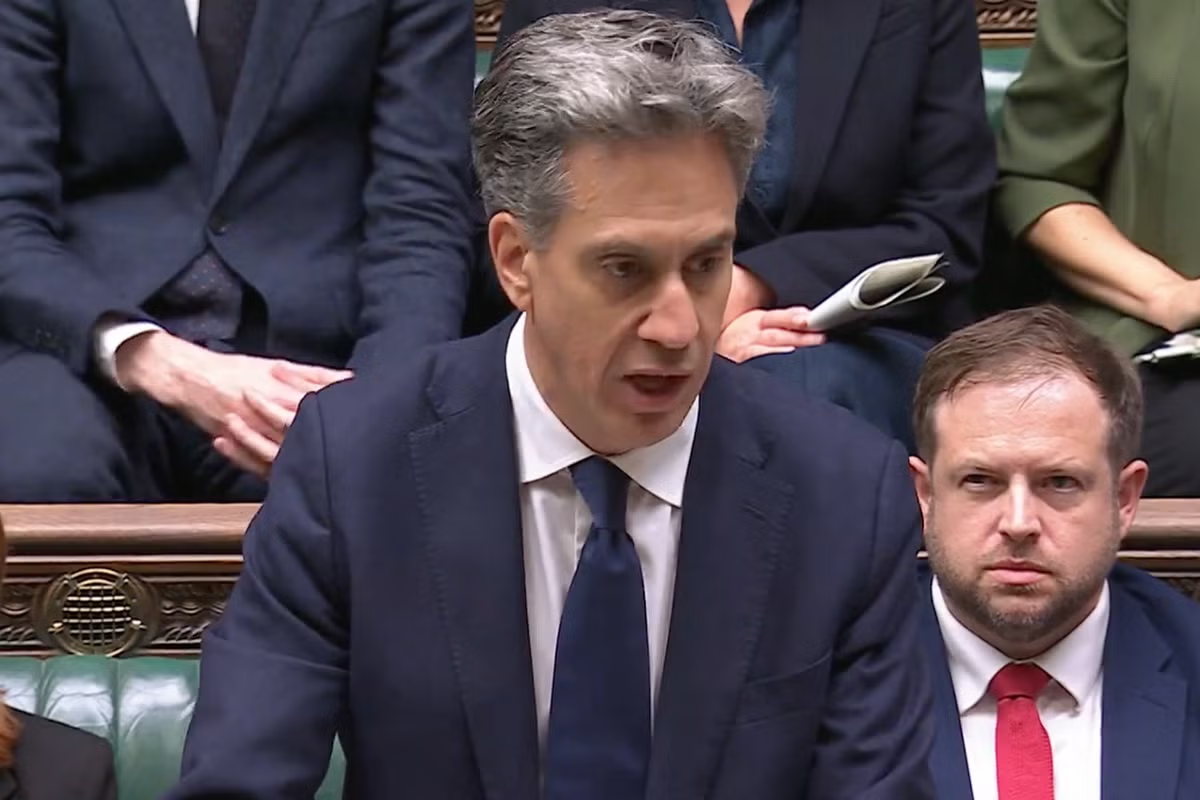
Ed Miliband said he “regrets” Israel’s response to a ban on trade with illegal settlements in the West Bank, but insisted it was “the right thing to do”.The foreign secretary also rejected domestic criticism that accused the Government of emboldening antisemites, including that of the chief rabbi Sir Ephraim Mirvis. He said: “I’m a proud British Jew and I don’t agree with the chief rabbi.“I have great respect for the chief rabbi, but I don’t agree with him.It has also emerged that Donald Trump did not push back on British plans to sanction Israeli settlements, after being informed of the plans by Andy Burnham. The US president held a phone call with the prime minister earlier this week, before Mr Miliband announced a trade ban on goods on imports from the Occupied Palestinian Territories. A Western official briefed on the call said: “There was no request to hold off.” Israel has since announced a raft of countermeasures, which included the closure of the British consulate in Jerusalem.Foreign minister Gideon Saar said the Labour government “has left us no choice but to respond to its hostile actions”, as he also declared that 12 British officials, including Jeremy Corbyn, were banned from the country.Britain must do more to keep the dream of a Palestinian state aliveThe expansion of Israeli settlements in occupied territory is wrong and should be reversed. Britain’s leverage over Benjamin Netanyahu’s government, however, is limited.As a nation, we have some historical responsibility for the situation in Israel-Palestine, but that does not give us much power now. Hence the logic of British policy over recent decades, which has emphasised working with other countries – above all, the United States – to maximise our influence.We have to be realistic, therefore, about how much difference will be made by the announcement by Ed Miliband, the foreign secretary, of a ban on Israeli goods and services connected with unlawful settlements.Read the full editorial here:Holly Evans9 September 2026 10:43Is the Labour Party united on the issue?The Labour Friends of Israel group has argued that a trade ban could lead to a “de facto boycott” which applies to the whole of Israel because many companies are linked to settlements thanks to financial integration or supply chains.The group has also raised concerns that a trade ban could impact on opposition parties in Israel ahead of elections by adding to a “siege mentality” perpetrated by Israeli Prime Minister Benjamin Netanyahu.Peter Prinsley, vice-chairman of the group, told the BBC that trade sanctions on Israeli settlements create “a real risk of increased chances of attacks on the British Jewish community”.“We’re coming up to what are called the High Holidays, these are the most significant religious days for Jews all over the world and there is a heightened sense of vulnerability in the British Jewish community right now,” he said.Prime Minister Andy Burnham had vowed to take a stronger stance on Israel (Jack Taylor/PA) (PA Wire)Holly Evans9 September 2026 10:28Israeli embassy accuses UK of deploying 'nuclear option of sanctions'The Israeli embassy in London has insisted that the sanctions are due to internal Labour politics, and accused the UK of deploying a “nuclear option”. Speaking to the Today programme, Alex Gandler said: “A response and a conversation between friends is something that is wanted.“Operating a nuclear option of sanction between democratic countries, especially towards a country that is at war for the past few years and is fighting a shared enemy in Iran, is something that is unheard of.“Hence, our assessment that this has nothing to do with realities on the ground and everything to do with the fact that there’s politics involved.”Holly Evans9 September 2026 10:03Israel trade ban must be 'floor, not ceiling,' say rights groupsWhile rights groups have welcomed the UK government's decision to ban imports from illegal Israeli settlements in the West Bank, campaign organisations have stressed that the measures must serve as a "floor, not a ceiling".Citing ongoing loopholes that permit the UK to export weaponry used by Israel in Gaza – including components for F-35 fighter jets – the Stop the War Coalition has demanded further steps must be taken against to end British ties to violations of international law.In a statement issued on Tuesday, the coalition said: “If the government is serious about ending complicity, a full two-way arms embargo must follow.”The campaign group warned that bans on settlement goods, finance, and advertising only address part of the wider issues surrounding Palestinian statehood. Suha Kidwai9 September 2026 10:00How are the sanctions likely to affect UK trade?The Occupied Palestinian Territory accounted for only 0.0008% of the total value of UK imports in 2025, or £5 million in current prices, according to the Office for National Statistics (ONS).This figure covers all imports from the West Bank and Gaza Strip.The ONS does not give a breakdown of imports from different areas of the Territories.Of the £5 million imports, £4 million were fruit and vegetables, while £1 million were vegetable oil and fats.Fruit and vegetables are the main export from the occupied West Bank to the UK (AFP/Getty)Holly Evans9 September 2026 09:46What has caused the increase in tensions between the UK and Israel?A combination of the expansion of settlements, the conduct of the Israeli military in Gaza, and restrictions on humanitarian aid have caused growing tensions between the UK and Israel in recent years.In May 2025, the Government announced it was suspending negotiations on an updated trade agreement with Israel in response to Israel’s actions in Gaza.The UK also has an interim political, trade and partnership agreement with the Palestine Authority.Keir Starmer’s government recognised the state of Palestine in September last year, with provisional borders covering land occupied by Israel in the 1967 conflict, and said the UK had a moral responsibility to support a peaceful future for Israelis and Palestinians.The Government has already imposed sanctions on some Israeli citizens and organisations, and its guidance on “business risk” currently “strongly advises against” trade with “illegal Israeli settlements”.The UK has also criticised the E1 settlement in the West Bank in joint statements with other countries, warning the plan would “divide the West Bank in two and mark a serious breach of international law”.In May, the Government said UK businesses should not bid for construction tenders for settlement developments.Holly Evans9 September 2026 09:29This is why UK sanctions against West Bank settlers are so seismicA sudden and seismic row, allegations of “ethnic cleansing” against Jewish militia from the British government and a counterattack from Israel in shuttering the British mission to Palestinians have followed the UK’s decision to impose sanctions on Israel’s project to build illegal Jewish colonies on the occupied West Bank.In announcing the trade sanctions, foreign secretary Ed Miliband said: “The British government agrees that there is ethnic cleansing of Palestinians in areas of the West Bank - perpetrated by settler terrorists.“All too often the Israeli government has turned a blind eye to this, and worse, members of it have made statements and taken actions to support the forced displacement of Palestinians.”Read the full analysis from our world affairs editor Sam Kiley here:Holly Evans9 September 2026 09:13Why have the Israel sanctions been announced now?Global criticism of Israel’s handling of the war in Gaza, which has seen an estimated 73,000 people killed, and recent settler violence in the West Bank has been mounting in recent years. Sir Keir Starmer faced criticism from within his own party during his tenure as prime minister for his perceived inaction on the matter, with Andy Burnham stating Labour “didn’t get it right”. The UK announcement comes after Israel opened up tenders for the construction of some 1,200 settlement homes in the so-called E1 area - a strategically important area east of Jerusalem.Foreign secretary Ed Miliband said that the controversial development would render a two-state solution “unviable” by “cutting through the heart of Palestine”.He said more settlements had been approved under the four years of Mr Netanyahu’s government than in the previous 20 years and settler terrorism in the West Bank was “rampant”.He added that he believes the UK should have “acted sooner” to put the measures in place, saying the government “didn’t feel we could wait”.Palestinian mourners after two teenagers were killed in an act of settler violence (AFP/Getty)Holly Evans9 September 2026 08:55Miliband explains how sanctions on illegal settlements will workEd Miliband has explained how his new sanctions on illegal Israeli settlements will work, but admitted the measures will have “challenges”.The foreign secretary said he was “confident” the trade ban will be enforceable, as he seeks to make a “substantive difference” in the region.“It will be based on the postcodes of settlements, and companies that import to this country will have to vouch for where in the in Israel these products are coming from,” he told BBC Radio 4.He also said he would sanction companies that “might be engaging in the occupied territories”.“This is about seeking to have an impact on the services that are provided to expand the occupation,” he said.“And we are very serious about making a substantive difference and using the power of our sanctions regime to make a difference to the facts on the ground.”Athena Stavrou9 September 2026 08:36Holly Evans9 September 2026 08:31
Miliband doubles down on Israel sanctions and hits back at Chief Rabbi - live
Israel has hit out at Ed Miliband’s plans, calling them ‘outrageous lies’ after a raft of sanctions were announced on Tuesday
1,522 words~7 min read