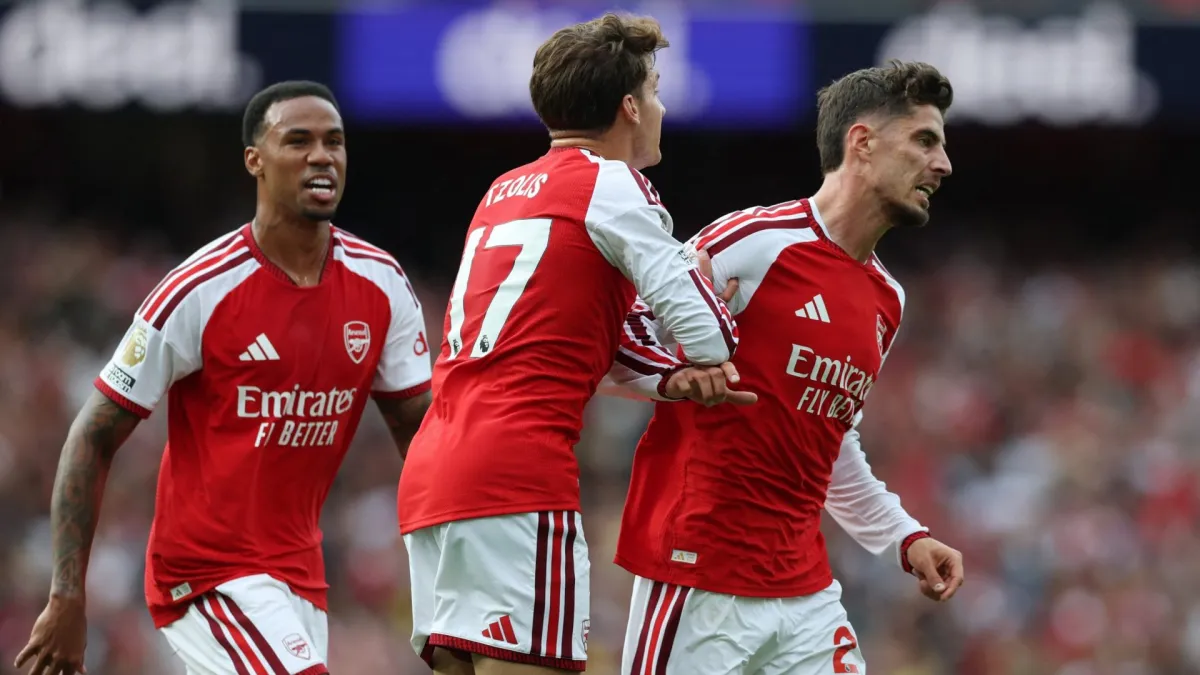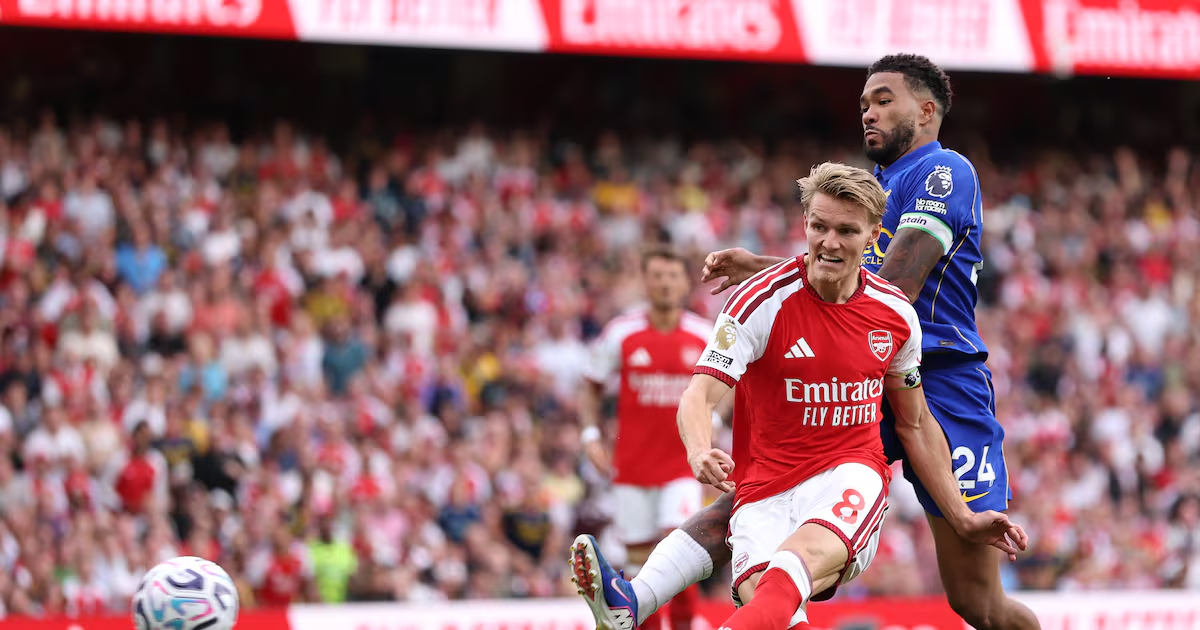
Welcome to week three of The Athletic’s Premier League performance table — a ranking system that really does not appreciate tightly-contested matches.In case you missed week one, or week two, this is not the official standings, where results are the only thing that matters.In our performance-based take, it is a clean slate at the start of each gameweek, which means you can go from top to bottom (and vice versa) in the space of a few days, with the one-to-20 rankings assessed purely on how well each team played in their previous match.You can also stay bottom. Sorry, Fulham, we know that you set up camp in the Crystal Palace penalty area on Saturday, but defending at the other end does actually matter.In case you are wondering how we decide where to position teams, we watch all 10 Premier League games in full across Friday, Saturday and Sunday (Monday too, if required), make copious notes about the good, the bad and the ugly at each match, and try to make sense of it all afterwards.To describe this gameweek as tricky is an understatement. There were a couple of exceptional 45-minute performances and some strangely subdued displays (Brentford and Mamadou Sangare, we take full responsibility for Saturday, after getting far too carried away in the first two gameweeks). More generally, though, it was a weekend in which there was precious little to choose between a dozen or more sides.Hopefully, the summaries below continue to provide you with a weekly snapshot of each club’s performances across the 2026-27 Premier League. And, naturally, we welcome your feedback.1. Arsenal (last week: seventh)Arsenal 2-1 ChelseaMikel Arteta called it an “avalanche”.The Arsenal manager was talking about the way his team responded to going a goal behind inside two minutes on Sunday, and the wave after wave of attacks that produced a sense of inevitability that the champions would turn this game around.Martin Odegaard ran the show. Kai Havertz reminded everyone why he is such an intelligent footballer. New signing Ezri Konsa introduced himself to the Emirates Stadium crowd in a way they will never forget (a superb challenge on former Aston Villa team-mate Morgan Rogers, whose touch was far too heavy – albeit not as heavy as one Viktor Gyokeres took later on), and Riccardo Calafiori continues to thrive in a position that is probably best described as ‘everywhere’.There were important contributions from others, too, including Christos Tzolis, who was back on song after a difficult evening at Villa Park in gameweek two – his pass, Havertz’s nonchalant dummy and Odegaard’s emphatic finish delivered the match’s defining moment.
Arsenal avalanche, Fulham an accident waiting to happen. Who won the Premier League weekend?
Kai Havertz and co already look in fine fettle as they ramp up their title defence, but Alvaro Arbeloa's side are struggling
4,077 words~19 min read