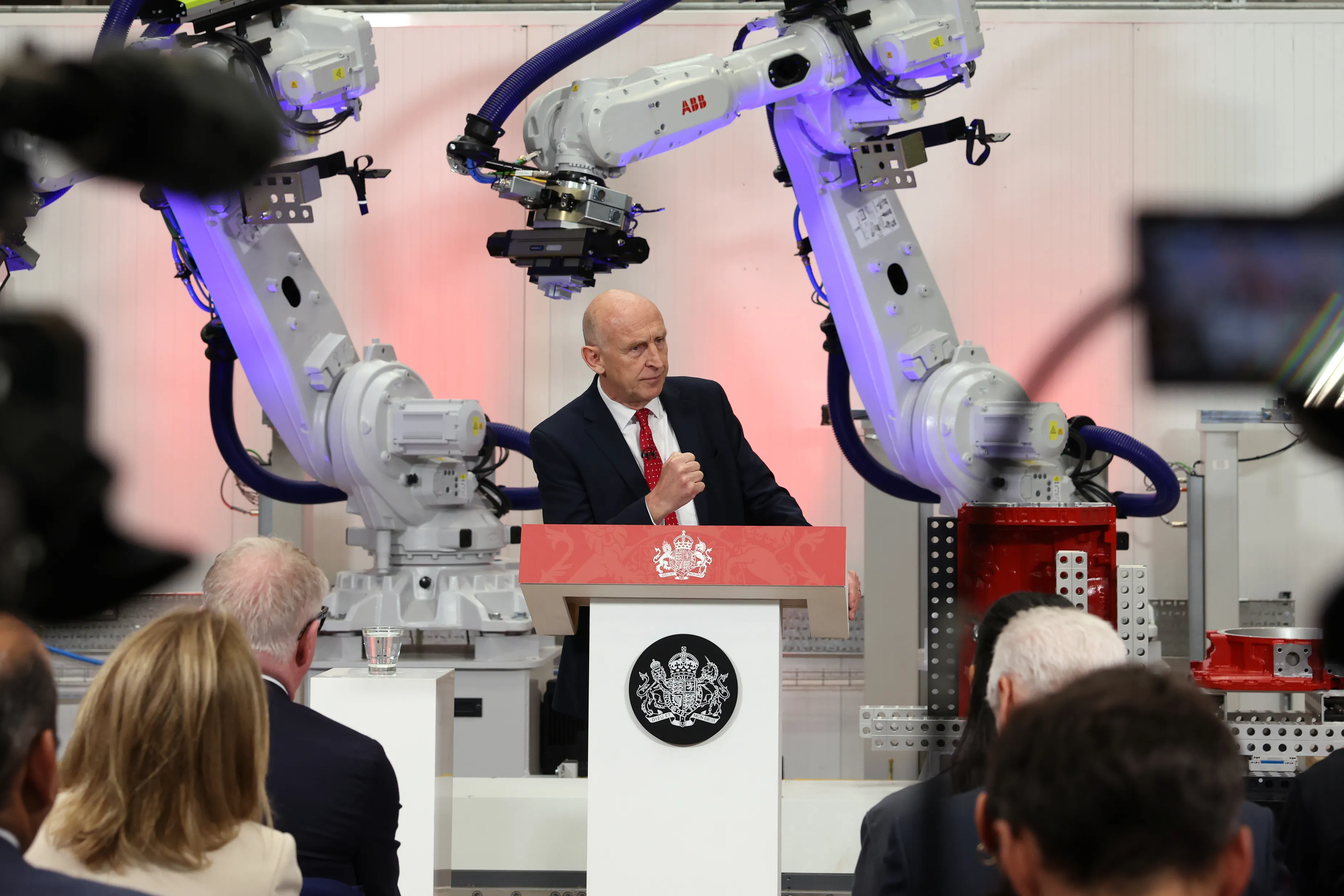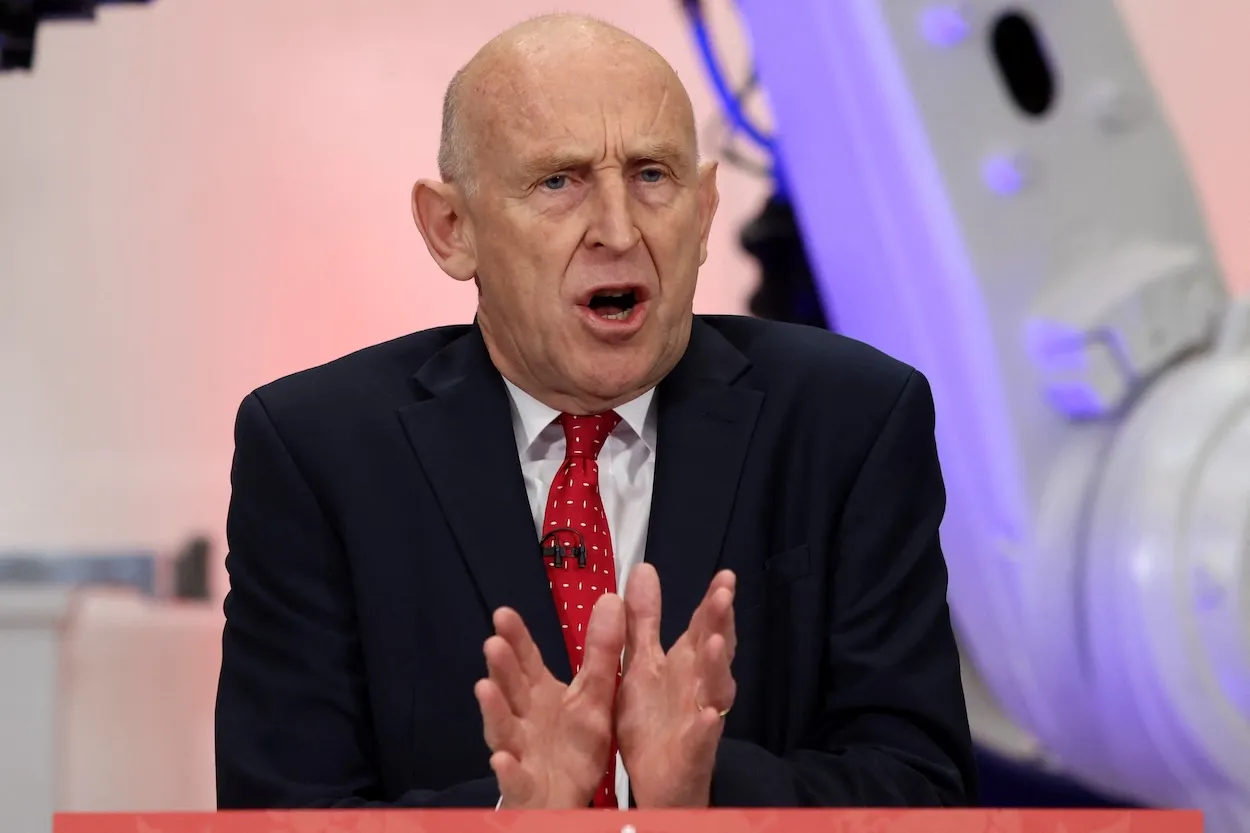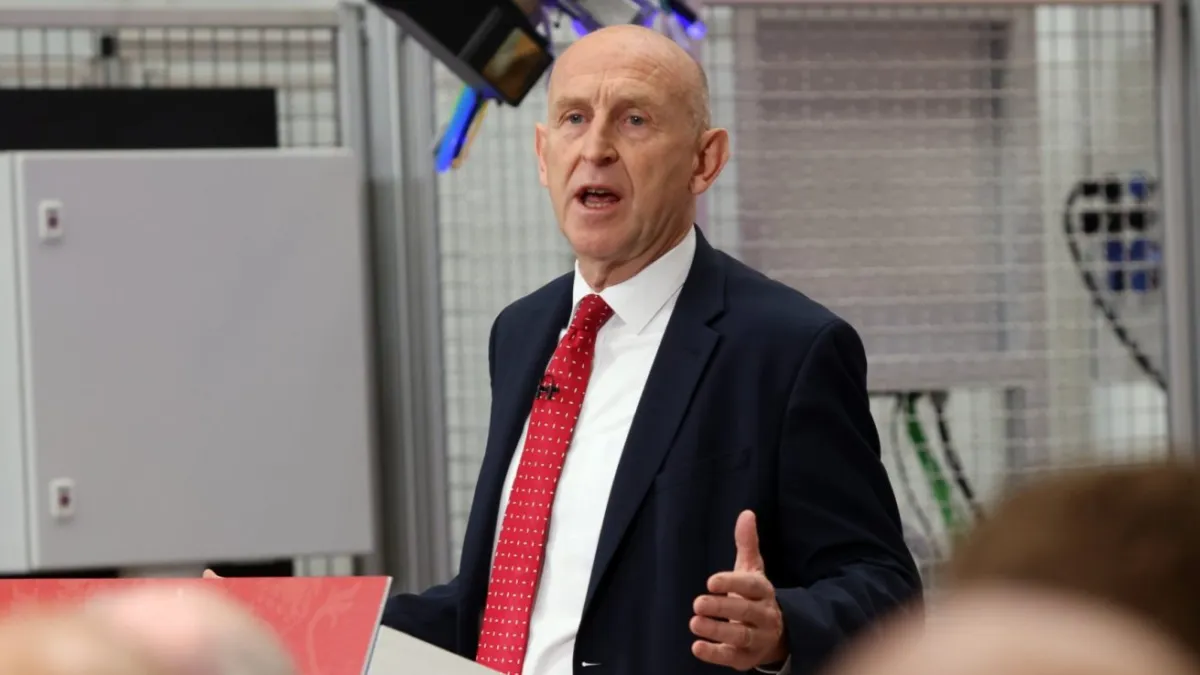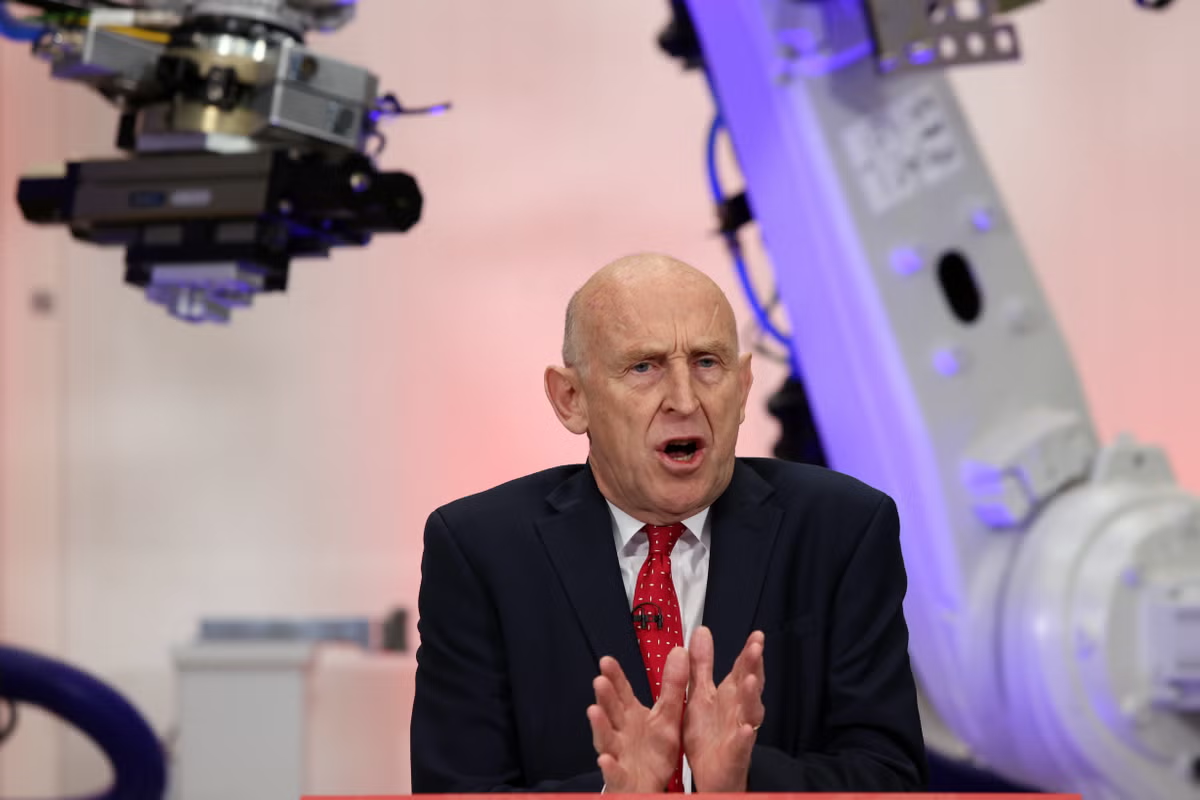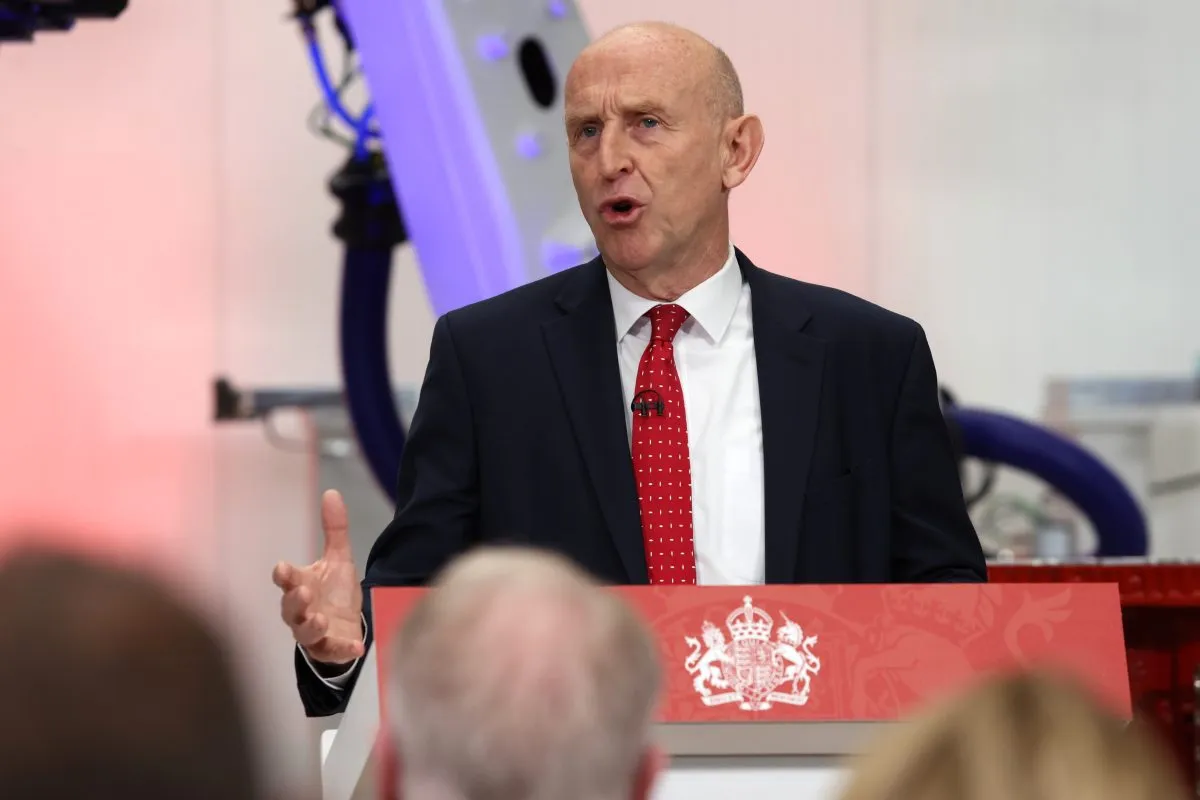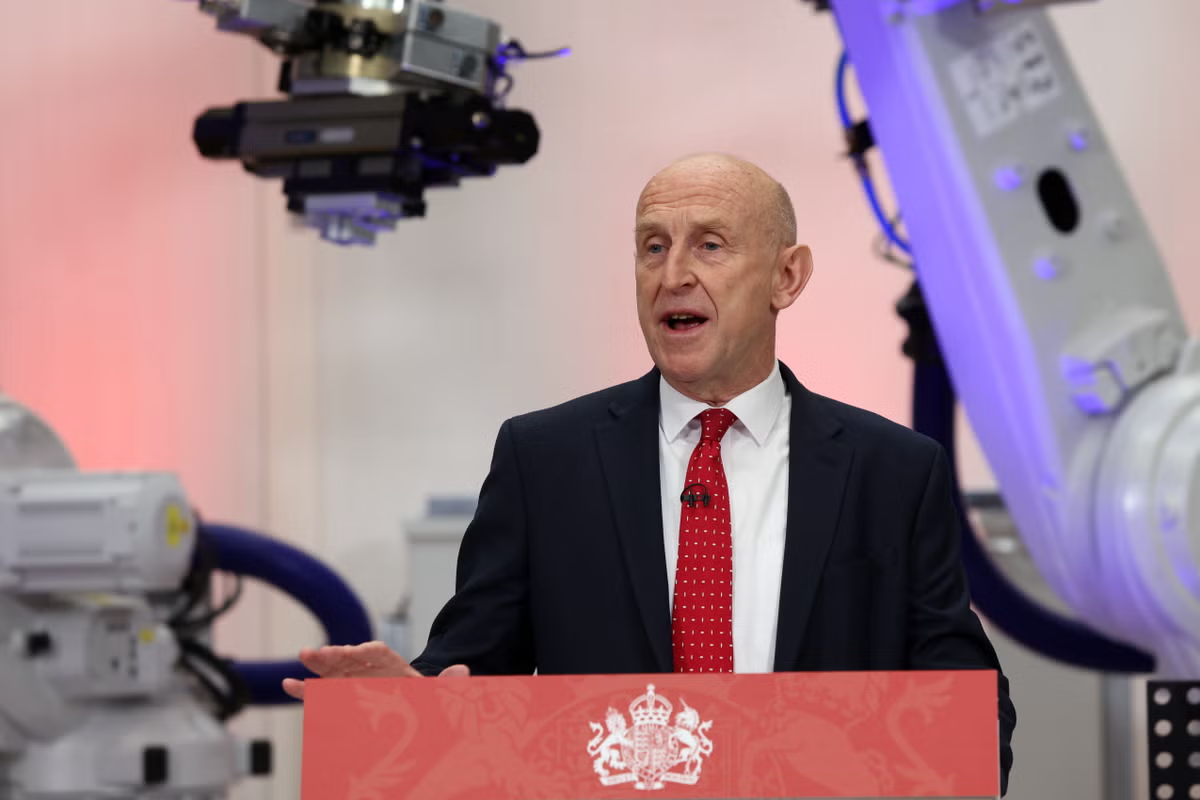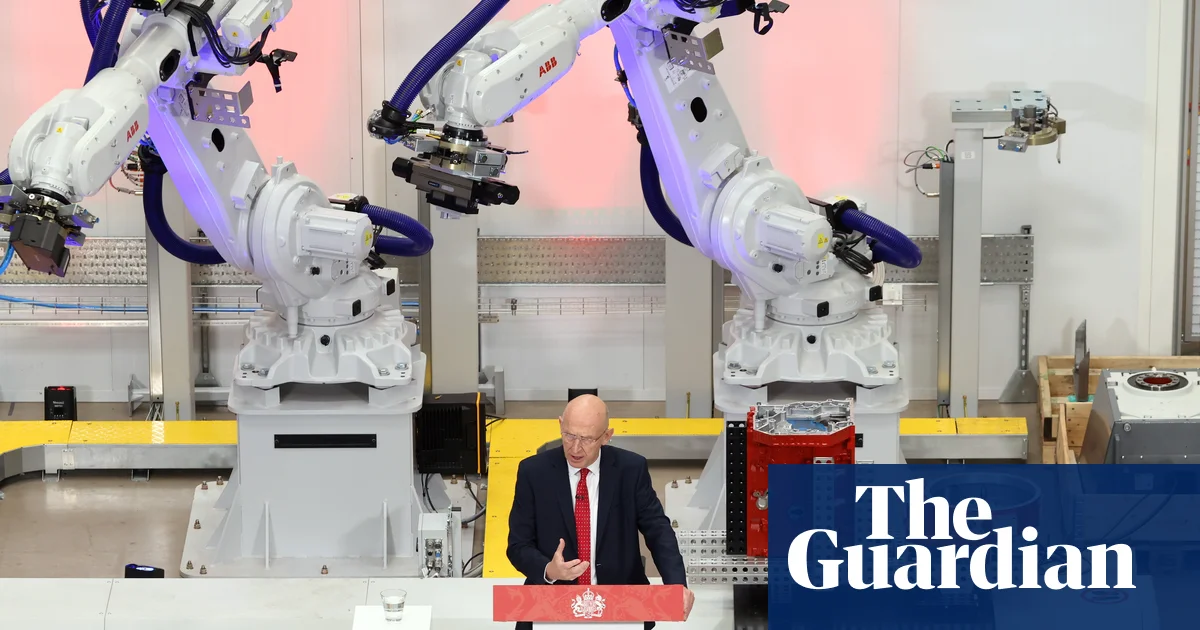
John Healey tried his best to be upbeat when he made his first major speech as Chancellor of the Exchequer yesterday. He was clearly anxious not to repeat the mistakes of his predecessor, Rachel Reeves, whose early days at the Treasury were a case study in amateur-hour economics from which she never really recovered.So determined was she to blame the Tories for her supposedly terrible inheritance that she talked the economy into the ground. If things are that miserable, people and business concluded, then we'd better tighten our belts – so companies stopped investing and consumers stopped spending.Healey was a ray of sunshine by comparison. We were 'world-beaters' in so many fields, with 'huge latent potential'. The country is 'turning a corner'. Sunny uplands beckoned as we seized 'the opportunities of new technology and new ideas'.In essence, it was the usual political pablum we've heard countless times before from ministers of all ideological stripes. But at least it was an improvement on Reeves's knack of making economic stagnation a self-fulfilling prophesy.In the process our new Chancellor said a lot of the right things. He promised to take an axe to what he called the 'thicket' of consultation, litigation and administration smothering every major investment, public and private, which delays or even stymies economic growth.Indeed, he vowed to end Britain's 'consultation culture' and even to sideline the concept of 'legal risk', which has long dominated ministerial discussions thanks to the omnipresence of lawyers across Whitehall these days, intimidating governments from taking bold decisions.Business regulation, he added for good measure, would be cut by 25 per cent by the end of the decade (though he gave no clue as to how we would be able to measure that). So far, so good, you might think.Yet his efforts to accentuate the positive were rather undermined by his funereal delivery. His upbeat words didn't match his downbeat tone. He spoke as if he was intoning at the graveside of a loved one. Perhaps with good reason. Healey had nothing to say about our industrial energy costs, the highest in the world, which have contributed to Jaguar Land Rover's problems, writes Andrew NeilFor as he spoke, news broke that Jaguar Land Rover (JLR) – one of Britain's few remaining world-class car companies – had confirmed 4,000 workers were to be made redundant.So much for all Labour's talk of re-industrialisation. It's never really been clear what it means by that. But it obviously cannot mean the loss of 4,000 well-paid, skilled manufacturing jobs.Healey had nothing to say about our industrial energy costs, the highest in the world, which have contributed to JLR's problems. Nor about his government's increase in National Insurance contributions and minimum wages, which have made labour so much more expensive to employ.Nor did he confront the threat of China Shock 2.0 which, by dumping cheap electric vehicles at below-cost into our car sales rooms, could wipe out our motoring industry within a decade.But there's a more fundamental reason for his nervous gloom: he's caught between a rock and a hard place. The rock being the bond markets where governments go to borrow and which are in no mood to lend him any more, except at prohibitive cost.The hard place being his Left-wing backbenchers, whose collective economic illiteracy leads them to think there really need be no limits on a Labour government's ability to borrow, tax and spend on what they regard as the 'right' things.We will have to wait for his first Budget on October 28 to see how he intends to reconcile the irreconcilable. I doubt even Harry Houdini could escape from the bind Healey is in.Yesterday he contented himself with the usual barbs about his Tory predecessors: David Cameron (austerity); Boris Johnson ('hard' Brexit); Liz Truss ('crashed the economy').But this can only get him so far. Safe passage through the upcoming Labour Party conference, no doubt, which is always easily bought off with a bit of Tory-bashing. But through the Budget? No chance.The bond vigilantes are watching him like a hawk – they're already demanding the highest interest rate premium in the G7 to lend to the UK. He has no room for manoeuvre – and that is entirely of Labour's own making.True, it inherited an economy which was borrowing too much, spending too much and taxing too much. But Reeves (with economics-lite Sir Keir Starmer as her willing accomplice) then compounded the problem with two Budgets that taxed even more, borrowed even more, spent even more.Compared with the Office for Budget Responsibility (OBR) forecasts it inherited for tax and borrowing between 2024 and 2029, Labour is cumulatively borrowing £260billion more and taxing £350billion more. That is the folly that Starmer-Reeves have bequeathed Healey. That is the straitjacket he's now in.Of course, if Healey was able to deliver on the deregulation agenda he outlined yesterday, he could spark some life back into the economy that could transform our fiscal position. But the omens are not propitious. Let us not forget that Labour was elected only two years ago on a promise to simplify and streamline the planning process to unleash a housebuilding boom that would result in 1.5million new homes in England alone between 2024 and 2029.It was the building boom, Starmer-Reeves assured us, that would propel Britain to the top of the growth league tables, just as housebuilding had spurred growth in the 1930s and 1950s.Alas, the axe used to prune planning must have been blunt. In the past financial year (2025/26), only 143,000 new homes were completed in England. No way you reach 1.5million by 2029 at that run rate.Even taking the broader definition of 'net additional dwellings', which covers not just new houses built but existing properties converted to residential purposes, the annual run rate is about 200,000. It needed to be 300,000 for five years.And it's getting worse – almost every indicator of construction activity is getting worse. One respected index has been in the doldrums for the past 20 months, with no sign of a revival. Builders all over the country report a sharp drop in residential construction. The fact Angela Rayner is now in charge of hitting the target hardly encourages confidence.The reality is this: Labour has as much chance of hitting the 1.5million mark as Scotland has of winning the World Cup. And, though I don't follow football, even I know Scotland is not going to win the World Cup.So what are we left with? The Burnham mantra, which Healey faithfully repeated yesterday, that growth will flourish with a bigger, more activist state and by devolving state power and money to regions and cities. There is very little evidence to support either contention – and plenty to suggest the opposite is true.The UK state is already so big it crowds out or smothers private-sector dynamism. That's not just true here but across the European Union, which is why European growth lags so far behind America and Asia. If devolution really was the magic elixir, why are Scotland and Wales not booming (which they most assuredly are not)?Healey and Burnham share the same statist conceit: That government is the fount of economic growth. They are about to waste the rest of this decade being proved wrong.We will all suffer as they undergo this expensive education in the bleeding obvious. No amount of happy talk can make it otherwise.READ MORE: Chancellor is branded 'Continuity Reeves' after tax rise hint... as Jaguar axes 4,000 jobs
ANDREW NEIL: Healey is in a real bind with bond markets and the Left
John Healey tried his best to be upbeat when he made his first major speech as Chancellor of the Exchequer yesterday.
1,238 words~6 min read