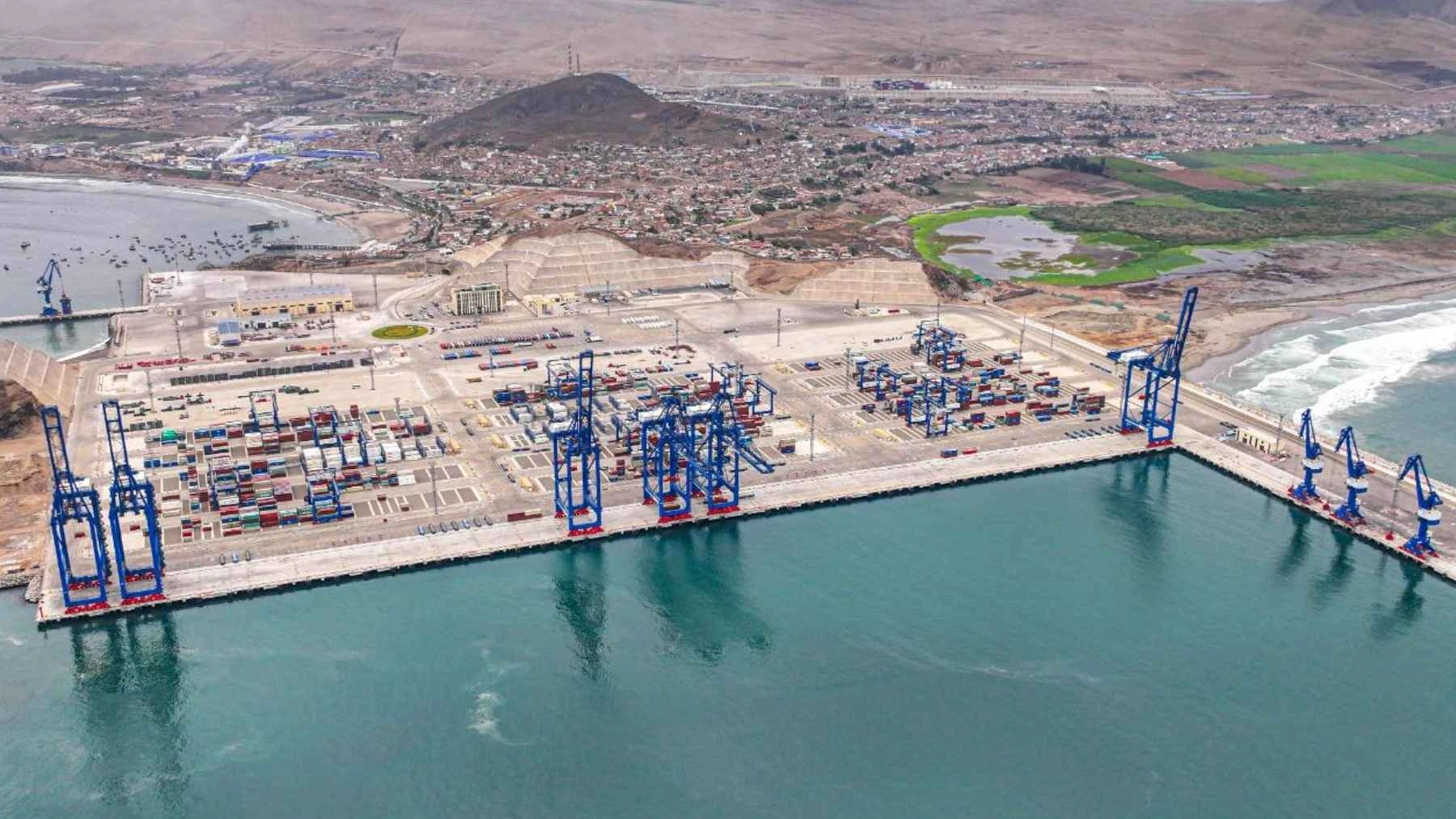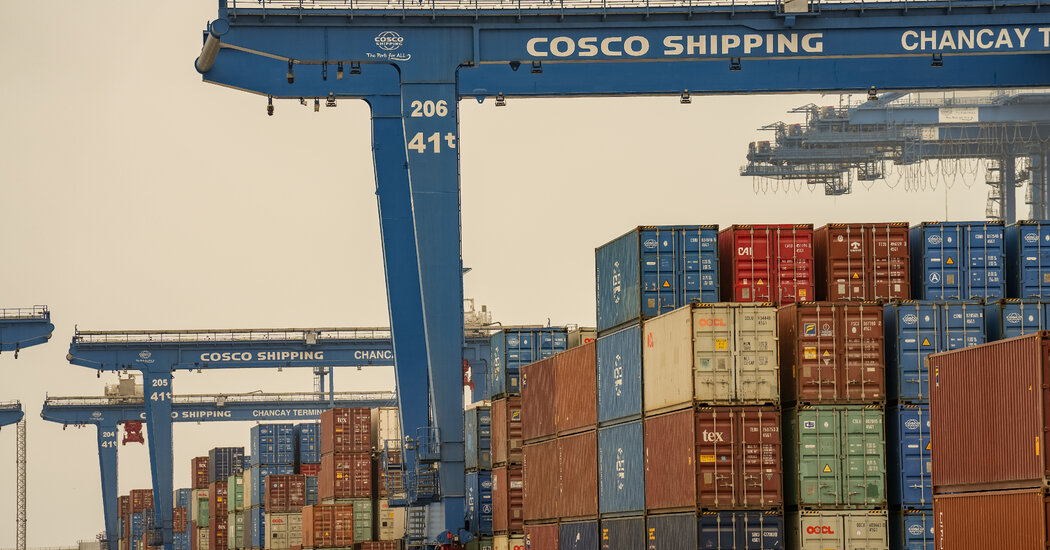
AdvertisementSKIP ADVERTISEMENTPeru Shows the Limits of Washington’s Anti-China PushAs Secretary of State Marco Rubio travels this week to Peru, its growing economic ties to China have raised tensions with the U.S., but show no signs of reversing course.Listen · 10:13 min The enormous new Chinese-operated cargo port at Chancay, Peru, is a source of tension with Washington, but Peruvians see it as economically vital.Credit...Sara Wayra for The New York TimesBy Genevieve GlatskyPhotographs by Sara WayraGenevieve Glatsky and Sara Wayra reported from Lima and Chancay Port.Sept. 7, 2026Peru’s ambassador in Washington, Luis Miguel Castilla, received a stern phone call in 2015 from the State Department, after U.S. officials learned that a Chinese firm would finance a sprawling new Pacific Coast port project.Why, they asked, was Peru handing Beijing a strategic foothold in South America?Mr. Castilla’s answer was blunt: Western investors had already passed.The port’s Peruvian private sector promoters “came to knock on doors here and in Europe, and no one opened the door,” Mr. Castilla said. “So, any space left behind is space that someone else takes.”Today, the $1.3 billion Chinese-backed mega-port in Chancay, north of Lima, the capital, has become the most visible symbol of China’s expanding economic presence in Peru.It is also a key reason the country, which Secretary of State Marco Rubio is planning to visit this week, has emerged as a testing ground for one of President Trump’s core objectives in Latin America: rolling back Beijing’s influence in the Western Hemisphere.ImageWorkers remotely controlling and monitoring port operations in April at Chancay.Credit...Sara Wayra for The New York TimesSenior administration officials have warned, while offering no evidence, that Chinese-financed projects threaten Peru’s sovereignty and, in the case of the port, could give Beijing a military foothold.But in Peru, Washington’s pressure collides with a stubborn reality. China has become Peru’s largest trading partner and a major investor in mining, energy and infrastructure — a relationship that has helped underpin one of South America’s most resilient economies.Even the inauguration in July of President Keiko Fujimori, a staunch conservative who has pledged closer security cooperation with Washington, is unlikely to deliver the anti-China shift the Trump administration seeks.She has given no indication she will scale back ties to China. In her first speech to Congress, Ms. Fujimori described Peru as a “bridge” between Latin American and Asia.Over the past decade, Peru has cycled through nine presidents, four impeachments, repeated waves of mass protests, one attempted self-coup and countless corruption scandals.ImageU.S. officials have depicted the Chancay port and other Chinese-financed projects as a strategic threat, but Peru says it needs the infrastructure investment.Credit...Sara Wayra for The New York TimesYet it has maintained steady economic growth, low inflation and strong investor confidence, avoiding the debt crises and sharp downturns that have plagued several of its neighbors.The benefits, however, have been uneven. Millions of Peruvians still live in poverty and rely on underfunded schools and health care.Experts attribute Peru’s economic stability largely to an independent central bank and successive governments that left economic policy to career economists, insulating it from politics.In addition, China has become a crucial pillar of Peru’s economy. When the 2008 financial crisis cratered U.S. and European demand for minerals, China’s construction boom continued absorbing Peruvian copper and iron. China eventually surpassed the United States as Peru’s largest trading partner and today buys roughly a third of the country’s exports.“China has been the perfect partner during these years because they bought everything,” said Eduardo Dargent, a Peruvian political analyst.ImageLow-cost Chinese vehicles unavailable in the United States are widely sold in Peru. “Almost all brands have dropped a bit in popularity,” said Antonio Anguiano, a Chevrolet sales manager. “Because the Chinese brands have gone up.”Credit...Sara Wayra for The New York TimesBeyond trade, Chinese firms have steadily expanded into sectors Western businesses have retreated from — Chinese state-owned enterprises have bought Peruvian infrastructure companies from U.S. and European firms. Today, Chinese companies control Lima’s electricity distribution system and play a role in transportation, banking and telecommunications.Experts describe China as a patient partner, with state-owned firms that often think on longer timelines than private Western companies under pressure to deliver quarterly profits to stockholders. President Xi Jinping of China inaugurated the port in November 2024, calling it “a new Asia-Latin America land-sea corridor for the new era.”To Washington, however, China’s presence represents something ominous. U.S. officials have repeatedly warned that the Chancay port could eventually provide access for the Chinese navy. After it opened, a Trump administration envoy proposed a 60 percent tariff on cargo routed through Chinese-controlled ports in Latin America, though it has not come to pass.ImageCranes at the Chancay shipping terminal.Credit...Sara Wayra for The New York Times“China’s investment advances the Chinese Communist Party’s political agenda abroad, often at the expense of the receiving nation,” the State Department said in a statement. “Through President Trump’s leadership, the United States is working to address risks posed to the security and prosperity of our hemisphere.”Diplomatic friction escalated this year after a legal dispute erupted over what authority Peru’s transportation regulator maintained over the privately operated port. “Peru could be powerless to oversee Chancay,” which is controlled by “predatory Chinese owners,” the State Department wrote on X in February. “Let this be a cautionary tale for the region and the world: cheap Chinese money costs sovereignty.”But Peruvian officials say the port is regulated by the port authority, police, customs, transportation ministry and others.“We face constant and meticulous oversight,” said Paola Fune, who oversees government affairs for the port.The Chancay port, operated by the Chinese state-owned shipping giant COSCO, has reduced shipping times to China from as many as 40 days to 23, port officials say, and is expected to become a major trade hub, increasing Peru’s integration with Asian markets.The port features autonomous cranes, driverless trucks, remote-controlled cargo operations and a mile-long tunnel routing container traffic beneath the city.ImagePart of the Chancay project is a mile-long tunnel, for trucking containers to and from the port.Credit...Sara Wayra for The New York TimesHotels and restaurants are rapidly expanding in Chancay, while universities and health care networks have begun buying land for satellite campuses and offices.Peru’s political and technocratic elite view the port as a major win for the country and bristle at being told by the Trump administration how to manage their commercial relationships.“They’ve been taking potshots at it, but they can’t make it stick,” said Cynthia Sanborn, a leading China scholar at Lima’s Universidad del Pacífico. “Peruvians are really proud of that port.”“The U.S. comes along and says, ‘Oh, you’re losing your sovereignty.’ That’s very paternalistic,” Ms. Sanborn said.ImageU.S. officials criticize China’s investment in Peru, “but they can’t make it stick,” and offer no comparable alternative, said Cynthia Sanborn, a China scholar at Universidad del Pacífico in Lima.Credit...Sara Wayra for The New York TimesCriticism from Washington rings hollow, analysts say, because many Peruvians see a stark contrast between Chinese and American engagement.While China has poured money into ports, mines and electricity infrastructure, U.S. engagement has focused on security projects paid for by Peru, including a $1.5 billion modernization of Peru’s naval base and the purchase of American F-16 fighter jets.“The Chinese are investing in Peru and Peru is giving its money to the U.S.,” Ms. Sanborn said.U.S. pressure to buy 24 F-16’s provoked widespread criticism over the $3.5 billion cost and the strain on public resources.“Aren’t there other, more important uses for that money than buying fighter jets?” said Mr. Castilla, now a senior visiting fellow at the London School of Economics.The tension is visible in the combative posture of the U.S. ambassador, Bernie Navarro, whose sharp rhetoric has alienated Peru’s political class. When it briefly seemed the fighter jet deal would fall through, Mr. Navarro wrote on X that Washington would use “every available tool” to promote its interests “if you deal with the U.S. in bad faith.”ImagePaola Fune, who manages governmental affairs for the Chancay port, at a giant screen showing the global flow of goods to and from it.Credit...Sara Wayra for The New York TimesAcross Latin America, Chinese firms have financed more than 300 infrastructure projects worth over $130 billion, and increasingly dominate sectors like electronics and electric vehicles, said Enrique Dussel Peters, an economist at the National Autonomous University of Mexico.Washington has treated trade with China as an ideological question rather than an economic necessity for Latin America, he said, and may not recognize what a gargantuan task it would be to try to reverse China’s “massive presence across the Americas.”“It is as if people think that by making a decision on a Friday we can just make China disappear by Monday,” Mr. Dussel added.The United States remains a major trading partner for Peru and is the main market for agricultural exports and textiles, sectors that generate far more jobs than some Chinese-dominated industries.Mr. Castilla said he agreed with longstanding American complaints about smuggling, intellectual property theft and unfair competition from some Chinese firms. But, he added, pressuring countries to choose sides without offering comparable investment alternatives risks alienating allies and pushing countries closer to Beijing.The United States “is bullying us a bit,” he said.ImageCredit...Sara Wayra for The New York TimesYet Latin American leaders — even those closely aligned with Mr. Trump — show no intention of severing lucrative ties to China. They hope their region will benefit from being a battleground for influence between global superpowers.José Tam, a lawyer specializing in Asian investment and former head of the Peruvian-Chinese Chamber of Commerce, said Peru welcomes greater U.S. investment.“What should not really be our problem is the geopolitical aspect,” he said. “As a developing country, what we need is investment, and it’s all the same to us.”Mitra Taj contributed reporting from Lima.Genevieve Glatsky is a reporter for The Times, based in Bogotá, Colombia.A version of this article appears in print on , Section A, Page 1 of the New York edition with the headline: Peru’s Embrace Of China Draws Heat From U.S.. Order Reprints | Today’s Paper | SubscribeAdvertisementSKIP ADVERTISEMENT
Peru Shows the Limits of Washington’s Anti-China Push
As Secretary of State Marco Rubio travels this week to Peru, its growing economic ties to China have raised tensions with the U.S., but show no signs of reversing course.
1,657 words~8 min read