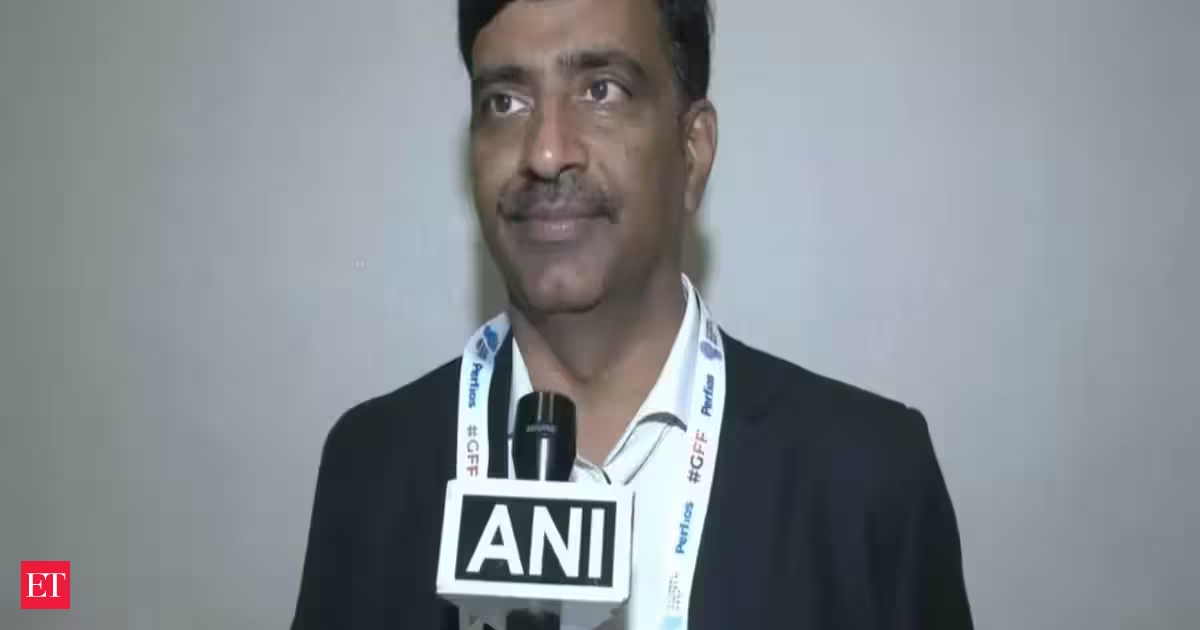
As UPI rapidly replaces credit and debit cards in merchant payments, fintech firm GetePay has called for a fresh look at the commercial sustainability of the digital payments infrastructure supporting India’s transaction boom.The Rajasthan-based company, which serves over one million merchants and works with over 300 partners, believes the industry may need to move beyond the zero-MDR model for UPI and consider a nominal transaction-linked fee to fund investments in technology, cybersecurity, fraud prevention, compliance and merchant servicing.UPI processed 24,162 crore transactions worth ₹314 lakh crore in FY26, registering 30 per cent y-o-y growth in volume and 21 per cent in value terms. By June, 55.49 crore users had been onboarded on the platform. UPI now accounts for about 85 per cent of digital payment transactions by volume.While the scale has strengthened UPI’s position as the country’s dominant digital payment rail, it has also intensified concerns over the economics of supporting the ecosystem. Unlike card payments, UPI merchant transactions have largely operated without a conventional Merchant Discount Rate (MDR).Praveen Sharma, founder, GetePay, said a nominal MDR could provide an additional revenue pool without undermining UPI’s affordability. “Even if it starts with some basis points, it is better than zero MDR,” said Sharma.At 5 basis points, a ₹10,000 transaction would attract a fee of ₹5, while a 7-bps charge would amount to ₹7. At scale, every ₹1 lakh crore of eligible annual transaction value could generate ₹50 crore in gross MDR revenue at 5 bps and ₹70 crore at 7 bps.The eventual distribution of such revenue among banks, payment aggregators and other ecosystem participants would depend on the structure of any policy framework.The issue is becoming more significant as UPI gains market share from cards and expands into higher-value and diverse merchant categories. Payment companies continue to incur costs on merchant acquisition, technology, compliance and servicing even as transaction flows shift towards a zero-MDR rail.For the RBI-licensed payment aggregator GetePay, the next phase of India’s digital payments growth will therefore hinge not only on transaction volumes but also on ensuring that the infrastructure powering UPI remains financially sustainable without compromising its affordability and accessibility.Published on September 7, 2026
UPI’s rise over cards creates sustainability challenge for GetePay
The Rajasthan-based company believes the industry may need to move beyond the zero-MDR model for UPI and consider a nominal transaction-linked fee to fund investments
357 words~2 min read