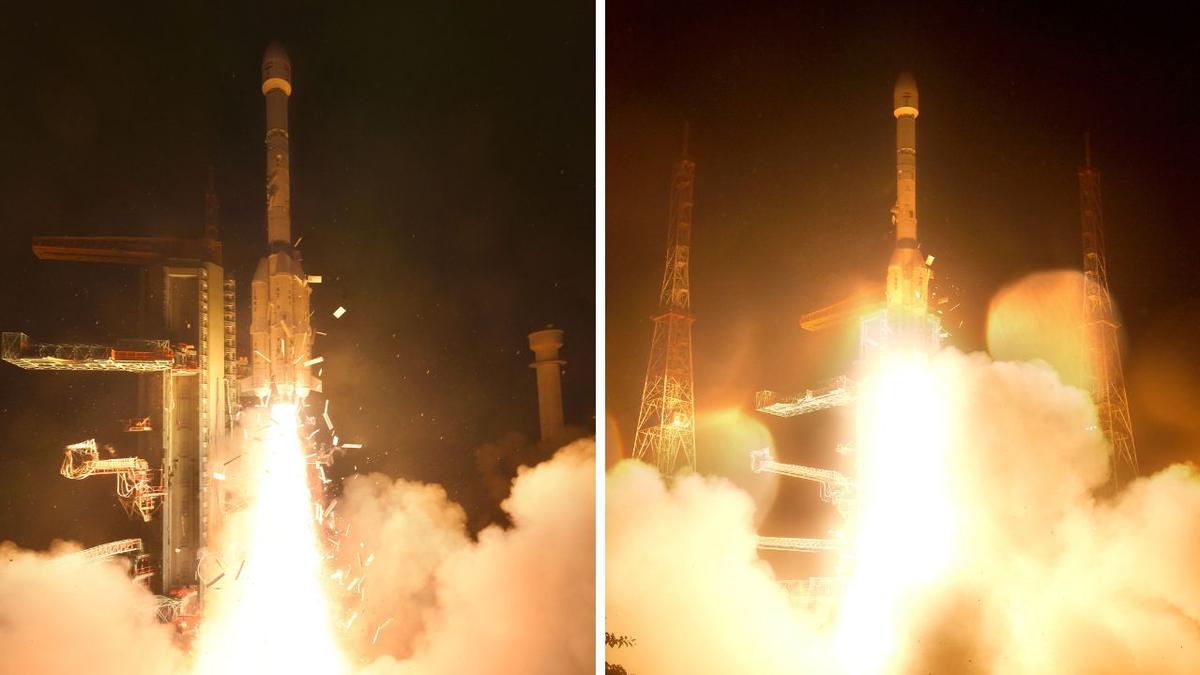
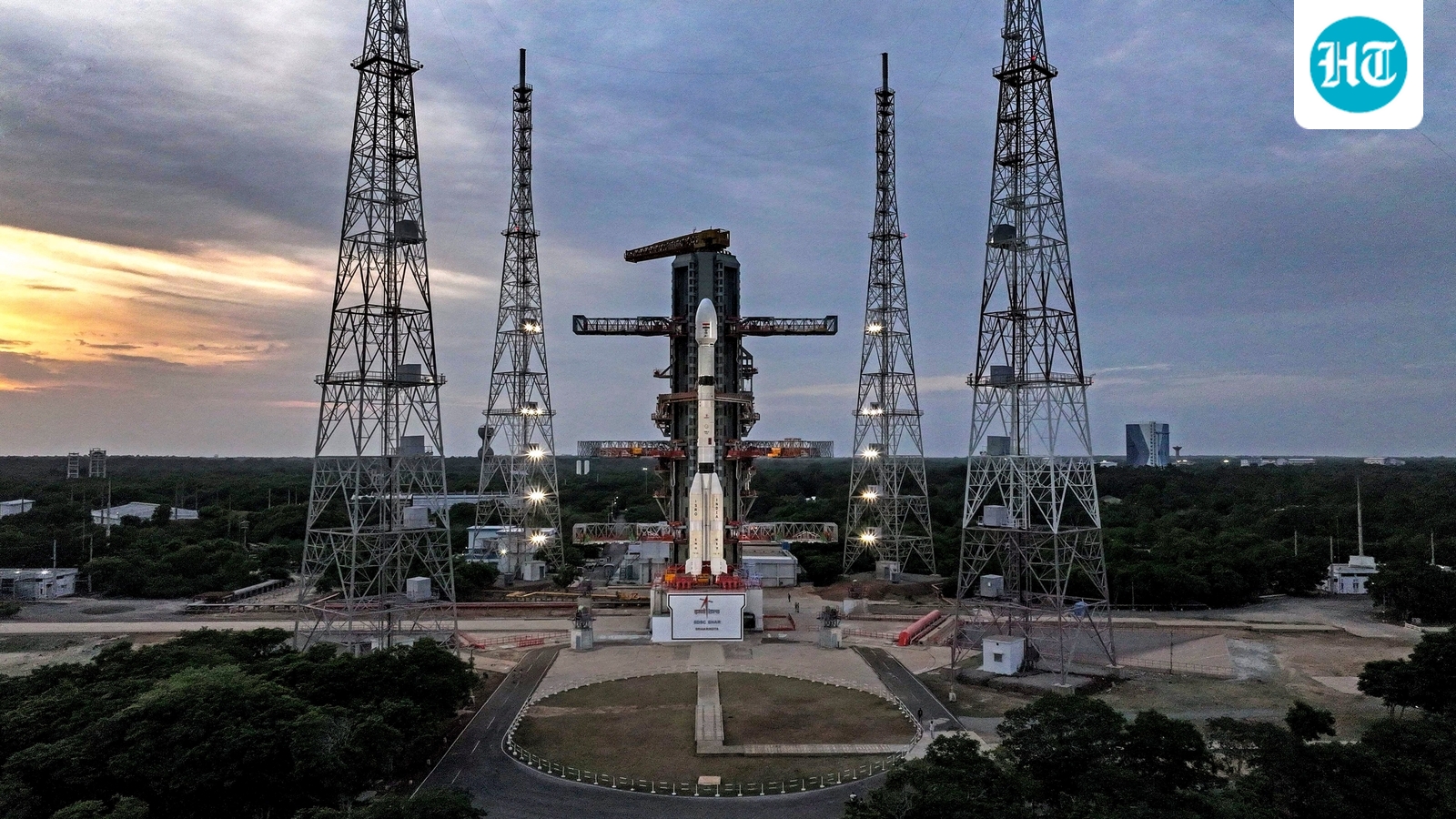
GSLV-F17 has successfully accomplished its mission, placing EOS-05 into the intended orbit.
ISRO’s Earth Observation Satellite EOS-05 has successfully completed significant orbit manoeuvres as it heads towards Earth’s Geosynchronous Orbit.The satellite was injected into the Geosynchronous Transfer Orbit (GTO) in the early hours of Friday, (September 4,2026) by the space agency’s Geosynchronous Satellite Launch Vehicle.From the GTO, the satellite will use in-built propulsion systems to further ascend its way to higher orbits before reaching the intended GEO at a distance of 36,000 kilometers.Post Friday’s launch, V Naryanan, Chairman, ISRO has said that the satellite will take around 4-5 days to reach the GEO. Once there, EOS-05 will be India’s first imaging satellite in the GEO - a significant milestone for the country’s strategic surveillance capabilitiesIn the latest manoeuvre that took place on Sunday, the Liquid Apogee Motor (LAM) engine of EOS-05 burned for a duration of about 5 minutes. Post the manoeuvre, it has now reached an orbit of 35,786 km.Earlier on Saturday, the LAM motors of the satellite fired for 1.5 hours to lift the satellite to an orbit of 20,000 Km x 31,129 Km — the apogee and perigee of the orbit, respectively.Apogee and perigee are the two extreme points of an elliptical shaped orbit. Apogee is the point where a satellite revolving in the orbit would be closest to the earth’s surface while perigee is the point where it would be the furthest.“Further, in the coming days, orbit manoeuvres are planned to eventually place EOS-05 in the intended orbit,” the space agency said in a statement.It will act as India’s ‘eye-in-the-sky’ that will help monitor critical assets like remote borders and conflict zones while also assisting with weather forecasting, cyclone and storm tracking, disaster management, agriculture, and environmental monitoring.Unlike other imaging satellites stationed at lower altitudes, EOS-05 will match Earth’s rotation, providing continuous, real-time viewing of the same region rather than multiple snapshots captured by satellites in lower orbits.Published on September 6, 2026