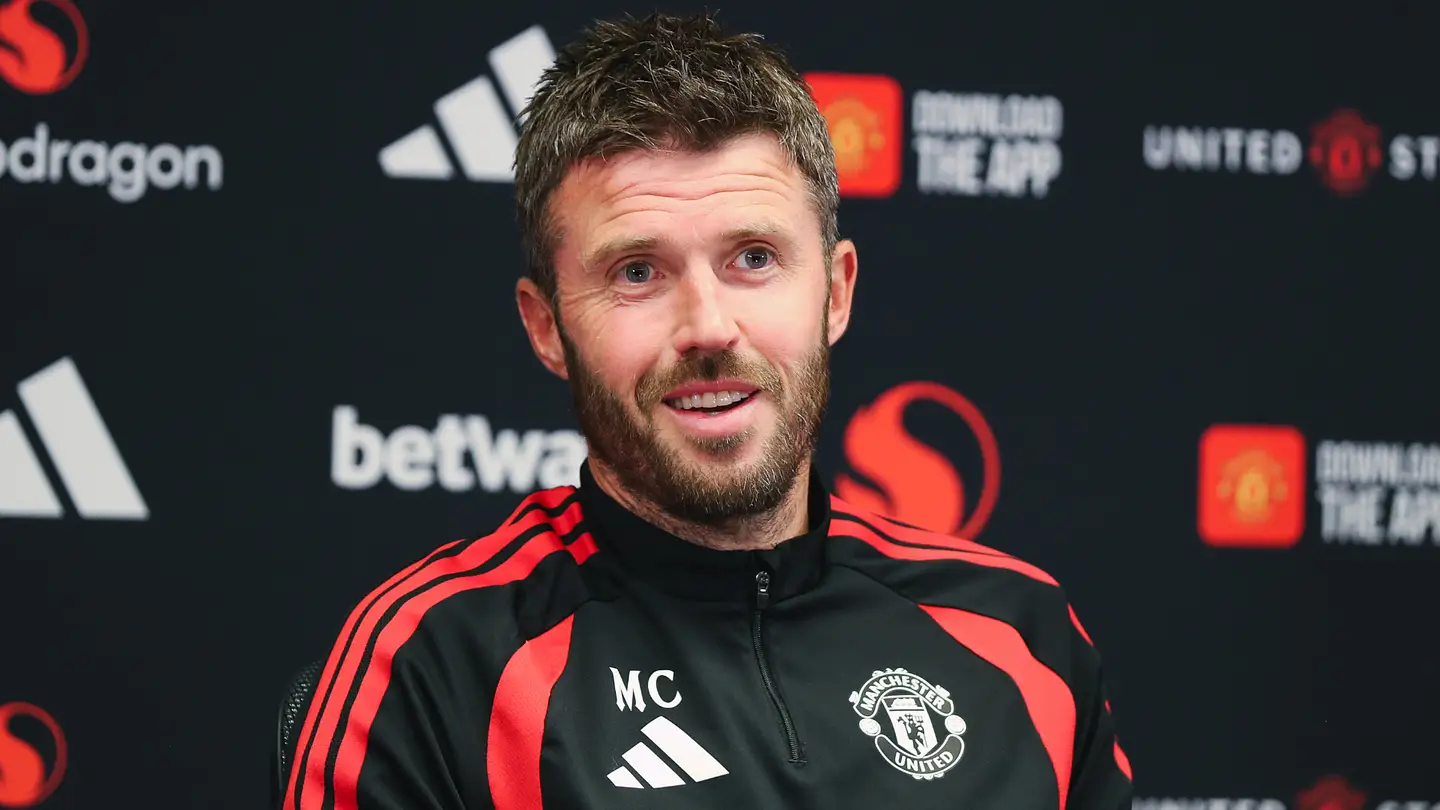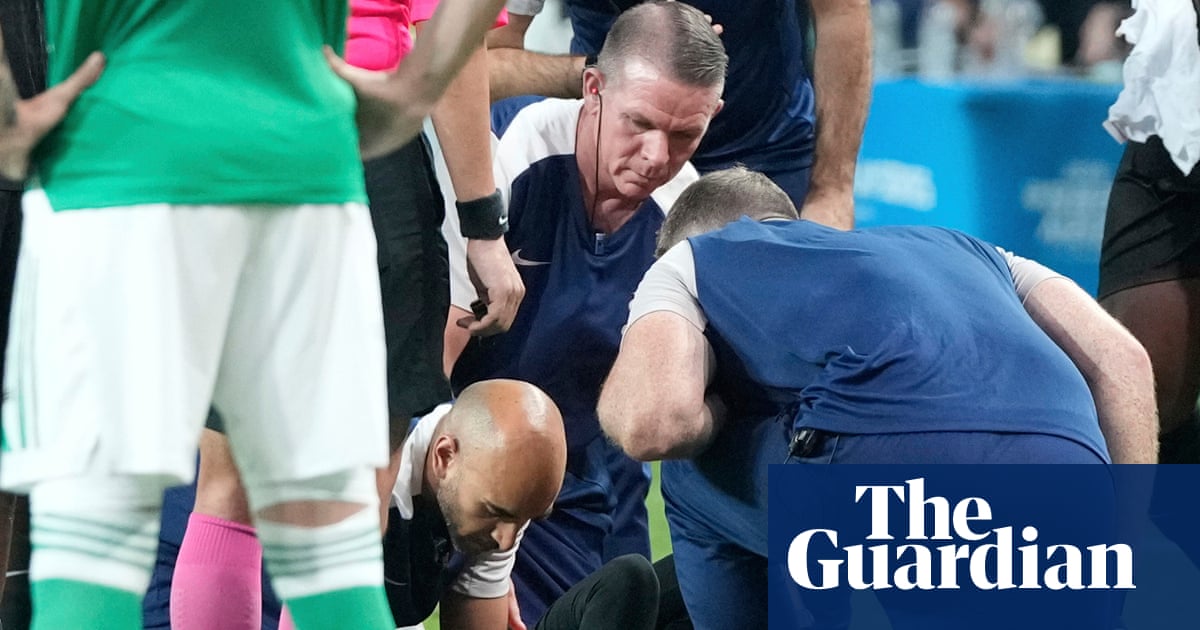
Napoli and Scotland midfielder Scott McTominay is to undergo a minor heart procedure next week that will see him miss over a month of football.The 29-year-old was substituted in the second half of last Sunday’s 2-1 home defeat against Como and requires corrective surgery for a medical condition that Napoli have confirmed is a mild, benign arrhythmia.An arrhythmia is when the heart beats too quickly, too slowly, or is unsteady in its rhythm, but McTominay is expected to return to the pitch after the September/October international break.“See you soon, Napoli. I won’t be long,” he wrote on Instagram after the news was confirmed.He is not the first active footballer to undergo a heart operation.Former Liverpool and England midfielder Adam Lallana had a corrective procedure for an arrhythmia aged 16 and went on to play over 500 senior professional games. Portsmouth striker Colby Bishop returned after open-heart surgery to negate a potential risk, and former Brighton & Hove Albion and Rangers defender Connor Goldson underwent it too, for an enlarged aortic root.Christian Eriksen, Daley Blind and Tom Lockyer have all returned to play having been fitted with implantable cardioverter defibrillator (ICD) devices, which deliver an electric jump-start or reset the heart if they detect a dangerous, life-threatening irregularity.While McTominay’s condition does not require major surgery, The Athletic spoke to consultant sports cardiologist Professor Aneil Malhotra of Manchester Metropolitan University, who looks after British Cycling and a number of elite sports teams including Manchester City and Manchester United, for insight into how football identifies and treats players with heart defects.McTominay in action against Como last weekend (Francesco Pecoraro/Getty Images)How are heart issues detected in football?Heart screening is very common in elite sport, with England’s Rugby Football Union (RFU) and England and Wales Cricket Board (ECB) also conducting their own programmes, but English football’s is the most thorough.In 1995, the death of 16-year-old John Marshall, who suffered a heart attack deriving from an undiagnosed condition known as arrhythmogenic right ventricular cardiomyopathy, proved to be a line-in-the-sand moment. He was due to sign for Everton the following day, but the tragedy saw the PFA, the footballers’ trade union in England, instigate a blanket screening programme for all scholars in English football.The scheme sees all scholars undergo both an electrocardiogram (ECG), used to measure the electrical current in the heart and detect irregular rhythms, and an echocardiogram, which uses ultrasound to create moving, real-time images of the heart’s structure and function.How common are they?Professor Malhotra’s research found that there is a higher prevalence of serious heart conditions in elite footballers, with an average of one in every 250 players. Cardiac Risk in the Young (CRY) conducts screenings on the general population for those between 14 and 35 years old and found that one in every 300 people has a life-threatening heart defect.In footballers, one in 50 will have a minor condition but, in Professor Malhotra’s findings from studying over 11,000 players, 75 per cent of those diagnosed with a serious one returned to play after undergoing comprehensive assessments including curative procedures.The use of an ECG alone has detection levels of up to 85 per cent, but some studies suggest an even greater rate for what are known as ‘silent killers’, where the vast majority display no symptoms before cardiac arrest.Costs vary, but charities such as CRY offer an ECG for £75 ($101), while the usual price is around £150. An echo is a few hundred pounds more expensive.Why are they operating on McTominay now?McTominay’s arrhythmia is understood to be a genetic condition that was first detected before he signed for Napoli from Manchester United in August 2024. A procedure was not required immediately, but wearable technology recently showed some elevated levels and it was recommended that he have the surgery now.It is a less intrusive period in the football calendar at the moment, and Napoli expect him to be back playing soon after the upcoming international break is over early next month.Italian football has stringent written rules on heart defects. The country is especially sensitive to these issues following the passing of Perugia player Renato Curi during a 1977 match against Juventus, and of Fiorentina defender Davide Astori in 2018, for which the former director of sports medicine at Careggi University Hospital in Florence received a one-year suspended prison sentence for involuntary manslaughter.It is why Danish midfielder Eriksen was unable to return to his Milan-based club Inter after being fitted with a defibrillator following his on-pitch collapse while playing for his country in the European Championship finals in 2021.Eriksen was unable to play for Inter after being fitted with a defibrillator (Marco Canoniero/Getty Images)What does the procedure involve?Professor Malhotra says that arrhythmia is an umbrella term for heart rhythm disturbances and that the time taken to perform an ablation procedure can vary between one and a few hours. Cardiac arrhythmia ablation, according to the British Heart Foundation, is when heat or cold energy is used to create tiny scars in the heart to block faulty signals and restore a typical heartbeat.“The traffic lights inside the heart, our own pacemaker, can sometimes malfunction. That sometimes requires procedures like ablations to ensure the traffic stays on the main road,” says Professor Malhotra.“That is how I always explain it to players. It is to try to keep the traffic on the main road going through the heart, so it can contract in a synchronised manner. Occasionally, you can get side-street traffic that can hijack the main road. An ablation is aimed at stopping that and ensuring that electrical activity remains normal along the main road.”Will he have to wear a monitor when he returns to play?Any player in the Italian top flight who has a heart condition or has undergone related surgery must pass Serie A’s sporting fitness requirements before returning to play.“A recovery period between two and four weeks is reasonable, but you would want a graduated return to play. You wouldn’t go from 0-60 on your first day training,” says Professor Malhotra.“You want to make sure there are no groin complications, as that’s where they pass the tubes through.”In players who undergo heart procedures, even minor ones, Professor Malhotra says the psychological recovery is often just as crucial:“I have an active research interest in it as we don’t have any formal data, but it is a very important point. From experience, there is the aspect of worry. ‘How much can I push myself?’ The longer they go without issue, the more confidence grows. “The psychological component of returning to play is important and can sometimes be underestimated. Even when we are medically satisfied that an athlete can return, the athlete may understandably ask, ‘How hard can I push myself and is this going to happen again?’“Confidence often returns progressively as they resume training, reach higher intensities and remain symptom-free. In younger athletes, I often find that parents can be more anxious than the player. The player simply wants to get back to doing what they have done throughout their childhood.“The perspective can be different in an older professional who has an established career and perhaps a family. The medical assessment may be reassuring but the way an individual weighs risk and approaches return to sport can understandably be different.”He says most players who undergo surgery will be monitored afterwards.One of the most common ways to do this is for them to wear a leadless device around the chest that continuously monitors their heart rhythm during sleep and exercise for up to seven days, and sometimes longer. They may also be put through an exercise test on a treadmill or stationary bike.What does this mean for Scotland?McTominay will miss the extended international break that stretches from late September into early October.It means new Scotland head coach Sebastien Pocognoli will be without his star player as he attempts to get off to a strong start in the 2026-27 UEFA Nations League in matches against Switzerland, North Macedonia and Slovenia (twice). Hardly ideal preparation as he attempts to transition Scotland into a brave new world of high-energy, high-pressing football.Scotland may have underwhelmed at the recent World Cup, being eliminated in the group phase, but McTominay was the nation’s poster boy in the weeks leading up to the tournament. A mural of his overhead-kick goal against Denmark in the qualification play-offs was unveiled across from Hampden Park in Glasgow, the team’s home ground, and he starred in Adidas’ ‘Choose Scotland’ advert alongside singer Lewis Capaldi.The midfielder has been the most reliable goalscorer in the Scottish squad in recent years, with 15 in 73 appearances for a nation who currently lack a true difference-maker up front — none of their striking options play at the elite level of club football.Aston Villa midfielder John McGinn, who got Scotland’s only goal across the three matches upon their return to the world stage this summer, is the other main threat, having scored 21 times in the international game, and he will likely have to take on even more of an attacking role during McTominay’s absence.
Scott McTominay’s heart condition: How common is it? How quickly will he be back playing?
The 29-year-old requires corrective surgery for a medical condition that Napoli confirmed is a mild benign arrhythmia
1,501 words~7 min read