From boosting public revenue to funding education and restoring capital, the anti-graft war is beginning to yield an economic dividend, writes Festus Akanbi
Tor an institution traditionally measured by the number of suspects arrested, celebrated prosecutions undertaken and politically exposed persons brought before the courts, the Economic and Financial Crimes Commission (EFCC) appears to be broadening the meaning of Nigeria’s anti-corruption war.
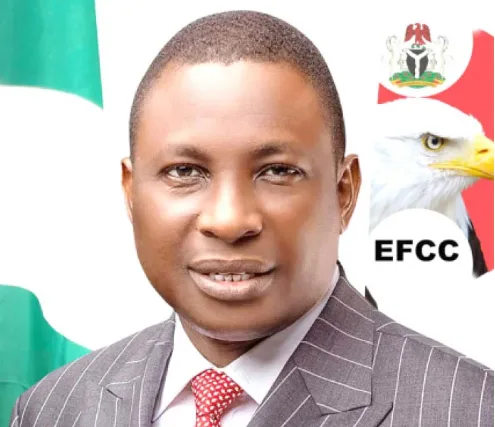
The figures reeled out by its Chairman, la Olukoyede,, at his three-year stewardship briefing suggest an agency whose activities increasingly carry consequences beyond law enforcement into revenue mobilisation, restitution, investment and economic recovery.
Between October 2023 and July 2026, the EFCC received 49,673 petitions, investigated 39,615 cases, filed 14,476 cases in court and secured 10,872 convictions. That translates to a conviction-to-filing ratio of 75.1 per cent. In the first half of 2026 alone, 1,370 convictions were secured from 1,889 filings.
These are formidable numbers. But the more consequential statistics for an economy desperately in need of additional resources may be found in what the commission recovered and returned to productive use.