This started as a practical annoyance: long tasks interrupted by quota limits, conversations that became too heavy, and reviews that required copying context across windows in clumsy and inefficient ways. To deal with that, I built a multi-agent workflow in VS Code, on Arch Linux. I first called it tri-agent; after a couple of months it became penta-agent, a still imperfect way of coordinating agents, roles, permissions, and traces in my own workflow.
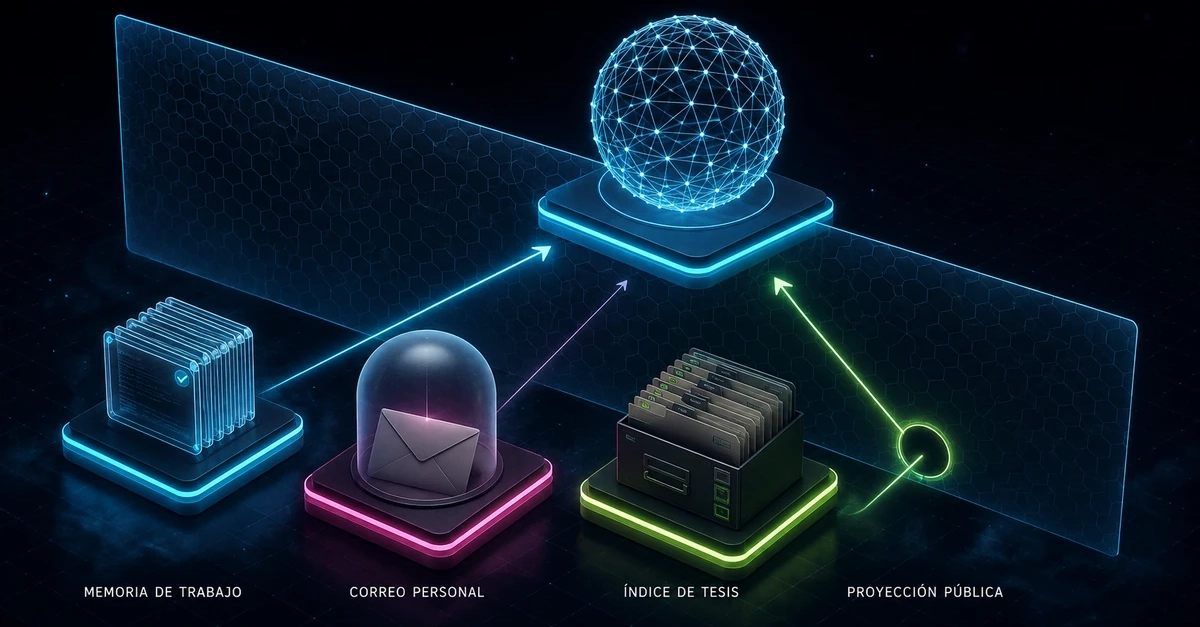
It is not a new idea, and it is not a promise of full autonomy. In fact, maintaining it takes work. But it is a local work contract that orders who executes, who reviews, when MCP is used, when Gemini/Antigravity enters, when Copilot remains only support, which skills are loaded, and what evidence or artifact should exist at the end.
I am writing from my own cases: memos, regulatory review, spreadsheets, statistical models, scripts for a home server, system timers, self-hosted cloud, router security, backups, this blog, and everyday maintenance. In those cases, having some agentic governance has helped me. Maybe it is also a false sense of digital sovereignty. I am not immune to that.
The thesis is simple: a multi-agent system without roles, permissions, and traces may look sophisticated, but in practice it can feel too much like a meeting without minutes.