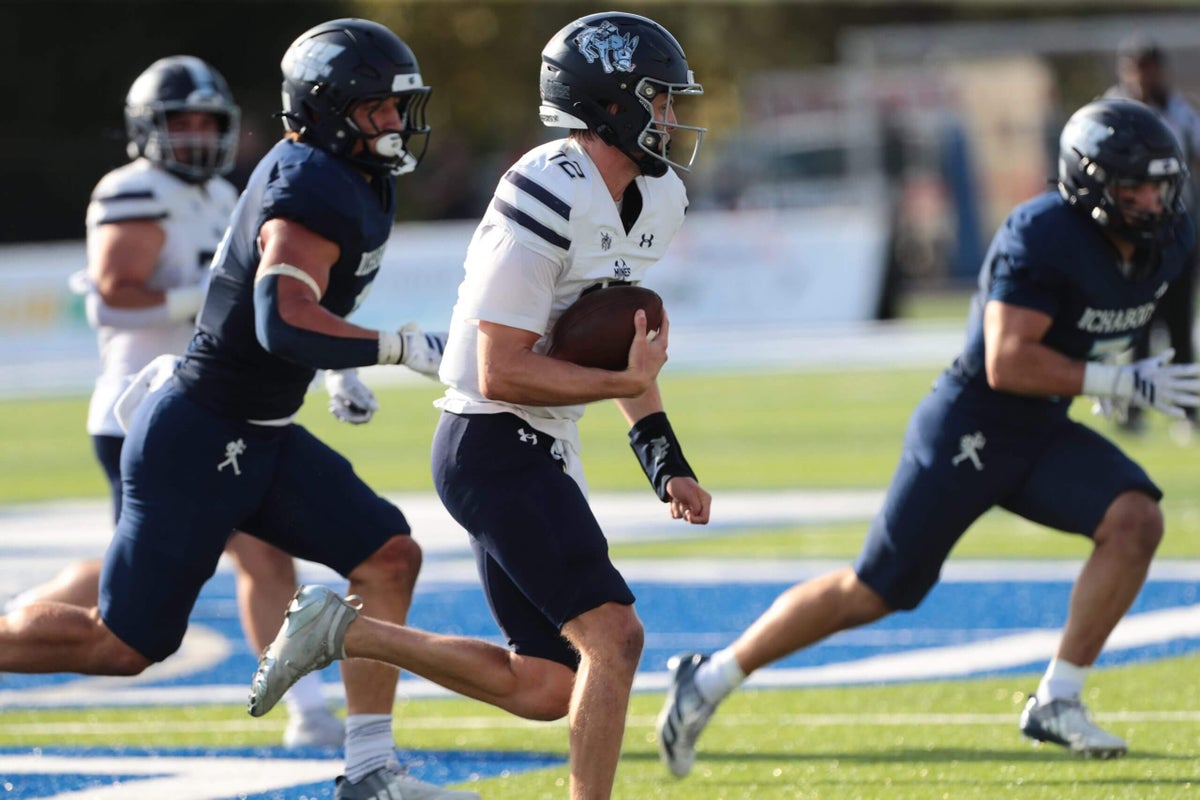
The game between the Colorado School of Mines and Washburn ended in a tie due to extreme heat. Evert Nelson / The Capital-JournalSept. 5, 2026 Updated A Division II football game between Colorado School of Mines and Washburn was suspended before overtime Saturday and finished in a 16-16 tie due to extreme heat conditions.At the time the game was paused, the temperature in Topeka, Kan., was 99 degrees with a heat index of 108, above the Mid-America Intercollegiate Athletic Association conference limit. By rule, the game could not resume until the wet-bulb thermometer temperature dropped below 92.1 degrees, but the forecast did not call for it to drop that low until night. After a lengthy delay, the game was called.Washburn tied the game on a 48-yard touchdown with 1:48 to play, and Mines missed a 64-yard field goal attempt as regulation expired in the nonconference matchup.
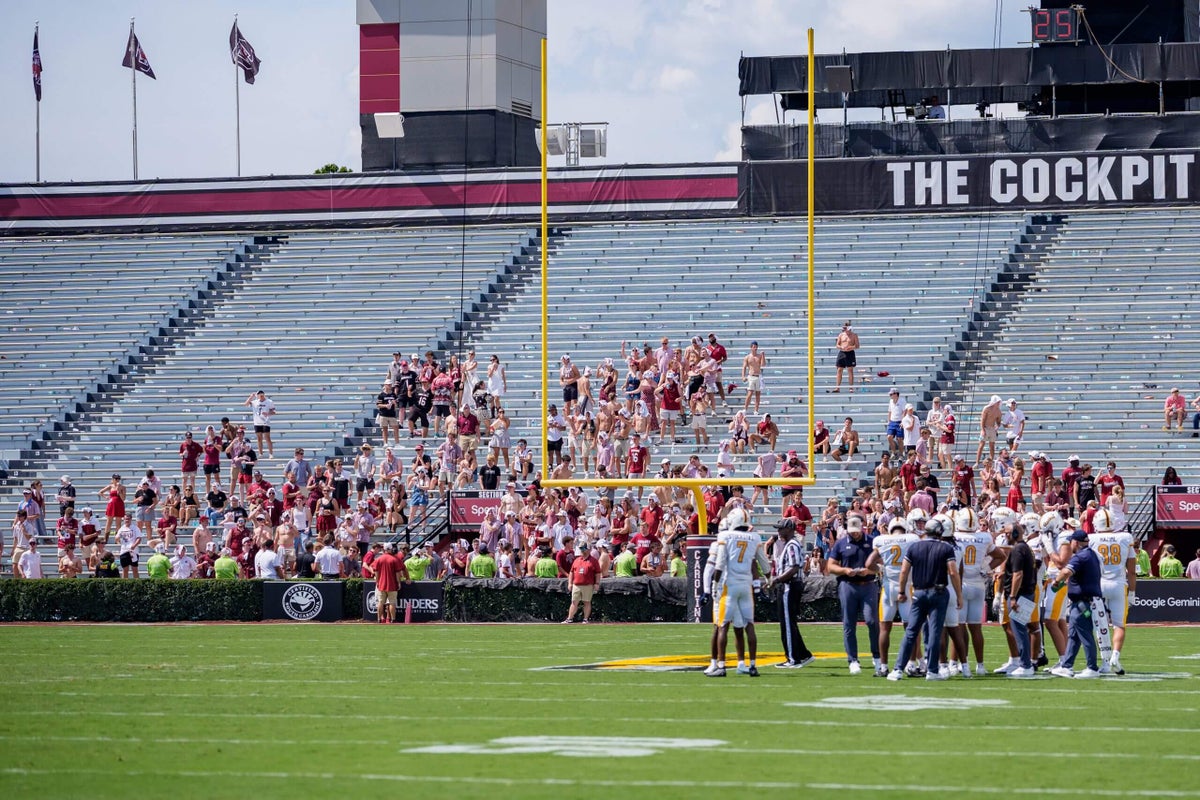
The game was originally scheduled for noon local time, according to a Washburn news release, but was moved to 7:05 p.m. It was then moved to 9 a.m. to accommodate Mines’ travel plans and an attempt to play before predicted temperatures rose too high.Weather-related cancellations have occurred a few times in recent years. Last season, a game between UC Davis and Mercer was declared a no contest in the fourth quarter due to torrential rain with no end in sight. UC Davis led at the time. In 2024, a Division II game between Clark Atlanta and Florida Memorial was declared a tie at halftime due to similar rain conditions.Several high school football games in Kansas and Missouri pushed back start times Friday due to heat, which has also become more prominent in college football recently.The temperature at kickoff for Georgia’s matchup against Tennessee State on Saturday was reportedly 100 degrees, the hottest game in the Bulldogs’ history, according to the SEC+ broadcast. Arkansas (101) and South Carolina (95) also set records Saturday for the hottest temperature at kickoff in their season openers. Last week, USC’s opener against San Jose State was accompanied by a 110-degree heat index, which Trojans fans cited as a reason for poor attendance.Next season, college football’s Week 1 will be moved back to what is now Week 0, which could make heat an even greater problem.