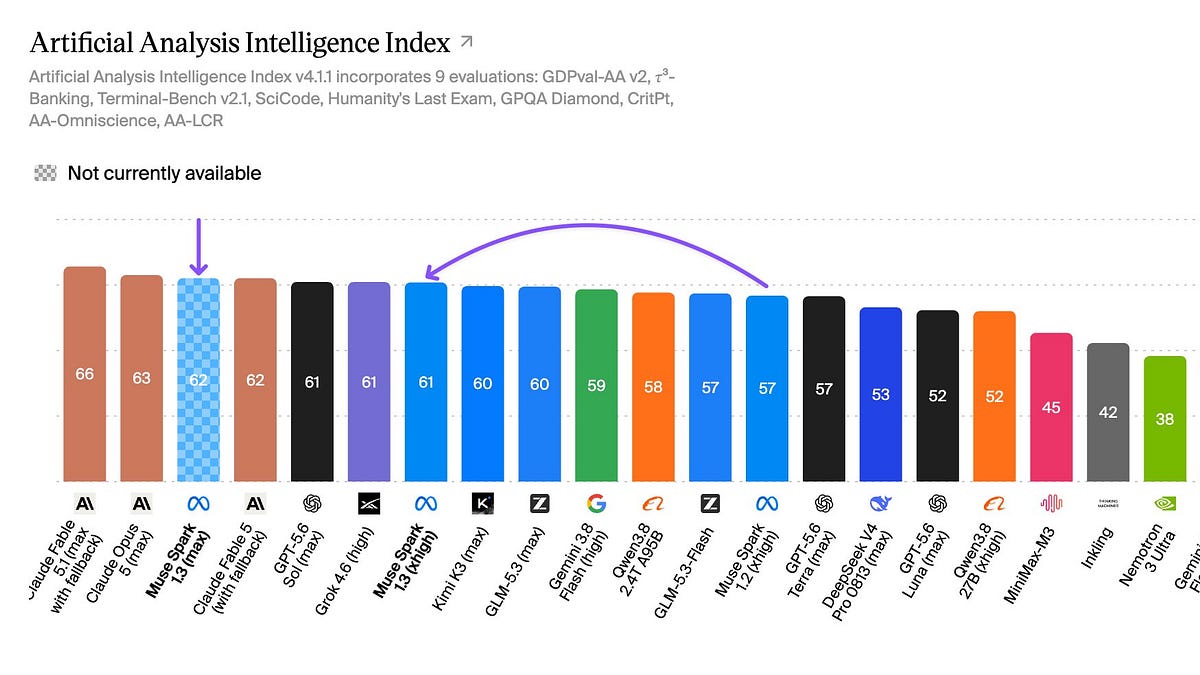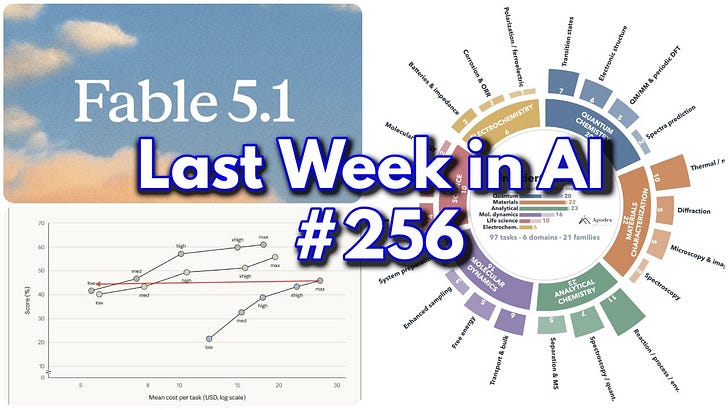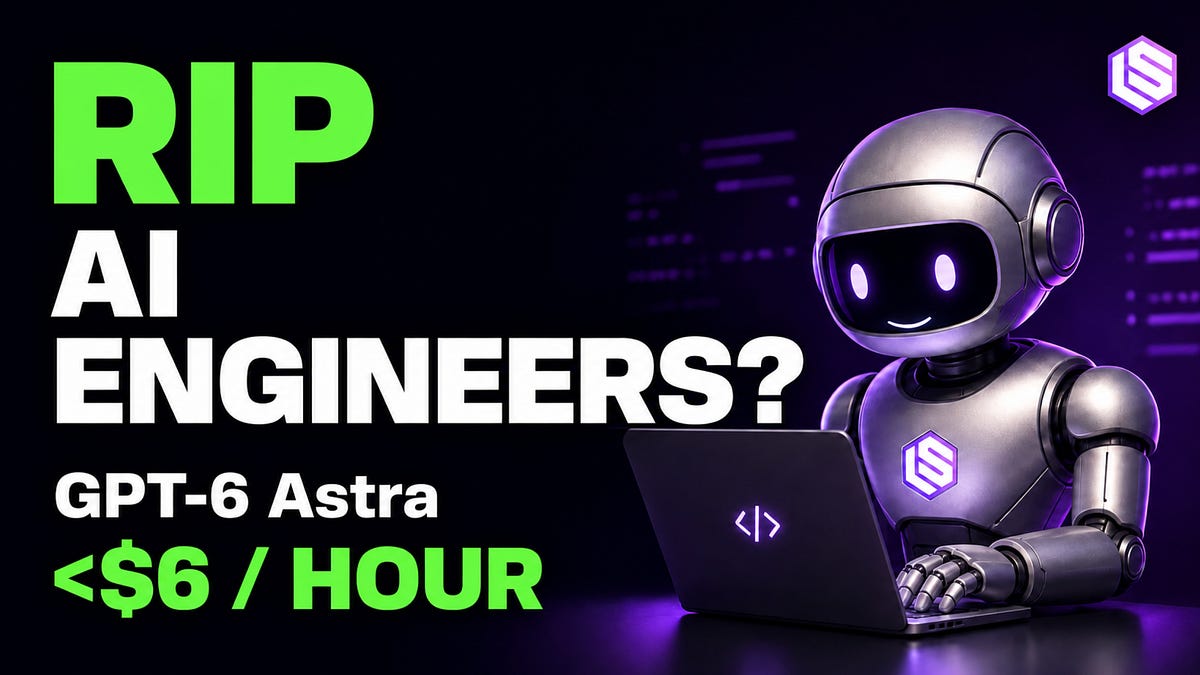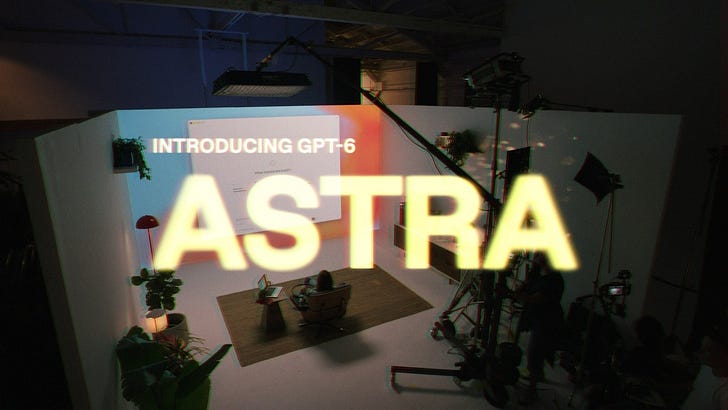
Figure 1. World Labs Atlas can now model the world with spatial intelligence.Fei-Fei Li’s World Labs launched its Atlas spatial intelligence model, a next-generation “omni” world model designed to generate, reconstruct and simulate coherent 3D environments. Atlas can do it all when it comes to recreating physical space: It can create camera-controlled videos lasting up to one minute at 1440p, reconstruct real locations from sparse photographs, output 3D point clouds and Gaussian splats, reframe recorded action from new camera angles, generate images and 360-degree panoramas, and construct simulated environments for robotics training.Atlas is a multimodal autoregressive diffusion transformer trained to operate across text, images, video, camera positions and 3D depth data. Atlas grounds these inputs within a shared spatial context so it can maintain consistent geometry while generating new views and imagining unseen portions of a scene.Figure 2. One feature of Atlas is reconstructing 3D scenes from images, then using that reconstruction to output images from different camera viewpoints.This grounding in spatial context makes it a very flexible and powerful AI for physical rendering of all types. World Labs Atlas is an important AI model release because it advances world models towards real-world capability as a foundational model for simulations, world-building, and image, video, and 3D asset generation. Atlas will power future versions of World Labs’ Marble platform but is initially available only in early access to selected partners.This was the biggest week for new AI model releases in a long time, and we covered the top five AI releases in the just-published “Claude Fable 5.1, GPT-6 Astra, and the New AI Model Stack.” These 5 AI model releases are:Anthropic’s Claude Fable 5.1 and Mythos 5.1, state-of-the-art advanced AI reasoning models for complex agentic tasks, with expanded coding capabilities, lower effective inference pricing, and refined safeguards.OpenAI’s GPT-6 Astra, their next-generation flagship AI model featuring a “generational leap in capability” for computer-use capabilities, scientific research and long-horizon agentic work. GPT-6 Astra began rolling out to enterprise customers through cybersecurity-focused Daybreak access program, with wider availability for ChatGPT subscribers coming soon.Tencent’s HY4 Preview, an open weights (Apache 2.0 license) 770B parameter MoE model with 49B active parameters offering near-frontier-level performance on coding and agentic tasks.Google’s Gemini 3.8 Flash, which has improved performance on 3.7 Flash, its predecessor, and performs at the cost-performance pareto frontier for coding and agentic tasks. Google also released Gemini 3.8 Flash Cyber in preview for trusted partners via the Fairwind Program, aiming to release an AI model for cyber-security protection.Meta’s Muse Spark 1.3, Meta’s latest version of their flagship multimodal reasoning model designed for long-running coding and agentic workflows. Muse Spark 1.3 is Meta’s best AI model yet, matching GPT-5.6 Sol on benchmarks but at a lower price point while promising open-weights release soon.Alibaba’s Qwen team delivered Qwen 3.8-Max 0902, joining the trend of rapid, incremental releases with a checkpoint update on recently released Qwen3.8-Max. This post-training update made solid improvements on coding and agentic tasks, bringing Qwen3.8-Max on par with GPT-5.6 Sol in benchmark performance.Artificial Analysis updated their Intelligence Index to version v4.2 , augmenting their collection of benchmarks with more realistic agentic knowledge work tasks and more private test sets to prevent ‘benchmaxxing’ to game results. The Artificial Analysis Intelligence Index (AAII) v4.2 scores have been adjusted, but the high-level view AAII gives of frontier AI models is familiar: Claude Fable 5.1 (at 57) and GPT-6 Astra (at 55) lead the pack, with Muse Spark 1.3, Kimi K3, and Grok 4.6, joining GPT-5.6 Sol as the new near-frontier.Figure 3. The Artificial Analysis Intelligence Index (AAII) v4.2 leaderboard shows the latest AI model releases are top AI models: Claude Fable 5.1 (at 57), GPT-6 Astra (at 55), Muse Spark 1.3 (53) and Gemini 3.8 Flash (47). HY4 Preview and Qwen3.8-Max 0902 are not yet benchmarked on AAII, but match Kimi K3 in capability.On cost per Intelligence index task, Muse Spark 1.3 and GPT-6 Astra perform at the cost-performance pareto frontier. GPT-6 Astra gets there despite its high token cost by being token efficient, while Muse Spark 1.3 earns its place by combining stellar performance with low token cost.Figure 4. Cost per intelligence index task chart shows GPT-5 Astra, Muse Spark 1.3, and GLM-5.3-Flash at the pareto cost frontier.Google launched agentic video understanding for its Gemini 3.7 Flash, 3.6 Flash, and 3.5 Flash-Lite models, enabling the models to dynamically scan and inspect specific video segments rather than ingesting video at a fixed frame rate. This reduces token consumption and analysis costs while improving accuracy, with gains most pronounced on long-form video content. The capability became available through the Gemini API in Google AI Studio and the Gemini Enterprise Agent Platform, with Gemini 3.7 Flash achieving the best accuracy-to-cost ratio among tested models for video analysis.Alibaba’s Qwen team released Qwen-Drive-1.0, the first Vision Language Model (VLM) for autonomous driving that incorporates 3D perception, driving visual question answering, and motion planning within the VLM. The model combines multimodal Qwen3.5-4B with two external modules, a BEV (Bird’s-Eye View) perception head for 3D object detection and occupancy prediction, and a diffusion transformer Planning Expert for generating trajectories. Qwen-Drive-1.0 achieves a driving QA average of 69.43, outperforming both general-purpose VLMs and driving-specialist models, while also demonstrating strong motion planning performance.Microsoft AI released MAI-Transcribe-2, an advanced speech-recognition model capable of transcribing audio across 60 languages with enhanced speed and accuracy at lower cost. The model achieves top placement on the FLEURS benchmark across 60 languages and introduces advanced features such as automatic language identification and configurable transcription styles. Microsoft made the new model available immediately to developers through its Foundry marketplace, playground environment, and OpenRouter. The transcription service costs only 10 cents per hour, undercutting major industry competitors significantly.Meta Superintelligence Labs introduced Muse Voice Transcribe, a streaming audio model that combines real-time transcription, endpoint detection, and speaker diarization for over 20 participants. The model processes incoming speech in short chunks using an adaptive delay mechanism to optimize recognition accuracy and response latency. Meta priced the API at 18 cents per hour of processed audio, targeting enterprise meeting systems and customer-service analytics.Google rolled out AI-powered voice assistant modes called Gmail Live, Docs Live, and Keep Live, enabling users to manage their inbox, documents, and notes through real-time conversational interaction powered by Gemini. The features allow hands-free tasks such as pulling specific details from email threads, formatting spoken ideas into structured documents, and transcribing contextual notes without requiring precise phrasing.OpenClaw released version 2.0 of its AI agent framework, featuring a comprehensive cleanup across the entire bot architecture with simplified installation setups and a rebuilt browser interface. The new version also introduces persistent cloud sessions, multi-user workspaces, and role-based permissions, features that transform the AI agent harness into a shared platform for team collaboration and workflows.xAI announced a tighter integration between Grok Bot and X, enabling users to connect their X accounts so that AI bots could search posts, read timelines, check mentions, and pull together platform activity.Nvidia announced PAIR (Personal AI Router), a free open-source tool that pools idle home computers to run local AI inference tasks in parallel. The software discovers compatible devices on a network, including Nvidia RTX and DGX Spark systems, and Apple M4 chips, and coordinates them to process AI workloads. Nvidia also unveiled local setup integrations for three AI agents: Perplexity Portable Computer, Hermes Agent, and OpenClaw. PAIR beta was launched with support for Windows, Linux, and macOS.Google DeepMind and Google Research introduced WeatherNext 3, their most advanced global AI weather forecasting model, which learns directly from real-time satellite observations rather than traditional physics simulations. The model generates hourly forecasts at up to 5-kilometer resolution, five times sharper than its predecessor, and adds precise precipitation forecasting and clean energy variables. Independent evaluations confirm it as the most accurate global weather model to date. WeatherNext 3 has been integrated across Google Search, Gemini, Maps, and Cloud for access by users and developers.The best AI model harness is a dynamic evolving harness. Researchers from Meta AI and the University of Illinois recently published “EvoHarness-RL: Learning Self-Evolving Runtime Harness for Long-Horizon LLM Agents,” presenting a framework that enables an 8B parameter model to autonomously update its workspace and recover from errors. This dynamic memory and harness approach allows the small 8B model to perform complex, long-horizon tasks and reduces the need for manually coded agent harnesses and larger AI models.XAI published LatchBio’s independent evaluation of Grok 4.6 on biological red-teaming benchmarks, finding Grok 4.6 was the strongest model tested at refusing hazardous biological tasks while still completing routine scientific work. Grok 4.6 was the only frontier model to score above 50% on both red-team refusal and routine compliance measures, and it averaged a 53.5% success rate on BioSecBench-Surveillance, placing it behind Anthropic’s Opus 5 but ahead of OpenAI’s GPT-5.6 Sol.Developer of the Devin AI coding agent Cognition is reportedly seeking to raise $1 billion at a $47 billion valuation, up from a $26 billion valuation just three months earlier. The company has attracted nearly $10 billion in investor interest and reportedly exceeds $900 million in annualized revenue, but the financing remains under negotiation.OpenAI announced that ChatGPT Ads reached a $1 billion annualized revenue run rate within 200 days of launch, and they opened self-service purchasing of ChatGPT ads to advertisers across many countries. The platform, now live in over 40 countries, uses conversational context to serve relevant ads while keeping them clearly labeled and separate from ChatGPT’s answers.OpenAI will stop providing OpenAI models to Cursor in the wake of the acquisition of Cursor by SpaceX, stating in an announcement that they would shut off use of OpenAI models to Cursor on November 12. OpenAI cited concerns that SpaceX would not honor its terms of service as its motivation, pointing to prior contract violations by Elon Musk-owned xAI and the former Twitter.Nvidia announced a $3.5 billion investment in Taiwanese chipmaker MediaTek to expand its custom AI silicon ecosystem. The partnership integrates MediaTek’s custom ASICs (application-specific integrated circuits) with Nvidia’s NVLink Fusion architecture, enabling hyperscalers to deploy custom chips along with Nvidia’s standard GPUs in their AI supercomputers.Thinking Machines entered discussions to raise $1 billion in funding at a valuation of at least $40 billion, with existing backer Accel reportedly leading the round. Despite several high-profile co-founder departures, the company maintains an annual revenue run rate exceeding $100 million. The AI startup recently launched the open-weight model and customization platform Tinker.OpenAI expanded ChatGPT for Teachers to 55 additional school systems across 20 states, expanding access to the free educator-focused tool to more than 100,000 additional teachers and staff.Meanwhile, some school districts are restricting AI in education. Los Angeles became the next major U.S. school district to ban AI for students, imposing one-year restrictions that extend to high schoolers. The announcement came just after New York City Mayor Mamdani announced a one-year moratorium banning AI use in classrooms for students in 2-K through eighth grade, affecting approximately 600,000 public school students.The European Commission designated ChatGPT as a Very Large Online Search Engine under the EU’s Digital Services Act, subjecting OpenAI to heightened regulatory obligations. The designation requires the platform to mitigate risks related to minors, user mental health, and the spread of illegal content, while also restricting targeted advertising.To combat deceptive AI influencers, Instagram has updated its AI creator label to “AI-generated profile” to clearly identify synthetically produced people. Profiles featuring undisclosed AI persons will face algorithmic penalties, including exclusion from Reels and Explore recommendations for non-followers. This new policy specifically targets synthetic accounts posing as real humans, exempting users utilizing AI tools for general content creation.Major music publishers have filed a copyright infringement lawsuit against Anthropic for using pirated books and scraped lyrics to train its Claude models. The complaint from including Sony Music Publishing and Warner Chappell seeks damages of up to $150,000 per work for tens of thousands of songs and follows similar legal actions from other music companies. As expected, Anthropic has stated that it disagrees with the allegations and intends to defend itself in court.Startup Abliteration.ai launched a commercial service hosting open-weight AI models with their safety guardrails and refusal mechanisms removed. The platform provides browser and API access to modified models, such as GLM-5.3, designed to execute tasks like offensive cybersecurity testing that standard models typically decline. Their pitch is:For offensive cybersecurity, AI red teaming, agent testing, and trust & safety, the model will follow through instead of shutting down.Safety researchers have expressed concern that making abliterated models easily accessible at scale could facilitate malicious activities. Defenders need better tools, so this could be good, but bypassing safeguards can go wrong in many ways. Many X reactions were negative: “Dangerous,” “This will not age well,” and “you’ll be held liable for damages.”Anpaure on X summed up that concern mixed with hope it won’t go badly:I pray that this is an FBI and CIA honeypot.
AI Week in Review 26.09.05
World Labs Atlas, Claude Fable 5.1, GPT-6 Astra, HY4 Preview, Gemini 3.8 Flash & Flash Cyber, Muse Spark 1.3, Qwen3.8-Max 0902, Qwen-Drive-1.0, MAI-Transcribe-2, Muse Voice Transcribe, OpenClaw 2.0.
2,133 words~10 min read