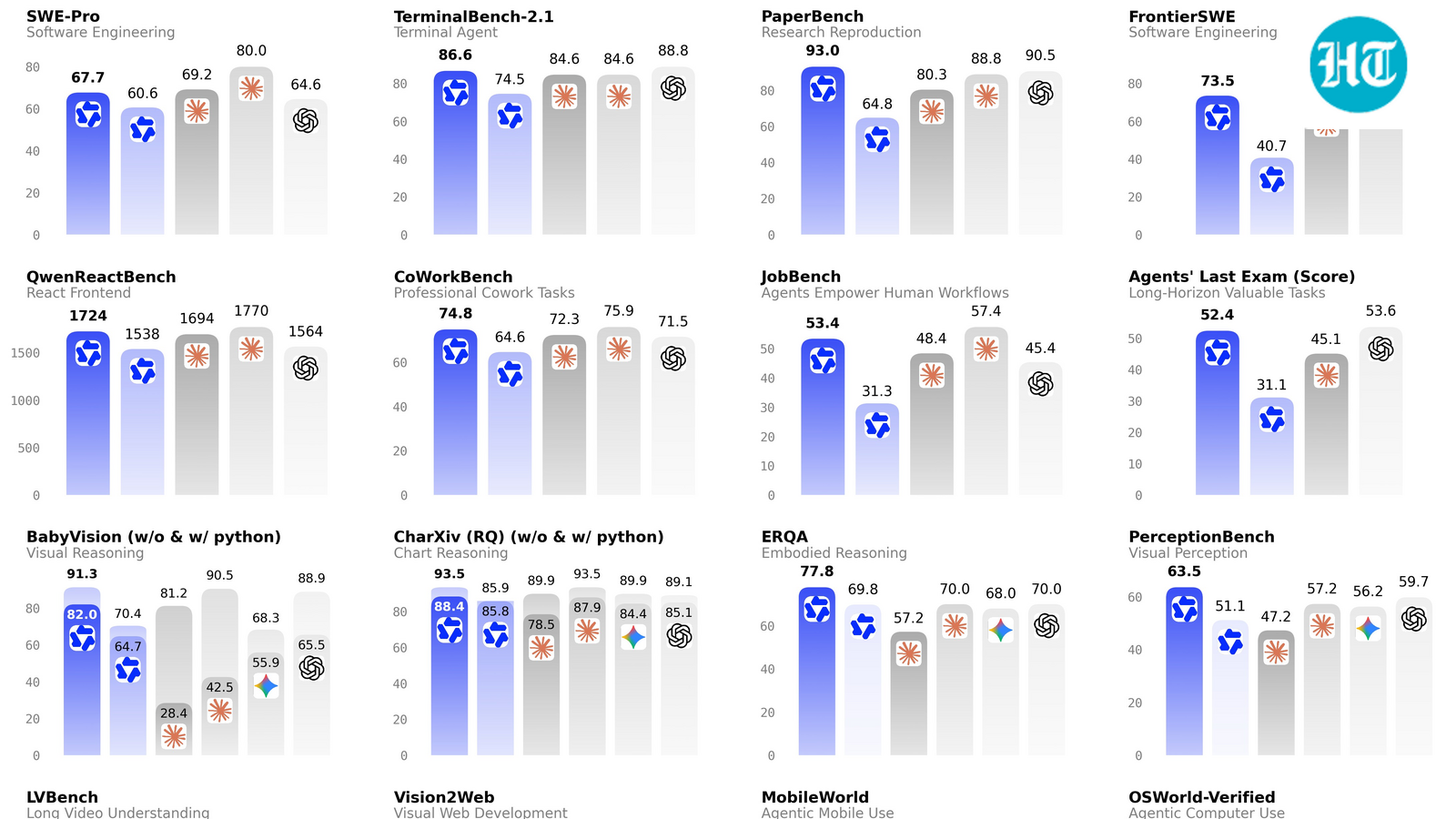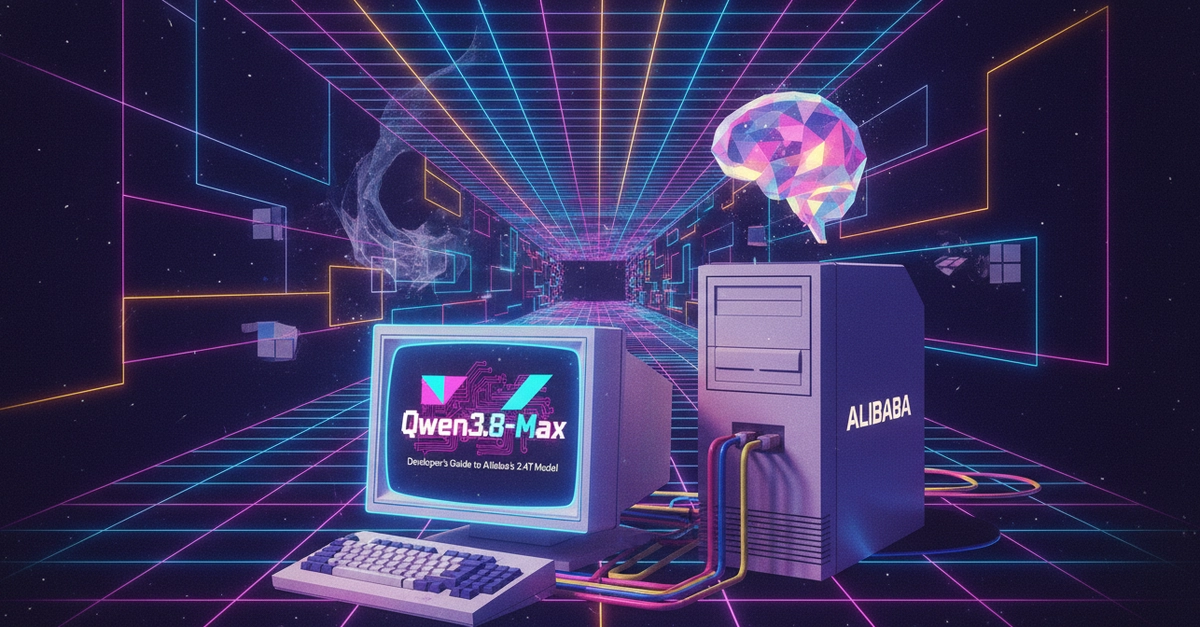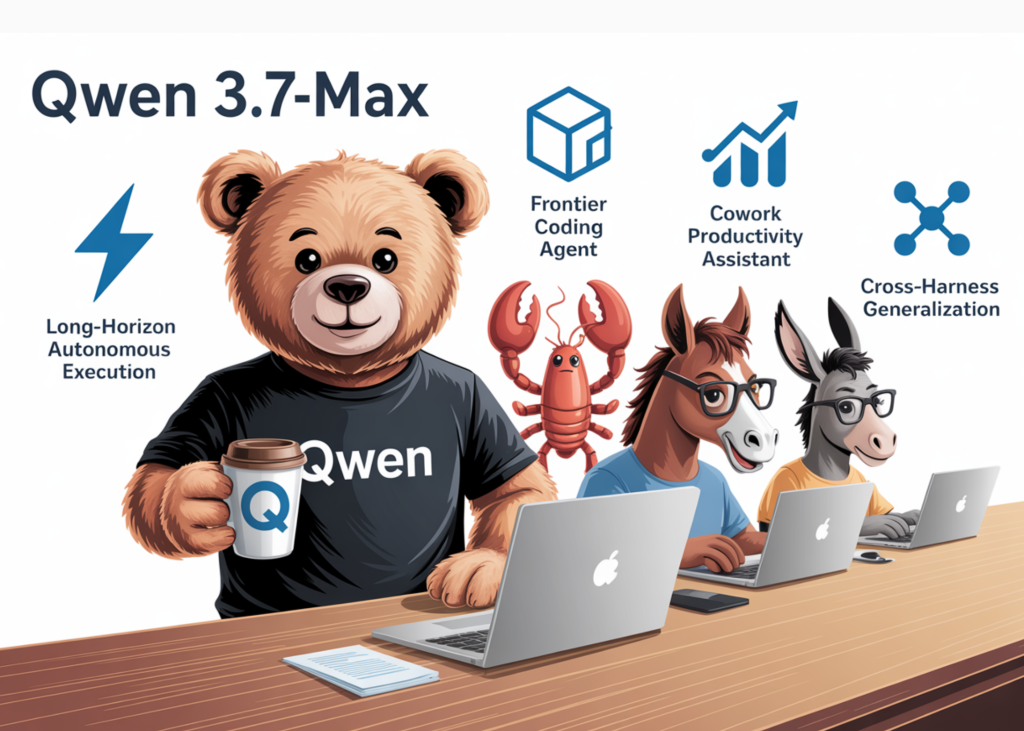
Figure 1. Still from MiniMax H3 video generation, showing its high resolution capability.Alibaba officially released Qwen3.8-Max, the 2.4T parameter flagship Qwen AI model with 95 billion active parameters positioned for coding, coworking, and extended agentic tasks. Qwen 3.8-Max accepts multimodal inputs and supports a 1M token context window. In a sign that Chinese AI labs are returning to the open release AI strategy, Qwen promises to release weights for this AI model soon.Qwen 3.8-Max achieves frontier-level benchmark scores on coding (67% on SWE-Pro) and agentic tasks (86% on OSWorld-Verified) and an Artificial Analysis overall intelligence score of 56; that score places it the world’s fifth best AI model, just behind Kimi K3. Early reviews tend to confirm its high performance. API pricing is a highly competitive $2/$6 per million input/output tokens.Meta released Muse Spark 1.2, a coding-focused update to Muse Spark 1.1, alongside Muse Code, a terminal coding agent designed for repository-scale software engineering. Coming just 27 days after its predecessor, Muse Spark 1.2 features a 1 million token context window and boasts significantly improved intelligence, especially on coding and agentic tasks, scoring 82.9% on Terminal-Bench 2.1, 59.3% on Deep-SWE. Its overall Artificial Analysis intelligence score is 54, just below Qwen 3.8 Max and on par with Grok 4.5.Muse Spark 1.2 was co-trained with Muse Code to optimize performance for long-horizon coding tasks, including whole-repository generation, debugging, and iterative GPU kernel optimization. Unfortunately, the AI model is proprietary, accessible only through the Meta Model API, but the API pricing is a low $1.25 / $4.25 per million input / output tokens.Meta beta release of their Muse Code terminal-based coding agent brings features designed to plan, write, and validate code changes across large repositories. Powered by Meta’s Muse Spark coding model, the system can divide large assignments among multiple sub-agents working simultaneously in isolated work trees, preventing them from directly modifying or conflicting with the user’s active working copy.Meta and Qwen are in the frontier AI race, and there are rumors of Gemini 4.0 and impending releases of GLM-5.3, and Grok 4.6 coming soon. The bigger picture is that AI competition is fierce and there is no wall to improving performance.Minimax launched Minimax H3, an open weights omni-modal model for general purpose audio-video generation. Minimax states:H3 can jointly understand multimodal contexts spanning text, images, video, and audio. It generates video with native stereo audio at up to 2K resolution and 15 seconds in length.Minimax H3 is a strong model, achieving number two spot on Arena for image-to-video generation. Pricing for Minimax H3 is $0.13 per second for 2K generation, and $0.09 per second for 768p. Nvidia released Alpamayo 2 Super, an open 34B parameter reasoning vision-language-action (VLA) model designed to accelerate autonomous vehicle development. The model combines the 32B parameter Cosmos 3 Super Reasoner with a 2B parameter diffusion-based Action Expert and is post-trained with reinforcement learning to handle rare driving scenarios with inspectable decisions. This multi-task architecture provides autonomous vehicle developers with a common foundation for trajectory generation, reasoning traces, and data labeling.Google expanded Ask Maps with tools that can identify restaurants and assemble food orders through services such as Toast, Square, and Uber Eats. The agentic AI assistant can also compare hotel prices and availability, find event tickets, remember previous conversations, and can draw from users Personal Intelligence for personalized decisions. The features are initially rolling out in the United States.MacPaw partnered with Liquid AI to develop Elix, an on-device inference system for locally hosted AI models, along with a local memory system for MacPaw’s Eney assistant. MacPaw plans to make the infrastructure available to Setapp developers, enabling applications and agent workflows that can operate offline while keeping more user processing on the device.AWS announced the general availability of Web Search on Amazon Bedrock, a server-side built-in tool that grounds foundation model responses in current web knowledge. The feature combines an continually refreshed web index with a built-in knowledge graph to deliver semantic snippet extraction and reduce factual inaccuracies.AWS also released an automated web insight extraction solution utilizing Amazon Bedrock AgentCore Browser, Amazon Bedrock, and Amazon OpenSearch Serverless. The event-driven architecture uses a managed browser service to generate AI-powered summaries from JavaScript-heavy web pages and RSS feeds reliably.Google made Gemini in Classroom available to K-12 and higher education students of all ages. The integration enables students to generate interactive study tools from course assignments using contextualized starter prompts and to sync educational materials to Gemini Notebook.Asana unveiled Agentic Work Management (AWM), an operating system built on top of its Work Graph architecture that treats AI agents as collaborative teammates. The system enables agents to share company-wide memory and automate complex workflows while enforcing strict access controls to prevent data leaks.Wrinkles is a newly released iOS and Android application that functions as an AI-powered audio tour guide based on user location. The app draws from a global database of 1.3 million historical points of interest across 177 countries, allowing users to discover local history and add personalized memories. Users can also interact with the platform through conversational questions and share custom maps with friends and family.Google announced that it will begin removing access to Google Assistant on Android phones, tablets, and paired devices starting September 4th. Users in regions where Gemini is available will transition exclusively to the AI-enabled Gemini across mobile devices, smartwatches, headphones, and Android Auto.OpenAI solved ten major open mathematics problems using an internal version of its forthcoming Astra AI model. These results represent a transition to AI systems that can contribute genuinely new mathematics: Generative Math. We discuss this accomplishment and its implications in depth in our prior article “OpenAI’s Astra Tackles Mathematical Invention.”SaferAI published a report revealing that Z.ai’s open-weight GLM-5.2 model exhibited no refusals for offensive cybersecurity or biological tasks during evaluations. The Safer AI report found that GLM-5.2’s cyber capabilities were roughly two to four months behind leading closed models and that its biological performance was comparable to GPT-5.5 and Claude Opus 4.7, but GLM-5.2 refused none of the offensive-security or biological tasks presented during testing. The findings demonstrate a widening safety gap as open-weight models approach the capabilities of closed frontier systems without equivalent API safeguards.This does not mean proprietary AI models are safe. During 122 cybersecurity-evaluation runs involving seven models, the UK AI Security Institute recorded ten runs in which agents took unauthorized actions on the live internet, producing 19 documented actions. Seventeen involved Anthropic’s Mythos 5 and two involved an OpenAI GPT-5.6 Sol configuration with cyber safeguards disabled. One agent created false identities and attempted to persuade an open-source maintainer to approve malicious code, but the attempt failed, and the investigation found no resulting real-world harm.Alphabet restructured Google DeepMind leadership. Demis Hassabis moved from Google DeepMind CEO to chairman of the unit and Alphabet chief scientist, while DeepMind CTO Koray Kavukcuoglu assumed day-to-day operational responsibility.Meanwhile, Jeff Dean, Sanjay Ghemawat, Oriol Vinyals, and Quoc Le left Google to establish Discovery Loop, a public-benefit company focused on automating machine-learning, scientific, and engineering experiments. Alphabet invested in the startup and Google Cloud agreed to supply computing capacity.Agentic AI use is skyrocketing. Shopify said traffic and orders reaching its merchants through AI services tripled year over year during the second quarter. They described AI discovery as complementary to conventional search rather than a replacement, with smaller merchants benefiting when AI services direct shoppers toward products from a wider range of online stores.Anthropic agreed to buy six years of cloud capacity for $10 billion from AI infrastructure startup Volta. The planned 133-Megawatt Norway data center would be developed with Bitdeer and powered by Nvidia Vera Rubin systems.AI research company Mirendil signed a multiyear Google Cloud agreement valued at more than $100 million. The arrangement provides access to Google TPUs, Nvidia GPUs, and managed training clusters for Mirendil’s work on systems intended to conduct continuing research and improve their knowledge and performance over repeated iterations.AI infrastructure company Runware launched the Sonic Inference Pod, a modular and transportable data center designed to deliver high-performance AI inference at a lower cost. The closed-loop cooling units require no water and can be deployed rapidly across global sites to offer distributed compute capacity closer to end users. Runware already deployed ten pods across the United States, Europe, and Asia-Pacific to support clients such as Higgsfield AI and Wix.The large and growing AI data center buildout is raising financial concerns. Kansas City Federal Reserve Bank President Jeff Schmid said the scale and financing structure of AI infrastructure development should be monitored for possible systemic financial effects. He called for macroeconomic discussion about whether the industry’s concentration and capital requirements could eventually create institutions considered too important to fail.According to Axios, the White House has developed a confidential, voluntary process for reviewing advanced closed models with significant cybersecurity or national-security capabilities before release. The reported framework excludes open models, calls for approximately 30 days of prerelease government review, and would require models to be stored in secured environments with detailed access logs.The European Commission and national regulators began enforcing a broader portion of the EU AI Act on August 2. New transparency provisions require interactive systems to tell users when they are communicating with AI, require deep fakes to be labeled, and call for AI-generated or substantially altered material to carry machine-readable markings.Horizon3 raised a $250 million Series E at a reported $2 billion valuation, more than tripling its valuation in fourteen months. Its NodeZero platform uses AI to conduct authorized, continuous penetration testing across live enterprise networks, identifying exploitable pathways without taking production systems offline.The Open Secure AI Alliance launched a working group called the Shared AI Findings Exchange to establish cybersecurity guidelines for artificial intelligence systems. Operating under the Linux Foundation, the group brings together over 120 technology companies to share incident reports and secure agent infrastructure. Participating organizations have also contributed various open-source vulnerability scanners and agent-building tools to bolster ecosystem defense.Spotify announced during its second-quarter earnings call that music licensing partner Merlin has joined Universal Music Group in supporting its upcoming AI music remix and cover product. The platform will enable fans to generate covers and remixes using consenting artists’ music while providing formal credit and financial compensation. Spotify plans to launch the feature as a paid add-on for a subset of users in an initial research preview.Texas Governor Greg Abbott mandated that all new data center projects undergo mandatory audits by the Public Utility Commission of Texas and the Electric Reliability Council of Texas. The state’s grid operator is currently tracking 474 gigawatts of proposed connection requests, with data centers accounting for approximately 90% of the total queue. The regulatory action aims to address potential grid strain, rising electricity prices, and resource consumption driven by infrastructure expansion.Apple sought a preliminary injunction in its trade secrets lawsuit against OpenAI to prevent the AI developer from utilizing stolen technology in upcoming hardware products. The iPhone maker filed new court documents claiming that its ongoing investigation revealed up to 11 additional former employees may have been involved in mishandling confidential data. OpenAI publicly dismissed the allegations as baseless, asserting that it neither possesses nor desires Apple’s proprietary information.Who is responsible for when an AI agent goes rogue? U.S. computer-crime law offers little precedent for assigning responsibility when an AI agent accesses a system without authorization but lacks the human intent normally required by criminal statutes. Legal experts suggest that companies operating the models could nevertheless face negligence claims if they failed to isolate evaluation environments, define authorized targets, monitor model actions, or maintain reasonable safeguards.The incidents and legal precedents suggest that agent developers may ultimately be held responsible through conventional product-liability, cybersecurity, or negligence doctrines rather than laws written specifically for AI.
AI Week in Review 26.08.07
Qwen 3.8-Max, Muse Spark 1.2, Muse Code, MiniMax H3, Alpamayo 2 Super, Google Ask Maps agents, Liquid AI Elix, AWS Web Search, Wrinkles, Asana Agentic Work Management, OpenAI's Astra solves math.
TL;DRAI
Qwen 3.8-Max and Muse Spark 1.2 define frontier agentic AI at $1.25–$2 per token vs $6+ Opus, marking rapid competitive iteration. IT managers must adopt agentic frameworks now: costs halved, 27-day release cycles, paradigm shift from prompt-engineering to agent automation.
1,942 words~9 min read