Demand for data centers has skyrocketed, with no signs of slowing down.
Analysis from JLL found that the sector is experiencing an infrastructure investment supercycle that could require up to $3 trillion by 2030.
But as the investments grow, the industry also faces a capacity crisis, centered around the usual power requirements, land availability, water for cooling, and chip scarcity. And while these physical constraints play a large role in how fast AI infrastructure can scale, there's another conversation that hasn't yet reached the mainstream: procurement infrastructure that hasn't scaled alongside the investment driving it.
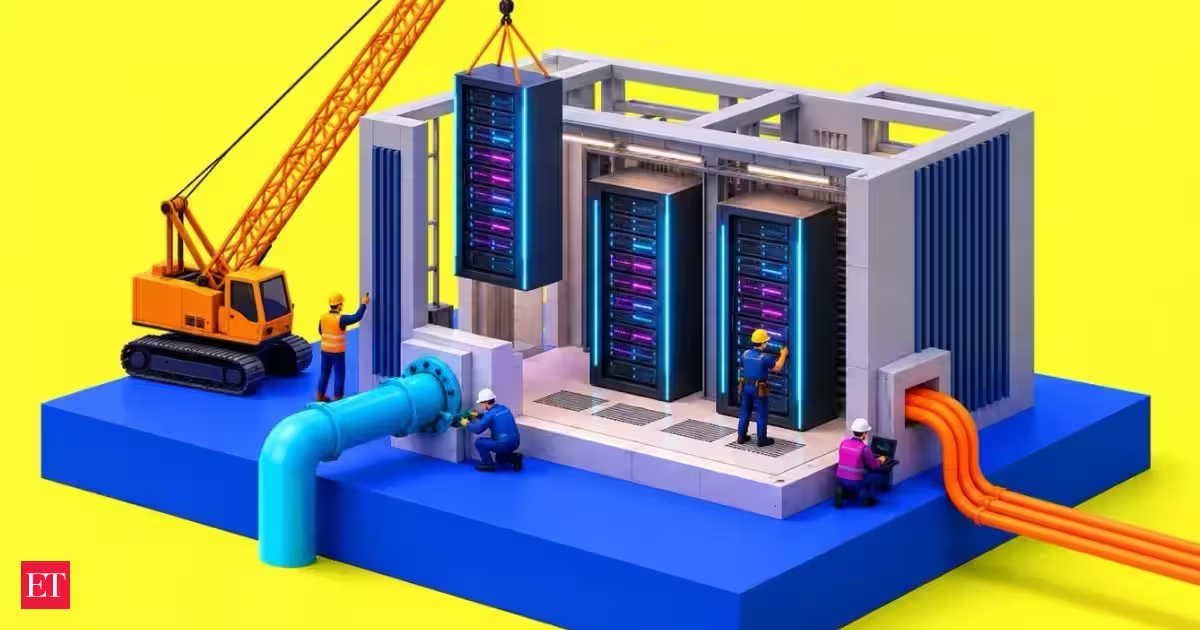
Modern data center builds require thousands of custom-engineered parts, ranging from power distribution hardware and liquid cooling assemblies to structural enclosures and cable management systems. Within those components, each part contains specific material requirements or performance specifications that vary by design, thermal load, and deployment environment.
The organizations tasked with specifying, designing, sourcing, and qualifying custom parts with niche specifications for their data center buildouts, such as liquid cold plates or air-cooled heat sinks that can maintain the growing temperatures within, are operating under systems that made sense in a slow, predictable industry. But as demand grows even higher, traditional manufacturing processes must quickly evolve to avoid becoming a larger bottleneck for data center development.