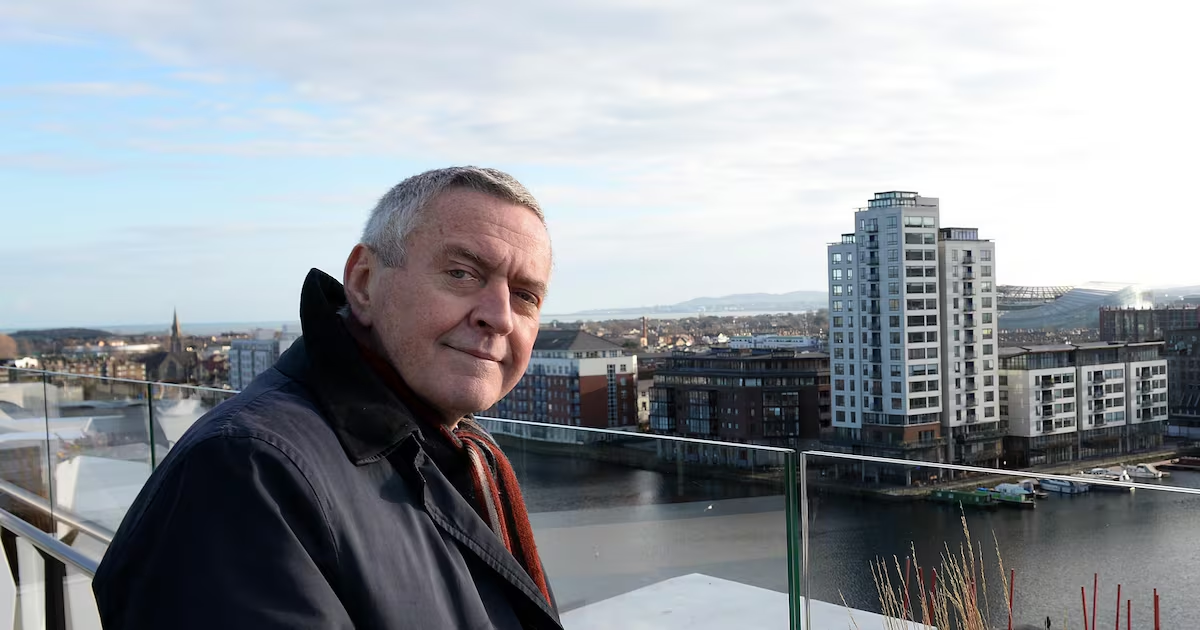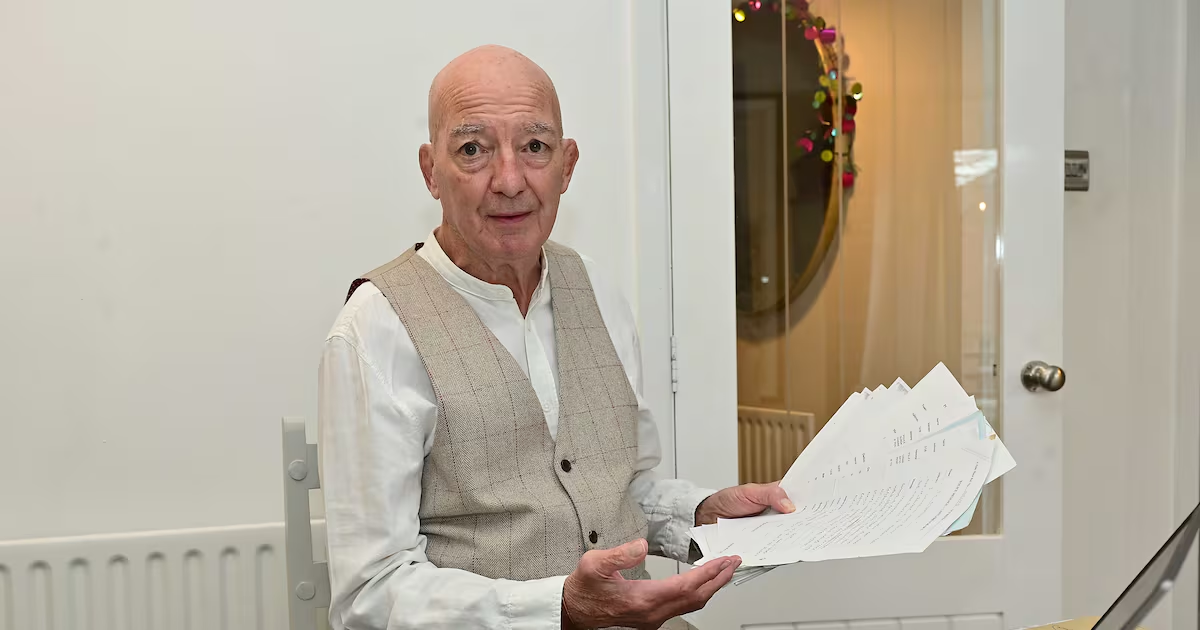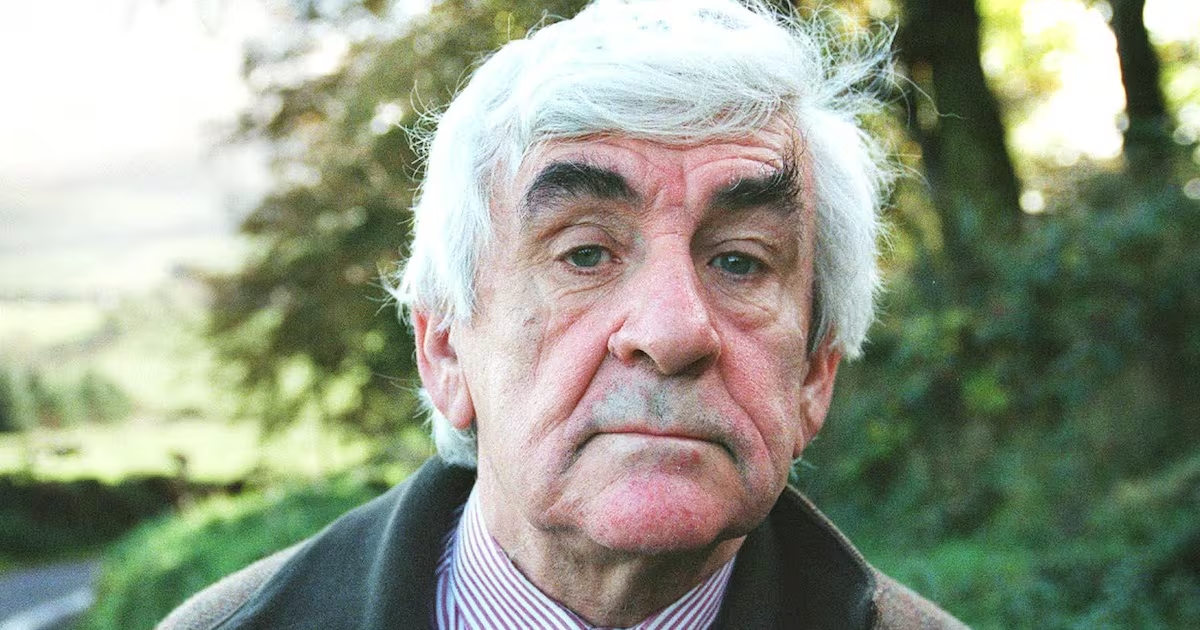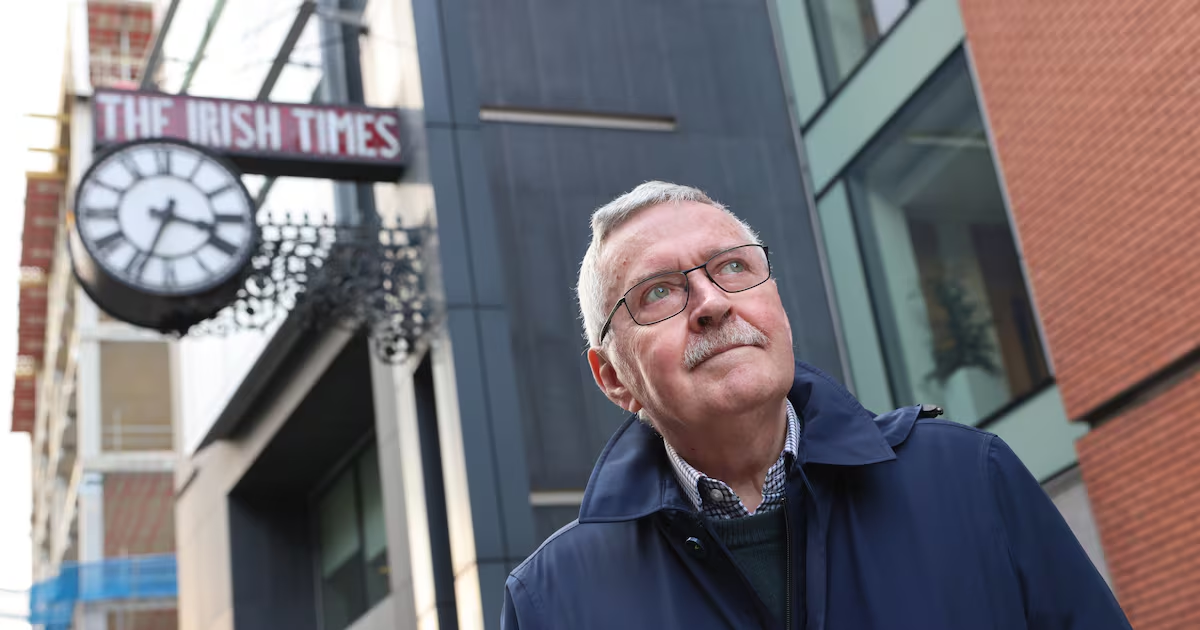
Frank McDonald – the former environment editor of The Irish Times, author and campaigner – has died. He was 76.McDonald was born in Cabra, Dublin, and studied history and politics at University College Dublin before entering journalism.He initially worked for The Irish Press but left in 1979 to join The Irish Times where he spent the next 36 years of his career.McDonald became the newspaper’s first environment correspondent in 1986 after a series of ground-breaking investigations into planning failures and dereliction in Dublin.His reporting on planning corruption was pioneering in Irish journalism, and he regularly reported from abroad on international climate negotiations.But he also maintained his deep interest in the built environment and Dublin’s struggles to balance the demands for housing and transport with architectural conservation and heritage preservation. He was appointed environment editor in 2000 and was also a prolific author, writing or co-authoring eight books and contributing to academic publications on the subjects of urban planning, planning corruption, architecture and the history and possible futures of Dublin. [ Frank McDonald obituary: campaigning journalist changed how we think about urban planningOpens in new window ][ Frank McDonald: ‘It took me years to accept who I am. I’m still working on it’Opens in new window ]He wrote his memoir, Truly Frank, in 2018, an account of his life and work in which he chronicled his experience of being gay in a country that for most of his life discriminated against people of his sexuality.Former Irish Times editor Kevin O’Sullivan, who also served as environment editor from 2017-2025, said McDonald was forensic and fearless in exposing bad planning; especially when it became tainted by corruption.“It was driven by a fervent wish for good design – not just of housing but also of urban spaces – that served the citizens rather than the interests of developers,” he said. “His outstanding journalistic work was marked by exceptional writing ability and a detestation of sitting on the fence.“That was particularly in relation to Dublin but soon extended to other Irish cities and large towns, while he became a stern critic of inappropriate housing in rural areas where there was insufficient infrastructure or it was inappropriately located – and often facilitated by local politicians through the Section 4 planning mechanism.”He said McDonald “shouted loudest” when it came to “bungalow blitz” in the 1970s and 1980s, which were poorly designed one-off houses that were “colonising the countryside”.For many years, McDonald was the lone Irish media presence at annual climate Cops that followed with negotiations hosted by the UN. “His ability to explain and contextualise the complex mix of factors contributing to an overheating world stood out,” said O’Sullivan.“He consistently called for more urgency in countering the climate crisis and the decline of nature – and became a commentator of international standing on these critical issues.”Seamus Dooley, Irish secretary of the National Union of Journalists, described him as “committed, dogged, and persistent”.“I am sorry to learn of the untimely death of Frank McDonald,” he said. “Frank was ferocious in his determination to hold those in power to account. “He was committed, dogged and persistent in investigating poor planning and corruption. He was not afraid to ask difficult questions or to swim against the tide when he felt passionate about an issue. He leaves a remarkable legacy.”In 2016, he married his partner of 40 years, Eamon Slater. The couple lived in Temple Bar in Dublin city centre for many years before settling in Blackrock on the city’s south side in 2022. McDonald retired in 2015 but continued to contribute to The Irish Times and other publications and often appeared as a commentator in radio discussions. He also remained active in planning issues, one of his most recent concerns being the configuration of MetroLink.In particular, he was concerned about plans for a MetroLink station in St Stephen’s Green, expressing fears for the park’s integrity and heritage as a national monument.The Green Party described McDonald as a “pioneer of environmental reporting, and an advocate and campaigner for the conservation of buildings and a liveable city”.“His voice will be a loss to national dialogue,” the party said. “We are grateful for his advocacy and passion.”Green Party leader Roderic O’Gorman added: “Frank was a powerful voice advocating for the protection of Dublin’s architectural and cultural heritage. “He used his platform in The Irish Times to highlight environmental and climate issues, long before these were part of the mainstream public debate. His contribution to national policy discussions will be missed.”He died overnight at the Blackrock Clinic in Dublin after a short illness and is survived by his husband and partner of 50 years, Eamon Slater, two brothers and a sister, and a large circle of friends.
Frank McDonald, former environment editor of The Irish Times, dies
McDonald’s reporting on planning corruption was pioneering in Irish journalism, and he regularly reported from abroad on climate negotiations
783 words~4 min read