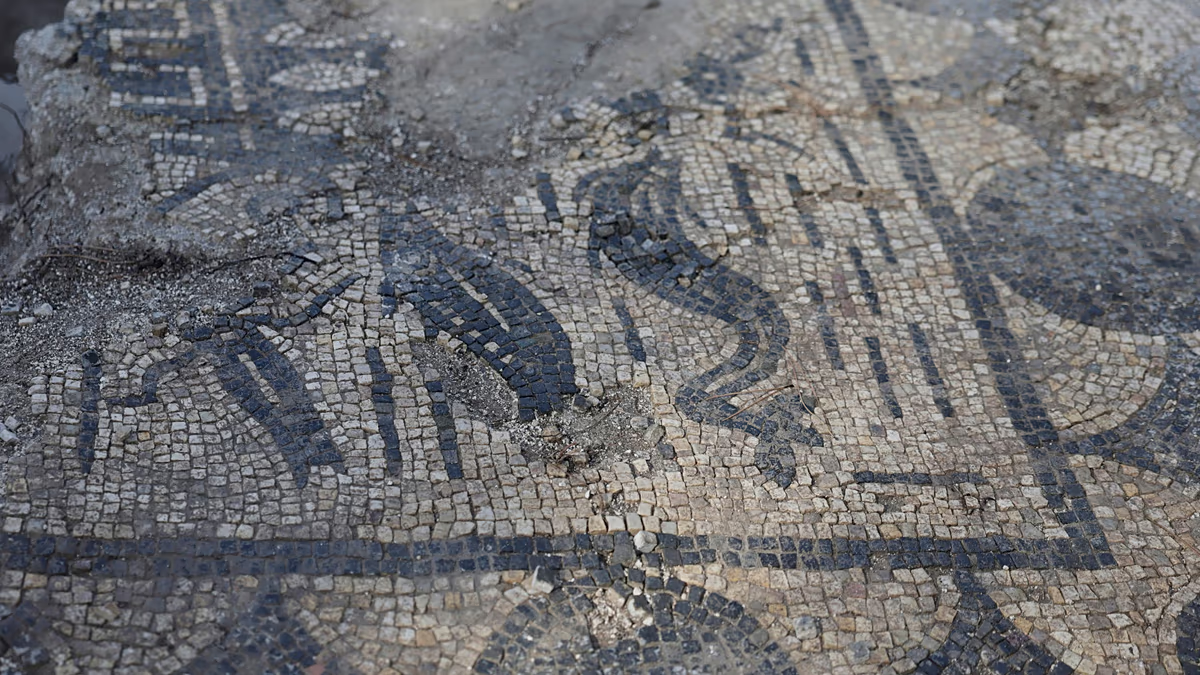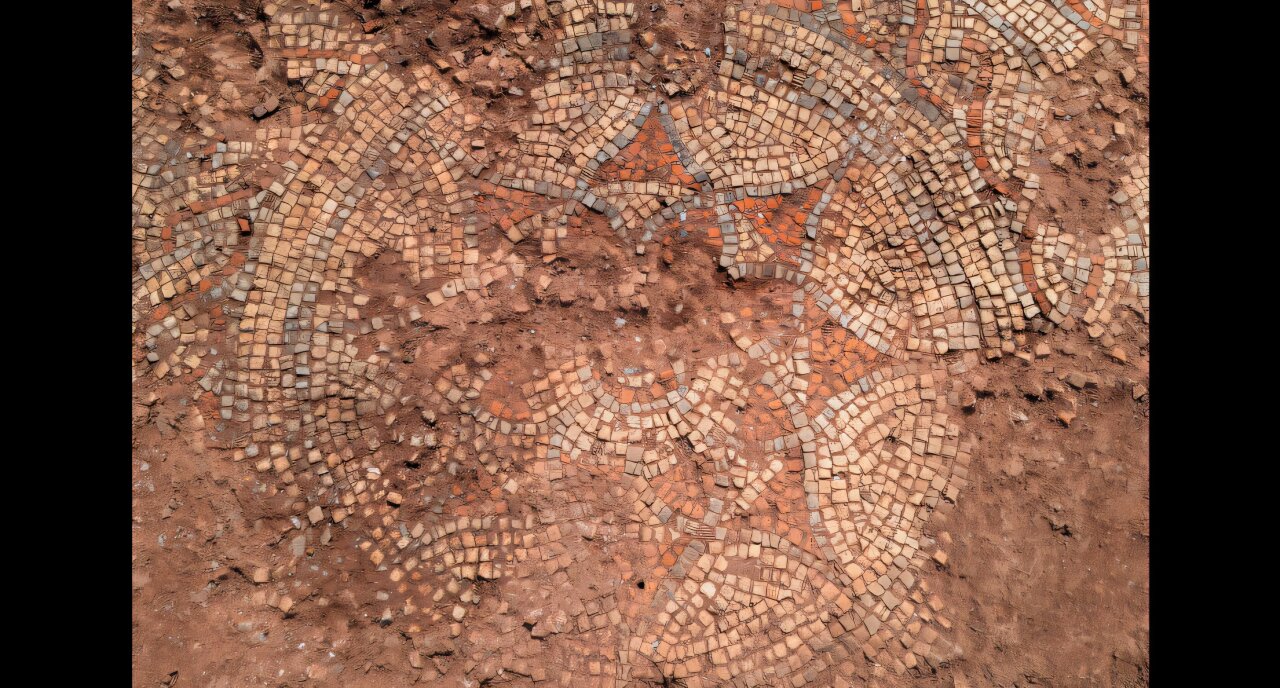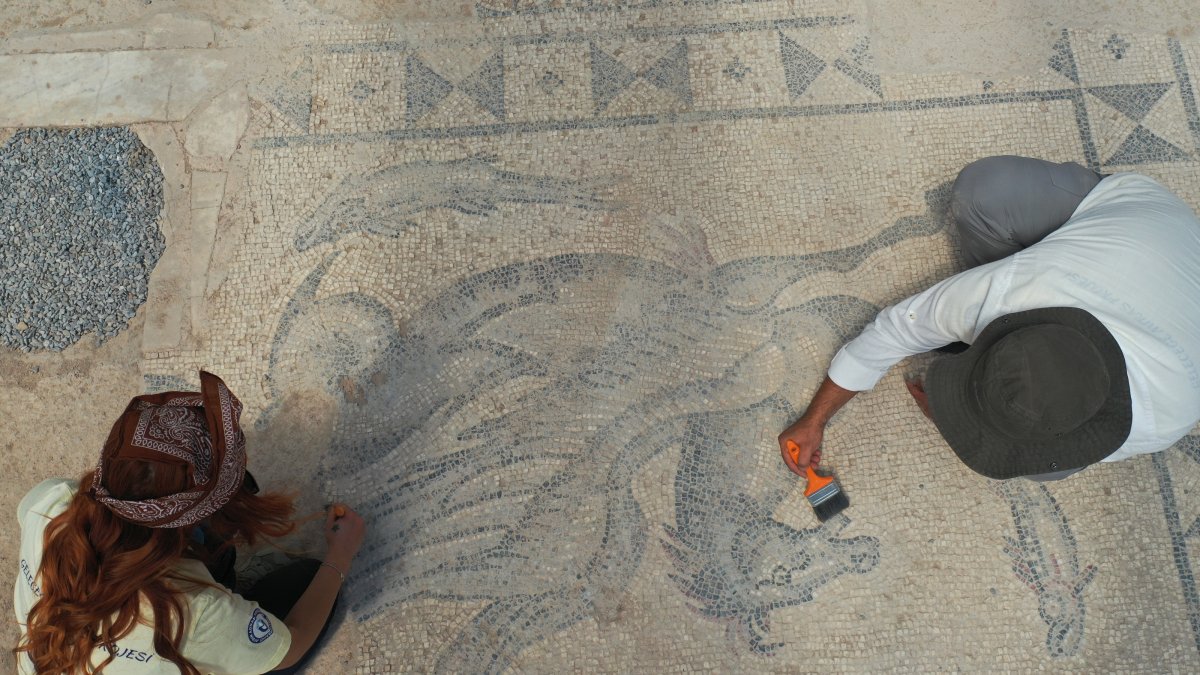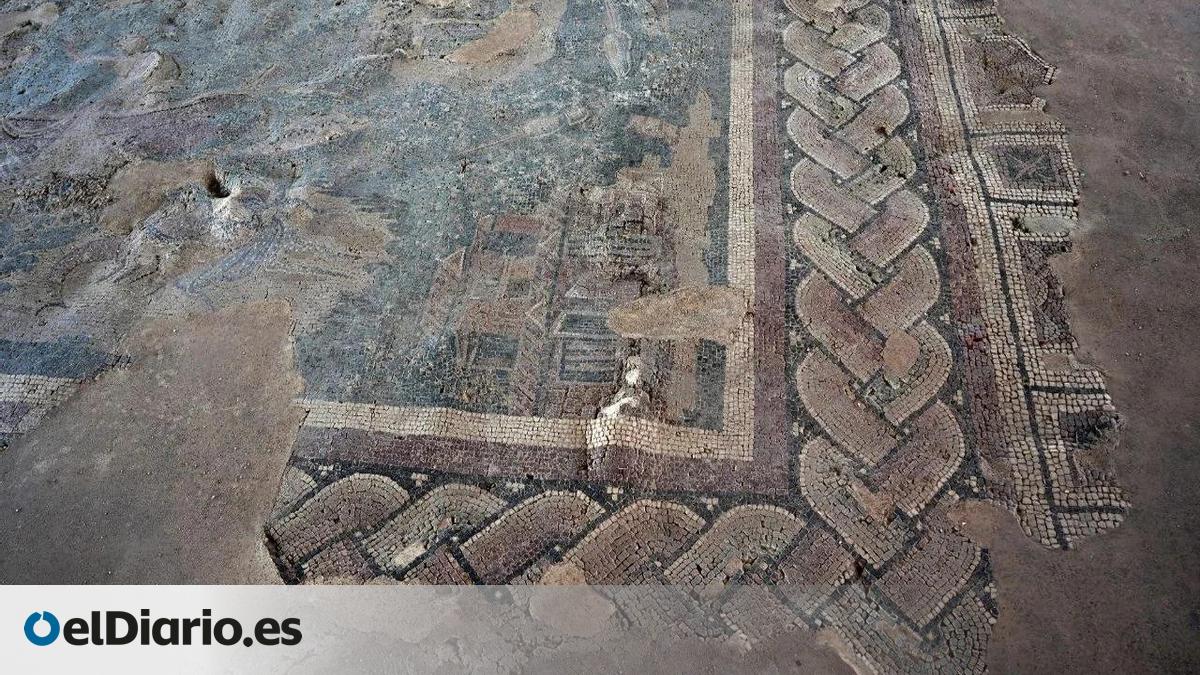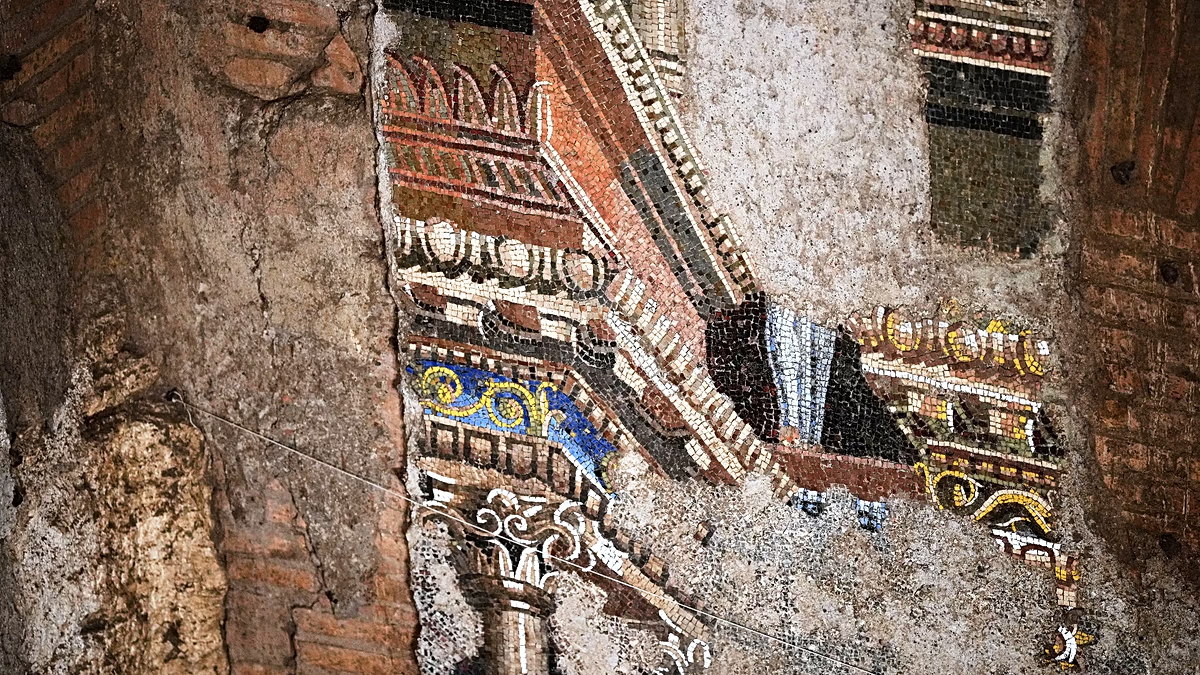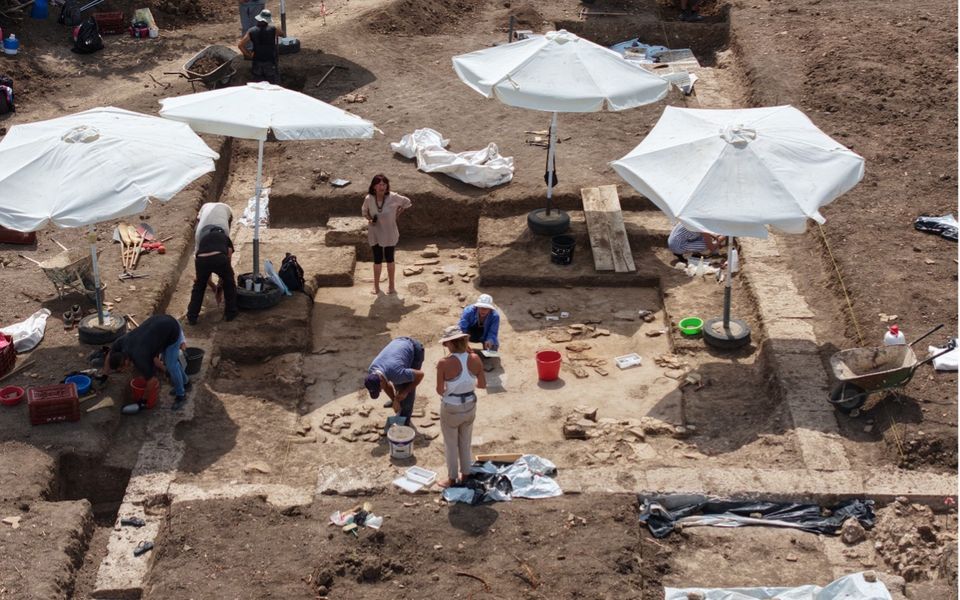
New archaeological discoveries at the Royal Gymnasium of ancient Mieza in central Macedonia in northern Greece are reshaping understanding of the monument’s architecture and functions, with mosaic floors preserved in two banquet halls emerging as the most significant find.
According to the excavation, the quality and technique of the mosaics closely resemble those of the palace at Aigai in Vergina, offering new evidence of the site’s connection to the Macedonian royal milieu.
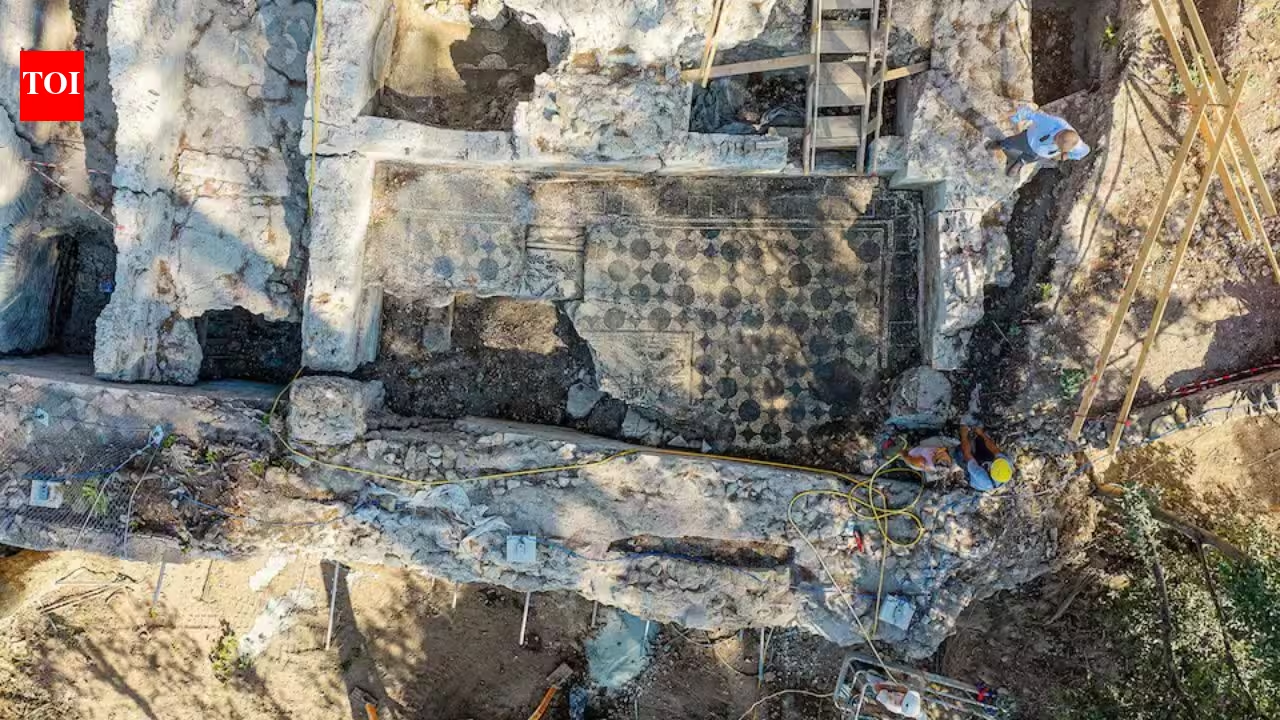
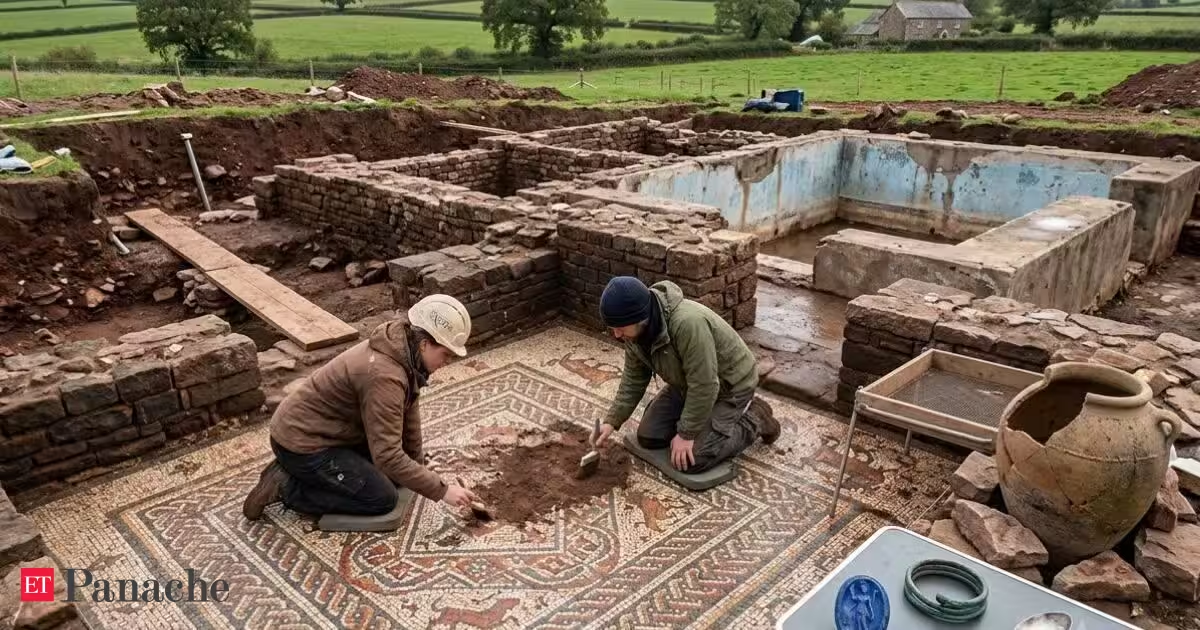
This year’s research focused on the eastern side of the complex, where lecture rooms with stone benches were identified alongside a three-part structure exceeding 160 square meters.
A central vestibule and two andrones retain mosaic floors, while raised platforms for couches confirm their use for symposia. Each hall accommodated 10 couches, allowing at least 20 diners.
Dating to the mid-4th century BC, during the reign of Philip II, the complex has yielded parts of the palaestra, stadium, stoas, waterworks, a covered stoa about 200 meters long, styluses, pottery, coins and architectural elements, among other excavation finds.