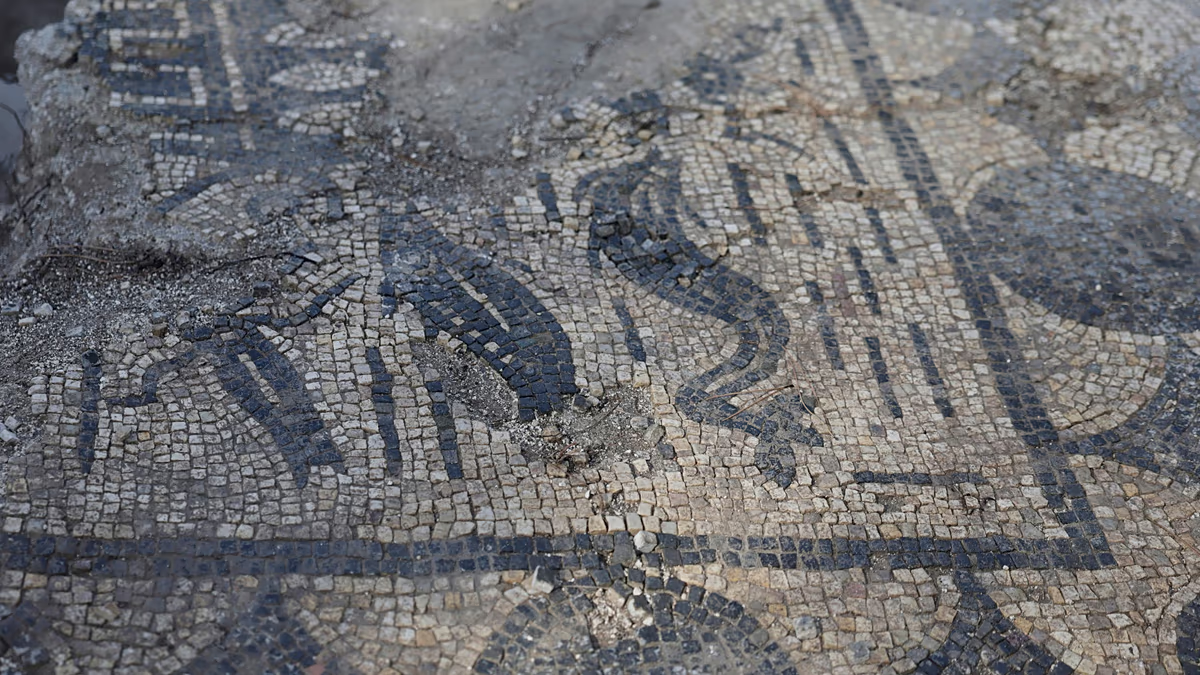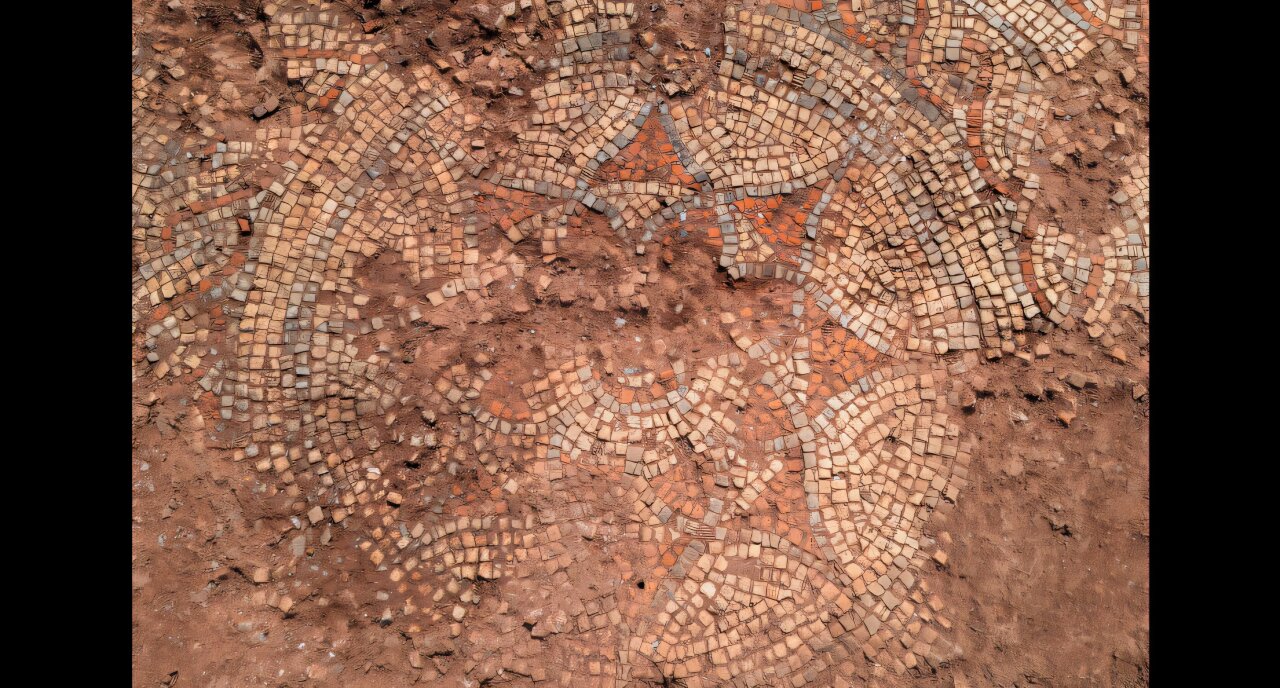
The central roundel of the mosaic design features a flower with overlapping petals. Credit: University of Exeter
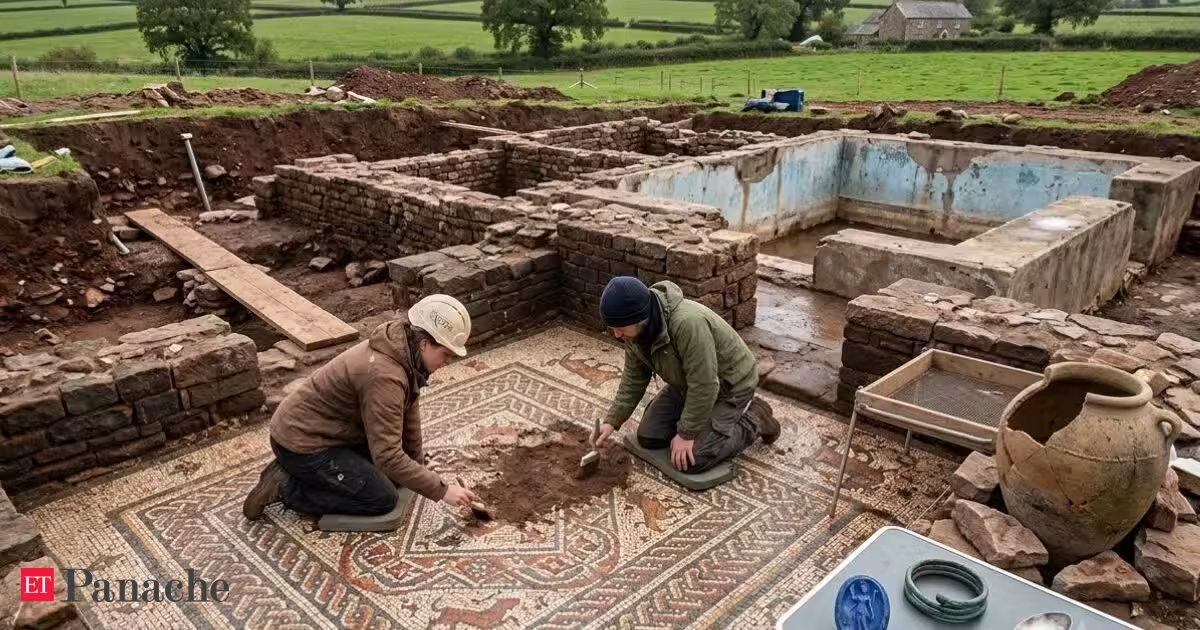
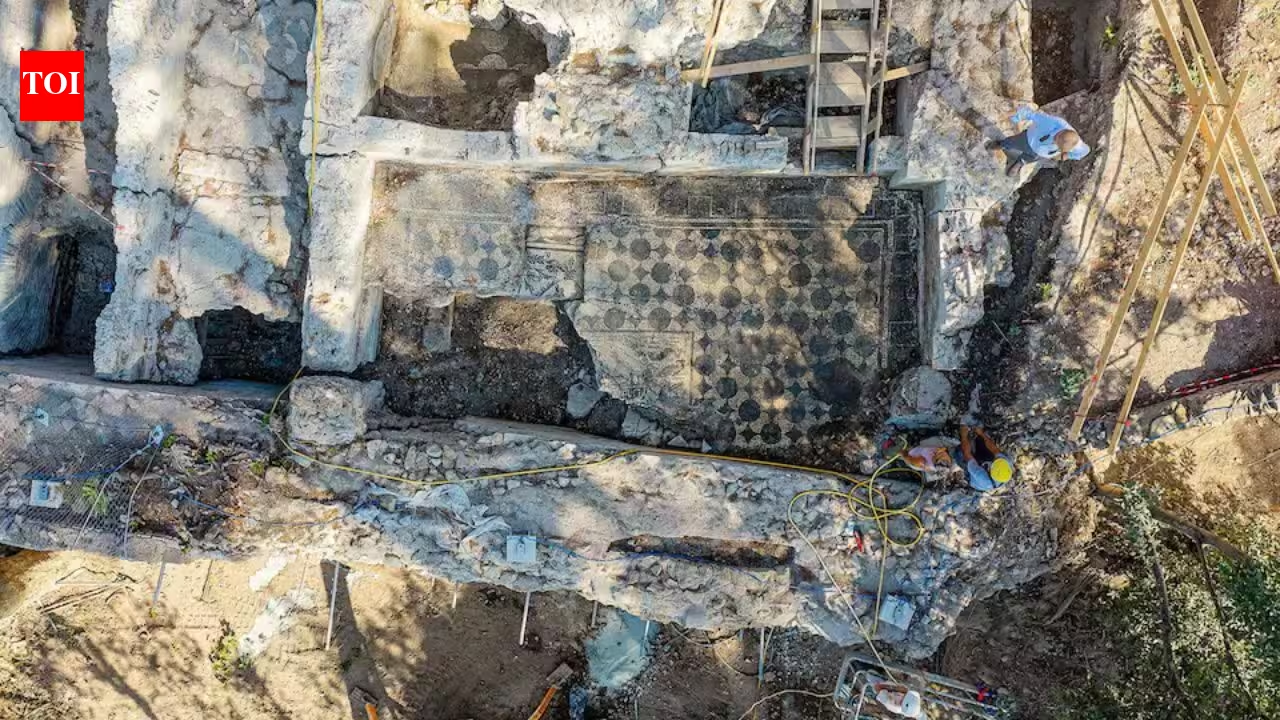
Archaeologists have uncovered a rare and intricate polychrome mosaic within the remains of a Roman villa beneath Devon farmland. Made up of thousands of red, white and dark blue-gray cubes, the 12 m2 (129 square feet) mosaic would have been a striking decorative floor feature in the villa when it was likely installed sometime in the 4th century A.D.
Away from the main villa, an elaborate bathhouse with at least two plunge pools and painted plaster walls has also been uncovered, along with Roman artifacts including an intaglio depicting the goddess Victory. The combination of these items suggests the villa was occupied by people of wealth and status, living a very "Roman" lifestyle. Such opulence is rare in this part of the southwest during the Roman period, with only a handful of villas known.
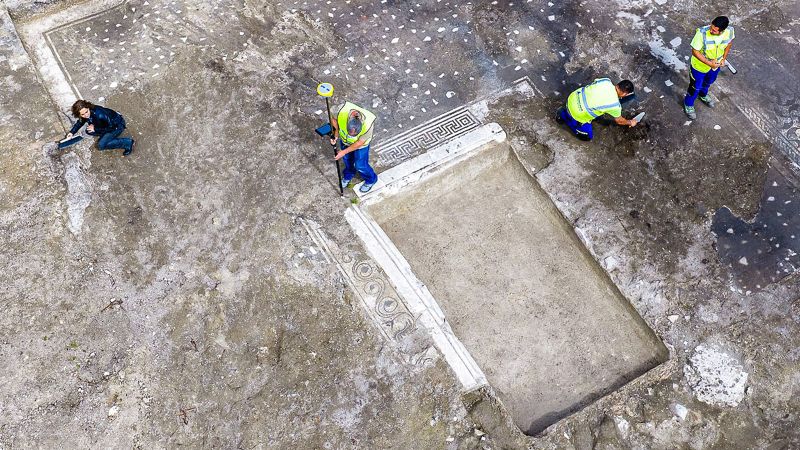
The discoveries have been revealed following a two-month dig on farmland between the villages of Halberton and Sampford Peverell, led by archaeologists at the University of Exeter and Cotswold Archaeology.
The SHARE project (Saving Halberton's Ancient Roman Environment) has attracted scores of community volunteers as well as archaeology students from the university. It is a partnership with Devon County Council, Tiverton Archaeology Group and the Sampford Peverell Society.