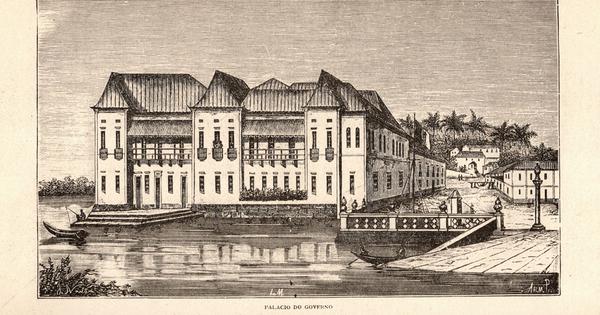
At the rate priceless public heritage buildings are vanishing before our eyes in the Goan capital of Panjim (the Campal lighthouse is the latest infuriating example) or sinister plans seem afoot to hand them over to the casino industry or to the real-estate mafia for “beautification”, “redevelopment” or similar euphemisms for erasure, I felt it necessary to highlight our existing heritage and fervently hope we don’t ever have to mention them in the past tense.It’s tragic how little we were taught in school about our heritage, and this problem of collective ignorance and apathy has gotten worse over time. It is this endemic ignorance that is partly responsible (apart from corruption and greed, of course) in illogical bureaucratic decisions adversely affecting Panjim’s heritage. What we know little or nothing about, we do not value. The writings of Percival Noronha, Vasco Pinho and Celsa Pinto are invaluable in addressing this lacuna.The Old Secretariat is probably (after the Panjim church) our capital city’s most iconic landmark edifice, so it felt appropriate to begin with it.In a different shape and form, it was already standing in 1510 when the Portuguese first arrived in Goa, the “al cazar mourisco” or fort used by Yusuf Adil Shah as his summer residence (the Portuguese called it Palácio de Idalcão), surrounded by a moat. Together with the fortification across the mouth of the river Mandovi (that we know as Reis Magos), it provided crucial defence against naval attack.It was reconstructed in 1759 and completely remodelled in the Pombaline style (which had developed in Lisbon during the rebuilding following the massive earthquake of 1755) when the Viceroy Dom Manuel de Saldanha de Albuquerque, Conde de Ega shifted his residence from Panelim to Panjim. The moat was filled and converted into a road.The Adil Shah Palace in Panjim. Credit: Joegoauk Goa, CC BY-SA 2.0, via Wikimedia CommonsA chapel on the ground floor was dedicated to Nossa Senhora de Imaculada Conceição (Our Lady of Immaculate Conception), the Patroness of Portugal and Panjim. A statue of the crucified Christ with glass eyes from this chapel is now at the chapel of São Sebastião (St. Sebastian), Fontainhas.The meticulous engravings (above) by cartographer and illustrator António Lopes Mendes (1835-1894) furnish vital information on how the edifice looked when he visited Goa (1862-1871). The river Mandovi lapped its exterior patio, as can be seen.The high scissor roofs (“tectos em tesoura”) similar to those found in Portugal were replaced in 1887 by the ones we see today, with the major works carried out by Rear Admiral Cardoso de Carvalho. The building remained a residence until 1918, when it was transferred to public administration offices.Work on the verandah we see today facing the Mandovi and the Abade Faria statue was begun during the tenure of Governor Joaquim José Machado (1897-1900) and completed by his successor General Eduardo Augusto Rodrigues Galhardo (1900-1905).Most of the footpaths were laid around 1903-1904.Post-Liberation in 1961, the building was extended along its eastern side soon after the inauguration of the administration of Goa’s first elected chief minister, Dayanand B Bandodkar.In the words of Vasco Pinho, the Adil Shah Palace as it is also known to us today “was and is undoubtedly Panjim’s most important Portuguese-era landmark”.He added, “It was Jawaharlal Nehru, the architect of modern India, who rightly pointed out that the Idalcão’ established a link with Goa’s pre-Portuguese past.” It is Panjim’s oldest surviving building and Goa’s oldest surviving royal building.1908: A view of the Secretariat building, Panjim. The 16th century building building was originally the palace of Sultan Adil Shah, a ruler of the Bijapur Sultanate. The building was a summer retreat of the Adil Shah Sultans, and then a Portuguese Rest house. #Goa #Heritage pic.twitter.com/xxYqjpN4AB— Ananth Rupanagudi (@AnanthOnTrack) September 28, 2025
Why is Goa allowing the 500-year-old Adil Shah Palace to crumble?
In the capital of Panjim, heritage buildings are being handed over to the casino industry and real-estate lobby for ‘beautification’ and ‘redevelopment’.
1,041 words~5 min read