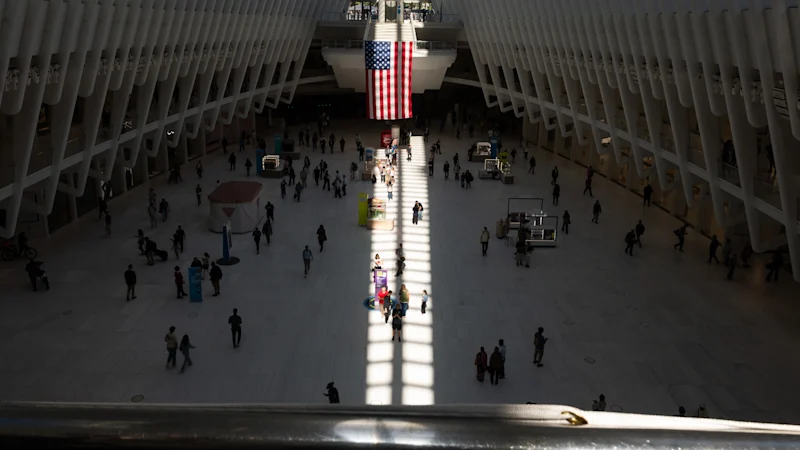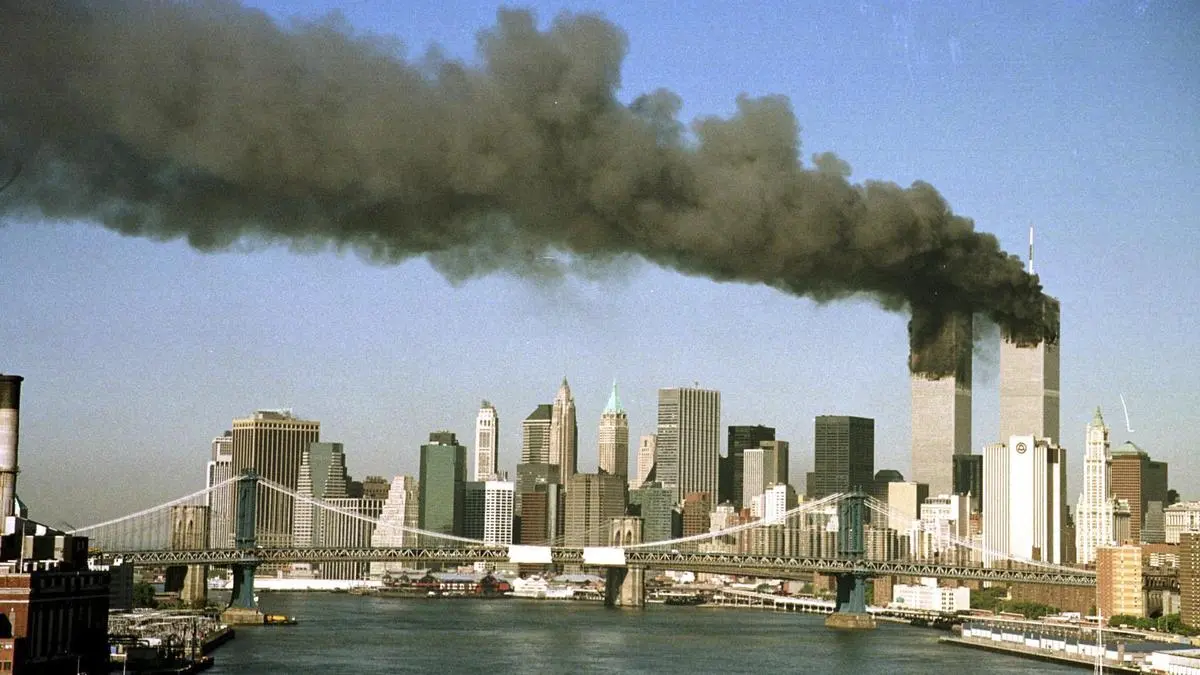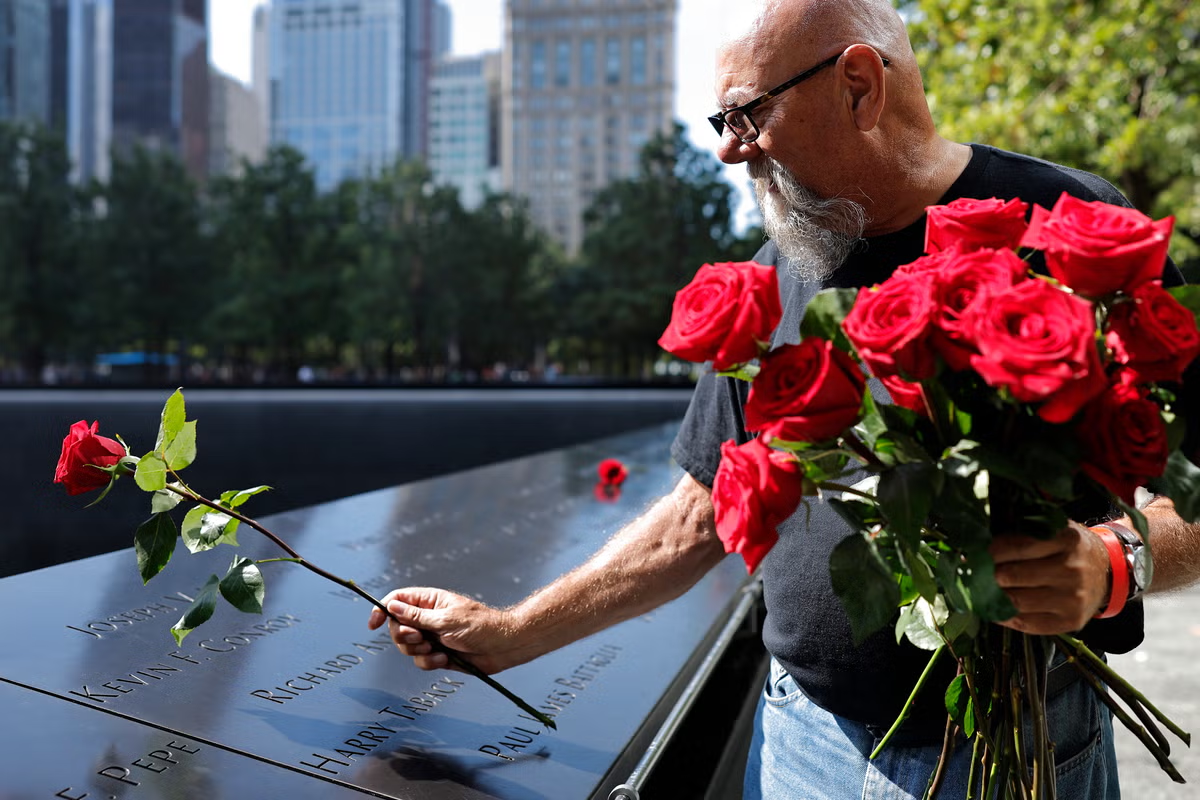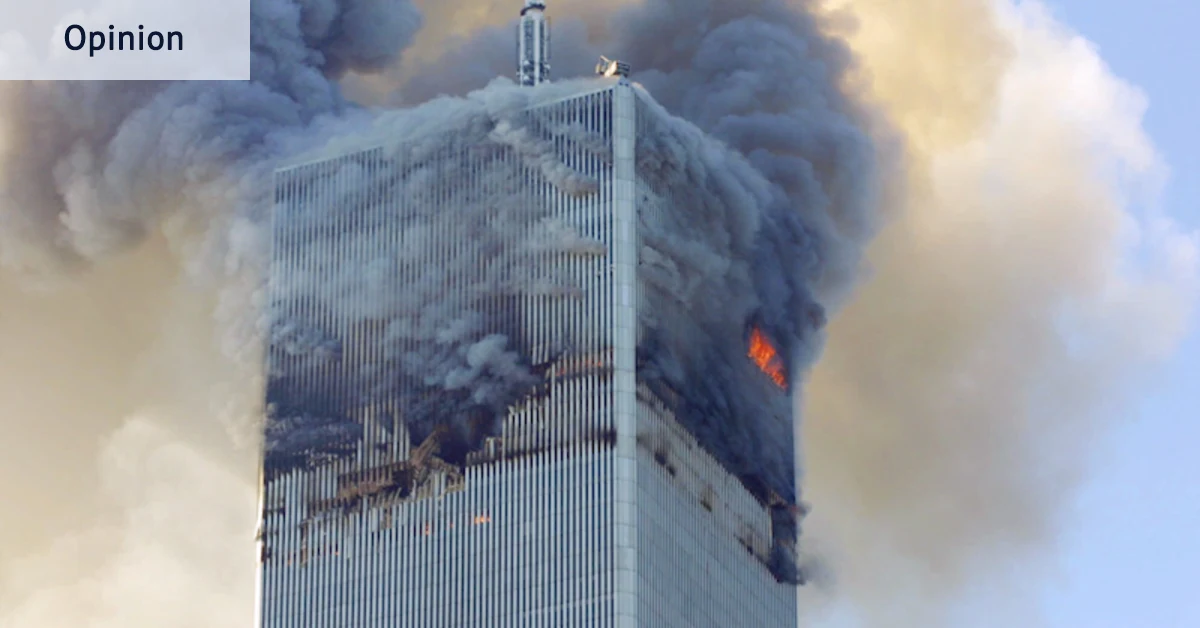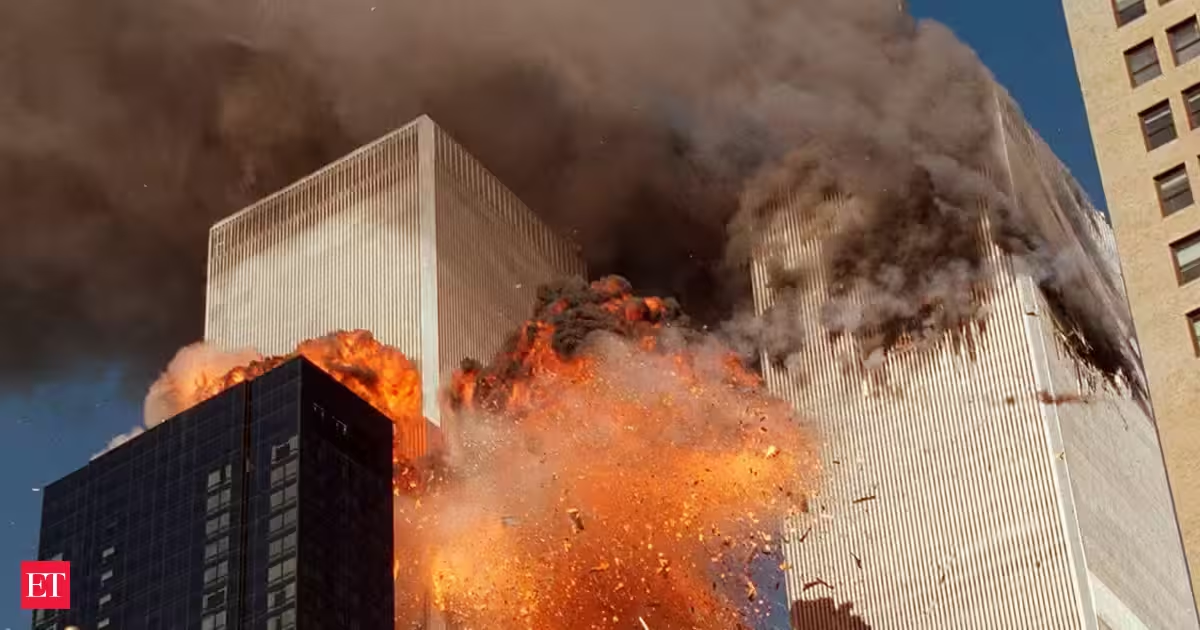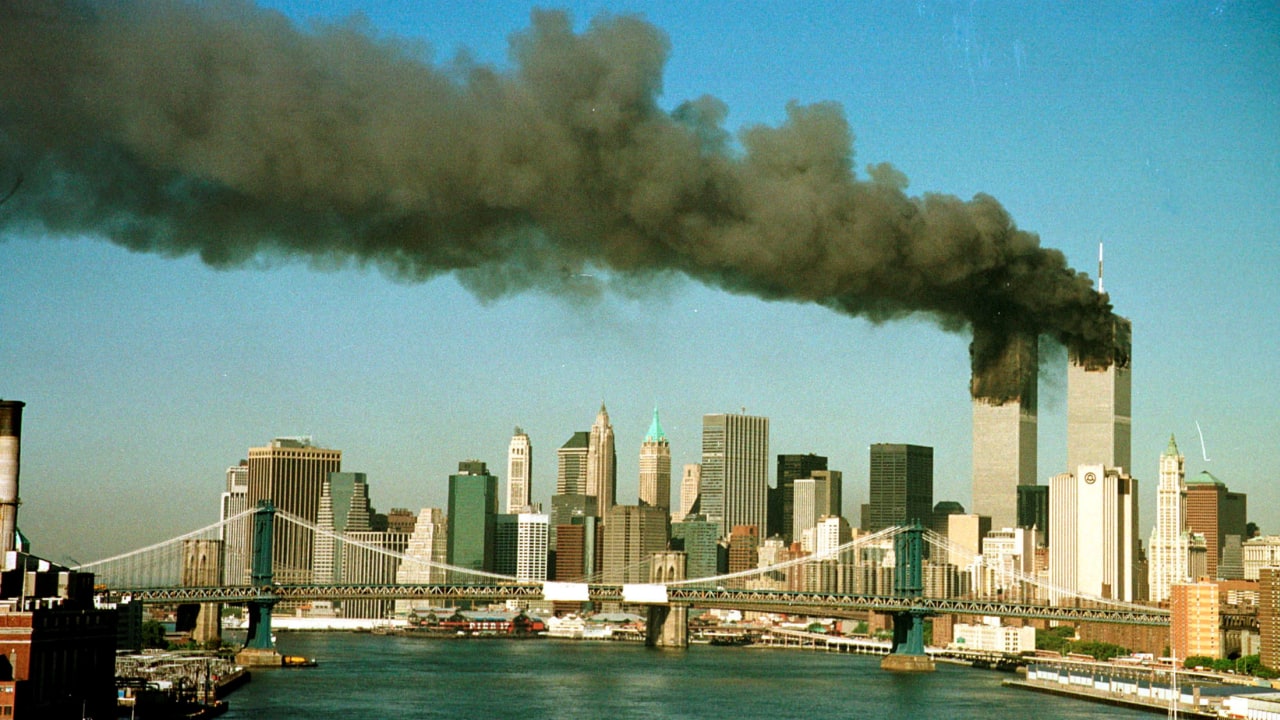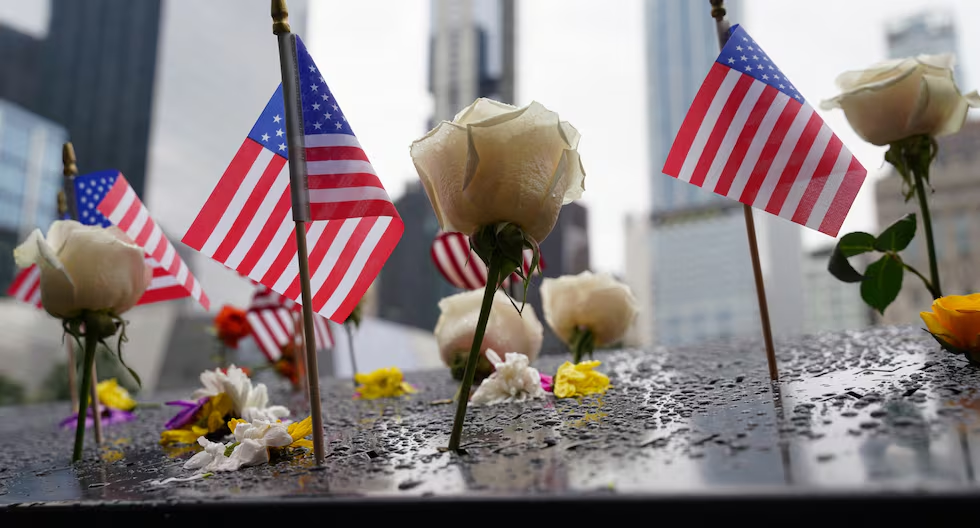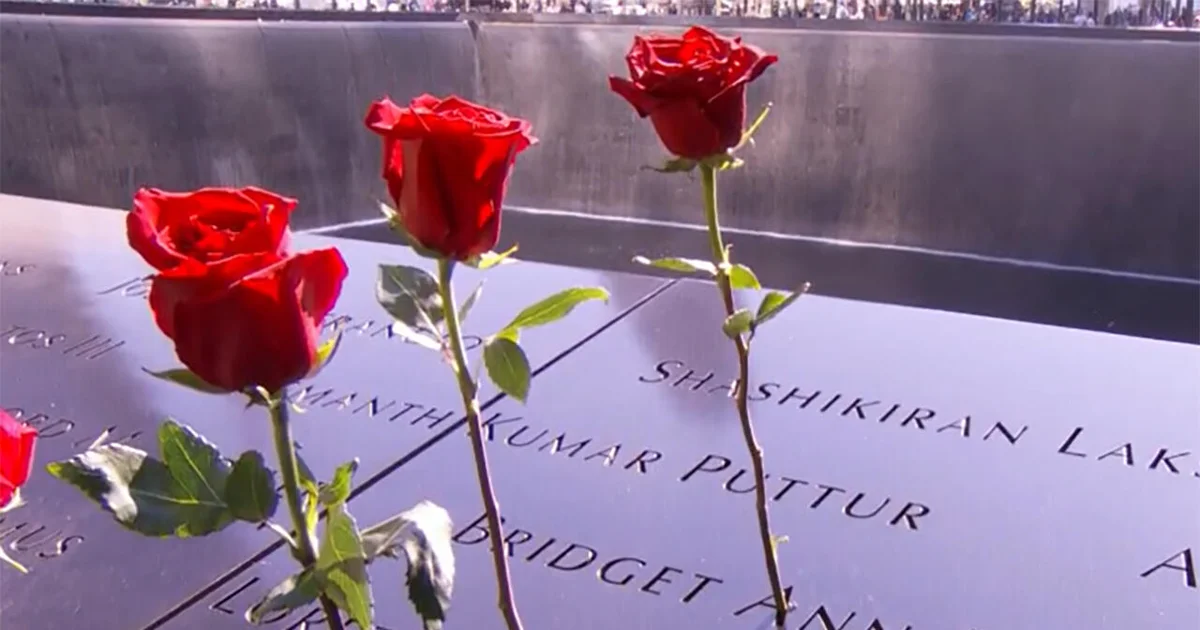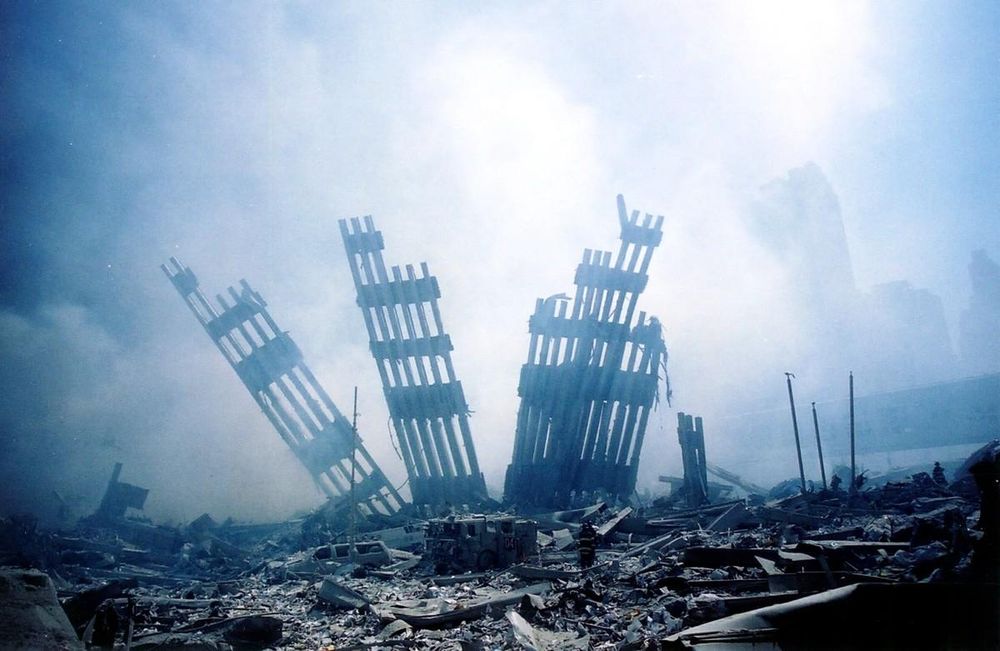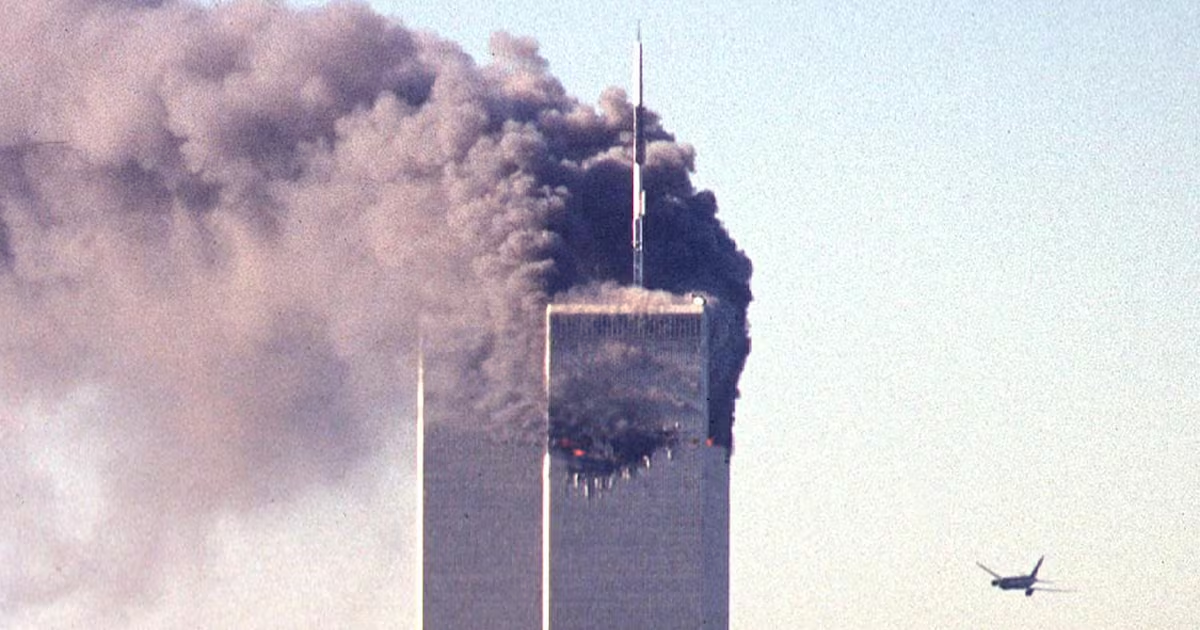
It is Tuesday now, as it was Tuesday then. The weather that morning – heaven-sent autumnal sunshine and an enormous pure blue sky – has become part of the mythology, part of the canvas of 9/11.“Yeah. It was beautiful,” Mike Keane tells me as we sit at a table by the door of O’Hara’s bar. Outside the window on this September Tuesday, 25 years on, there’s muggy rain and a steady flow of tourists. The building – sturdy redbrick and unassuming on the narrow, sloping Cedar Street – has been part of the landscape of lower Manhattan since 1917. It is a minor miracle that it is still here. It has had several iterations – “the Chinese had it; the Greeks had it” – before a Cavan man and a Roscommon man turned it into a cosy, floor-level Irish bar in 1983 which soon became a bolt-hole for the young crowd working in the World Trade Center, opened just a decade earlier. Mike and his fellow bar owner, Paul McEntee, started out as kids there. “It was unreal,” Mike remembers of the financial district in the closing years of the last century.“Bars up and down Greenwich Street and they all did business. Like I said, everybody went out drinking at lunch – every day. All the office guys, the construction guys, they were all drinking. And not just beer. And back then if you didn’t go out drinking, you got left behind. It’s the opposite to now. There were no tourists in this area at all. So, we closed on Saturdays and Sundays. Not many people lived down here at all. Around 1995, there were so many older buildings allowed residential living, and they were converted to apartments. And then it began to change.”Today, if you stand at the corner of the memorial pool marking the void of the south tower, it takes less than one minute’s walk to make it to the front door of O’Hara’s. It lived in the literal shadow of those enormous buildings. Mike Keane was actually on the phone to someone in the World Trade Center when the first plane struck. 9/11: O’Hara’s Irish bar and restaurant in lower Manhattan, formerly 'in the literal shadow' of the World Trade Center. Photograph: Keith Duggan “And they said: ‘Hey Mikey the lights just dimmed around here’. And a couple of people walked in. I said: ‘Let me call you back’. And I went out and you could see debris up and down the street, but you couldn’t see anything because it was the north tower that got hit, on the other side, so we couldn’t see anything clearly from where we are. And the phones started ringing. And then a crowd came in. They’d evacuated the Commodity Exchange over there. These guys are all big boozers. And now the bar is full. They think they are out of work for an hour or two. We got a small 20-inch TV out front and we turn it on.”One of the passengers on that first plane, American Airlines Flight 11, hijacked after departing from Logan Airport in Boston, was Patrick Currivan, an Irish businessman specialising in stockbroking and the emerging tech industry, living then partly in Paris and also in Winchester, outside Boston. He was on his way to Los Angeles that morning. Patrick was 52, successful to the point of considering retirement and a bon viveur. Back in Dublin, his sister Helen had, for several hours, been telling her husband, Martin Redden, that she’d had a bad, ominous feeling all morning and couldn’t shake it. “I don’t feel right,” she kept saying. 9/11: Irishman Patrick Currivan, who was on American Airlines Flight 11, which was crashed into the north tower and was the first plane to hit the World Trade Center The couple had already been through a horrendous year when Helen, following what was supposed to be a routine appendicitis operation, suffered what the family believed to be an extreme reaction to a general anaesthetic. She had last seen Patrick when he visited in the summer. Dan, their other sibling, was out at sea, working as a marine engineer. By strange coincidence, his ship was en route from Venezuela to Boston. The siblings were far-flung. “But they were very close,” Martin says. “Always on the phone.” “They’d planned to meet in Spain at the end of September.”Gedeon Naudet and Jules Naudet. Photograph: Paul Morigi/Getty Images for Showtime When Flight 11 struck, among the people on the streets close to the World Trade Center was Jules Naudet. The story of the Naudet brothers is one of several divine threads running through an apocalyptic day. Jules and his brother Gédéon had spent months living with the Ladder 1 crew of Engine 7, in Tribeca, intent on making a cinema vérité account of a summer in the life of a “probie” firefighter, Tony Benetatos. The FDNY had last granted film-crew access to any firehouse in the 1970s. [ Military trial of accused mastermind of 9/11 attacks set for June 2028Opens in new window ]The Naudets gained access to Ladder 1 through their friendship with James Hanlon, a firefighter and actor. Even then, it took the brothers months of just hanging out at the firehouse before the crew began to feel at ease in their company. The film-makers and subject matter make for an almost comical clash of cultures. The brothers, although Manhattan residents since moving with their parents in the late 1980s, remain classically French and speak impeccable but heavily accented English. Given the subject matter, there are even one or two belly laughs. One occurs when Jules decides he will cook the company dinner and settles on a leg of lamb dish. He fatally underestimated the collective appetite of 13 big-boned firefighters and slow-cooked just one leg of lamb. “He would have needed at least five,” his brother narrates sorrowfully. The crew feigns mock disgruntlement. “Hey Frenchie, couple o’ more meals like this and we’ll be able to share shirts.” Then the film shows the date of the culinary mishap: it is the evening of September 10th. And it’s a gut punch.9/11: A display at the 9/11 Memorial & Museum in New York this week as it prepares to mark the 25th anniversary of the September 11th terrorist attacks. Photograph: Spencer Platt/Getty The following morning, Jules Naudet was filming what started as a routine call-out: a reported gas leak, on Church Street, about a three-minute walk from the World Trade Center. Jules was more of a producer than a cameraman: he was there to learn the craft. And at 8.46am, he catches the confused glances as, in the famous words, a screaming came across the sky. He caught the only ground-level footage of the first plane meeting the tower. Then he follows battalion chief Joseph Pfeifer, and the other firefighters into the lobby of the North Tower. They would have passed close to O’Hara’s that morning.For an hour, Jules Naudet filmed an unbroken reserve of material that serves now as a visual testimony to the otherworldly courage, and coolness, of the firefighters who arrived in the lobby. Many of the faces he filmed are in the last hour of their lives. One of those, Fr Mychal Judge, the FDNY chaplain, is seen standing alone in the lobby, terse faced and praying. He would die not long afterwards, struck by debris during the collapse of the south tower shortly after giving another person the last rites. Other firefighters managed to carry his body from the lobby up to St Peter’s, a six-minute walk away on Barclay, and the oldest Catholic parish in Manhattan. They laid his body on the altar.9/11: The Twin Towers of the World Trade Center after being hit by hijacked passenger planes on the morning of September 11th, 2001. Photograph: David Surowiecki/Getty Images Jules Naudet would later say he self-censored as he went that morning, refusing to film burning people he encountered immediately upon entering the lobby or, later, falling bodies hitting the pavilion with sickening loudness. He was still inside when the first tower fell and kept filming, constantly clearing his lens. He somehow managed to keep filming through the collapse of the neighbouring south tower, which, although struck by the second plane, United Flight 175, collapsed first, at 9.59am. [ Watching 9/11 unfold: A scene of endless horrorOpens in new window ]By then, fully aware of the calamity, O’Hara’s had evacuated the bar. Mike Keane was preparing to leave but shortly before 10, he went up on to the second-floor roof to make sure none of the burning bits of paper and debris he had quenched earlier were still smouldering. He was on the roof when the south tower, looming over him, began to crumble before his eyes.“It was like a bomb went off. Dust. Debris. We just ran back down that stairwell. Lucky there were no windows. If we were sitting here, we could have gotten … the noise was too much to comprehend. When we got back inside, I had to get something out of the office. I got the key out and I thought I was fine. But I held the key and my arm was like this – shaking. “In the fire escape out front there were a bunch of papers burning and we were trying to put that fire out. Then I got out, and up the street to Zuccotti Park. And I meet a cop. It’s pitch black. Like a snowstorm but with grey dust. And he sees me and he says, oh good, you can help look for survivors. So, we were looking underneath the hot dog wagons on Cedar [Street]. And then the second tower started coming down and we took off and went into some buildings nearby for an hour or so.”Gédéon Naudet had arrived at the scene minutes before the collapse of the north tower and was standing in the direct line of debris when the terrible implosion started.9/11: A worker vacuums around the World Trade Center slurry wall − built to keep the Hudson river from flooding the Twin Towers − which is exhibited at the 9/11 Memorial & Museum. Photograph: Spencer Platt/Getty “At that point I realised I was going to die,” he says in the film. “And the only thing I could think about in truth was that if I survived, I would be a better brother.”But he survived the avalanche of dust and debris and helped carry another survivor out. Over the following hours, each brother would believe the other dead. Today, the camera Jules Naudet used that morning is one of the many artefacts in the 9/11 Memorial &Museum. To walk through that underground museum, which is located in what was the car park of the south tower, is to be pulled into both the diabolical awfulness and the unfathomable scale of what took place that day. The museum opened in 2014. Someone told me that to walk through it is to experience the sensation of “someone standing on your chest.” It’s a perfect description. The museum is spacious but claustrophobic, extraordinarily curated, with recordings of the voices of those trapped in the towers, and the firefighters, and then artefacts of the day; everything from fragments of the aeroplanes to singed but still legible documents that came cascading from those towers to the warped steel girders where the planes struck to a bike stand with five bikes still locked, never claimed. There is the crushed body of the fire truck from Ladder 3. There is a brick salvaged from the Osama bin Laden compound. The Rolex watch worn by Todd Beamer, one of the passengers who mounted a bid to rescue Flight 93, which the hijackers crashed into a field near Shanksville, Pennsylvania. There are artefacts from the plane that was flown into the Pentagon. There’s a preserved window display of the baggy skater fashion of the day, shrouded in 9/11 dust. All of these bits of recovered detritus acquire a kind of super omnipotence as the atrocity recedes further in time. There is, controversially, an exhibit featuring a “composite” which is the heat-fused remains of five floors into a mass of “surfaces, crevices, and interior fragments” no more than four feet in height. There is, on the upper floor, a gift shop. The 9/11 museum is not under the auspices of the National Parks: it must fund itself. There is a huge blue wall bearing a quote from Virgil: No Day Shall Erase You From The Memory Of Time. Behind that wall, the guide told us, the remains of the victims not yet identified- about 40 per cent of the remains of the 2,753 people who lost their lives at the World Trade Center. 9/11: Vistors view exhibits at the National 9/11 Memorial & Museum in New York this week. Photograph: Angela Weiss/AFP/Getty The museum estimates that two billion people watched what happened on 9/11 in real time, on television or computer screens. The images were burnt on to the retinas of anyone old enough to absorb them. The diabolical awfulness of the attack – and the diabolical success of the planning and execution of the atrocity – was too much to comprehend. 9/11 became the unofficial dividing line between the 20th and 21st centuries. The idea of a museum has made some New Yorkers uncomfortable and there is still divided opinion on what Ground Zero means today; a strange amalgamation of solemn remembrance and high-end consumerism, with the “Oculus”, a white-tiled shrine to shopping, part of the overall concept. “The rebuilding of that site from the very beginning was kind of over-determined, with so many competing interests and so many different meanings being layered on it,” says Marita Sturken. A professor of media, culture and communication at NYU, Sturken has written extensively on the concept of memorials and the shaping of memory. Her 2022 book Terrorism in American Memory specifically looks at the evolution of the 9/11 site.[ 20 years on: How The Irish Times covered the events of September 11th, 2001Opens in new window ]“Because that day was so traumatic to New Yorkers in particular, a lot of the decisions about what to do got locked in very quickly – because the sense of loss was so profound. So even though I have a real critique of what was eventually built there, I understand that a lot of it came from that profound grief. They spent nine months clearing the site and searching for the bodies. Firefighters and half the people killed there, their remains were never found. So, there is a sense of that site being particularly meaningful. “But I would say that a lot of the early proposals were a lot more cosmopolitan than nationalistic. If nothing had happened there for 10 years, what we would see down there now would be quite different. But that couldn’t have happened. People were talking about ‘memory’ on September 12th. The demand to do something was very powerful. And this is in the middle of a very dense city, an economic city. And the city had little control over what happened – it was real-estate developers and Port Authority, which owned the land, and some federal money, and then architects become involved – and it becomes a conversation about narrative architecture.”Over the phone, Martin Redden and I chatted for a while about the Currivans, a fascinating family. He has terrific stories of laughter in the bleak years – like the day his phone rang and he instantly recognised the baritone drawl and clipped Bostonian r’s. “Who’s it now?” Helen called wearily. “Ummh … it’s Senator Ted Kennedy,” her husband replied. Kennedy was delivering them a US flag that had flown in the Capitol. It’s framed, and in the hallway today. About three years after 9/11, the family received word that some of Patrick’s remains had been identified. They were sceptical but travelled to Boston to scatter his ashes near a pond.“It was no more than a thimble of salt. It was a kind of an end to the whole thing. Okay, we still didn’t believe the ashes were Patrick. We believed that this was the American way of saying: this was terrible and we want people to feel they have their loved one back. It was just the improbability. You are in an aluminium tube flying at 400 miles an hour into a solid object and then the two buildings fall. And everything incinerated. But the ceremony we held was very nice, and it did bring solace.”Helen died in 2008. Dan died in 2014. Martin has never visited the 9/11 memorial but thinks he might someday.“My attitude is that it wasn’t an attack just on the States, it was an attack on human civilisation. When you see the newsreels of it now, what really hits me is the scale of it. Because I haven’t been at Ground Zero it is hard for an Irish fellah who hasn’t walked around New York and looked up to comprehend the enormity of the area, first of all. And just the fact that almost 3,000 people died there that day.”That basic fact is still the most incomprehensible. Whether by human energy or memory, to walk around those pools is to be aware that something profound and terrible happened. It has an atmosphere of its own. The names of all those who died that day are inscribed in the steel perimeter of the pools. A victim’s birth date is marked by the memorial staff placing a single white rose by the name. 9/11: A visitor at the site of the Twin Towers of the World Trade Center this week. Photograph: Spencer Platt/Getty 9/11: The south tower reflecting pool at the National 9/11 Memorial & Museum in New York. Photograph: Angela Weiss/AFP/Getty 9/11: A white rose is placed beside the name of one of those killed to mark their birthday. Photograph: Bryan O’Brien/The Irish Times Twenty-five years is a reckoning. On Thursday night, the Naudet brothers gave a talk in Stamford about their film. They’ve been admirably reticent over the years about speaking about what is one of the most powerful documentaries ever made. (And a strange, French-oriented bookend to the 1974 high wire walk by Philippe Petit which helped to humanise the Twin Towers when they were new on the skyline). Somehow, the Naudet brothers are in their mid-50s now. All of this week, New York will brace itself to remember again. There have already been dispiriting political squabbles and faction fighting. Against that, hundreds of human stories, some haunting, some heartening. There is the secondary tragedy of the legacy of illnesses and early-onset cancers suffered by those involved in rescue and recovery.9/11 does not feel like a quarter of a century ago. Time-stamps define that day. 8.46am; 9.03am; 9.59am; 10.28am. Everybody understands the coda of those numerals. The world seemed to stand still. But, of course, it could not and was almost immediately set upon a new historical trajectory.“Most of my students weren’t even born when it happened,” Marita Sturken says. “People ask me what it means. I tell them about lessons not learned – destabilisation of the Middle East and polarised society and I think a lot of the memory of 9/11 now; some of that is a nostalgia for a moment, however brief, afterwards, of national unity.”[ From the archive: Fintan O’Toole: The deepest wounds of 9/11 are those the US inflicted on itselfOpens in new window ]In Dublin, Martin Redden won’t consciously avoid the documentaries but he’ll remember his late wife, and her brothers, in his own way.O’Hara’s is preparing for a big week. The bar became a sort of spiritual touchstone – and watering hole – for firefighters and police and rescuers in the years afterwards. There will be a host of reunions.9/11:O’Hara’s on Cedar Street, Manhattan, where Mike Keane is co-owner. Photograph: Keith Duggan Mike Keane may not know this but there’s a photo of Gédéon Naudet sitting in one of the booths a few years ago, having a meal and a few drinks with friends who were caught up in the day. He smiles when asked if it feels like 25 years. Not a day goes by in O’Hara’s when he isn’t asked about the World Trade Center. And it’s fine, except around this time of year. “A couple of days before every 9/11 you get that sick feeling in your stomach,” he says quietly.“And there’s a few things that I don’t talk about because they trigger me and I get real emotional. I just stay away from those things.”[ US announces thousands of arrests in New York immigration operationOpens in new window ]
25 years later: ‘A couple of days before every 9/11 you get that sick feeling in your stomach’
New York braces itself to again remember the diabolical awfulness of the attack on the World Trade Center in 2001
3,448 words~16 min read