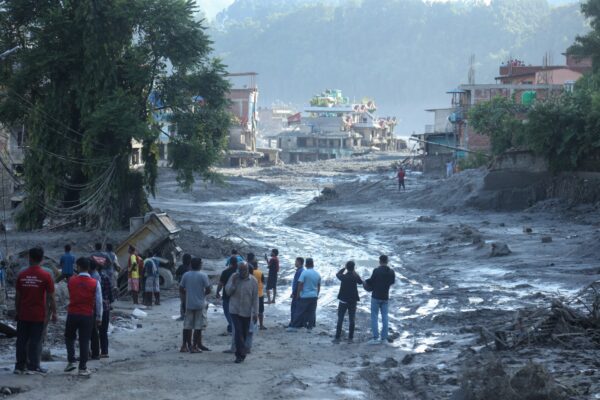
Nepal’s recent floods, which have killed at least 1,280 people while over 5,600 are still missing as of this writing, rank among the country’s worst natural disasters. Preliminary estimates put economic losses at $2.56 billion. But the disaster’s consequences will extend far beyond the immediate human and economic toll.
It has also undermined the efforts of successive post-2015 governments to achieve more geopolitical balance, largely through the development of new transport, trade and transit facilities with China.
As a landlocked country wedged between India and China, Nepal has long sought to preserve its strategic autonomy by balancing the influence of its two neighbors.
For a variety of reasons, India, which surrounds the country on three sides, has blockaded its open border with Nepal three times since 1969 — most recently in 2015. That year, Nepal promulgated a new constitution that had failed to address India’s concerns. At other times, New Delhi has openly meddled in Nepali politics.
To reduce that vulnerability to Indian pressure, Nepali rulers have felt the need to increase engagement with China, the northern neighbor.