Every data engineer eventually runs into the same apparent contradiction: the database design that every textbook, every senior review, and every "how do I avoid duplicate data" instinct insists is correct turns out to be the wrong shape the moment someone asks a real business question about it. That's not a contradiction. It's two different jobs sharing one word — "database" — when they actually want opposite things from how the data is laid out.
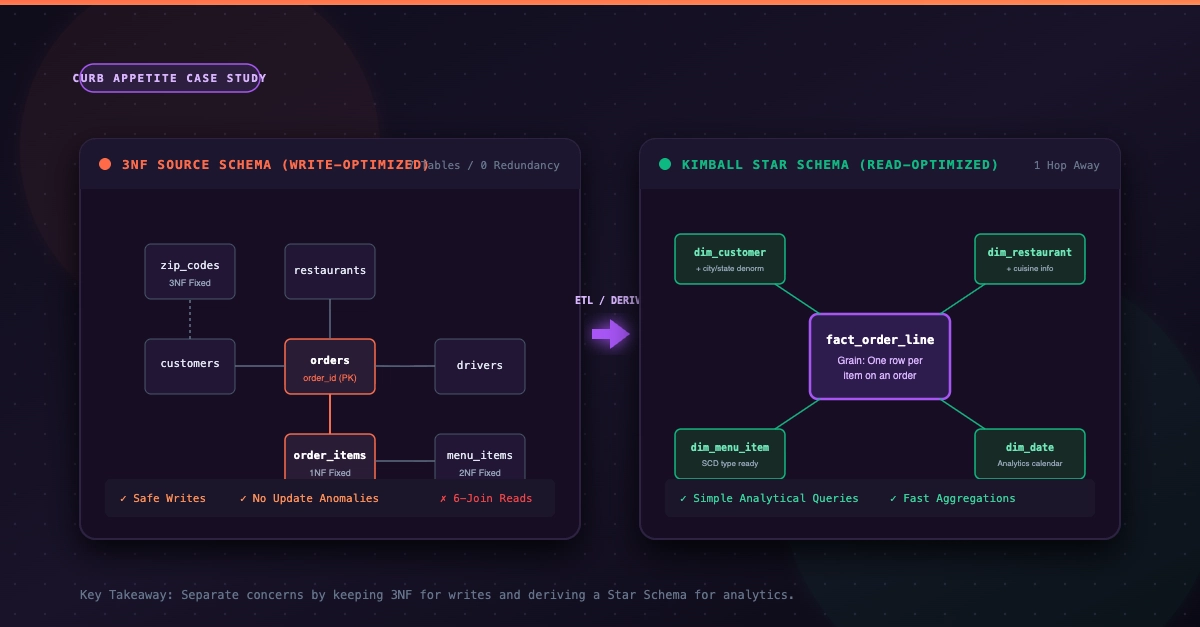
This article walks both halves, in order, on one running example: build a properly normalized schema from a genuinely messy starting point, watch it become painful the moment someone wants to ask something of it, and then deliberately undo the normalization — on purpose, for a documented reason — into a star schema built for exactly that question.
Meet Curb Appetite
Curb Appetite is a food delivery app: customers order from local restaurants, a driver picks it up and delivers it, everyone involved generates data. The starting point is the kind of table that actually exists in a lot of early-stage companies — a flat export somebody built to get the app shipped, never designed, just grown:
order_id