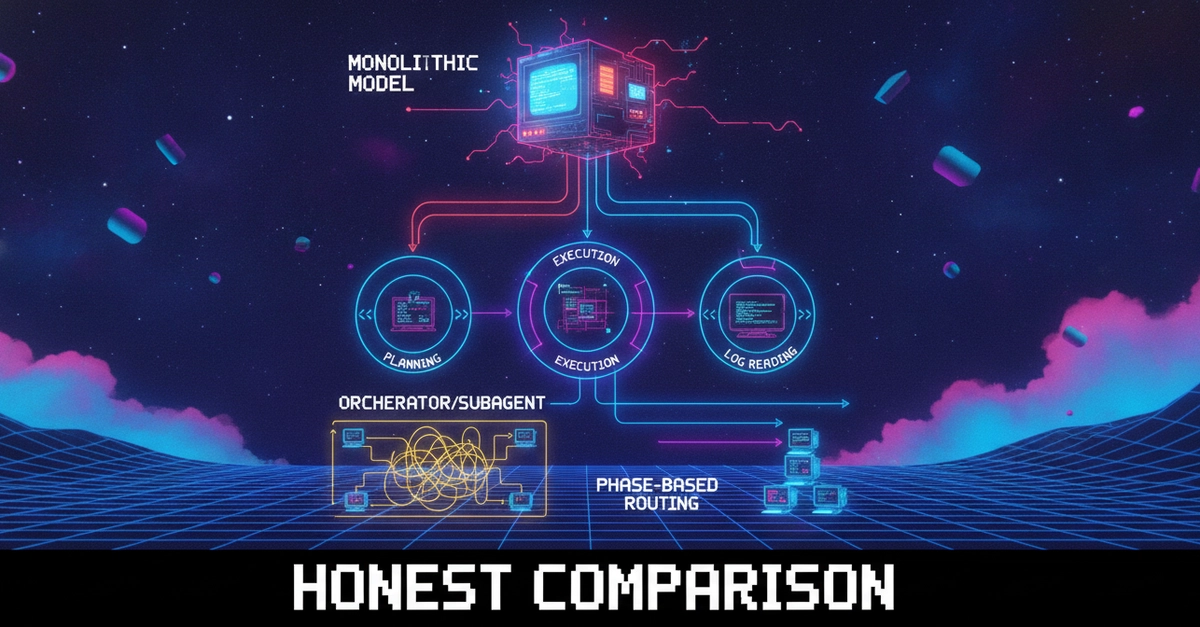
The setup I run is a cheaper model doing the implementation. Give it a clear plan and it writes the code cleanly and fast, at a fraction of what a frontier model costs. I use Opus 4.8 for this and it's a genuinely good implementer. Where a model like that is weaker isn't the typing, it's the hard thinking: a subtle concurrency bug, a real fork between two designs, a "why is this actually happening" that wants a stronger reasoner than the one writing the code.
The lazy fix is to run everything on a top tier model, but that's a bad trade. You'd pay frontier prices on every trivial edit just to have the deeper reasoning on hand for the few moments that need it. And telling a cheaper model to "think harder" in the prompt doesn't do anything, because it doesn't hand the model a better reasoner, just a longer leash.
What I wanted was to keep the cheap, fast implementer and let it borrow a stronger brain for the hard question, then go straight back to writing code.
That's all ask-fable (https://github.com/baggybin/ask-fable) is...
How it works