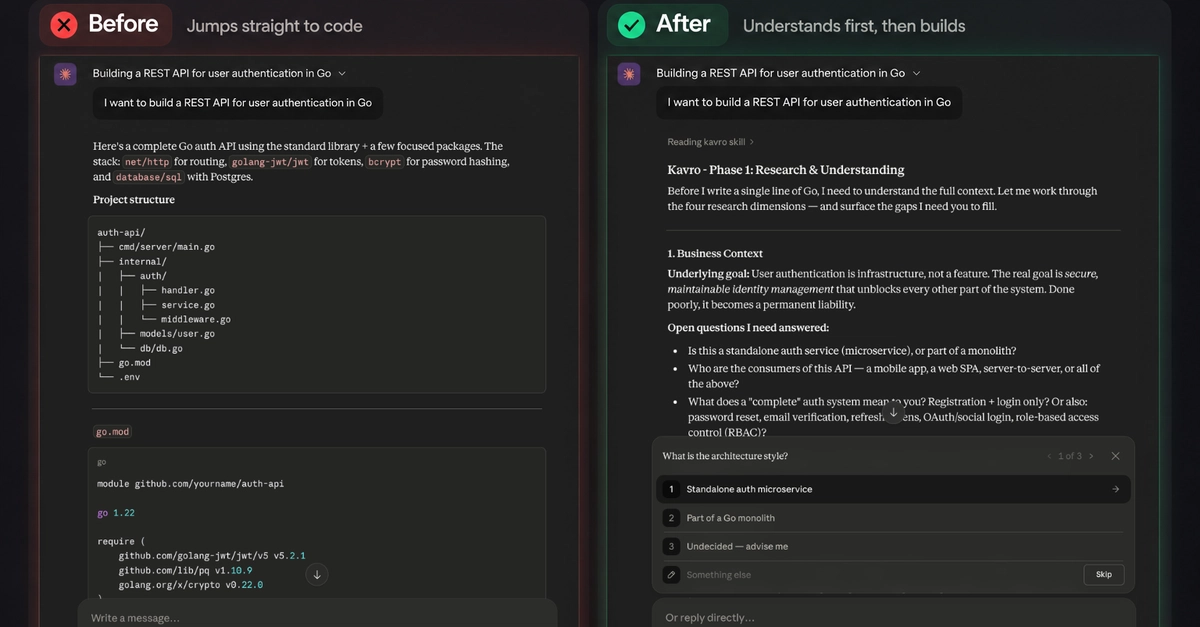
AI coding agents are strangely lopsided. Hand one a well-scoped task and it writes better code, faster, than I do. Hand it a large feature, the kind that takes days and touches a dozen files across several layers, and the failure mode changes. The context window fills up and quality quietly degrades (AKA context rot). A fresh session, missing the history, confidently invents an API that never existed. And even when the code is good, you're left staring at a 3,000-line diff you can't meaningfully review.
Those failures are not solved by the model alone. They are largely a process problem.
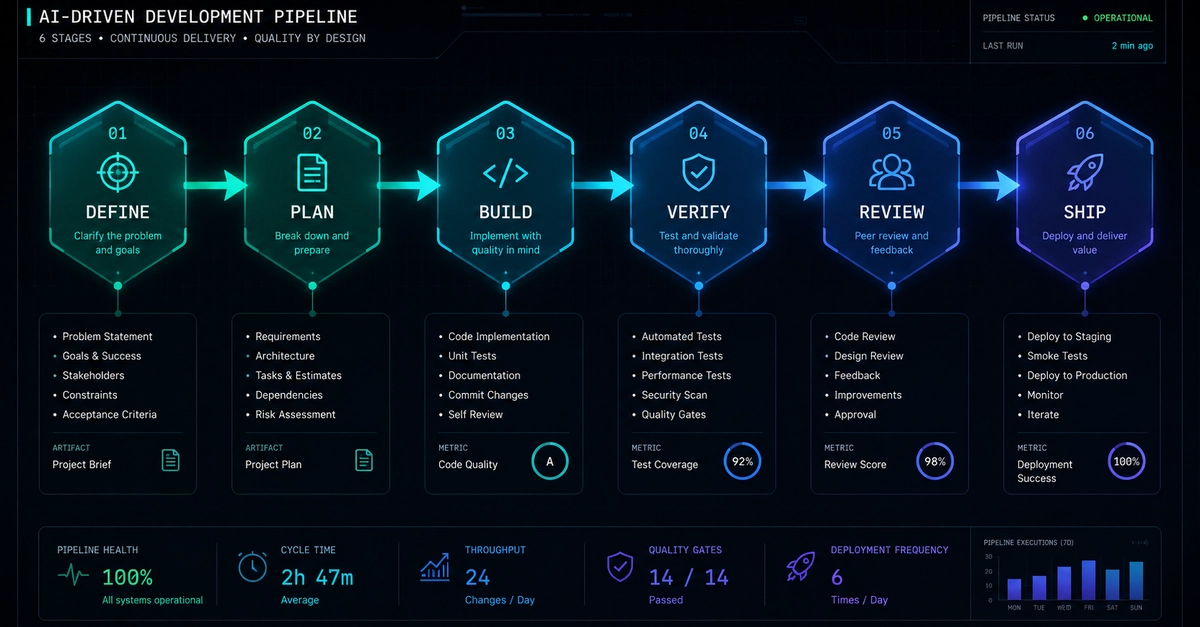
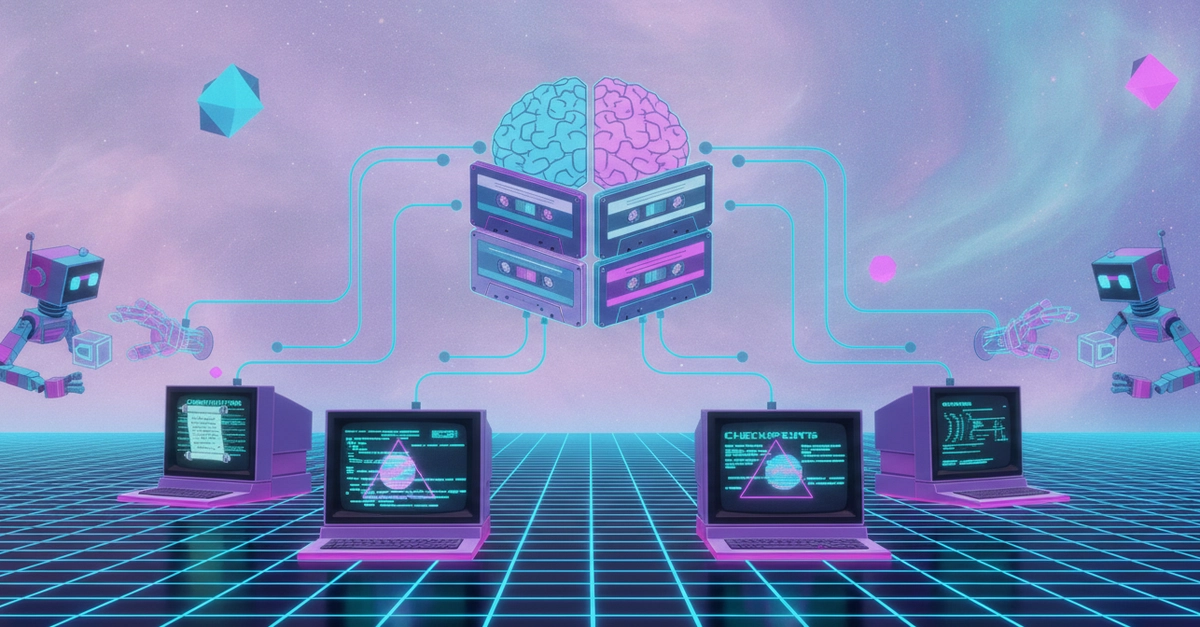
The backbone I work inside isn't mine and isn't novel: a constitution, specs, and deliberately stabilized plans. It's spec-driven development, which has been around in various shapes for years. What I added from running it day to day were two operational mechanisms that made it survive long features: explicit checkpoints and structured handoffs.
The mental model I use: treat the agent like a brilliant but forgetful senior engineer. Sharp in the moment, no long-term memory, occasionally overconfident. You wouldn't hand that person a two-week feature and walk away. You'd give them the ground rules, a spec, and a plan, then review their work in slices. That's the whole idea.