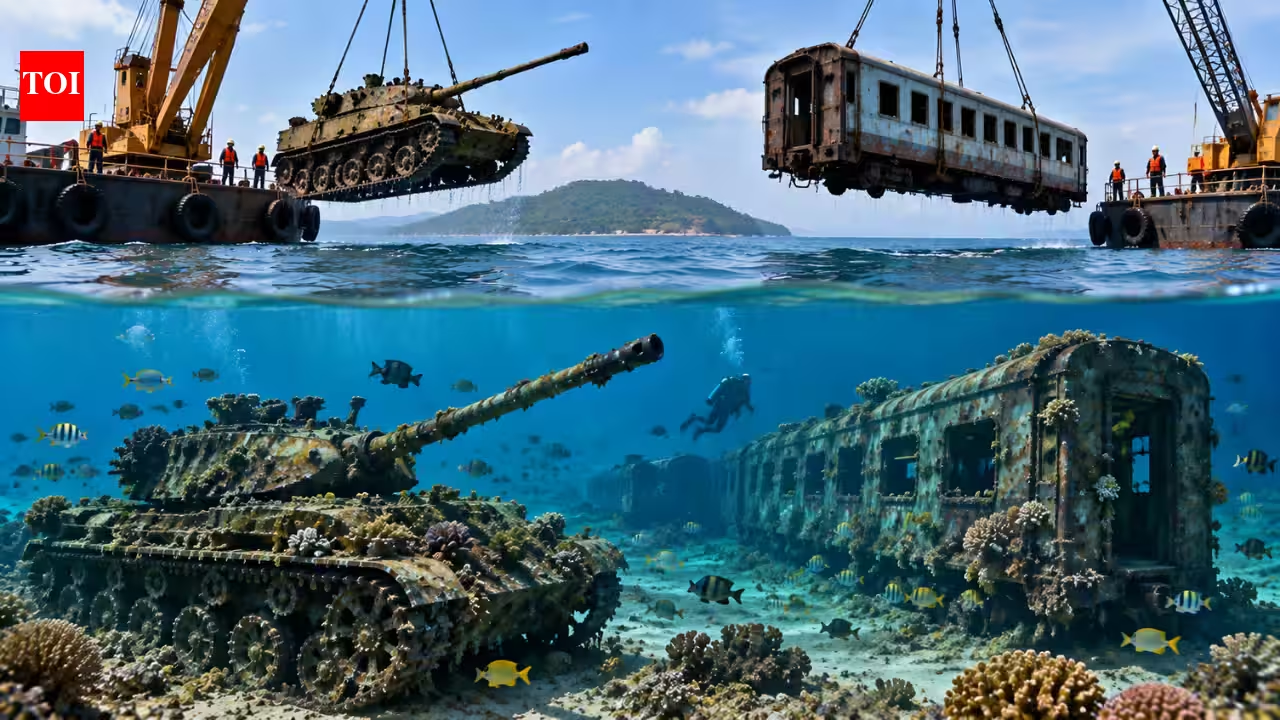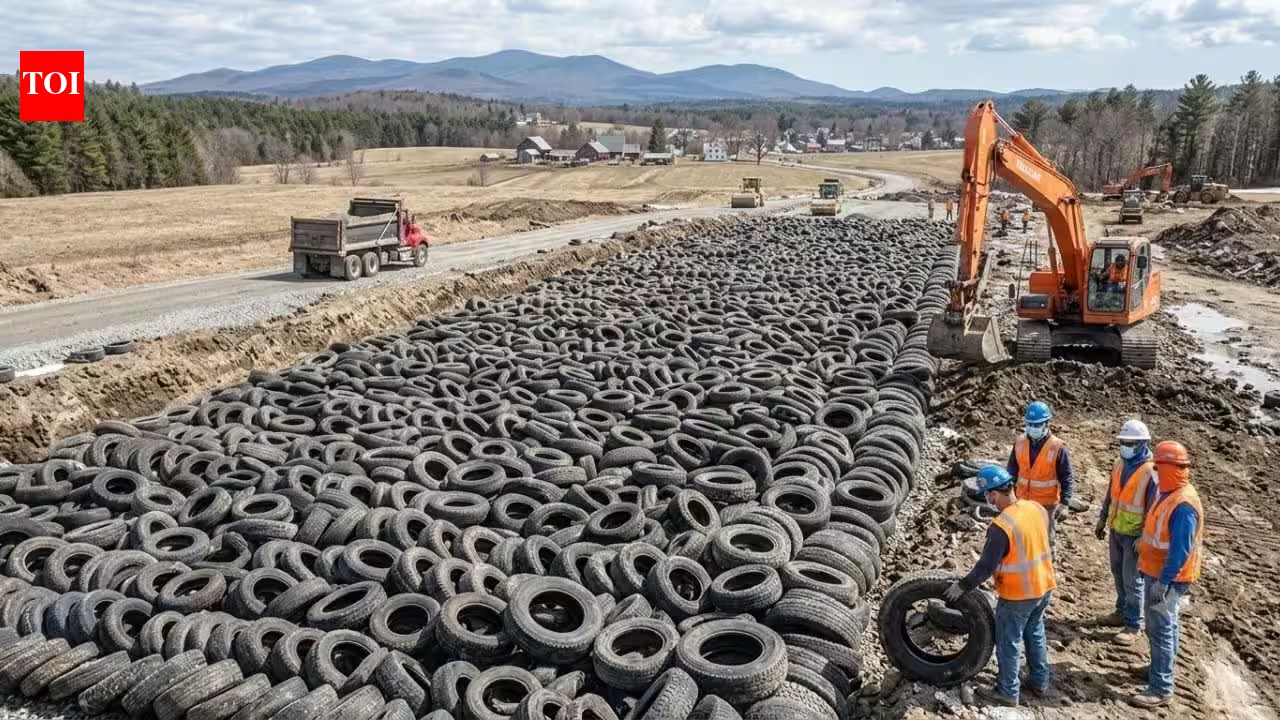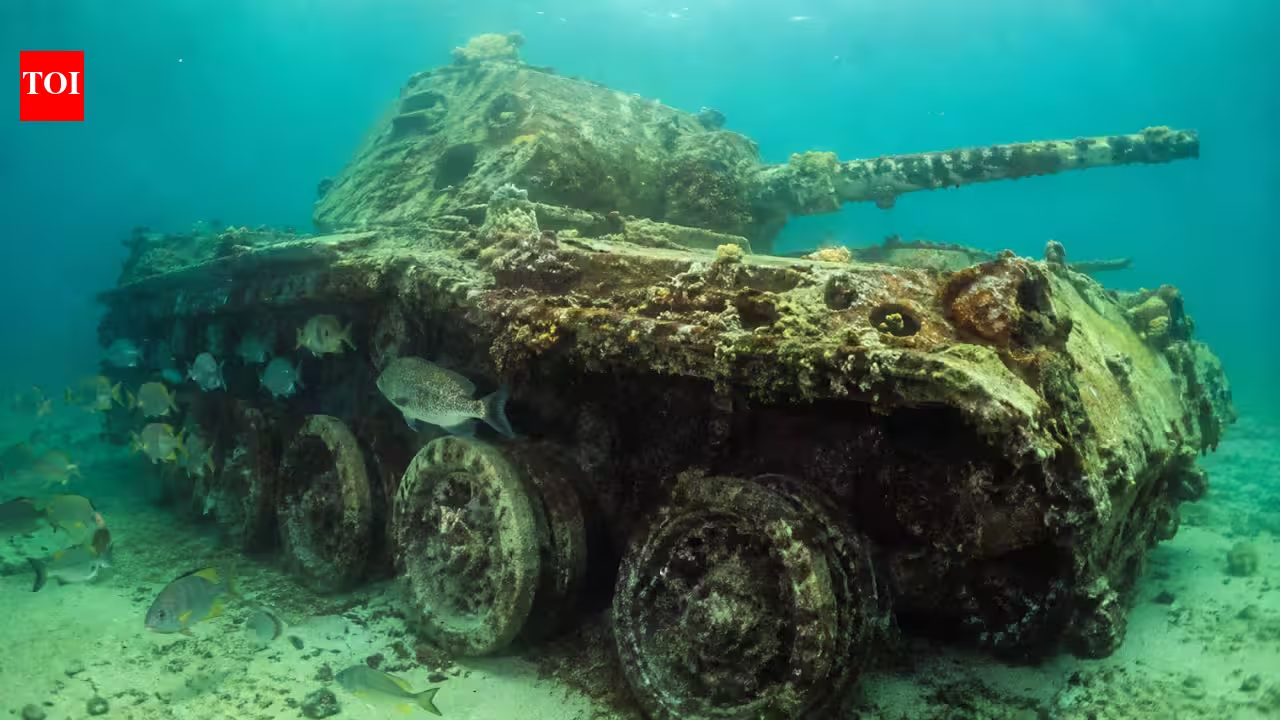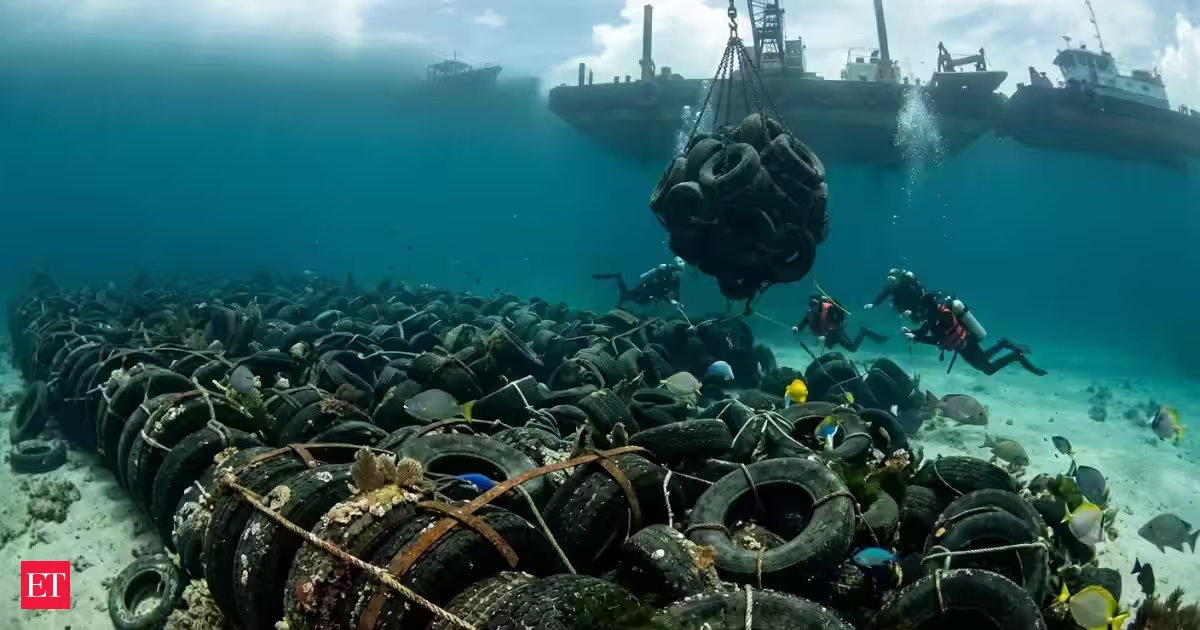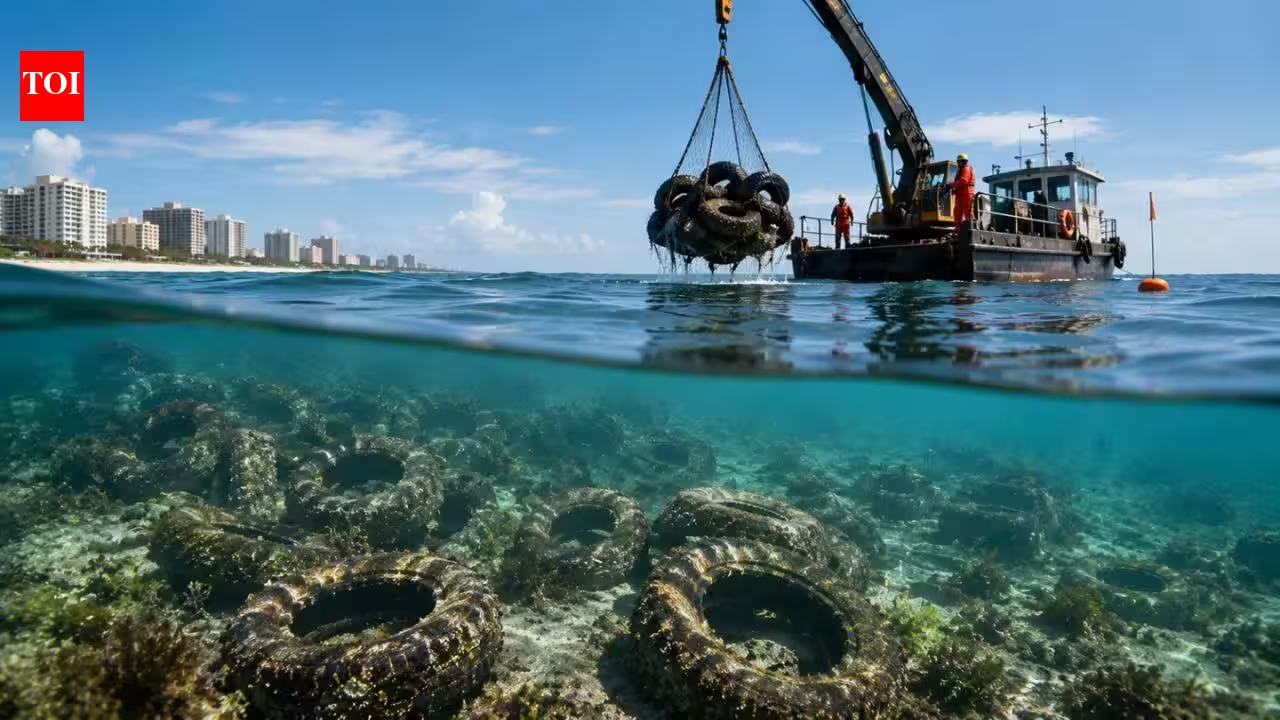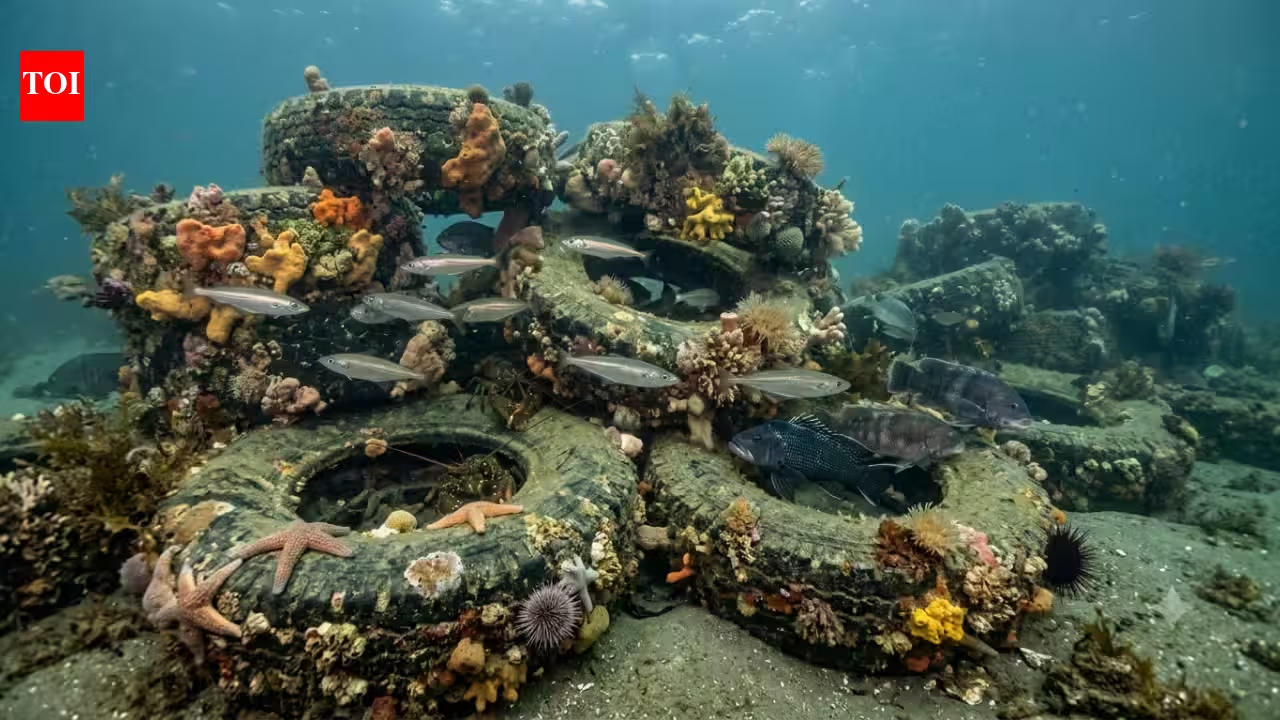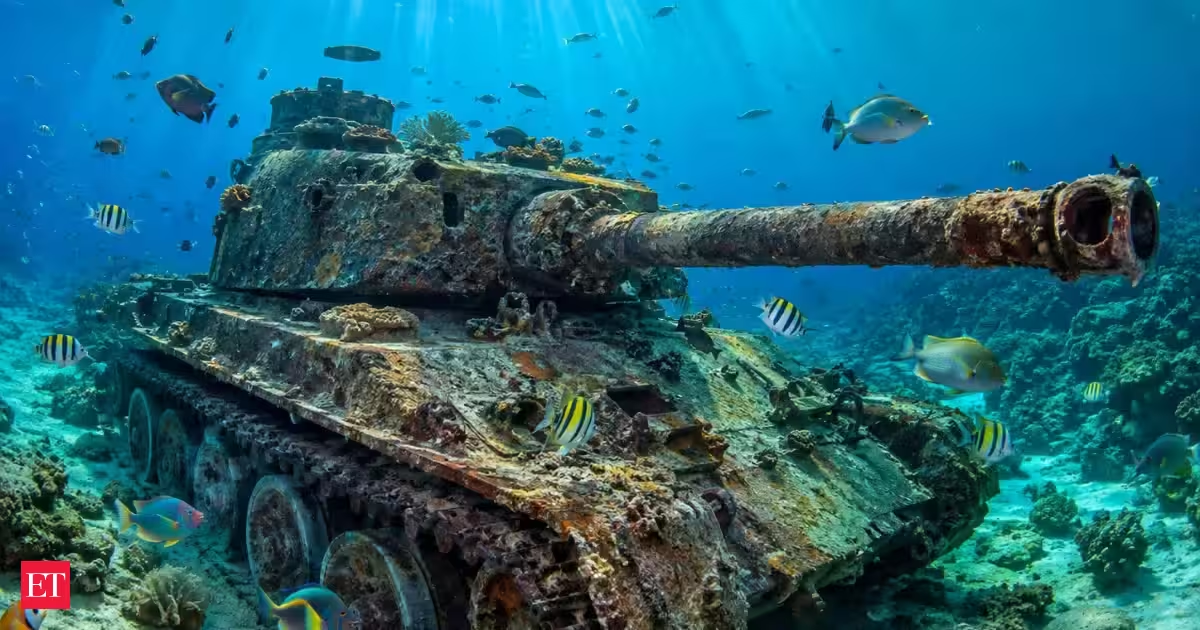
Think about the last time you had something taking up space in your garage; now imagine that thing was a battle tank. In August 2010, Thailand's army took 25 obsolete battle tanks from China and dumped them into the waters of the Gulf of Thailand near Narathiwat province. According to Al Jazeera's report on the event, the tanks were sunk into the water along with 273 obsolete railway cars and 198 scrapped rubbish trucks in order to create new fishing grounds. The idea came when local fishermen in southern Thailand complained to Queen Sirikit about decreasing fish catches after decades of overfishing. The army itself was not very interested in the tanks: they had been purchased second-hand from China in 1987 at a discount and decommissioned in 2004, according to Bangkok Post reporting on the deal. Sinking them was a way to repurpose unused steel.What marine life lives there nowYears later, a team from Ramkhamhaeng University in Bangkok dived into the waters to assess the marine life that had developed. Their findings, published in the Ramkhamhaeng International Journal of Science and Technology, titled "First Insight on the Fish Species Composition at Two Artificial Reef Areas, Narathiwat Province, Thailand," documented 53 species of fish belonging to 21 different families living on the tanks and the sunken train wagons nearby. Snappers were the richest group, with seven species, followed by damselfish and wrasses with four species each. The research found that the enclosed tanks held considerably larger fish schools than the open wagons. Commercially valuable fish such as snappers, as well as the critically endangered humphead parrotfish, have been found in the artificial reef structure.Why steel works almost like coralFish are not fussy about what their home looks like. What they care about is having a firm surface on which algae and barnacles can grow and some spaces to avoid any predators. A flat sandbed doesn’t provide these features. Once a sunken structure develops a layer of marine life, small fish move in to feed, and larger fish follow soon after. This concept of sinking boats, trains and even concrete structures has been successfully tried for years in countries such as Japan, the USA and India to rebuild fishing grounds on otherwise empty seafloor.The endangered Humphead Parrotfish, one of the reef's most surprising residents. Image Credits: Wikimedia CommonsWhat the numbers show elsewhereThis makes the local claim of higher catches more plausible, though no independent study has measured the increase in Narathiwat. In 2013, H. Mohamad Kasim and colleagues at the Central Marine Fisheries Research Institute published a study in the Indian Journal of Fisheries titled 'Economic performance of artificial reefs deployed along Tamil Nadu coast, South India.' The study found that fish catches per unit of effort were 34% higher in reef areas than in open fishing zones, and that net income from gillnet operations was nearly three times higher near the reefs. The cost of creating the reefs was recovered in about two and a half months.Not a guaranteed fixResearchers who study artificial reefs, including Kasim's team, point to an unresolved mystery in this field: do these artificial structures contribute to increasing the number of fish around them, or do they simply pull existing fish from elsewhere into one easy spot? If that happens, a popular reef could be depleted within a couple of years. That is why successful reef initiatives are paired with regulations, such as fishing quotas, to let fish multiply rather than be caught. Many factors, including depth, currents, and the materials used to construct a reef, influence its performance, which may help explain why some tank and wagon reefs succeed.The bigger pictureWhat makes the Narathiwat reefs notable is not only that they appear to have helped, but what they represent. War equipment was repurposed to rebuild a livelihood instead. The broader reef program in the region, which grew to include donated railway lines and concrete pipes from the state railway and highways departments, was already underway by 2008; the 2010 tank sinking became its most widely reported chapter. For the fishing families who first asked Queen Sirikit for help, the result has been simpler access to fish near shore, without the need for bigger boats or longer trips to the sea. Sometimes the best fix doesn’t require new technology at all. It just needs someone to look at what is already there, unused, and wonder what else it could become.
In 2010, Thailand lowered 25 retired battle tanks into 80 feet of water off Narathiwat; a decade later, local fishermen reported a sharp boost in catches
In 2010, Thailand submerged 25 retired battle tanks and various other structures in the Gulf of Thailand to create artificial reefs. A decade later, fishermen report a significant increase in fish catches, highlighting the effective repurposing of military equipment for ecological restoration.
733 words~3 min read