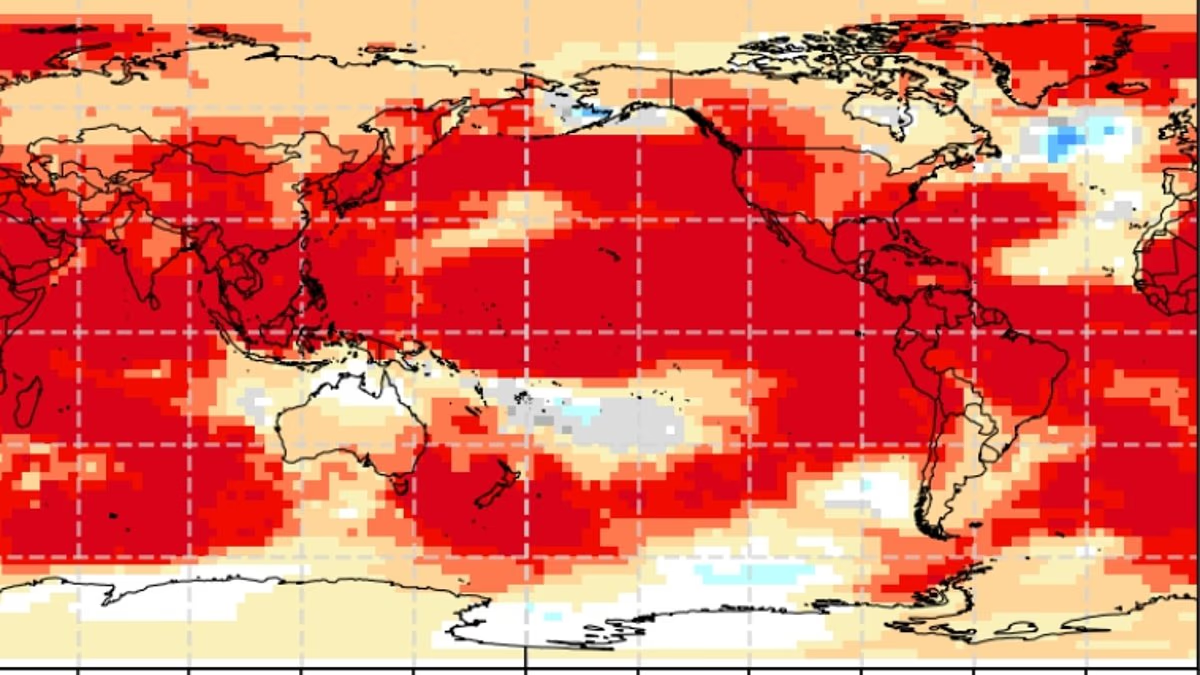
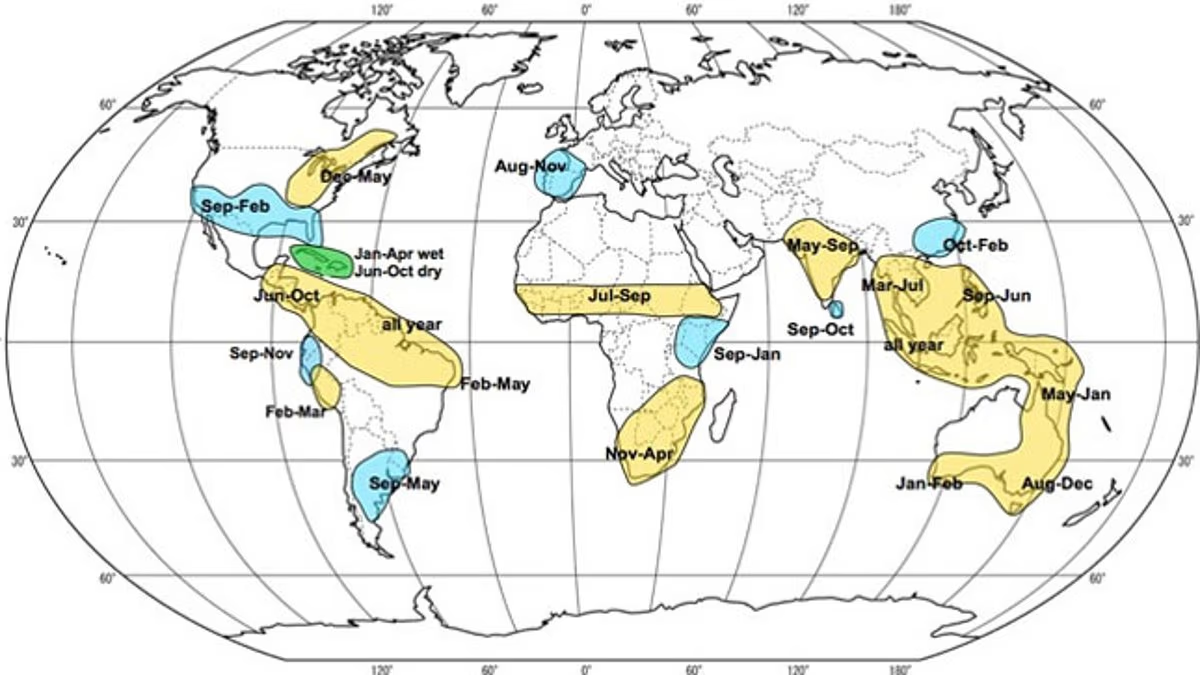
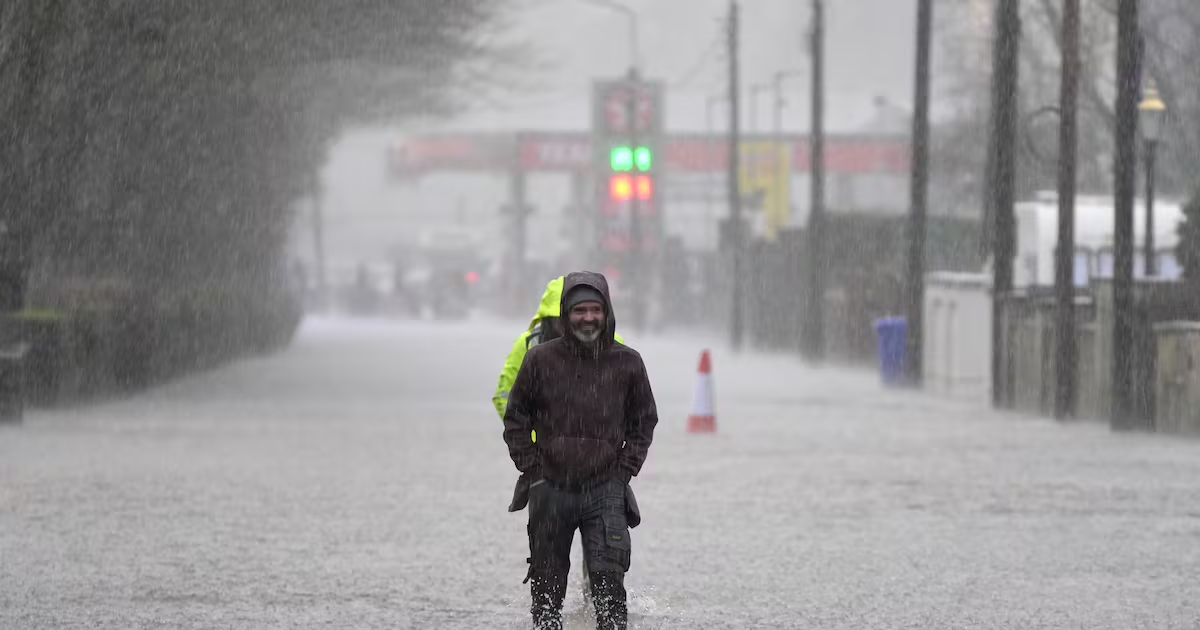
If you're looking forward to a winter ski getaway, the Super El Niño could scupper your fresh powder plans.The weather phenomenon is forecast to bring less snow than usual over Europe, with significantly less expected over key ski destinations.Andrej Flis, a senior meteorologist and long–range forecaster at Severe Weather Europe, warned a dominant mild Atlantic air flow will drive widespread snowfall deficits across low and mid–elevations.Popular destinations such as Les Gets and Morzine in France, and Saalbach–Hinterglemm and Mayrhofen in Austria, could be the most affected.However, resorts at an elevation of about 1,800–2,000m in the Alps – such as Val Thorens and Tignes – look 'favourable' for snowy conditions, models show.'Overall, models agree on a well below–normal snow season across Europe, dominated by a high–pressure ridge and a North Atlantic low–pressure zone, driving a milder westerly flow into the continent,' he wrote in a blog post.'Below–normal snowfall does not mean no snowfall at all. It just means less snow than the long–term average.'So, an area with one metre (40 in) of total snowfall over the winter, on average, might see just 25 cm (10 in) of snow instead.' Popular destinations such as Les Gets and Morzine in France, and Saalbach–Hinterglemm and Mayrhofen in Austria, could be the most affected. However, areas about 1,800–2,000m in the Alps – such as Val Thorens and Tignes – look 'favourable' for snowy conditions, models show Popular destinations such as Les Gets and Morzine in France (pictured during a previous low snow season) could be the most affectedThe El Niño Southern Oscillation is a naturally occurring climate cycle that shifts between hot El Niño years and cool La Niña years once every two to seven years.As we enter an El Niño phase, the powerful trade winds that normally blow hot water across the Pacific towards Australia weaken, or even reverse.That prevents cool waters welling up from the deep ocean below and causes hot water to collect near the surface off the west coast of South America.Eventually, that warm water starts to spread out, raising the average global temperature and causing major disruptions to weather patterns around the globe.Mr Flis explained that for skiers in Europe, 'the upcoming season here will be defined by elevation and latitude'.The forecast for November indicates that most areas will have below–normal snowfall, 'indicating a very delayed snow season start, even across the elevations'.'The December snowfall forecast shows most of the lowlands with below–normal snowfall, apart from the far north,' he said.'This is due to a more westerly to southwesterly flow over most of Europe, which is rich in precipitation but also warmer.' A forecast for North America shows reduced snowfall across the Northern US and southern and Atlantic Canada. However, it shows above-normal snowfall potential across the Central and Eastern United States and eastern Canada
How Super El Niño could scupper your plans for a winter ski holiday
If you're looking forward to a winter ski getaway, El Niño could scupper your fresh powder plans.
868 words~4 min read