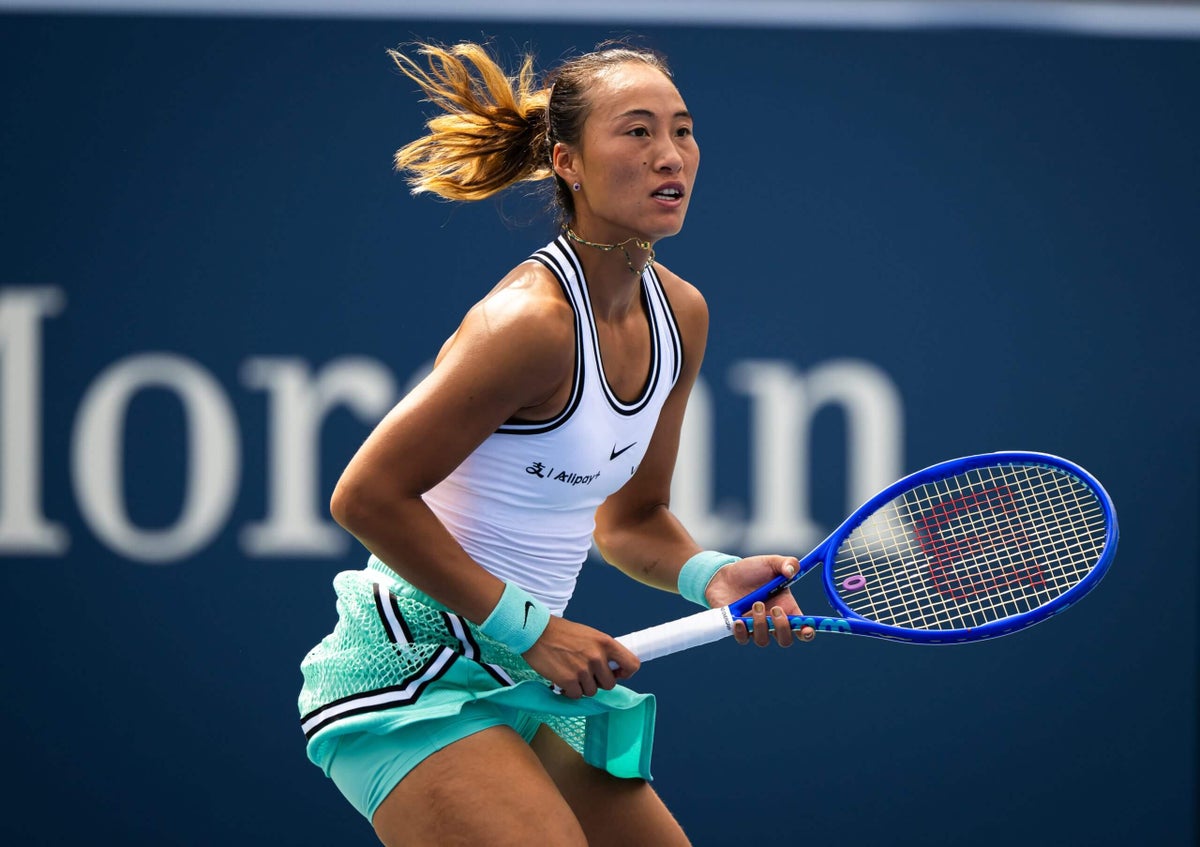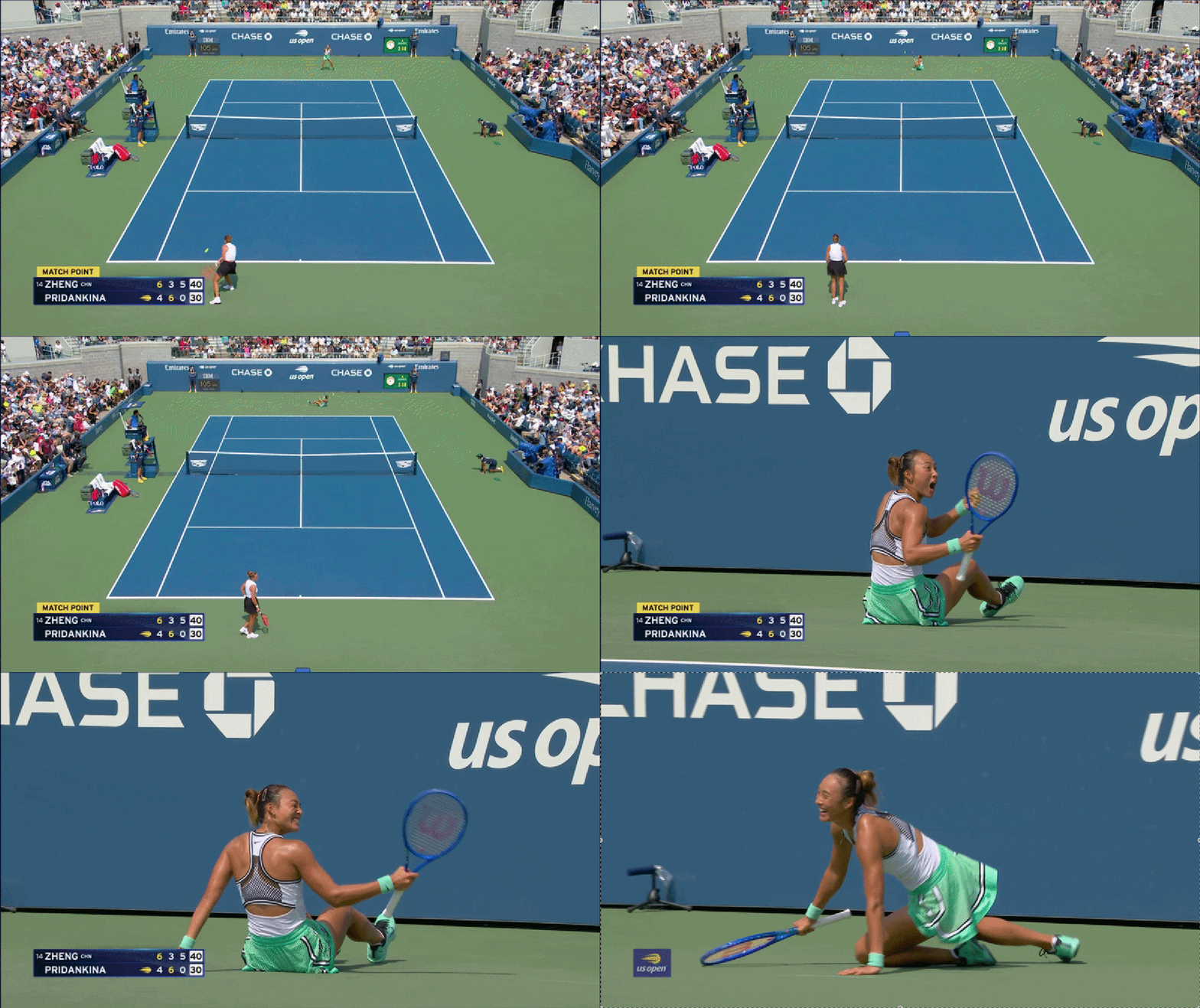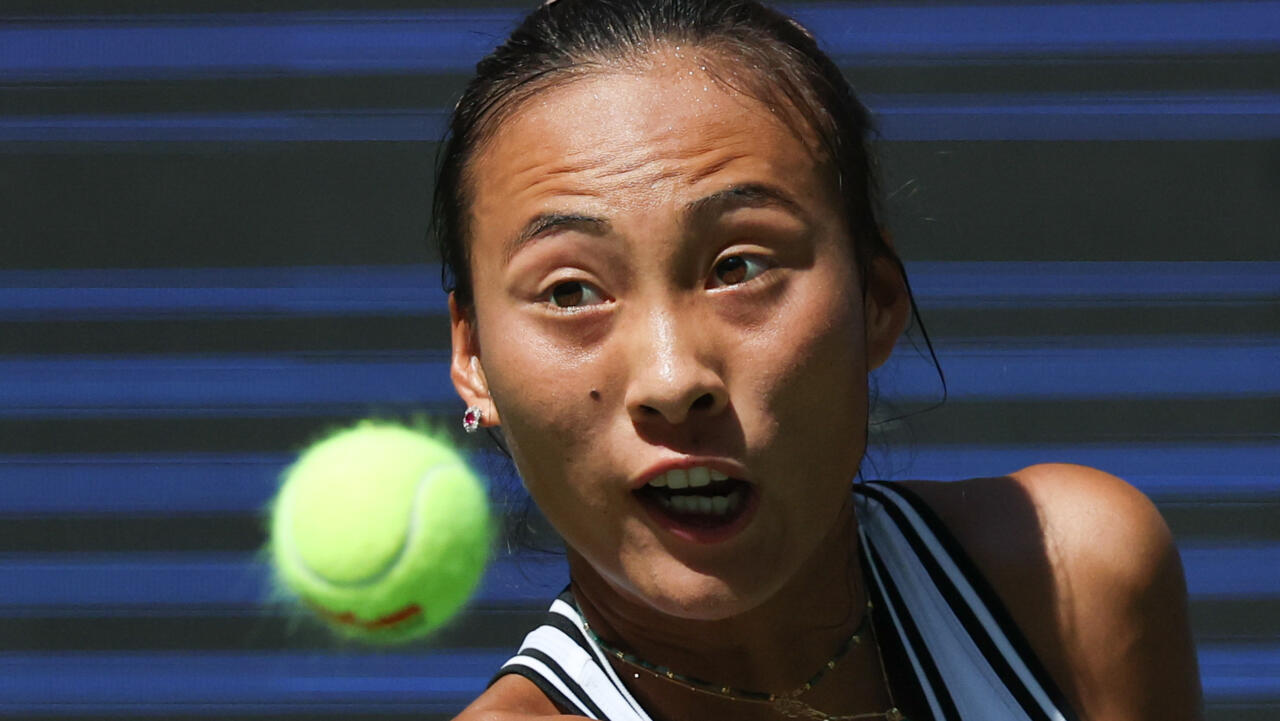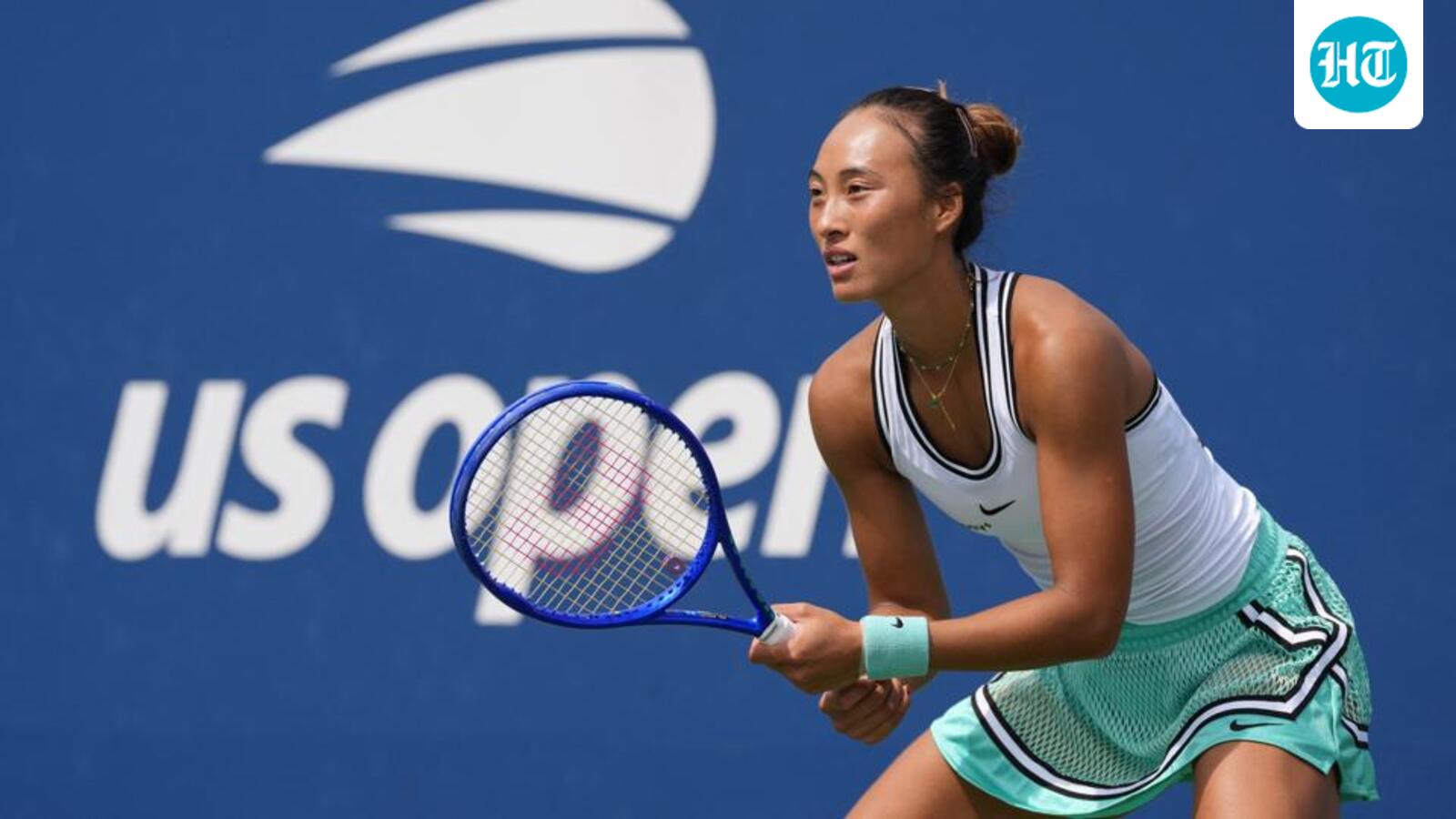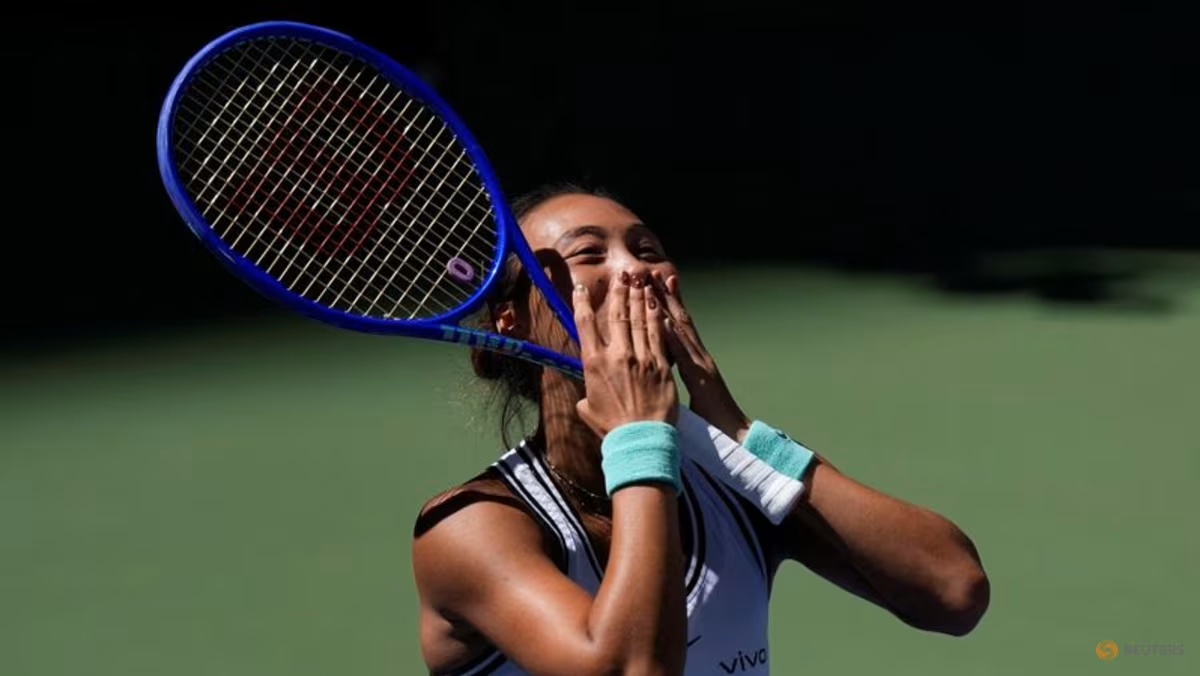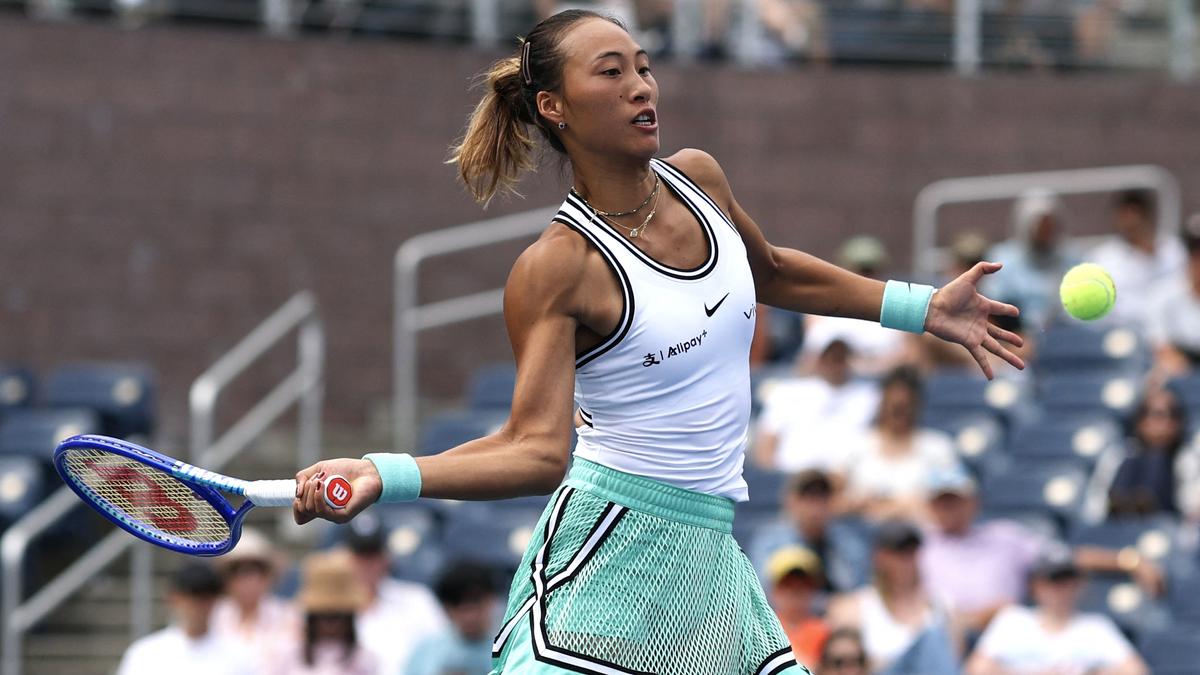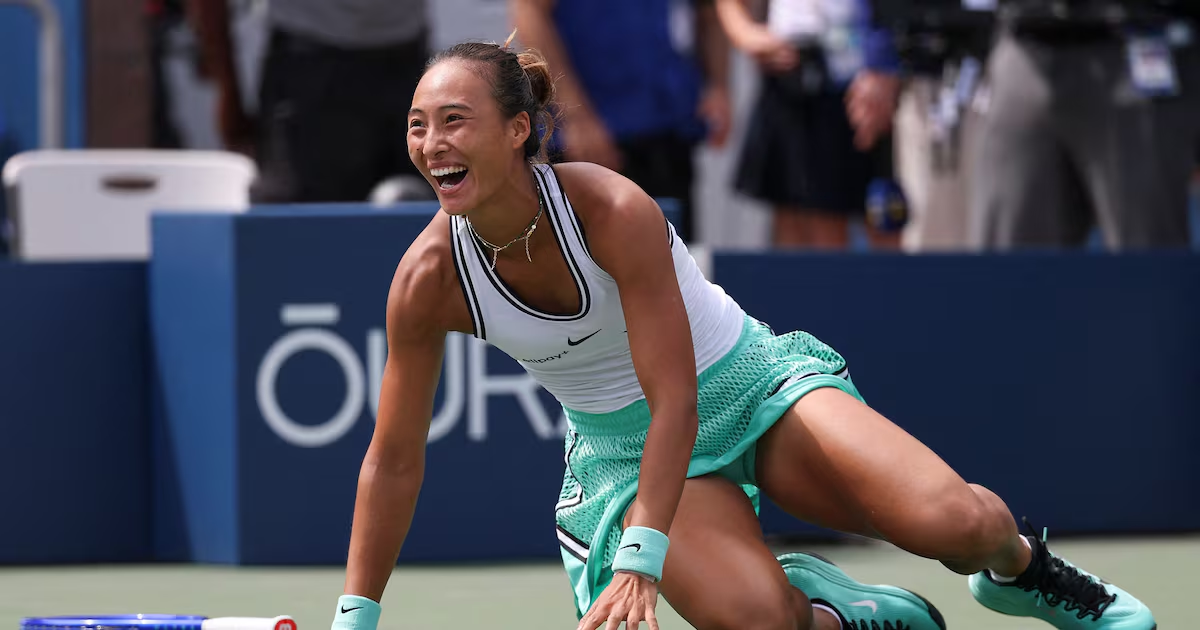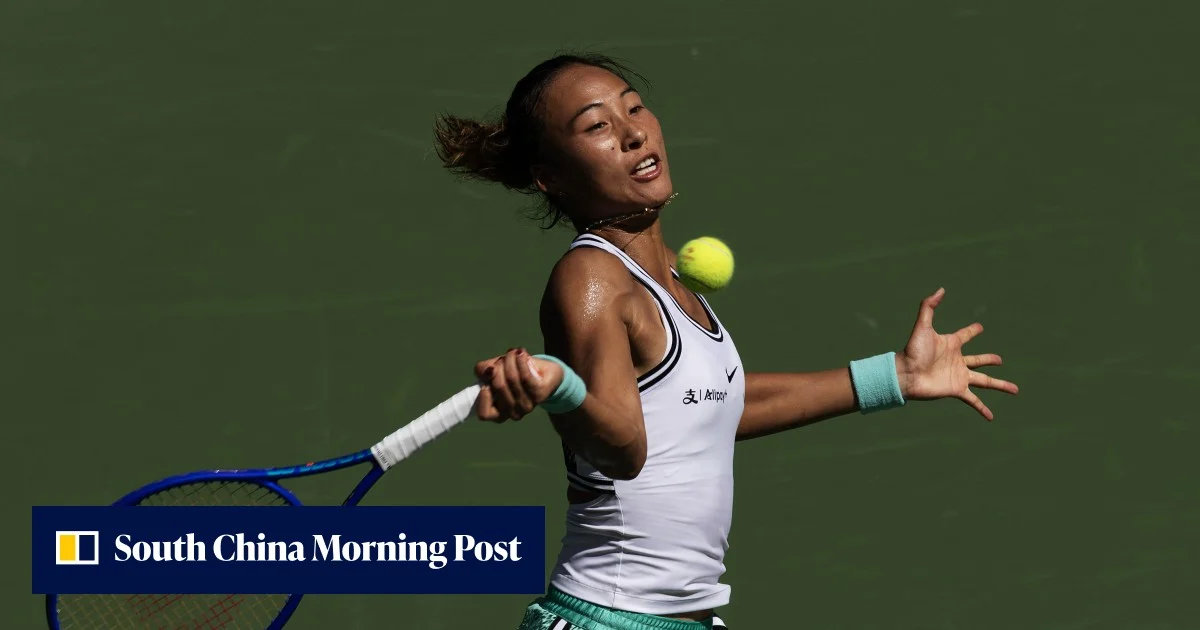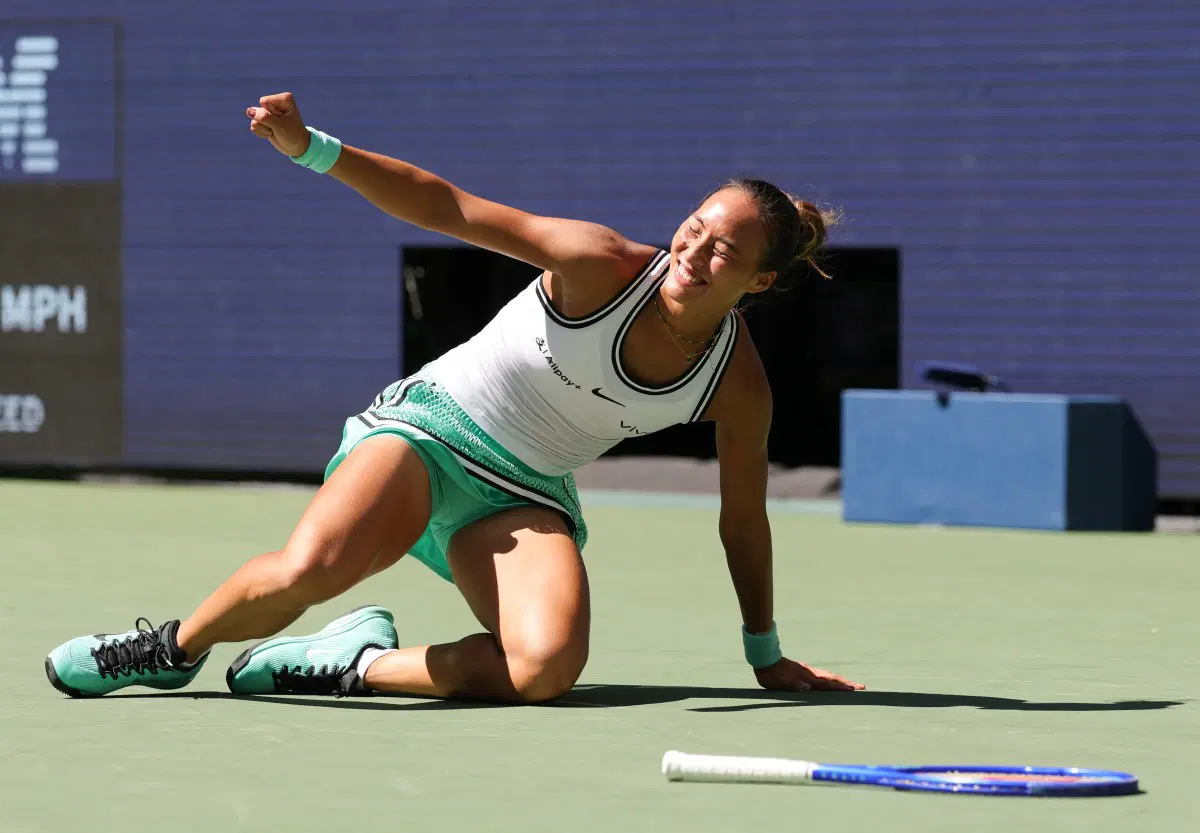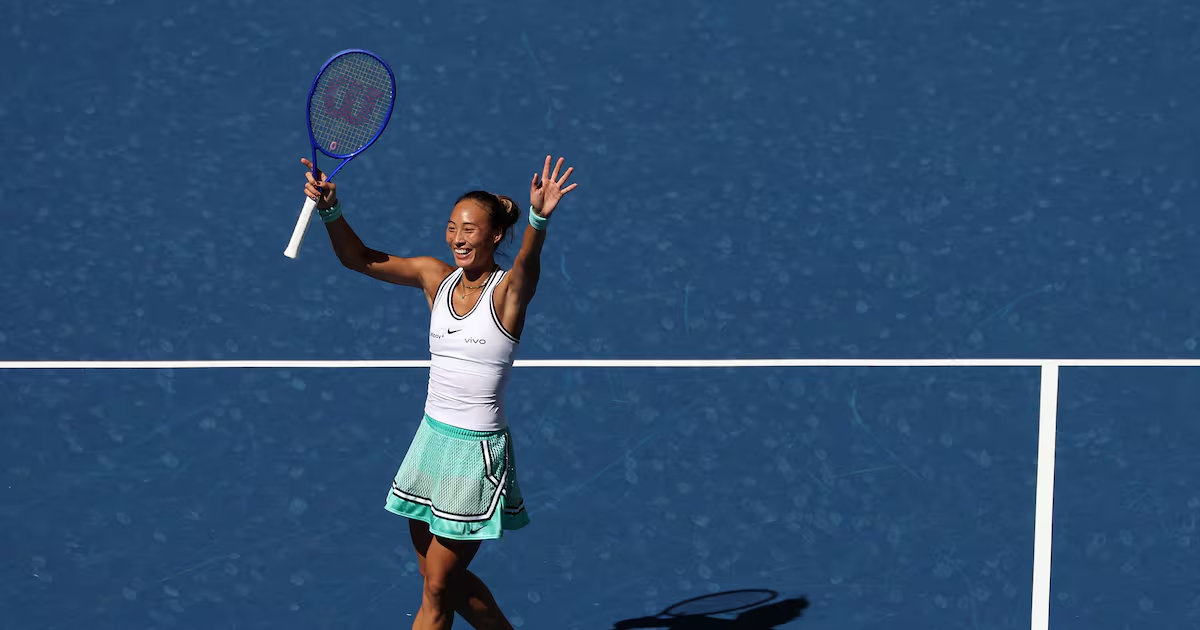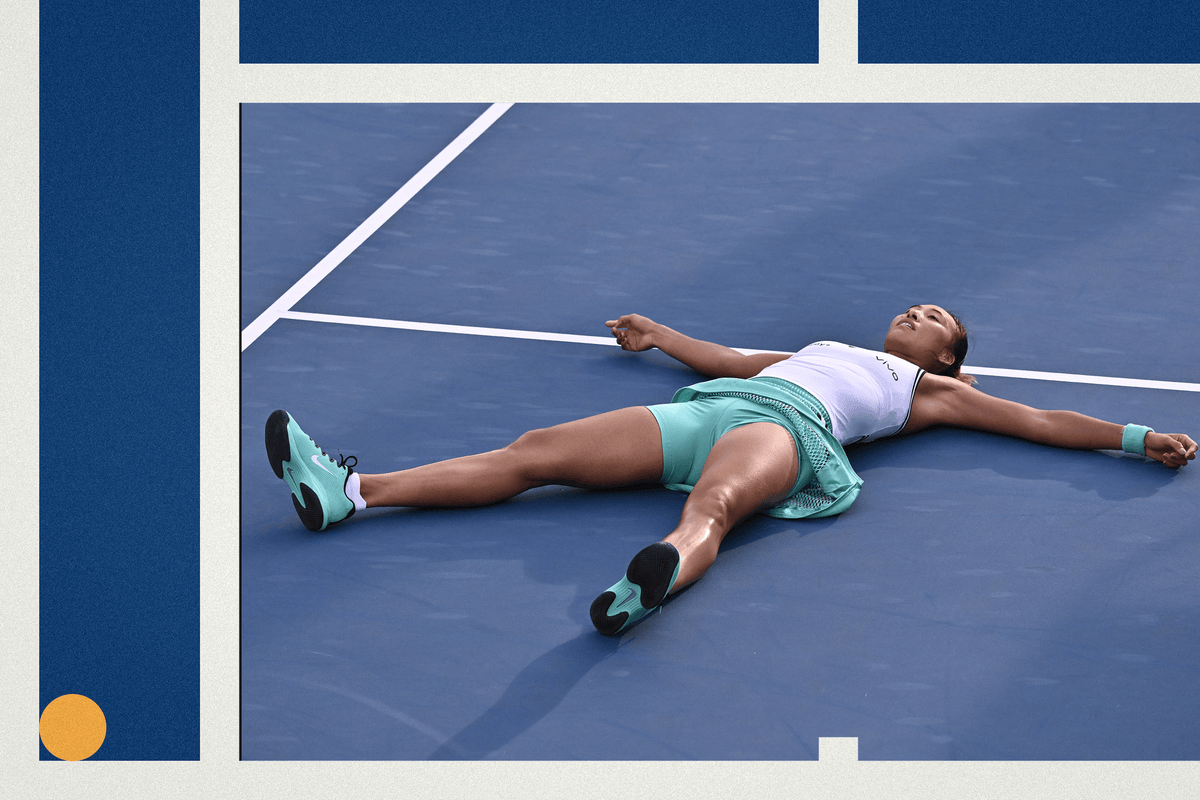
The Athletic has live coverage of the 2026 U.S. Open. Welcome to the U.S. Open briefing, where The Athletic will explain the stories behind the stories on each day of the tournament.On Day 5, an emotional result, a fantastic comeback and a lesson in tennis statistics from a champion.How did an Olympic champion find her tennis self again in New York?Zheng Qinwen found herself splayed on the court Thursday after a tough 6-4, 2-6, 6-1 win over Yulia Putintseva to advance to the third round of the U.S. Open.The 2024 Olympic gold medalist isn’t trying to be dramatic with her celebratory collapses, even though it wouldn’t be a surprise if she has some acting flair, judging by her comic timing in news conferences. It’s just that the emotions of winning again are intense, after going so many months without feeling them as she navigated a long road to recovery after elbow surgery.Also, she’s tired. Zheng, 23, also saw her ranking dip to world No. 121. She had to come through the qualifying tournament, and she said she was sick during the second round. She does not yet feel 100 percent.“That’s why when I won I laid down on the court and cried,” Zheng said in a news conference. “You know when you get sick, you are weak. This weakness made me feel like, ‘Oh, I finally got it,’ and I couldn’t control my emotions.”What does the high cost of this year's U.S. Open mean for tennis?Matthew FuttermanThough her emotions are higher than usual, Zheng said this U.S. Open is the first time she’s felt like herself again in a long time.She said she still remembered how to play tennis after she came back from injury, but spending so long living life “without any pressure, without any adrenaline,” made her forget how to compete.She remembers now. She’s back to screaming her “come ons!” and dialing in on her opponent for hours without losing focus. Part of rediscovering her competitiveness involved setting her ego aside. “I really miss the big courts, honestly,” she deadpanned Thursday.Zheng also spoke about how much she’s been fighting these past few weeks. Every match feels like an exhausting battle as she works to come back. But the suffering, she said, makes her stronger.She’s got another fight coming up, against Madison Keys in the third round. Zheng is looking forward to the tussle, happy because playing a well-known American means she’ll get back on a big court. And because she knows now that the bigger the fight, the sweeter the win.— Ava WallaceWhy did two seeds wilt on their way out of the tournament?After four days of mostly gray, cool and wet weather at the U.S. Open, Thursday brought temperatures that climbed into the mid-80s and strong sun. The change in weather also brought changes in fortune for two players.Lorenzo Musetti, the Italian No. 13 seed, made it through his afternoon match against wild card Dane Sweeny of Australia. But he didn’t do much more than that. After a routine opening set that Musetti won 6-3, he started to wobble. The lead became an even 6-3, 1-6 after two sets, by which time Musetti could barely move. When he went off court for a medical timeout, the big fear was another injury. In January, Musetti had a two-set lead when he had to retire with a quad issue during his Australian Open quarterfinal against Novak Djokovic.It wasn’t that. It was something like heat stroke, Musetti said in a news conference. He said he felt woozy and dizzy and weak in the legs, and added that the warm-up conditions at this year’s tournament might have been to blame.The player areas, next to and under Arthur Ashe Stadium, have strong air conditioning. Because of construction, the outdoor warm-up area is unavailable.“There’s no possibility to warm up physically outside, to acclimatize a little bit,” Musetti said after a 3-6, 6-1, 6-2, 6-2 defeat. “The shock was pretty big for me in terms of temperature, and that probably could be something that was part of this feeling not well.”Canadian No. 3 seed Félix Auger-Aliassime went through a similar experience. He led Karen Khachanov, a fellow former semifinalist in New York, when, Auger-Aliassime said in a news conference, “he just couldn’t feel well and was dizzy and seeing spots.”As with Musetti, a lead quickly turned into a loss — 6-7(5), 6-3, 6-2, 6-2.— Matt FuttermanWhy would a perfect win still be cause for discussion?When late summer rolls around, Taylor Fritz joins a chorus of Americans in extoling the virtues of hard courts and talking about how the North American swing is his favorite time of year. Then, 10 months pass, and it’s time to discuss how perfect the 28-year-old’s game is for grass and for Wimbledon instead.Fritz is good on both surfaces, but everyone should probably listen to him just a little bit more. The 28-year-old eviscerated Mattia Bellucci 6-0, 6-1, 6-1 in a clinical 98 minutes on Arthur Ashe Stadium on Thursday to advance to the third round, where he’ll play Francisco Cerúndolo.Fritz and Bellucci’s only other meeting was a two-hour-and-26-minute Stuttgart Open quarterfinal in June, in which Fritz dropped a set — on grass. Fritz was feeling at the top of his game right from the start of the match Thursday, but the biggest difference he noted between the June and September meetings was the court surface.Grass is good for Bellucci’s serve and backhand. On a humid hard court, Fritz could put a lot more returns in play, he said, as well as using his crosscourt forehand to handle Bellucci’s backhand, among other things.Taylor Fritz won in just under 100 minutes at the U.S. Open. (Patrick Smith / Getty Images)“I can have that extra time to step around (my backhand) as well and look for forehands when he lifts his forehand cross, which is something I can’t really do on grass. If I step around it, it’s not going to sit up for me,” Fritz said.“Even though I love grass, I do think these conditions are better for me.”They are for his life off court, too. Fritz is so routine-driven that he’ll do everything the same way whether he plays for 90 minutes or four hours. Still, such an early finish means he might treat himself to a nice dinner out.— Ava WallaceAnd why are the two draws a study in contrast?With No. 2 seed Elena Rybakina’s 6-2, 6-4 win over Jéssica Bouzas Maneiro, the WTA Tour set a milestone.As the third round begins, all of the top 10 are still vying for the U.S. Open title. That hasn’t happened at a Grand Slam event since Wimbledon 2009, a little over 17 years ago.Rybakina’s win was the last of a day that began with world No. 8 Iga Świątek, the 2022 champion in New York, dispatching Argentina’s Nadia Podoroska 6-3, 6-2, before the wins just kept coming. American Amanda Anisimova, last year’s beaten finalist and now world No. 10, defeated Austria’s Lilli Tagger in three sets. World No. 5 Mirra Andreeva thrashed Germany’s Eva Lys 6-2, 6-0; world No. 4 Coco Gauff played a thrilling, high-quality match against Spain’s Paula Badosa and came out with a 6-4, 7-6(5) victory.The new record adds to the feeling that in 2026, the number of people who can win a major in the women’s game is not down to openness, but rather parity.2023 U.S. Open champion Coco Gauff helped the women’s tour set a milestone in New York. (Charly Triballeau / AFP via Getty Images)In the men’s draw, it was a very different story. There’s been a lot of chatter at the U.S. Open about all the opportunities for American men, with top players on the sidelines or losing.The real beneficiary of all this? That would be Alexander Zverev, the No. 1 seed, world No. 2 and second favorite behind Carlos Alcaraz.Some biggish names fell on Thursday, including Auger-Aliassime and Musetti.Down went Alex de Minaur, too, the No. 6 seed, in a straight-sets loss to Botic van de Zandschulp of the Netherlands. Both Musetti and de Minaur were in Zverev’s quarter of the draw. The highest seed in that quarter is now Luciano Darderi, the No. 21 seed from Italy.The quarter is filled with some odd matchups for very good spots. Michael Zheng, the recent graduate of Columbia College, will play Arthur Géa, a lucky loser from France, for a spot in the round of 16.That makes for potentially pretty smooth sailing for Zverev, who has had a consistent year at the majors. He lost to Alcaraz in the Australian Open semifinals, won the French Open and lost a tight Wimbledon final to Jannik Sinner.Zverev was two points from a first-round exit against Lorenzo Sonego, but dug in to fight another day. He did something similar against France’s Quentin Halys in a 6-4, 4-6, 7-6(3), 6-7(3), 6-3 win, but Zverev may have made it even harder to take advantage of the opportunity in front of him. By beating Halys in five sets, he became the first No. 1 seed in the Open Era to play back-to-back five-set matches at the start of a Grand Slam. He has already spent nine hours and 27 minutes on court, and still needs to win five matches in a row to lift the title.— Matt FuttermanOther notable results on Day 5:
U.S. Open recap Day 5: An emotional win as Olympic champion Zheng Qinwen finds her tennis self
Zheng Qinwen has managed a chronic elbow injury and several halting comebacks since winning Olympic gold. In New York, she felt relief.
2,150 words~10 min read