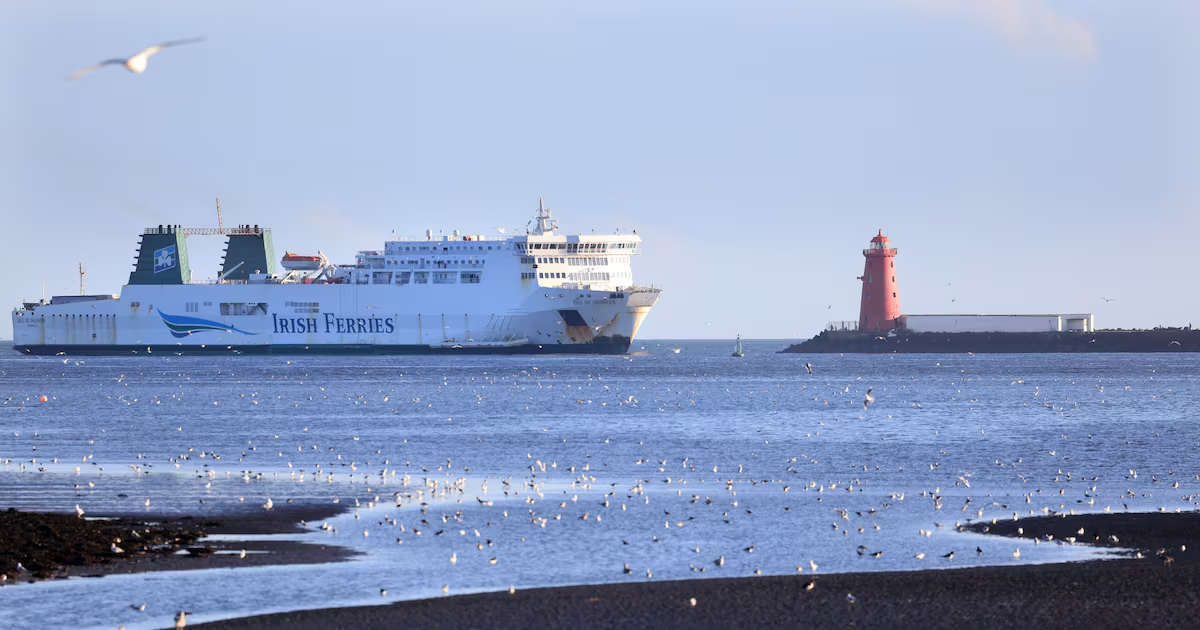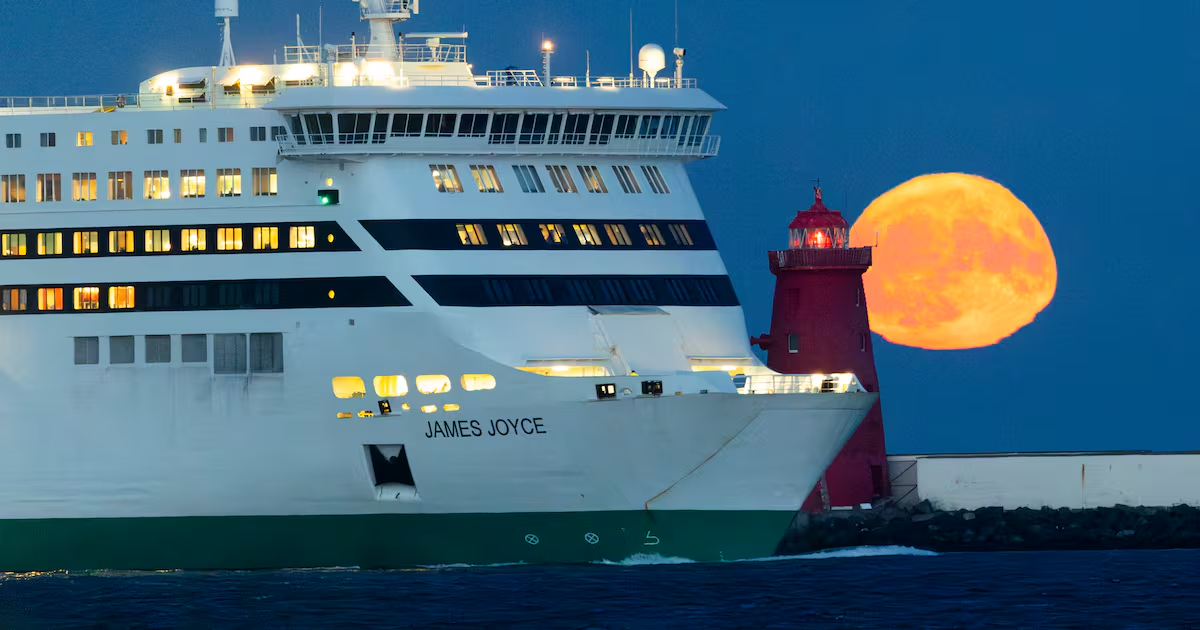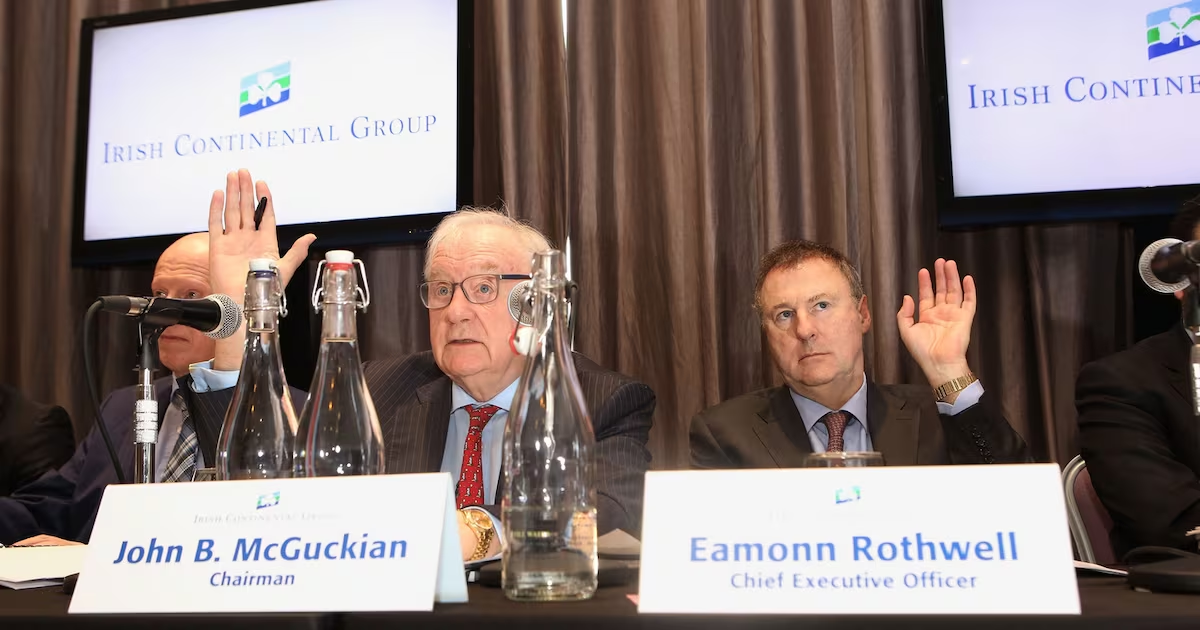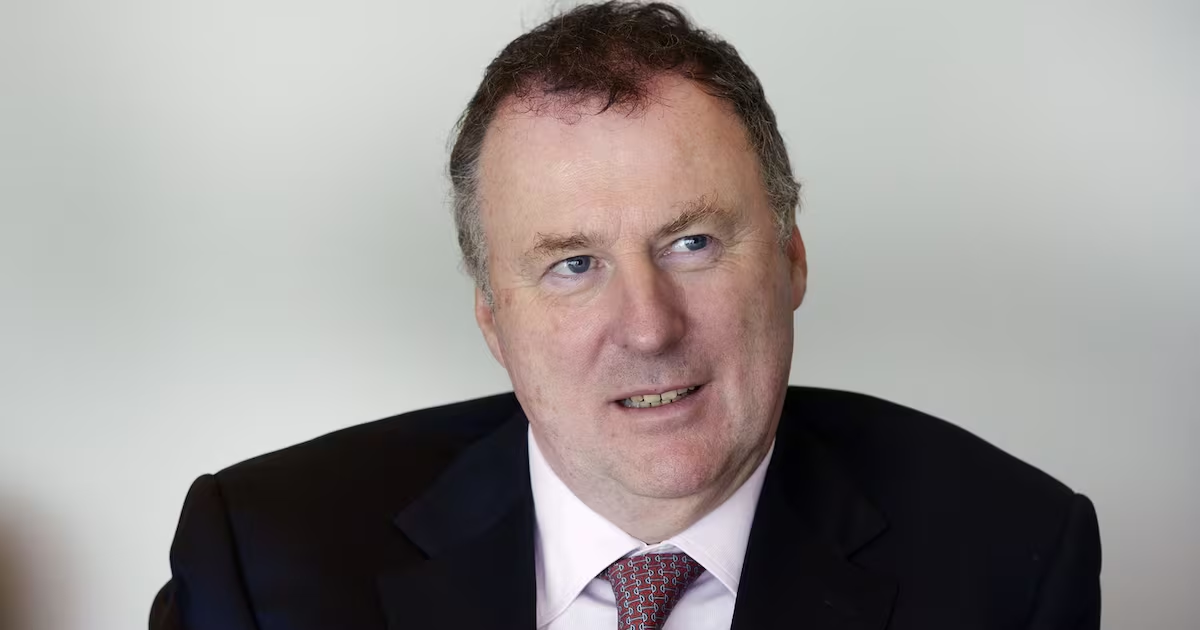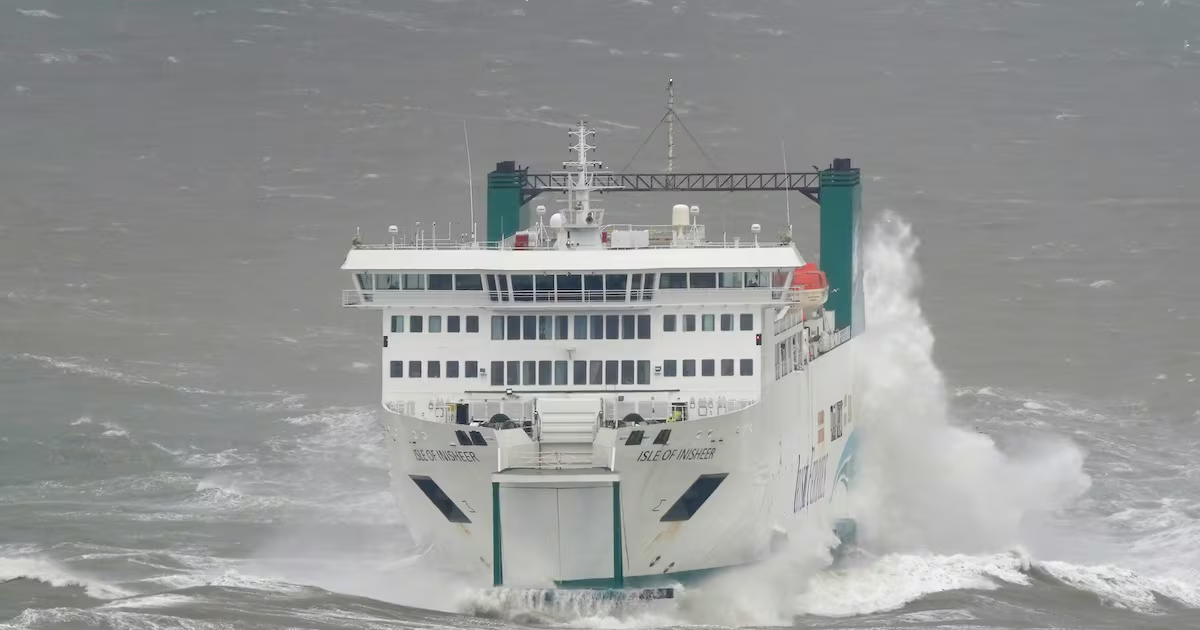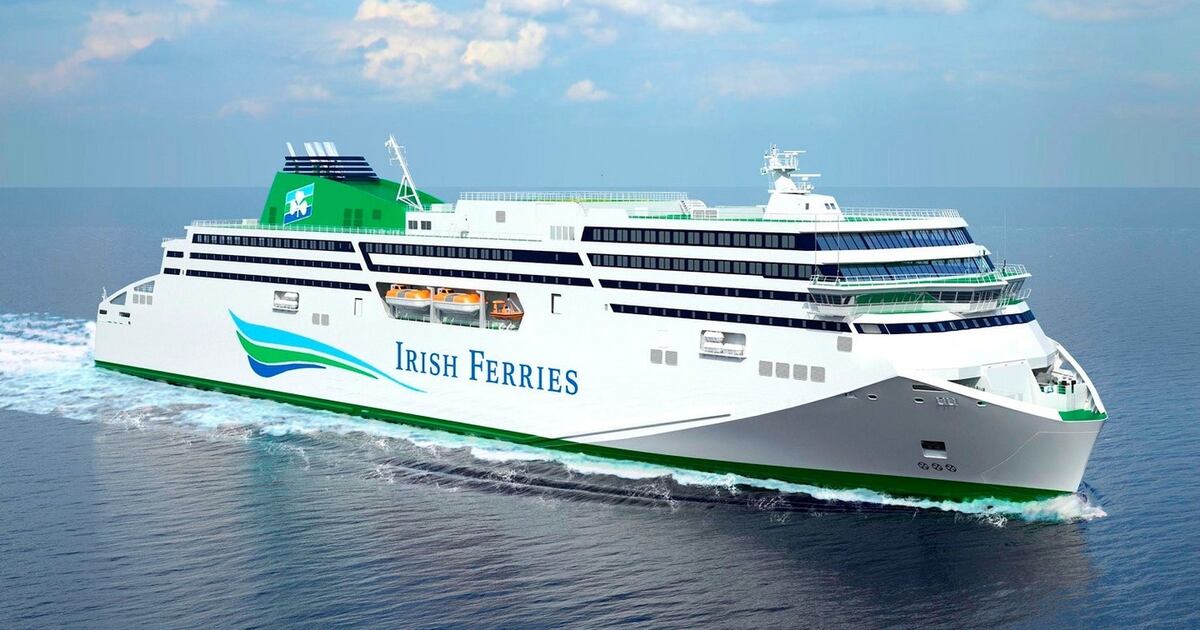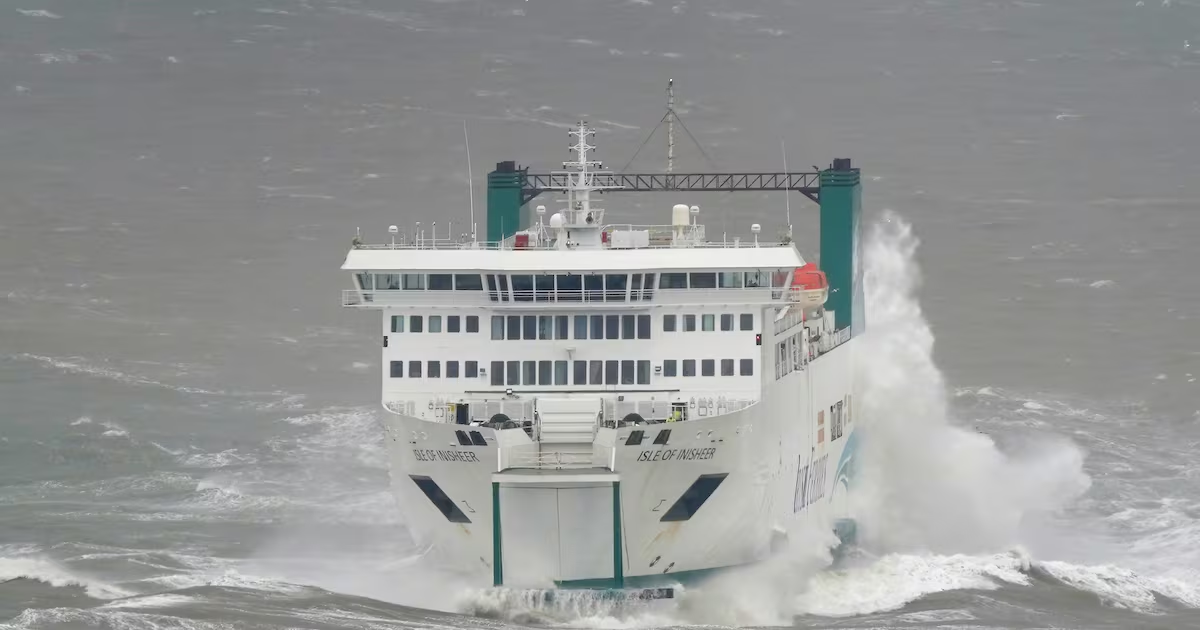
On June 29, 2021, with the ink barely dry on the UK’s future relations deal with the EU and Covid-19 still battering the travel industry, Eamonn Rothwell pulled off one of the boldest operational moves of his career. Rothwell, chief executive of Irish Continental Group since 1992, dispatched the company’s Isle of Inishmore – a Dutch-built, 183m ferry capable of carrying 2,200 passengers and 855 cars – from Dover to Calais, historically one of Europe’s most competitive short-sea ferry routes. Within a year, Rothwell had three ferries serving ICG’s first connection not to involve an Irish port. It established Irish Ferries as a significant new player on a crossing dominated by P&O, whose financial problems at the time limited its ability to mount a defensive strike. The move – together with the post-Brexit return of duty-free shopping on the Irish Sea and English Channel – has fuelled an 85 per cent surge in ICG’s revenues to €666.7 million between 2019, the year before the pandemic, and last year. Earnings before interest, tax, depreciation and amortisation (Ebitda) jumped 73 per cent over the period, with the slower pace partly down to margins on the newer service being lower than ICG’s less-contested Irish routes. It cemented Rothwell’s reputation in Dublin financial circles as the Michael O’Leary of the maritime world – even if he has remained a far more elusive figure than the Ryanair boss, having shunned financial-results media briefings and interviews for decades.ICG boss Eamonn Rothwell. Photograph: Cyril Byrne His standing was already in the making before he became CEO. The Dubliner’s heavy involvement, as a non-executive director, in ICG’s transformative acquisition of B&I Line from the State in early 1992 – for IR£8.5 million, as Charles Haughey’s government agreed to deal with IR£35 million of B&I’s historic debt – contributed to him being appointed to the top job. Following a period of restructuring, Rothwell embarked on a €500 million investment programme between 1995 and 2001, acquiring four large ferries and backing port upgrades, before facing down unions, public backlash and a sharp rebuke from taoiseach of the day Bertie Ahern in 2005 to force through the controversial replacement of more than 500 workers with much cheaper agency crews, mainly from eastern Europe.Having led a failed attempt to take over the company in 2007 – as rival bids from developer Liam Carroll and a consortium comprised of the then Philip Lynch-led One51 group and Doyle Shipping ended in stalemate – the conventional wisdom was that establishing a foothold in the Dover Strait would be Rothwell’s last big step before overseeing a sale of the company to a private equity or infrastructure fund, allowing him to cash in his 21.8 per cent stake. Instead, the now 71-year-old left his most audacious step until now: a fresh €1.2 billion offer to buy the group with three other managers. It has not been plain sailing. Some major shareholders claim the independent board, led by John B McGuckian, a director of almost four decades, has agreed to sell ICG on the cheap – and is ignoring the will of minority investors when deciding on the eve of an extraordinary general meeting (egm) last Friday to adjourn when it became clear not enough votes had been secured to seal the deal. The meeting is now set for next Thursday, with the company known to be actively canvassing dissidents in recent weeks to change their minds. ICG said last week that it was aware of at least one instance where a shareholder had wanted to change their original vote against the deal. It is understood that Paris-based DNCA Finance, with a 3.36 per cent stake, is the investor in question. Market sources also say businessman Eamon Waters’s Sretaw investment vehicle, with a 3.79 per cent equity stake and a further 2.1 per cent interest by way of non-votable financial instruments, has been keeping ICG guessing about which way it will lean. It had not voted by proxy in advance of the originally scheduled egm. [ ICG’s chairman faces potential revolt if now delayed takeover deal rejectedOpens in new window ]The two investors could be pivotal to the vote. Holders of about 20 per cent of the stock had not filed votes by a deadline before the original egm, according to sources. The management team’s 23.7 per cent stake in ICG is excluded. It requires at least 75 per cent approval to go through under a so-called scheme of arrangement structure overseen by the High Court. The Currency reported on Monday that MBO team had been “within a single-digit percentage” of what is required to secure the vote. “Having invested in listed smaller-capitalisation companies across most western European markets, we consider that the conduct of the bid process by the independent board, including its treatment of the views of shareholders, could raise questions about Ireland’s reputation as an investor-friendly environment and the quality of corporate governance in practice,” said Lisbon-based Oxy Capital, which owns 1.86 per cent of ICG and is among a number opposing the deal. “Our engagement with other European and North American institutional investors during the process indicates that these concerns are widely shared.”Another institutional shareholder, who declined to be identified, said: “I’ve been a shareholder for years. I really admire how Eamonn has managed the business and its balance sheet. He’s a very clever operator. But I cannot understand how an open sales process was not held to test the market – especially when this is a deal where the board has agreed to sell to management.” ICG’s independent board said in its surprise stock exchange announcement at 5.55pm on Friday, July 24th of the agreed sale that the approach had not come from Rothwell and the rest of the MBO team, comprising his chief financial officer David Ledwidge, the head of the Irish Ferries division Andrew Sheen, and Declan Freeman, managing director of the group’s Eucon container vessels and Dublin and Belfast terminals unit.ICG’s net debt at the end of 2025 was elevated by acquiring its previously leased James Joyce ferry and preparing for a final payment on its Oscar Wilde vessel. Photograph: Alan Betson Instead, it said it had invited management to make a proposal after it had “carefully considered ICG’s strategic position and the alternatives available to enhance value and liquidity for ICG shareholders”. Further background in a document issued to shareholders 12 days later indicated that the independent board had been concerned for some time about the stock price being negatively affected by two growing dynamics in the market: the company was too small to be included in major stock indices, which are increasingly tracked by large investment firms using passive investment strategies, while active investors also face pressure to hold stocks that can be easily bought and sold. No new long-term institutional investor has bought into the company in the past five years, according to market sources. The independent board, which has been actively buying back ICG shares in recent years, had also considered returning more capital to shareholders, selling individual assets to boost shareholder value, as well as a formal sale process. But having fielded a “significant number” of approaches from investment banks, private equity and infrastructure investors over several years without receiving a “viable proposal”, it concluded the possibility of a failed process was too risky for the stock. PJT Partners, the investment bank advising the board on the current deal, was given a mandate three years ago to find a buyer with the clear understanding that Rothwell was a seller as he neared his 70s, according to sources. It is understood that he reiterated this to the board when it approached him earlier this year about the possibility of putting together an MBO. But it was becoming increasingly clear that Rothwell’s only real prospect of cashing in some of his chips now would come from finding a consortium of funders to back a leveraged buyout. The MBO team secured the backing of US investment giant BlackRock’s Global Infrastructure Partners, which committed €455 million of preferred equity. Positioned behind the MBO team’s ordinary equity in the capital structure, this instrument provides an additional layer of loss absorption in the event of future financial stress and enabled the team to raise €798 million in senior loans and credit facilities from lenders BNP Paribas and Banco Santander. The funding deals would allow the managers to cash in a third of the value of their combined ICG holdings – amounting to €87.3 million for Rothwell and €2.7 million for his partners – and roll their almost €200 million of remaining equity into the bid vehicle. The preferred equity has a 12 per cent dividend that will be rolled up and added to the amount outstanding, according to sources. The senior loans carry an initial rate of about 5.5 per cent and are due to be repaid after seven years. It would leave the company with an initial annual financing cost of close to €100 million – a multiple of its €9.8 million interest bill in 2025.For someone who has been wary of high debt levels during his three-and-a-half decades at the helm of ICG, it is striking that Rothwell has anchored his ultimate pay-day to such a highly leveraged deal.The €8-a-share offer represented a 25 per cent premium to the average price at which the stock had been trading in the three months before the announcement. It put an enterprise value – including debt and equity – of 9.8 times the group’s Ebitda for 2025.The stock soared to hover around €7.90 – within a whisker of the offer price – in the first few weeks that followed news of the deal. But it subsequently fell in mid-August when The Irish Times reported that five big shareholders were opposing the sale, arguing that it undervalued the business, and ICG accompanied the release of first-half results with a downbeat outlook. It warned of a “particularly worrying trend” of weak car and freight volumes on its ferries during the peak summer season that “poses a significant challenge”.The dissenting shareholders were Marathon Asset Management, Janus Henderson, Pageant Investments, Equus Global and Oxy Capital, which at the time had a combined 11 per cent stake.[ How ICG’s push to close €1.2bn buyout in August’s holiday lull backfiredOpens in new window ]Some of the shareholders highlighted that last year’s Ebitda – used as a basis for promoting the offer – had been adversely affected by some disruption on the company’s principal route between Dublin and Holyhead. They also said ICG’s net debt of €256 million – or €133.5 million excluding lease agreements – at the end of 2025 represented a temporary peak level of borrowings for a highly cash-generative business. The debt figure had been elevated by the company acquiring its previously leased James Joyce ferry last year and preparing for a final payment on its Oscar Wilde vessel to give it full ownership of its fleet.Some shareholders were also disappointed that, other than members of the management buyout team, investors were not being given the opportunity to roll their equity into the bid vehicle.There was also concern among the five about ICG originally planning to conclude the egm just five weeks after the announcement – with many investors unable to give a bid their full attention during the August holiday period. Some were even more perplexed that the board adjourned the egm when it became clear that the vote wasn’t going its way. Pageant issued a statement saying: “The only apparent material change is that the votes cast to date are insufficient to secure the required approval. The independent board’s change of position lacks credibility.”ICG said in deciding to extend the timeline last week that it took account of the fact that a “clear majority of shareholders” were supportive of the deal and that “a number” of others had asked for more time. A portfolio manager at a continental Europe-based institutional shareholder, which owns less than 1 per cent of the stock, told The Irish Times his firm had originally planned to vote against the deal but ultimately decided in favour, after the cautious outlook in the first-half financial statement. Oxy, for one, has argued that the weakness largely reflected the short-term impact of a roll-out of the EU’s new Entry/Exit System (EES), a biometric border programme, on the group’s Dover-Calais route.However, other market sources highlight that an expected offsetting boon in travel between Britain and Ireland over the summer – amid local heatwaves and geopolitical tensions elsewhere – does not appear to have materialised. An executive with a Dublin-based asset management company, who also spoke on condition of anonymity, said that while the offer price “seems fair”, the low level of trading in the stock – used by the board to partly justify a sale – and its persistent trading at a discount to analysts’ target prices was partly down to a lack of a concerted investor relations drive, including capital market days, by ICG to garner interest in the company. The board has deemed the shares to be trading at enough of a discount to their intrinsic worth to justify spending €200 million buying back and cancelling stock over the past six years. This served to boost the stakes of remaining shareholders, led by Rothwell. However, some followers of ICG say the buyback programme helped underpin the stock and that it would otherwise have been trading at a much lower level before the MBO bid. Institutional Shareholder Services, an influential shareholder advisory firm, has recommended that investors back the management buyout bid as it offers an “attractive premium” and “immediate liquidity and certainty of value”. However, rival proxy advisory firm Glass Lewis called on investors to reject the deal, as it “appears to have been struck at a low relative valuation”.Market observers say PJT, where Irish investment banker and former DAA chairman Basil Geoghegan is a partner, would have used the time since the original deal announcement in late July to contact any party that expressed an interested in ICG over the years to see if there was the prospect of rival bid emerging – knowing, at the very least, it would generate a higher fee from a better offer. “No one else has come over the hill even though ICG has clearly been in play,” another continental Europe-based investor said. “The real question is: what happens to the stock if the deal on the table is voted down?” The extended deadline may avoid that outcome being tested.
Odds tighten on CEO Rothwell’s bid for Irish Ferries owner
Eamonn Rothwell’s bid for Irish Ferries parent ICG would be one last big deal for the ‘maritime Michael O’Leary’
2,415 words~11 min read