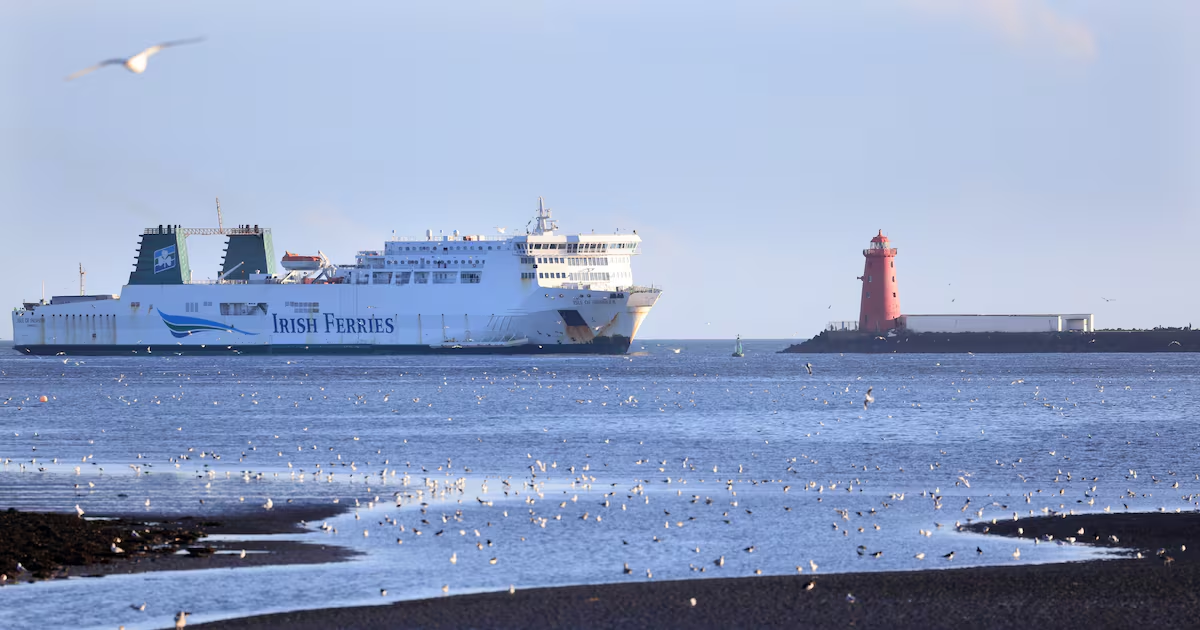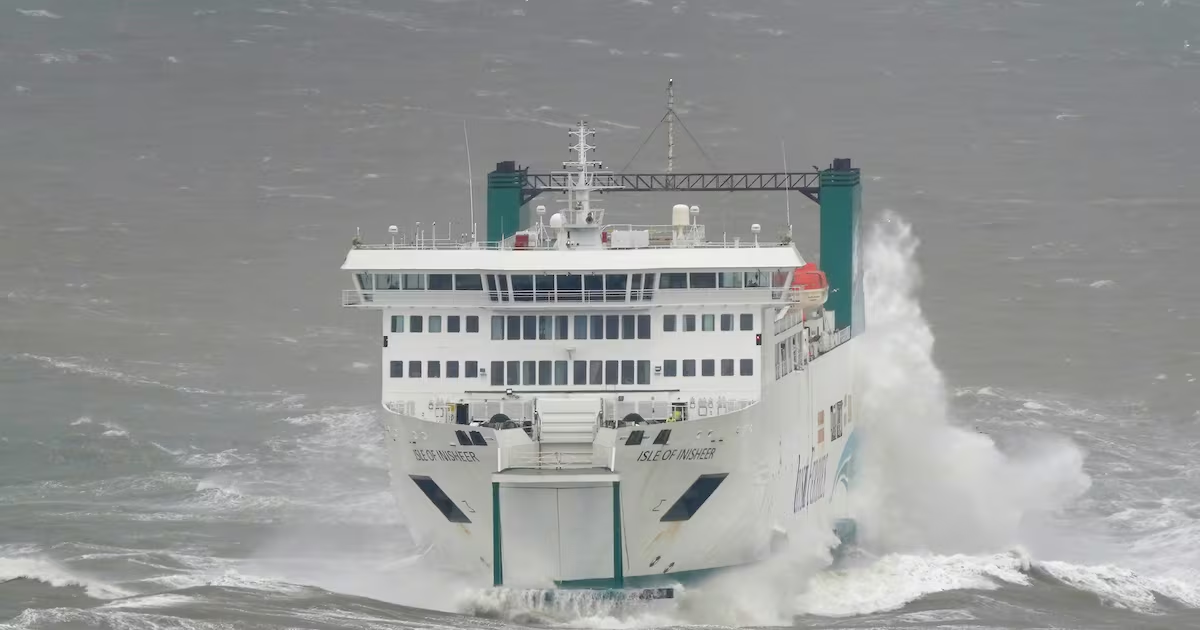
Long regarded an obvious takeover target in Dublin financial circles, few people following Irish Continental Group (ICG) would have expected its chief executive, Eamonn Rothwell – who was involved in a takeover battle for the ferry operator 19 years ago that ended in stalemate – to be the one to make a move last month. Having turned 71 in June, the conventional wisdom was that Rothwell, who has led the group since 1992, was holding out for a company sale to a private equity or infrastructure fund to cash in his stake. That stake had grown by almost 50 per cent over the past decade, thanks to stock awards and options as well as ICG spending more than €200 million buying back and cancelling shares. ICG investors were, therefore, surprised with ICG announced at 5.55pm on Friday, July 24th, that its independent board – led by John B McGuckian, a director of almost four decades – had agreed to sell the owner of Irish Ferries and the Eucon container shipping business to Rothwell and three other managers.How did the deal come about?The independent board said in the original Friday after-hours announcement that having weighed ICG’s “strategic position and the alternatives available to enhance value and liquidity”, it invited Rothwell to consider making a bid.It said there had been a lack of any third-party proposal even though the company is said to have attracted tyre-kickers in recent years.Rothwell assessed funding options and eventually secured the backing of US investment giant BlackRock’s Global Infrastructure Partners, which committed €455 million of preferred equity, and lenders BNP Paribas and Banco Santander, which provided €798 million of loans and credit facilities. The €1.2 billion – or €8 a share – management buyout (MBO) proposal that emerged represented a 25 per cent premium to the average price at which the stock had been trading in the three months before the announcement. It gave an enterprise value – which includes the company’s equity and debt – of 9.8 times earnings before interest, tax, depreciation and amortisation (Ebitda) for 2025.How did the shares react? ICG shares soared the following Monday to about €7.90 – within a whisker of the offer price – and remained around that level for weeks before The Irish Times reported that five big shareholders were opposing the sale, arguing that it undervalued the business. They included Marathon Asset Management, Janus Henderson, Pageant Investments, Equus Global and Oxy Capital, which at the time had a combined 11 per cent stake. Some of the shareholders highlighted that last year’s Ebitda – used as a basis for promoting the offer – had been adversely affected by some disruption on the company’s principal route between Dublin and Holyhead.They also said that ICG’s net debt of €256 million at the end of 2025 represented a temporary peak level of borrowings for a highly cash-generative business. The debt figure had been elevated by the company acquiring its previously-leased James Joyce ferry last year and preparing for a final payment on its Oscar Wilde to give it full ownership of its fleet. Some shareholders were also disappointed that, other than members of the management buyout team, investors were not being given the opportunity to roll their equity into the bid vehicle. Others expressed concern at the time that the extraordinary general meeting (EGM) to seek shareholder approval for the deal was scheduled for August 28th, just over a month after the transaction was first announced, with many investors potentially unable to give a bid their full attention during the summer holiday period.The shares fell in the days that followed, accelerating as ICG accompanied the release of first-half results with a downbeat outlook that warned of a “particularly worrying trend” of weak car and freight volumes on its ferries during the peak summer season that “poses a significant challenge”. Oxy, one of the dissenting shareholders, argued in a statement it was confident that the weakness largely reflected the short-term impact of a roll-out of the EU’s new Entry/Exit System (EES), a biometric border programme, on the group’s Dover-Calais route. How low did the stock go?The shares fell to as low as €7 – which was still about 75 cents above where they were trading before the bid announcement – by August 20th, after Rothwell’s bid vehicle, Bluefin Bidco, insisted it would not be improving the offer price and the independent directors said that, based on votes already submitted by proxy before the egm, the offer would “likely fail” unless sufficient shareholders changed their stance. The directors revealed late on Wednesday that they were considering adjourning the egm, saying they were aware of at least one instance where a shareholder had wanted to change their original vote against the deal. They are known to have been actively canvassing the dissidents over the past week to change their minds. The directors also said they had learned of instances where shareholders were required by intermediaries to register votes up to two weeks in advance of the meeting, which may not have given them enough time to issue voting instructions.It is understood that investors behind about 20 per cent of the stock had not filed votes by the time a final decision was made on Thursday evening to adjourn the meeting from Friday to September 10th. Was this not to have been expected?It should have been. The company had control of the timeline and it is no secret that some intermediaries require submission of proxies well in advance of a vote. It chose to set the tightest timetable of any Irish public limited company to face a bid so far this year, seeking to conclude the vote just five weeks after the surprise announcement. PTSB’s shareholder vote in July on its planned takeover by Austria’s Bawag took place 15 weeks after the deal was announced. DCC’s egm on its takeover offer from KKR and Energy Capital Partners is set for September 18th, almost eight working weeks after an agreement was reached – and 20 weeks after it first emerged that the US private equity firms had lodged an initial offer. (Both PTSB and DCC have drawn their share of dissenting shareholders claiming the companies were being sold on the cheap.) The vote on Dalata’s sale last year took place eight weeks after it agreed to be sold. The rush to wrap up the ICG vote during Europe’s main vacation month backfired. The adjournment has also left some observers with a distinctly sour taste, as the board uses the extra time to try to cobble together enough votes to push the deal it insists is “fair and reasonable” over the line.
How ICG’s push to close €1.2bn buyout in August’s holiday lull backfired
Directors of ferries group are blaming an overly tight voting window that was entirely of their own making for deferral of vote on MBO
1,104 words~5 min read