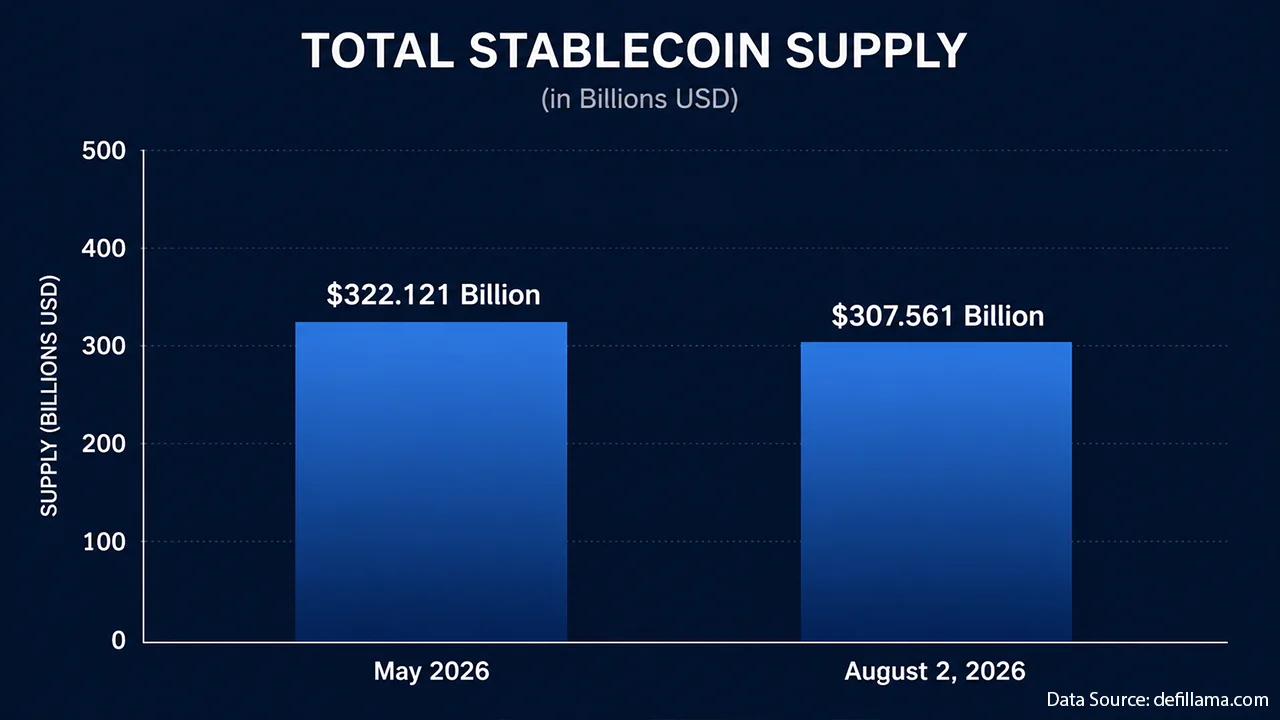
The US stablecoin market has a yield problem, and it’s not the kind most investors are thinking about. While the GENIUS Act, signed into law in July 2025, explicitly prohibits payment stablecoin issuers from directly paying interest or yield to holders, a growing ecosystem of third-party workarounds has emerged. The result is a $22.7 billion yield-bearing stablecoin market that’s growing at roughly 11% per month, and an accounting framework that has no idea what to do with it.
Coinbase currently offers approximately 3.5% APY on USDC through what it classifies as loyalty rewards, funded largely through its revenue-sharing partnership with Circle, the issuer behind USDC. Kraken and Gemini offer rates above 3.75%. The yield isn’t coming from the issuer’s mouth, technically speaking. It’s coming from the platform’s pocket. That distinction matters enormously to regulators, accountants, and the banks watching their deposits trickle away.
The loophole that launched a thousand spreadsheets
The GENIUS Act drew a clean line: issuers can’t pay yield. But it left the territory around third-party arrangements largely uncharted. Crypto exchanges realized they could fund yield programs from their own revenue, often generated by the very reserve income that issuers like Circle earn from parking stablecoin collateral in Treasury bills. Circle keeps the float, shares a cut with distribution partners, and the end user gets what looks and feels like interest on their stablecoins.