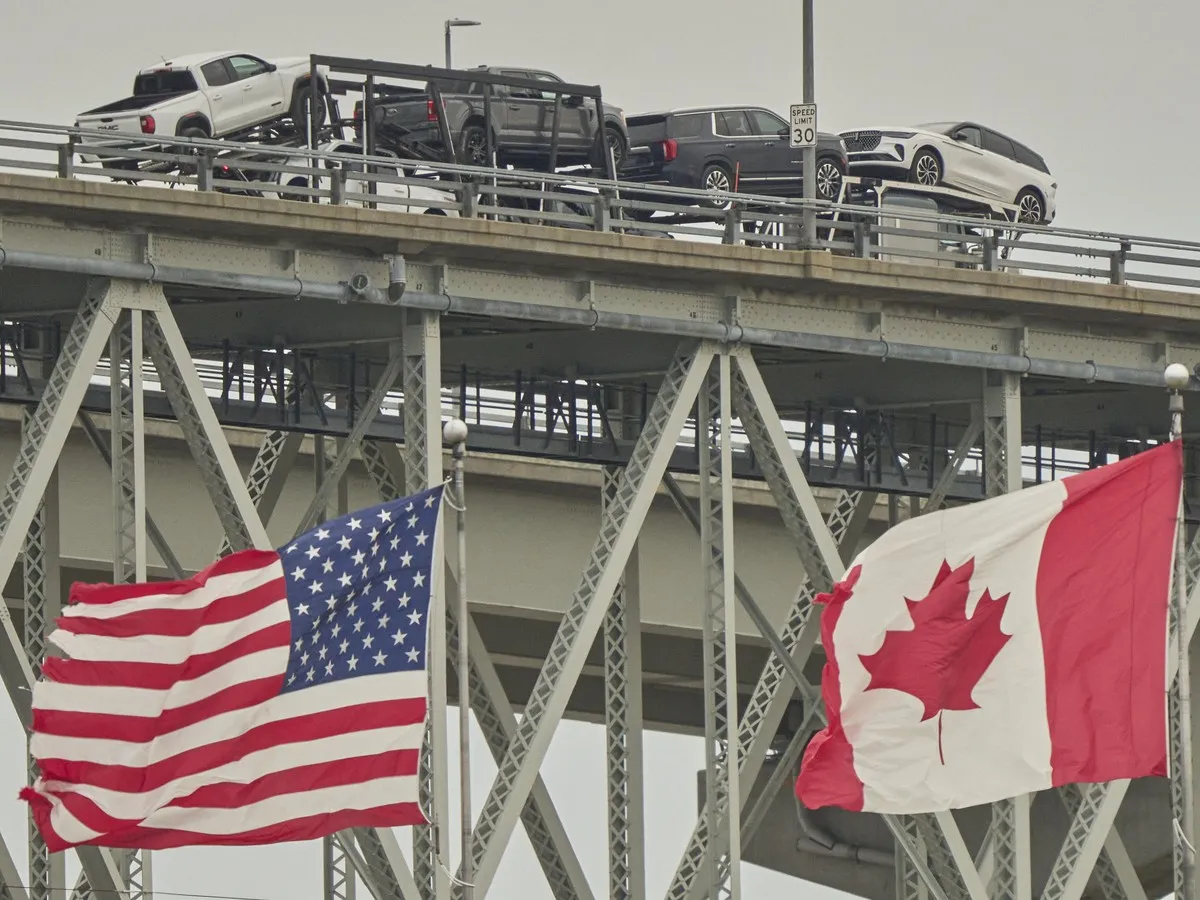
Skip to Content Subscribe My Account Manage My Subscriptions FAQ Newsletters Canada Canadian True Crime Canadian Politics Health World Israel & Middle East Financial Post NP Comment Longreads Puzzmo Diversions Comics NP News Quiz New York Times Crossword Horoscopes Modern Life Eating & Drinking Style Sponsored Play for Ontario Travel Travel Canada Travel USA Travel International Cruises Travel Essentials Culture Books Celebrity Movies Music Theatre Television Business Essentials Advice Lives Told Tails Told Shopping Buy Canadian Home Living Outdoor Living Kitchen & Dining Tech Style & Beauty Personal Care Entertainment & Hobbies Gift Guide Travel Guide Deals Savings National Post Store More Sports Hockey Baseball Basketball Football Soccer Golf Tennis Driving Vehicle Research Reviews News Gear Guide Obituaries Place an Obituary Place an In Memoriam Classifieds Place an Ad Celebrations Working Business Ads Archives Healthing Epaper Manage Print Subscription Profile Settings My Subscriptions My Offers Newsletters Customer Service FAQ Newsletters Canada World Financial Post NP Comment Longreads Puzzmo Diversions Modern Life Shopping Epaper Manage Print Subscription HomeNewsCanadaU.S. abandonment of CUSMA would be severe but survivable for Canada, report findsStudy from Deloitte predicts a big hit unevenly spread across different sectors, and recommends more free trade with other nations and between provincesLast updated 6 days ago A truck laden with vehicles crosses the Blue Water Bridge border crossing into Port Huron, Michigan, from Sarnia, Ont., on April 3, 2025. Photo by GEOFF ROBINS /AFP via Getty ImagesA U.S. withdrawal from the Canada-United-States-Mexico trade agreement (CUSMA) would have a “severe but not cataclysmic impact on Canada’s overall economy, although perhaps cataclysmic for some sectors,” according to a new report released this week by Deloitte Canada.Enjoy the latest local, national and international news.Exclusive articles by Conrad Black, Barbara Kay and others. Plus, special edition NP Platformed and First Reading newsletters and virtual events.Unlimited online access to National Post.National Post ePaper, an electronic replica of the print edition to view on any device, share and comment on.Daily puzzles including the New York Times Crossword.Support local journalism.Enjoy the latest local, national and international news.Exclusive articles by Conrad Black, Barbara Kay and others. Plus, special edition NP Platformed and First Reading newsletters and virtual events.Unlimited online access to National Post.National Post ePaper, an electronic replica of the print edition to view on any device, share and comment on.Daily puzzles including the New York Times Crossword.Support local journalism.Create an account or sign in to continue with your reading experience.Access articles from across Canada with one account.Share your thoughts and join the conversation in the comments.Enjoy additional articles per month.Get email updates from your favourite authors.Create an account or sign in to continue with your reading experience.Access articles from across Canada with one accountShare your thoughts and join the conversation in the commentsEnjoy additional articles per monthGet email updates from your favourite authorsSign In or Create an AccountorThe report is titled “Tariffs: A rough road leads to new destinations,” and imagines two broad scenarios in the near future.In the first, the “CUSMA Withdrawal Scenario,” the U.S. opts out of CUSMA entirely. “Trade resets at Most-Favoured-Nation rates that apply to member countries in the World Trade Organization,” the report says. It assumes a 10 per cent global tariff imposed by the U.S. affects previously CUSMA-exempt sectors, including oil and gas.Get a dash of perspective along with the trending news of the day in a very readable format.By signing up you consent to receive the above newsletter from Postmedia Network Inc.A welcome email is on its way. If you don't see it, please check your junk folder.The next issue of NP Posted will soon be in your inbox.We encountered an issue signing you up. Please try again“There is potential for much worse if the Trump administration imposes further punitive tariffs on Canadian goods, as it has stated will happen in January,” the report notes, but it’s uncertain how long they would last and whether they would withstand legal and political challenges.Even without a worst-case-scenario, however, the outlook is rough. The report predicts Canadian GDP would fall 1.6 per cent by 2036 relative to where it was last July, representing $402 billion in lost GDP over the coming decade.“Domestic investment in things like infrastructure and machinery take a hit and employment is also projected to shrink by 163,000 jobs annually on average,” it says. “Average wages would likely decline, cutting into domestic consumption and household purchasing power.”The pain would not be shared equally, with sectors that rely heavily on exports suffering the most. Manufacturing could see a 28 per cent drop in GDP over the decade, while electronics, machinery and equipment could lose 21 per cent, rubber and plastics products 20 per cent, and chemicals 13 per cent.Oil and gas would fare better, with a loss of 0.4 per cent in GDP for oil and 0.9 per cent for natural gas — the “severe, not cataclysmic” part of the forecast.The second scenario is called “Accelerated diversification” and paints a somewhat rosier picture. In this “best-case scenario,” Canada maintains all its existing free trade agreements while successfully negotiating new ones elsewhere.Here the report predicts GDP growth of 0.6 per cent by 2036, representing $141 billion and the creation of 53,000 jobs a year. The gains aren’t as large as the losses under the first scenario, but at least they’re positive.“Agriculture … represents one of our highest potential growth sectors, particularly to the extent markets open in China and India,” the report finds, predicting a possible increase in crop exports to non-U.S. markets of $4 billion by 2036, and food manufacturing increases of $16 billion.Manufacturing of electronics, machinery and equipment could grow by $3 billion or 5 per cent, while motor vehicles and parts could increase by $1.1 billion or 3 per cent, and transportation equipment manufacturing and chemical manufacturing by about $1 billion, representing 4 per cent and 3 per cent, respectively.Matthew Stewart, a partner in the Economics and Financial Advisory group at Deloitte Canada and one of the report’s co-authors, told National Post that, while the numbers are relatively easy to calculate, the future is hard to predict.“It’s so tough to tell lately,” he said when asked for the odds of America actually walking away from CUSMA. “Every day I hear different things from our government negotiators and the contacts I have. So it’s so tough to tell. It just seems to change direction on a regular basis.”As to whether the next U.S. administration might behave differently, he’s cautiously optimistic. “It’s clear that trade benefits both economies,” he said. “But it’s clear that there’s increased protectionism across both parties.”He added: “I’m hopeful that we’ll get back to the table, whether it’s soon or after the (next U.S.) election, and then we’ll be able to restore some normalcy to the trade agreement. But it’s likely that we’re going to continue to see some increased tariffs.”As to what can be done, Stewart sees several tactics beyond inking more free-trade deals with other partners.“It’s also transportation capacity,” he said. “If we can build better transportation capacity, we can get more of our oil and raw materials to market.”Major projects around critical minerals are also vital, “so that we can develop new markets … to try and offset some of this downside.”He added: “The final piece that we can do, that is completely within our control, is interprovincial trade barriers. And we have been talking about this for years. And I know we made some effort to reduce them, but there’s still substantial barriers.”Research by Deloitte found that interprovincial exports’ share of the Canadian economy has remained largely unchanged for more than 30 years, standing at 18.1 per cent of GDP in 2023.“If Canada is to be tariffed by the U.S. and is looking for offsetting economic gains, it can start at home,” the report says. A Deloitte analysis from last year found that completely phasing out interprovincial trade barriers over five years would generate $881 billion in economic output by 2040 — a 2.4 per cent GDP increase — and create 133,000 new jobs.Interprovincial trade involves workers as well as goods, Stewart added. “If we can’t move construction workers from B.C. into Manitoba, where we’re building a major project, because of health and safety regulations on those construction workers, it makes it much more expensive.”Our website is the place for the latest breaking news, exclusive scoops, longreads and provocative commentary. Please bookmark nationalpost.com and sign up for our newsletters here. Join the Conversation This website uses cookies to personalize your content (including ads), and allows us to analyze our traffic. Read more about cookies here. By continuing to use our site, you agree to our Terms of Use and Privacy Policy.
U.S. abandonment of CUSMA would be severe but survivable for Canada, report finds
Study from Deloitte predicts big hit unevenly spread across sectors and recommends more free trade with other nations and between provinces.
1,437 words~7 min read