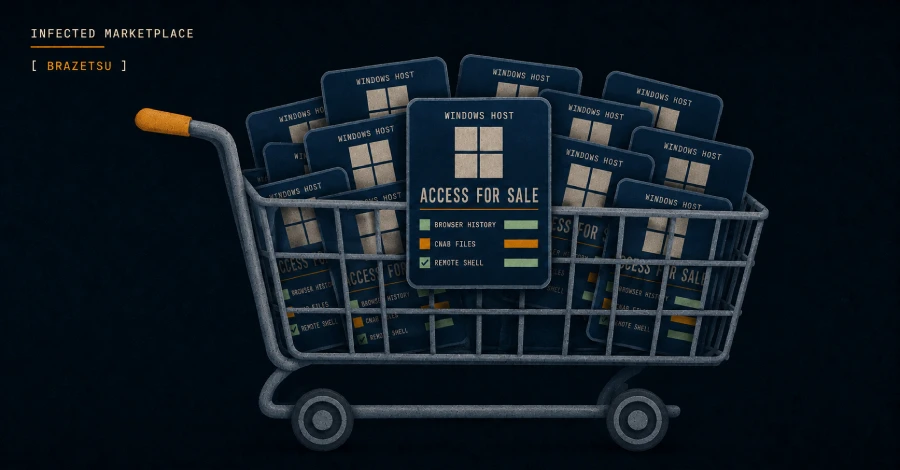
Cybersecurity researchers have disclosed details of a sophisticated Python-based Windows malware framework called BraZetsu that fuels an underground marketplace commercializing access to compromised hosts.
"Unlike the standard infostealer model, BraZetsu is a comprehensive master toolkit that empowers Initial Access Brokers (IABs) by turning compromised systems into highly valuable commercial assets," Group-IB malware analysts Julio Guapo Menezes and Miguel Salazar said in a technical report.
"The framework exhibits high operational maturity, utilizing a modular architecture and stealth techniques that allowed some samples to remain fully undetectable on VirusTotal at the time of analysis."
BraZetsu is a portmanteau of "Brazil" and "Zetsu," a fictional character from the Japanese Manga series Naruto who is known to operate as a threat from the shadows. The naming is inspired by the fact that the initial access tool stealthily infiltrates target networks to conduct highly destructive follow-on attacks. The threat actors, tracked as Exilware, are believed to be native Portuguese speakers.
The Singapore-headquartered company said BraZetsu is primarily scoped to target Iberian and Latin American targets in e-commerce, corporate, financial, industrial, law enforcement, and other environments. Evidence points to heavy use of generative artificial intelligence (AI) for not just malware development, but also backend data triage and target prioritization.