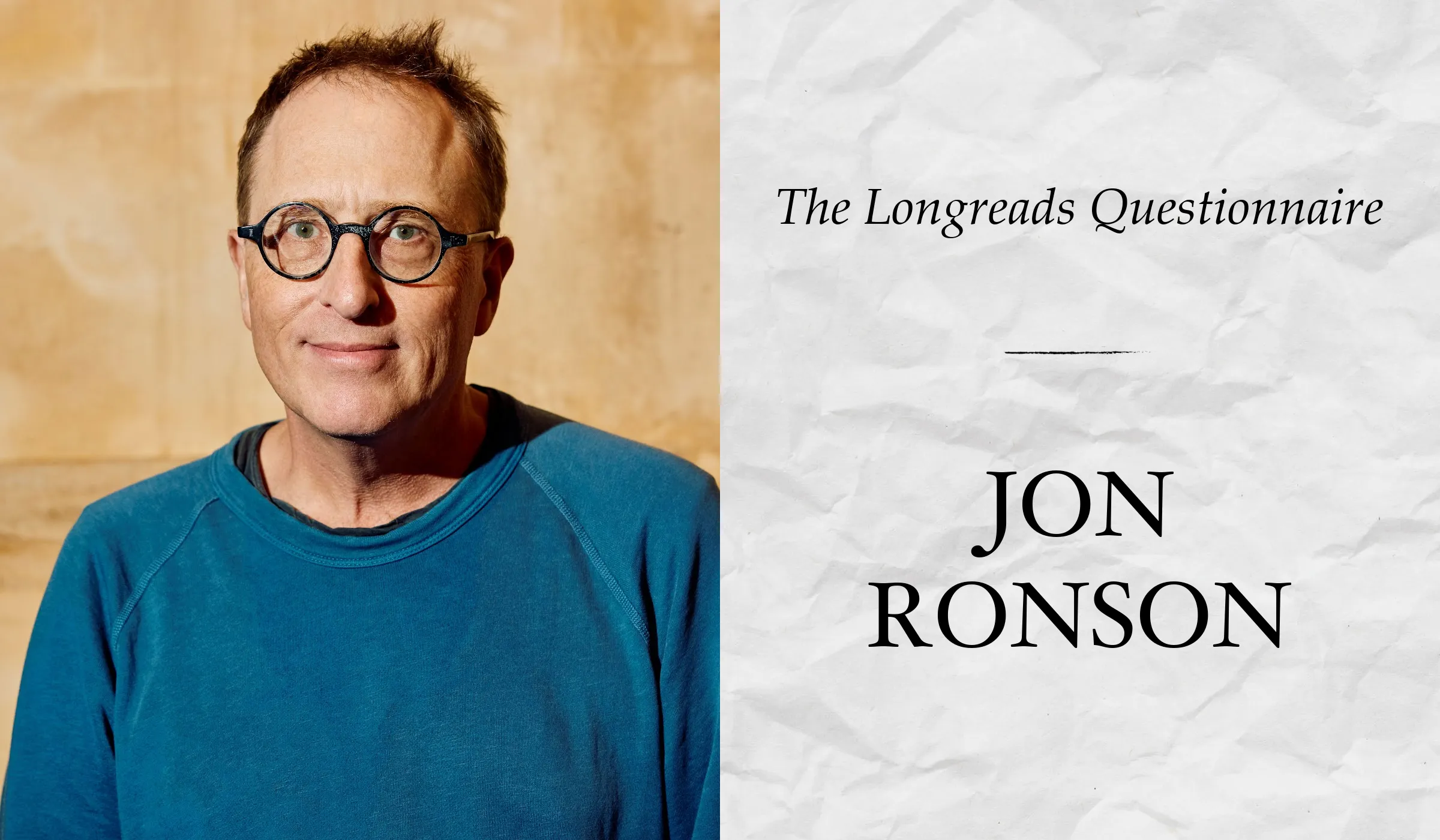
“I do unashamedly want to write page-turners,” Jon Ronson told The New Yorker in an interview. “I can never understand why most nonfiction books have such limited creative ambitions.” Ronson, who is “not a thrill-seeker,” then recounts fearing for his life while being pursued by members of a secretive political gathering—a chase that found its way into Them: Adventures with Extremists, his 2001 breakthrough book. Thrills have a way of finding Ronson, either through active pursuit or some subtler means of revelation. The Men Who Stare At Goats begins with a US Army general who attempts to walk through walls, repeatedly smacking into them. In the opening of The Psychopath Test, a neurologist hands Ronson a baffling package, copies of which have been anonymously mailed to academics throughout the world. The pages turn themselves.
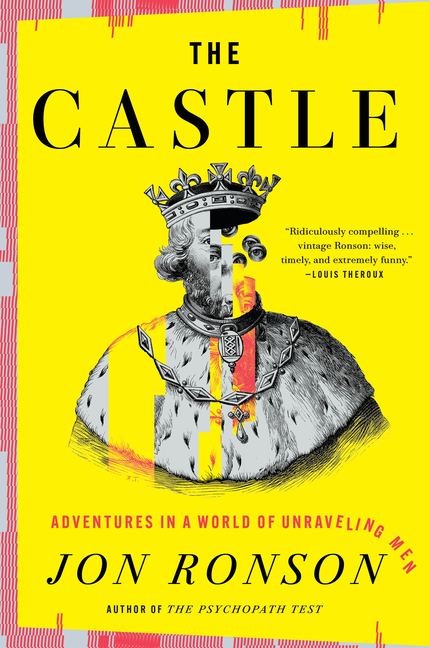
Ronson’s latest, The Castle, earned a starred review from Publisher’s Weekly, which praised the book as “a blockbuster portrait of men gone mad” and Ronson’s style as “intuitive but rigorous.” His podcast, Things Fell Apart, was recently renewed for a third season, in which Ronson will shift focus from American culture wars to individual battles against institutions. He once told The Guardian, “I get called faux-naïf all the time. But I honestly think I am just genuinely naive.” It’s an observation that reminds me of Joan Didion’s own famous self-assessment: that she was “so physically small, so temperamentally unobtrusive . . . that people tend to forget that my presence runs counter to their best interests.” Ronson is warmer than that, but his access is no less astonishing. Time and again, someone allows him to get very close—closer, perhaps, than they might be aware of. Each of Ronson’s books is a testament to his depth of inquiry, his proximity to the surprising, and his conviction that a good narrative should be propulsive.