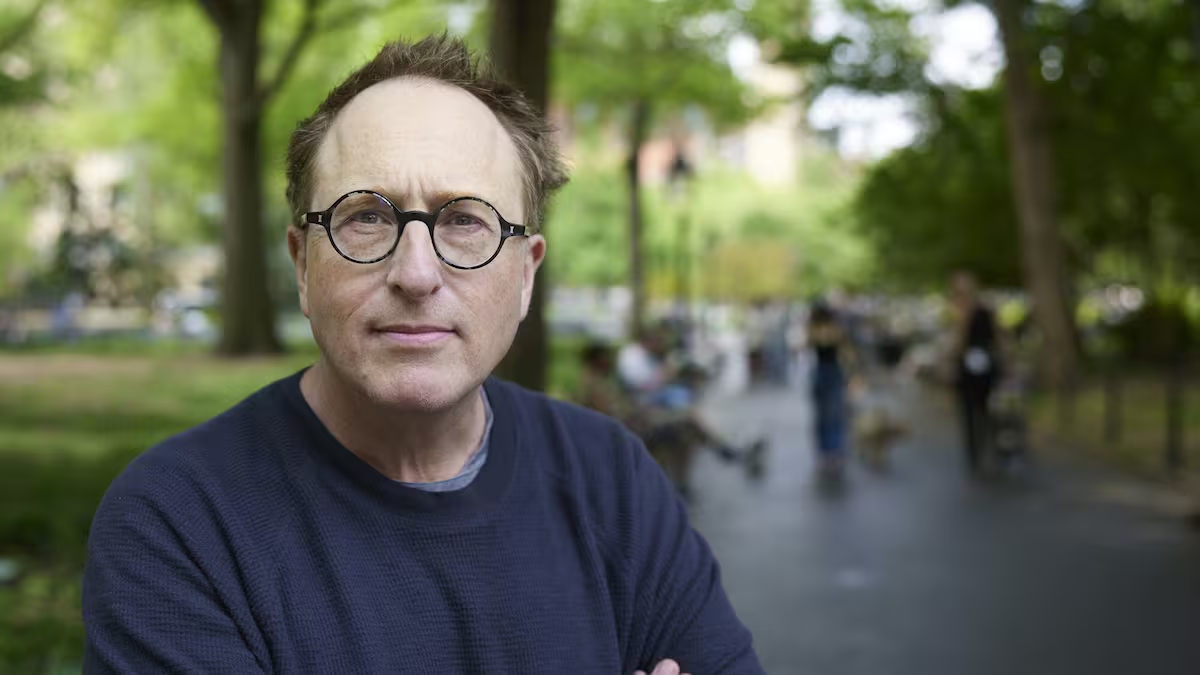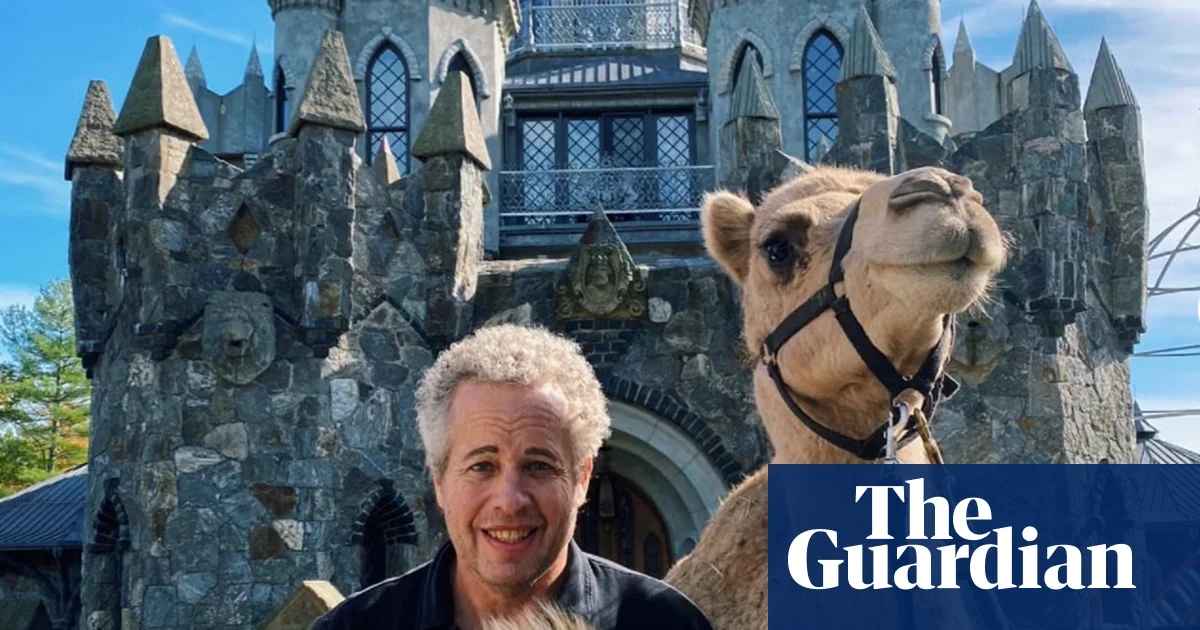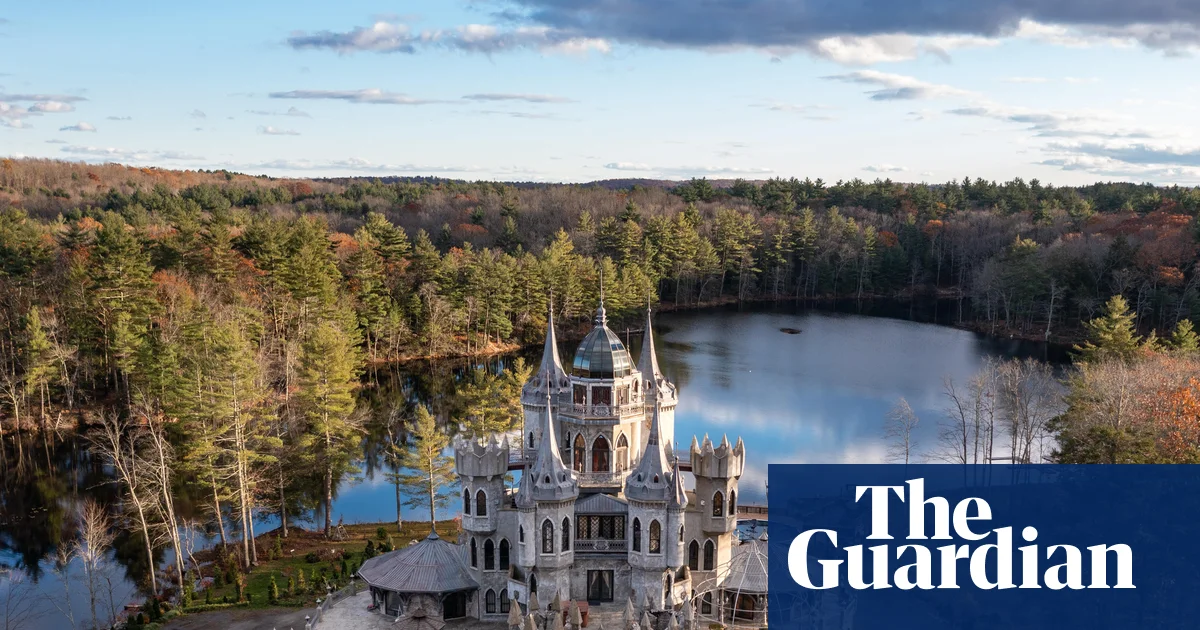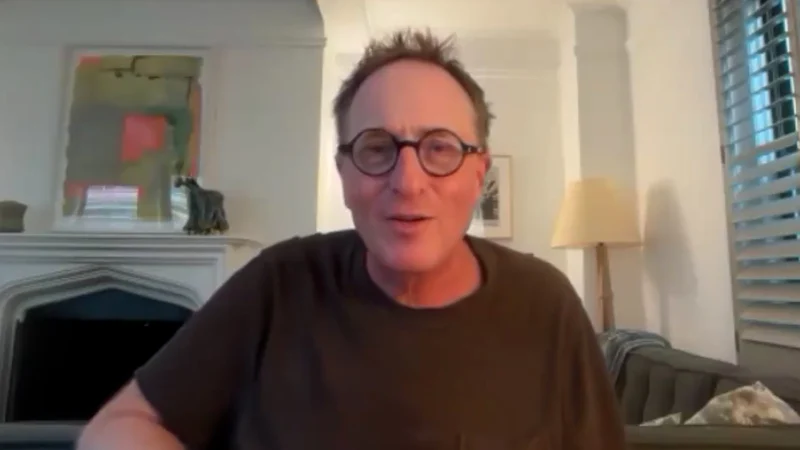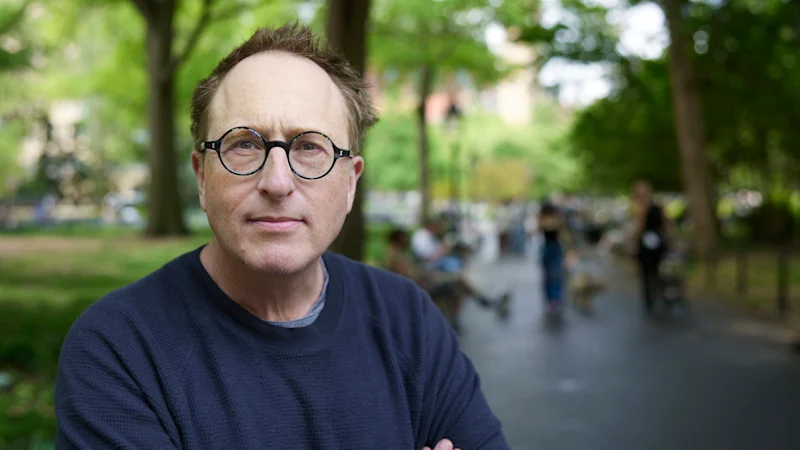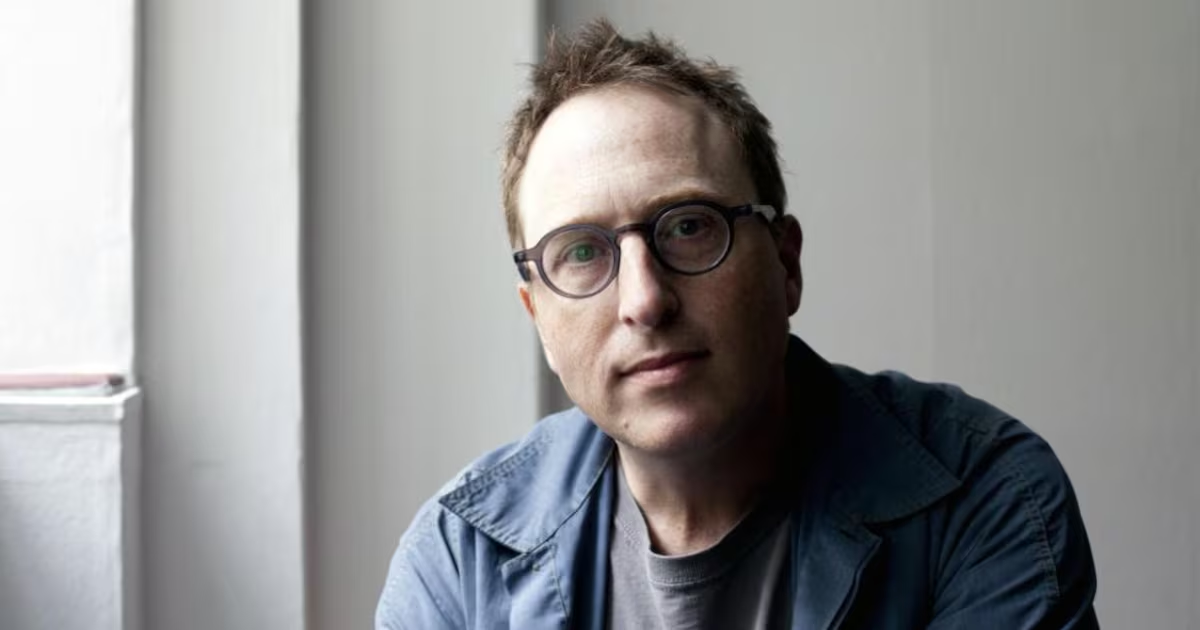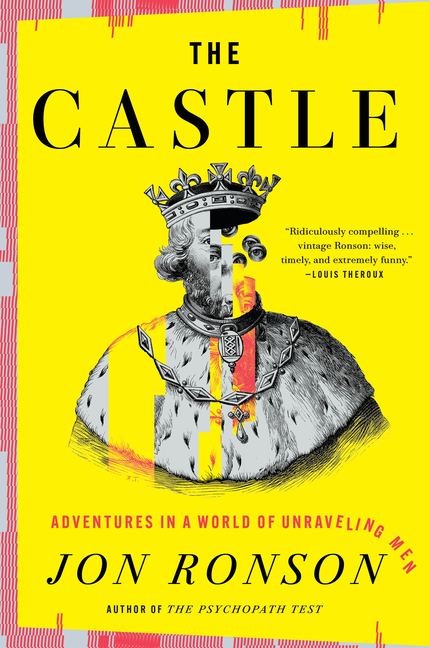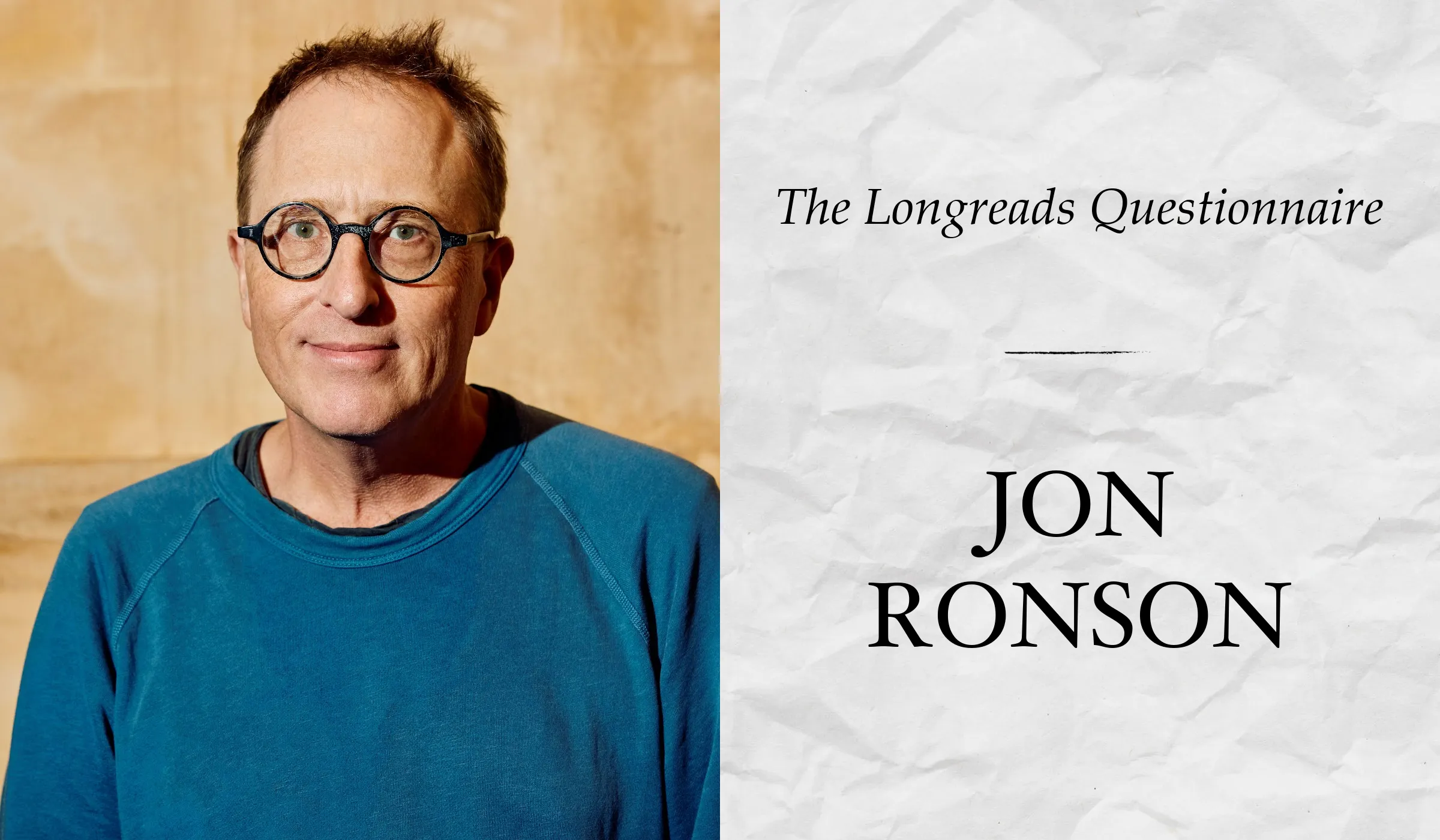
In the summer of 2023, the writer and podcaster Jon Ronson woke to several alarming texts from his son Joel. The night before, Joel and his friends had been lured to a “party” at a fairy-tale castle in rural Connecticut owned by an odd multimillionaire called Chris Mark. Joel’s female friends were the ones who had actually been invited. There was also a number of other young women and a camera crew there.It wasn’t a “party”, Mark explained. It was, in fact, a reality show called 101 Princesses where young women vied to live in his castle with him. It did not feel like a particularly well-run reality show or, indeed, a reality show at all, so Joel had contacted his parents lest anything weird was to happen.By the time Ronson and his wife woke up, Joel was fine. He and his friends had been kicked out of Mark’s castle because they would not participate. Ronson was concerned for his son, but he also thought (because he never stops thinking about work): This is the start of a book.He knew it actually was a book when Joel’s friend helped him track a girl they had met at the castle. She told him that Hugh Hefner was one of Mark’s idols and that he was trying to create a Playboy Mansion. “That was the moment of clarity. This guy is trying to be Hugh Hefner at the worst moment in human history to be Hugh Hefner.”Ronson is a nuanced and thoughtful writer. If you’ve read The Psychopath Test or So You’ve Been Publicly Shamed or listened to the podcast series The Last Days of August or Things Fell Apart you’ll know he needs more than a crazy anecdote. “The story itself needs to be surprising and funny and absurd and adventurous and exciting and mysterious,” he says. “But also: does it have a bigger resonance? Does it say something about the way the world works? It needs to be small and also big.”Chris Mark was, he realised, “a man out of time ... What this guy can’t do anymore is have a harem in his castle. That’s not relatable. What is relatable is the fact we’re all at home, office life is dying, factory life died and a lot of men are realising that there are things that they can’t do anymore.”And so The Castle became a book about what happens to men when they lose their purpose. It’s a much more interesting story than yet another about the cartoonish inhabitants of the manosphere (though manosphere figures do turn up). Ronson investigates Mark, the sexually entitled heir to a steel fortune, but he also engages with other men who have spiralled into weirdness thanks to the modern age’s lack of structure. He goes to Marktown, the once thriving and now depressed town Mark’s grandfather built for his employees.He draws a parallel between such industry towns and the digital worlds built by capitalists for their digital workers today. He tells the story of controversial influencers such as Greg Chism, an indebted father turned YouTuber who allowed the algorithm to morph his output into videos where he and his daughters dressed and acted like babies. “If you come to his story at the end, you’re thinking: ‘What the f**k?’ If you’re with him every step of the way from his childhood, every decision makes perfect sense but leads him to this insane place.” Ronson laughs. “My son, Joel, who’s staying with us at the moment, read the book recently and said: ‘I’m not as sympathetic to Greg Chism as you are. I don’t think he should have put his daughters on YouTube.’”Then again, Ronson did put Joel into his Guardian columns back in the day. He laughs. “Yeah, I think he was ‘subtweeting’ me when he said that.”Graham Linehan testifying on 'Europe's Threat to American Speech and Innovation' at the US Capitol in February in Washington. Photograph: Heather Diehl/Getty Like Chism, Ronson was once guilty of being overly utopian about social media and all that happened there. “When Twitter first started, I remember thinking: ‘This is amazing. This is like a Robert Altman movie, but real life’ ... Ironically, Graham Linehan said to me at the very beginning of Twitter: ‘You’ve got to join Twitter. It’s the place where no one fights.’ Which is very ironic now.”[ Jon Ronson: In 2008 Graham Linehan told me ‘Join Twitter, the place where no one fights’Opens in new window ]News editors will focus in on his chapter about Linehan. The Irish comedy writer was an early adopter of social media before finding the issue that would forever define him: trans identity. He became vociferously outspoken againsttransgender activism, tweeting on the subject around the clock and lashing out at old friends like Ronson (he still tweets angrily about Ronson).The Castle is about “men spiralling into disinhibited behaviour”, says Ronson. “The old world doesn’t exist anymore, so they’re creating these fake worlds for themselves ... That’s why I ended up putting Graham in there because it feels like the culmination of one of the arguments in the book, which is that men are being tossed around in a sea of conflicting ideas as to what being a man is these days ... Some men just get so sick of being tossed around in that turbulence [that] they say: ‘F**k it, I’m going to rip off my face’ ... It felt more personal and more interesting to make that point about Graham than to make that point about a manosphere man.”In that chapter Ronson challenges Linehan but also tries to understand what drove him to blow up his life. “I sat on the interview for six years,” he says. “In the end Graham got annoyed with me because I didn’t write about it. Well, you can imagine what stopped me. It’s a very fraught thing to write about. It’s a very emotional thing. I was super fond of Graham.”How does he manage his emotions when reporting on difficult subjects? “I remember years ago I went to see my doctor when I lived in Islington, and the night before, my documentary about [conspiracy theorist] David Icke was on Channel Four ... And the doctor said to me: ‘God, the toll that hanging out with people like that must take on you.’ And I said: ‘What? I live for those moments.’”Things are a little different now, he says. “Since around 2019, when I made The Last Days of August [about the controversial death of porn star August Ames] something changed in me and it never really changed back. It’s this idea of being just very, very aware of your moral and ethical responsibilities. The gonzo fun of those early days, I still have it. I still really love being somewhere I’m not supposed to be, whether it’s inside The Castle or going to Broadmoor for the Psychopath Test. But it’s a bit like Eve after eating the apple. I spend a hell of a lot of time thinking about the ethics of everything.” He worries that, like Martin Luther, he might suffer from a condition called “scrupulosity”. “I think I might worry about this more than is healthy and more than is appropriate ... There’s lots of caveats. Firstly, [Ames’s] husband had brought out a press release accusing other porn stars of basically contributing to her suicide. So, he was in public anyway and I don’t think I would have made that show if he hadn’t done that. But the fact is, she hadn’t been dead for long, and there I was, investigating. That’s the one thing that stays with me: Did I do the right thing?”There are other concerns when doing work like this. At one point, he alleges, Chris Mark repeatedly threatened him by text with a visit from his ex-con friends “Carlos and Brandon”. It is partly played for laughs in the book, but does he worry about safety? “A little, yeah. We’ve put security in and stuff like that. I think it’s a very small worry.”What makes Ronson’s writing so entertaining and funny is the way in which his meticulous reportage on serious subjects coexists with his fears, anxieties and self-deprecation. “It’s weird that so many journalists don’t want to do that ... Journalists are raised to be authoritative, but we are just as f**ked up as the people that we’re interviewing half the time.”His work is very much influenced by the largely American nonfiction narrative tradition that sees the form of the story as being as important to its veracity as the content. When he was younger he remembers reading an article by Luke Jennings about a professional Andrew Lloyd Webber lookalike and thought: “This is what I want to do.”To hell with Watergate then? He laughs. “It was so funny and absurd and human.”[ Jon Ronson: ‘I still see myself as marginal’Opens in new window ]He thinks it is interesting that his friend and fellow longform reporter Patrick Radden Keefe has also, in his book London Falling, written about “lost men acting out in these weird ways”.Ronson’s own evolving personal worldview is evident in all of his work. For example, with So You’ve Been Publicly Shamed, he had “come to this realisation in my life that empathy and trying to understand people is better than cold, hard judgment. Yet, I’ve come to this conclusion just when the world has come to the opposite conclusion. And then with this book, Joel gets lured to the mysterious castle just as I’m [getting colon] surgery. It’s about fragility.”He thinks the two books are linked. “The excesses of public shaming have partly led to disinhibition, to [some people] behaving exactly how they want, [saying]: ‘F**k people’s feelings.’”I wish I could be more confident. It’s a real problem for me. I get incredibly shyHe realised when writing The Castle that his obsession with work was bound up with a masculinity he barely previously considered. “And then I find myself in Nantucket on my wedding anniversary, chasing this story. And I think: ‘F**k, my masculinity is more toxic than I realised.’”He complicates his workaholism by turning his books into shows and then going on the road. “There’s an American storyteller called Sam Green,” he says. “I went to see him [in] this tiny little venue in New York City called The Kitchen ... I was just mesmerised. He was doing his storytelling in sync with both the band live-scoring it and all of these images on the screen. And that just really inspired me. With The Castle, it’s going to be like that, a live documentary unfolding on stage.”It’s possible he does all this, he says, because he is “s**t at parties”.I tell him I think journalism has made me more outgoing. “Interesting,” he says and laughs. “I remain socially inept.”Later he says: “I think I’ve gotten worse, to be honest ... My favourite sort of party is where I’m recognised and praised.” (We both laugh because I also like this sort of party.) “So clearly, there’s an insecurity there. For the same reason if I’m on stage, I’m fine because it’s like I’ve come pre-approved ... If people don’t know who I am and I’m just starting from scratch, a massive insecurity takes over, just a feeling of low self-worth ... I wish I could be more confident. It’s a real problem for me. I get incredibly shy. I blurt out the wrong thing.” Was he similarly underconfident when touring as Frank Sidebottom’s keyboardist as a very young man? He laughs. “Suddenly you’re my therapist. I have very clear memories of thinking: ‘Everybody in this van is cooler than me.’”This is why he loves being out in the field amassing material where “all the awkwardness vanishes”. Does he feel anxious confronting people such as Chris Mark? “Weirdly, no. I guess this is where the spectrumy side of me probably takes over, which is that I’m so excited about amassing the material and being in the moment, you find yourself asking very difficult questions, but you do it with such excitement and buoyancy that I think [the interviewees] like it too ... I leap into those difficult moments with joy and abandon because I’m so excited about being on an adventure.”
‘It’s very fraught. I was super fond of Graham Linehan’: Jon Ronson on his book about men spiralling
The Castle was inspired by Ronson’s son finding himself in the home of an heir ‘trying to be Hugh Hefner at the worst moment in human history to be Hugh Hefner’
2,040 words~9 min read