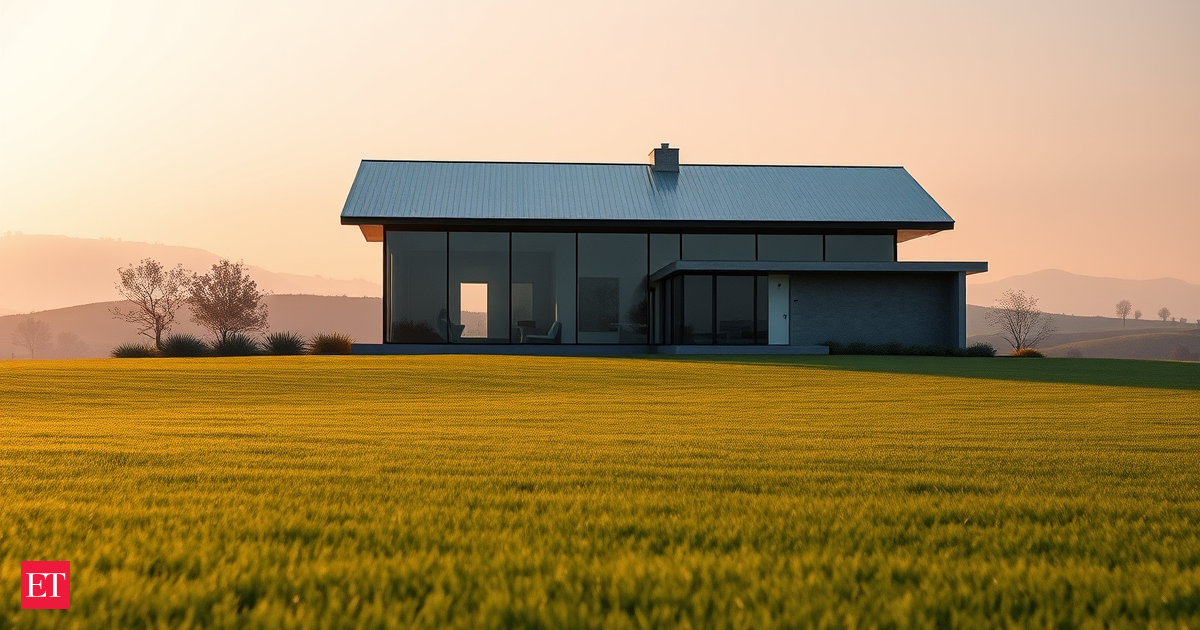
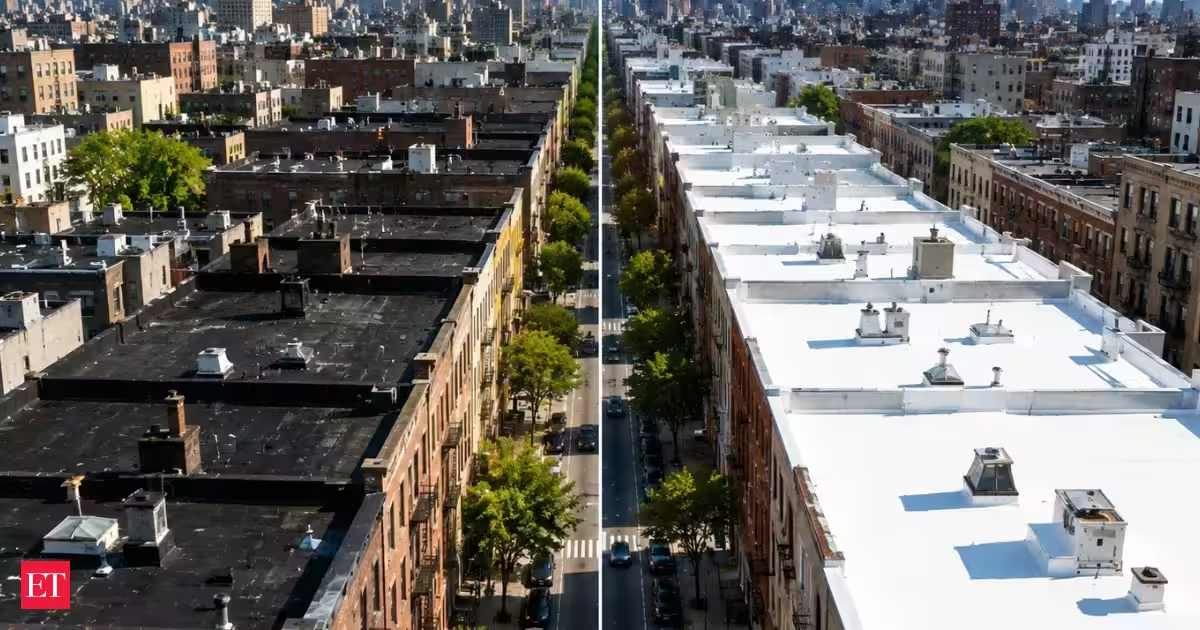
Long before ‘cool roofs’ became popular in climate circles, a small strip mall on US Highway 1 in Cocoa, Florida was already conducting a scientific experiment without even realizing it. Between 1996 and 1997, a team from the Florida Solar Energy Center painted the metallic roofs of seven occupied shops with bright white color and observed what happened next. According to the FSEC's "Demonstration of Cooling Savings of Light Colored Roof Surfacing in Florida Commercial Buildings: Retail Strip Mall" report, the roof surface, which would often heat above 170°F on matched hot summer days, became as much as 70°F cooler once coated.The strip mall itself was a 12,500-square-foot metal building with eight storefronts along US Highway 1, each about 25 by 50 feet with large glazed fronts facing east. Researchers signed the monitoring agreement in mid-June 1996 after struggling to find a willing site since one larger mall backed out because its gravel-covered built-up roof would have needed an expensive vacuuming and pressure-washing process before any coating could go on. The project followed an earlier FSEC trial at Our Savior's Elementary School in Cocoa Beach, where a gray roof with just 23% reflectance was monitored for a year before a white coating cut chiller energy use by 10% annually and trimmed peak demand by 30%.Why a metal roof turns into a frying panInitially, the mall’s roof had unpainted galvanized metal, which absorbed sunlight instead of reflecting it. The report says roof reflectance without coating was less than 29%, meaning the roof absorbed more than 70% of incoming sunlight. According to the same FSEC report, an infrared scan of the uncoated roof taken at midday on June 9, 1996 recorded surface temperatures over 150°F, hot enough to heat the ceiling tiles and ducts below. The heat seeped into the plenum space above each shop’s ceiling, forcing air conditioners to work harder to keep customers comfortable.What makes a white coating reflective, not just light-coloredNot every white paint performs the same way on a roof. The acrylic coatings used in tests like this one are formulated with reflective pigments, most commonly titanium dioxide, chosen specifically because they scatter a very high proportion of incoming sunlight across the solar spectrum rather than absorbing it and converting it to heat. This is different from ordinary white house paint, which may look similarly bright to the eye but wasn't engineered with the same solar-reflectance performance in mind. Manufacturers of genuine cool roof paints assess their performance based on standardized solar reflectivity and thermal emissivity ratings, which are exactly the kind of figures referred to by the FSEC report in describing how the paint reflects 75% of the incoming solar energy. The reason that the paint's performance decreases due to contamination is that dirt on the paint blocks the reflective pigment underneath from doing its job, which is why some manufacturers suggest occasional cleaningo maintain a cool roof's rated performance.Turning the roof white, one shop at a timeThe researchers couldn’t coat the whole roof in one fell swoop. To make a fair before-and-after comparison, researchers first measured each shop's normal summer energy use for several weeks, then applied an acrylic white coating in two phases: two shops in 1996 and five in 1997. The coating made the roof reflective, so it reflected about 75% of solar radiation instead of absorbing it. In fact, on comparable hot days, uncoated areas would reach over 170°F, whereas coated areas would stay 70°F cooler.Heat rising off unpainted metal, none off the coated section: The researchers' findings in one frame (representative image). Image Credits: ChatGPTCooler shops, lighter power billsThe researchers calculated that the lower roof temperatures produced cost savings. The daily consumption of cooling energy across seven shops dropped from 34.1 kWh to 25.5 kWh, showing a 25.3% drop; however, some shops saw savings in the range of 13-48%, depending on how low interior temperatures were required by each shop's management. Cooling electricity demand also fell during the late-afternoon utility peak period, when electrical grids face their highest loads. As the report notes, cooling electricity demand at this time was reduced by 40.3%, from 1,469 watts to 877 watts, on average across all the monitored shops. This change was not only noticeable to researchers; shop owners reported similar trends. Meridith Huelsman, owner of the bagel shop, told researchers cooler afternoons encouraged customers to stay and dine. According to the same FSEC report, Traci Wood, nurse manager of the Alzheimer's daycare center in the mall, said mornings were so cool she thought someone had fixed the air conditioner overnight.Not just a Florida quirkThis wasn’t an isolated finding. According to Lawrence Berkeley National Laboratory's Heat Island Group, a bright white roof that reflects up to 80% of solar radiation can be about 50°F cooler than a gray roof that reflects only 20% on an average summer afternoon. The U.S. Environmental Protection Agency’s page on using cool roofs to reduce heat islands adds that cool roofs do more than cut power bills; the agency's heat-island health guidance notes that reducing heat islands can also ease heat-related illnesses such as exhaustion and dizziness, while lowering temperatures in the surrounding area, not just inside the building.The catch: It takes years to pay for itselfWhite roofs aren't a magic fix. According to the FSEC report, the average cost of whitening each store's roof was about $1,325, and with roughly $150 in annual electricity savings per store, the simple payback averaged about nine years when the coating was applied purely to cut energy use. However, the economics improve considerably for buildings already scheduled for a new roof, since choosing white materials over dark ones at that point adds little or no extra cost. That timing detail, easily overlooked in the headline numbers, could be more important than the paint color itself.A lesson that still holds upAlmost three decades later, this humble strip-mall experiment is still notable because, as the researchers noted, there had been no earlier objective test of roof whitening on commercial buildings in Florida; this was one of the first done on a real, occupied store with customers, instead of a lab setup. As cities look for affordable ways to survive hotter summers, painting a roof white could be one of the simplest tricks in the book, something that a small commercial strip in Central Florida helped prove decades ago.
In 1996, Florida researchers whitened 7 shops in a Cocoa strip mall; roof surfaces fell by as much as 70°F, cooling energy dropped 25.3%, and peak demand dropped 40.3%
Explore how a 1996 study in Cocoa, Florida transformed shop rooftops with white paint, reduced energy consumption by 25%, and lowered peak demand by over 40%. Discover the benefits of cool roofs that still matter today!
1,053 words~5 min read