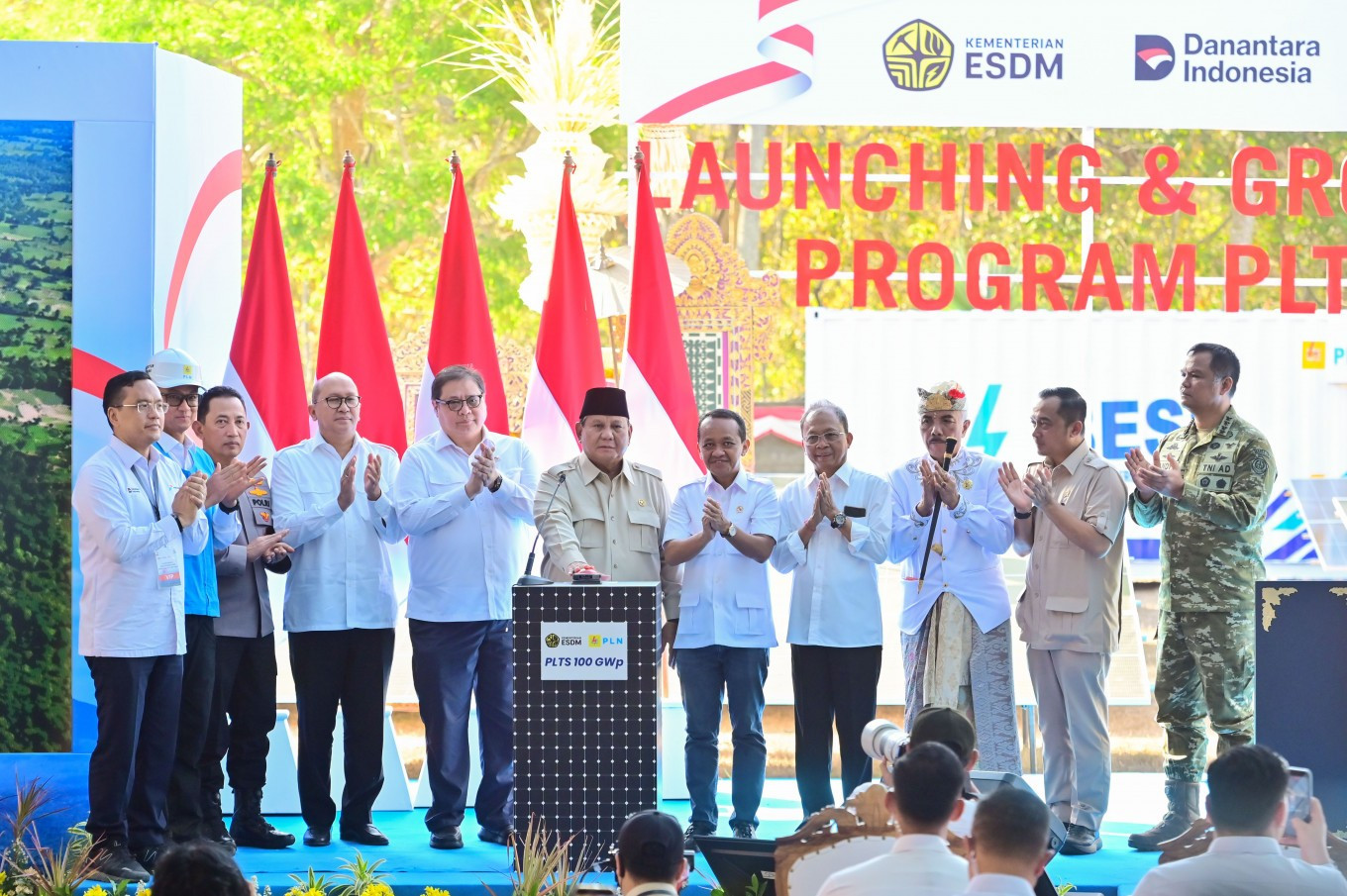
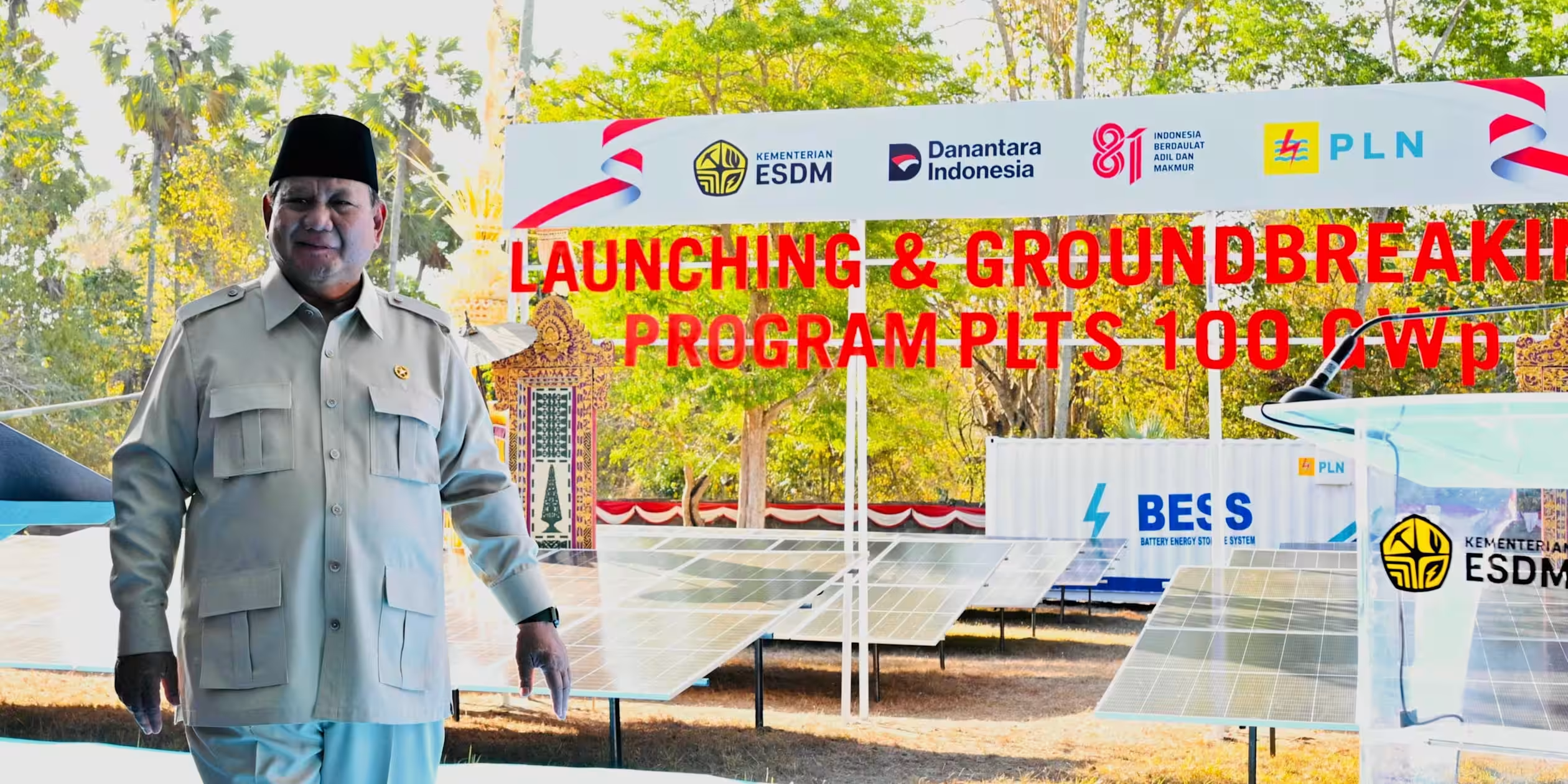
Energy and Mineral Resources Minister Bahlil Lahadalia (center), Bali Governor Wayan Koster (left) and PLN president director Darmawan Prasodjo (right) inspect the construction site of the 100-gigawatt-peak (GWp) Gilimanuk solar power plant in Jembrana, Bali, on Aug. 25, 2026. (Antara/Fikri Yusuf)
National energy subsidy and compensation expenditures could skyrocket by Rp 300 trillion in the 2026 fiscal year unless the country accelerates its transition to new and renewable energy, the Energy and Mineral Resources Ministry has warned.Deputy Energy Minister Yuliot Tanjung explained that prolonged global geopolitical tensions, including the United States’ war on Iran and the Russia-Ukraine conflict, were severely disrupting global energy supply chains.
These disruptions, he noted, had triggered a sharp surge in energy commodity prices, inflation, production costs and logistics expenses worldwide.
Speaking at the EBTKE ConEx 2026 event on Wednesday, Yuliot detailed the ministry’s projections, emphasizing that a failure to mitigate this volatility through domestic renewable energy supplies could trigger a massive fiscal deficit.
"The energy ministry has calculated the impact of these increases; if we fail to anticipate them by ensuring the availability of new and renewable energy, the consequence would be a rise in compensation and subsidy costs, potentially adding around Rp 300 trillion to the [current budget of around] Rp 400 trillion," Yuliot said.