The modern web is built on a lie. For decades, we have forced deeply interconnected, fluid, real-world data into rigid rectangular cages. We take rich conceptual domains—such as enterprise organizations, multi-tenant SaaS workspaces, dynamic user permissions, and complex AI dependencies—and slice them up into normalized SQL tables or nested JSON document trees.
When you need to know how Alice is connected to Project X through three degrees of separation, your database engine grinds to a halt under the weight of massive table joins or recursive JSON queries. Worse still, as we step into the era of Neuro-Symbolic Artificial Intelligence, traditional databases completely fail to provide the deterministic, explainable grounding that Large Language Models desperately need to stop hallucinating.
Enter Knowledge Graphs (KGs).
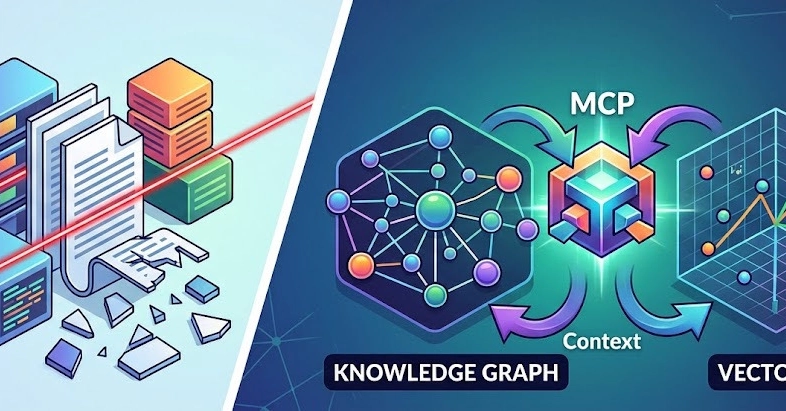
If you are a JavaScript or TypeScript developer, understanding knowledge graphs is no longer an academic exercise reserved for data scientists. It is a fundamental architecture shift. By trading monolithic table structures for a microservice mesh of semantic triples, you can build zero-hallucination AI systems, lightning-fast traversal engines, and scalable SaaS data models with absolute schema flexibility.