Presented by MongoDBThe gap between what AI models and agents can produce and what legacy infrastructure can reliably support is known as architectural drag, and it is the defining bottleneck of the agentic era. The data layer underneath an agentic system must handle variable schemas, vector embeddings, real-time retrieval, and multi-tenant scale, often simultaneously and without human intervention to manage migrations — but traditional relational databases weren't natively designed for document flexibility or AI capabilities. Fixed schemas require manual updates every time an AI agent introduces a new data shape, while separate vector databases add latency and synchronization overhead.Three digital-native startups — Huntr, Modelence, and Tavily — solved this problem the same way: by building on MongoDB Atlas, a unified database platform with native vector search, hybrid search, and managed autoscaling. Their experiences define what an agent-native data stack looks like in production, and why using Atlas enables developers to easily build complex AI native companies.Modelence: Building the agent-native cloudModelence is an AI app builder with an open-source framework designed specifically for agent-native development, enabling anyone to build and deploy production-ready web applications, including APIs and databases, in minutes. The company recognized early that most backend infrastructure was built for humans, not AI, and that the rigid schema management and complex migrations of traditional systems create operational drag that causes agents to fail when trying to build production-ready apps.“Choosing MongoDB helped us keep everything in a single place, which is an important property of what we strive to do for our own users," says Aram Shatakhtsyan, co-founder and CEO of Modelence. "Live data streams, vector search, all as part of the main database. For AI agents, it’s especially important to have a single platform where everything can be done, because connecting multiple platforms together makes it more error prone.”Modelence standardized on MongoDB Atlas because its document model aligns with how AI agents process and generate data, allowing schemas to evolve rapidly without manual migrations. The platform pairs that flexibility with a typed schema layer on top, a deliberate architectural decision. “MongoDB’s document model enables us to both keep things simple and at the same time decide how structured we want everything to be," Shatakhtsyan says. We still add a typed schema on top, which tremendously improves the accuracy at which AI can generate fully working, reliable web apps."The TypeScript integration has been especially consequential, he adds. “Because MongoDB types and values can be directly translated to TypeScript, it becomes an extension of the Modelence framework and our App Builder has a single source of truth for both app logic and database,” Shatakhtsyan explains.The result is a platform that can move from planning to a running live feature in minutes with significantly fewer regressions. That speed and reliability helped Modelence raise $3 million in seed funding and successfully launch an AI-native app builder that handles the entire application lifecycle end-to-end.Tavily: The web access layer for agents Tavily is the search API purpose-built for AI agents, connecting them to real-time, accurate web knowledge and keeping them grounded in what's actually happening, not in static training data. At Tavily's scale, every agent request authenticates, retrieves, and meters without friction. That demanded backend infrastructure built to absorb change without breaking.“On the user side, every agent request authenticates and meters against it," says Tomer Weiss, Data Team Lead at Tavily. "On the data side, we use it to track the lifecycle of every document we’ve ever touched: when it was fetched, how stale it is, what the freshness signals were and how popular it is. MongoDB’s flexible schema let us keep evolving those records without migrations as new metrics and features came along.”That living record is what keeps agents grounded in reality. Multi-tenancy at Tavily's scale means managing millions of API keys, distinct usage profiles, plan tiers, and regional residency requirements. They built for that complexity from day one. “We separated concerns across clusters early: a user/account cluster optimized for low-latency authentication and usage writes, and a sharded cluster for document state where the scaling axis is URLs, not users," Weiss explains. "That separation has paid off.”The most critical lesson is about choosing infrastructure that doesn’t punish change, and that flexibility compounds, he says. "The AI space moves so fast that change is our norm," he explains. "For a company serving AI agents, where the workloads themselves keep changing shape, choosing a data platform that doesn’t punish change has turned out to be more valuable than any single feature.”
Digital-native startups are ditching rigid databases for their agentic stacks
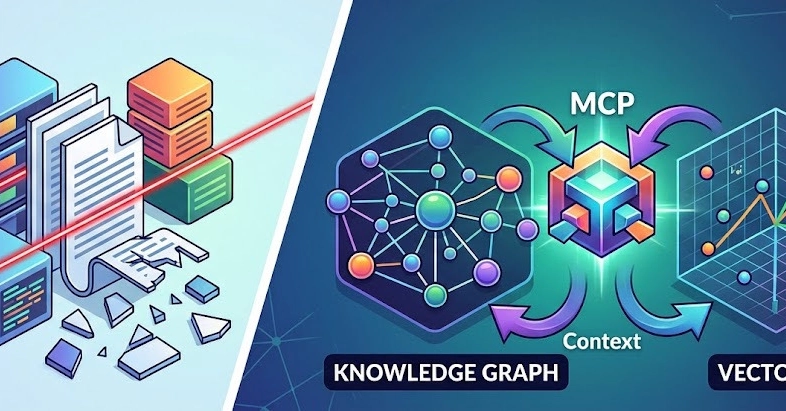
The data layer underneath an agentic system must handle variable schemas, vector embeddings, real-time retrieval, and multi-tenant scale, often simultaneously and without human intervention to manage migrations — but traditional relational databases weren't natively designed for document flexibility or AI capabilities.
1,245 words~6 min read