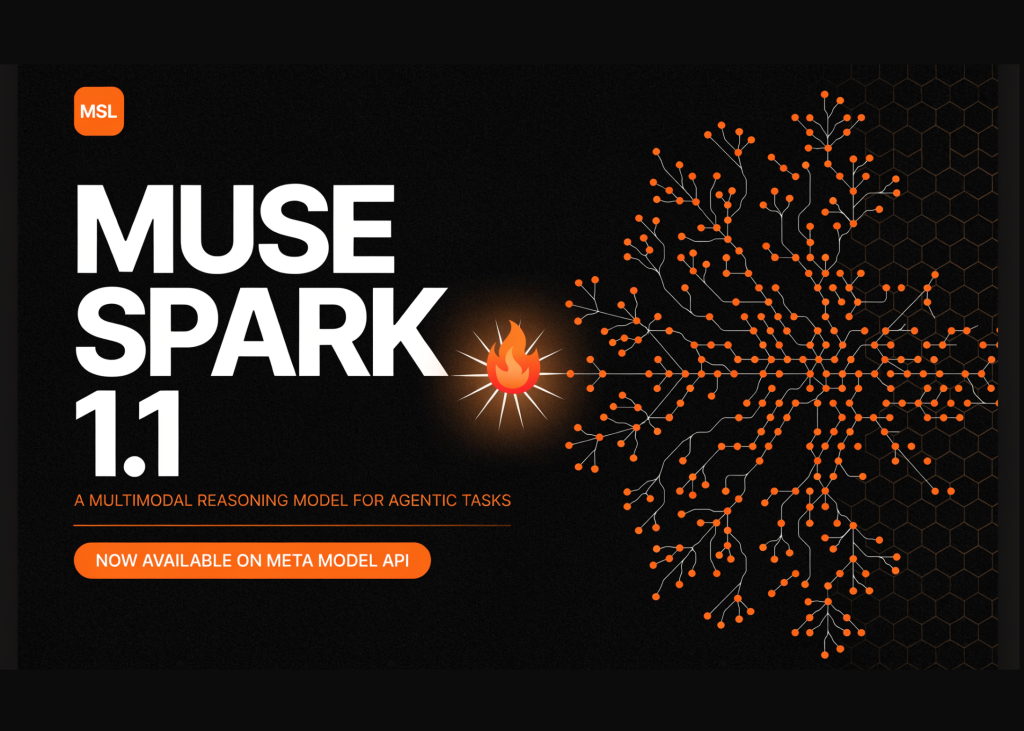
Meta is shipping AI model updates the way most companies ship Slack messages: constantly, and with increasing urgency. On September 2, CEO Mark Zuckerberg announced the release of Muse Spark 1.3, the third major update to a model family that didn’t even exist five months ago.
The new version brings meaningful efficiency gains for developers, with a 20% reduction in tool calls and 25% fewer tokens consumed compared to its predecessor, Muse Spark 1.2. In practical terms, that means the model does more with less, producing cleaner code while burning through fewer computational resources to get there.
What Muse Spark 1.3 actually does differently
The core upgrades center on two areas: agentic workflows and coding performance. Muse Spark 1.3 has been trained on a broader set of long-horizon coding tasks, which is the AI equivalent of teaching someone to run a marathon instead of just sprinting 100 meters.
The 20% reduction in tool calls matters because every tool call introduces latency and potential error. Fewer calls with the same output quality means the model has gotten smarter about when to reach for external tools and when to handle things internally.